11 Cutest Small Towns on the Atlantic Coast
The small towns along the Atlantic Coast have collected the kind of identity the resort strips never quite manage. Bar Harbor sits at the doorstep of Acadia. Provincetown is where the Mayflower actually first dropped anchor in November 1620. Cape May counts almost 600 preserved Victorian buildings inside its compact downtown, and Newport runs a harbor full of Gilded Age mansions and one of the country's oldest yacht-racing traditions. The eleven small towns ahead each deliver one signature draw that gives the place its character.
Bar Harbor, Maine

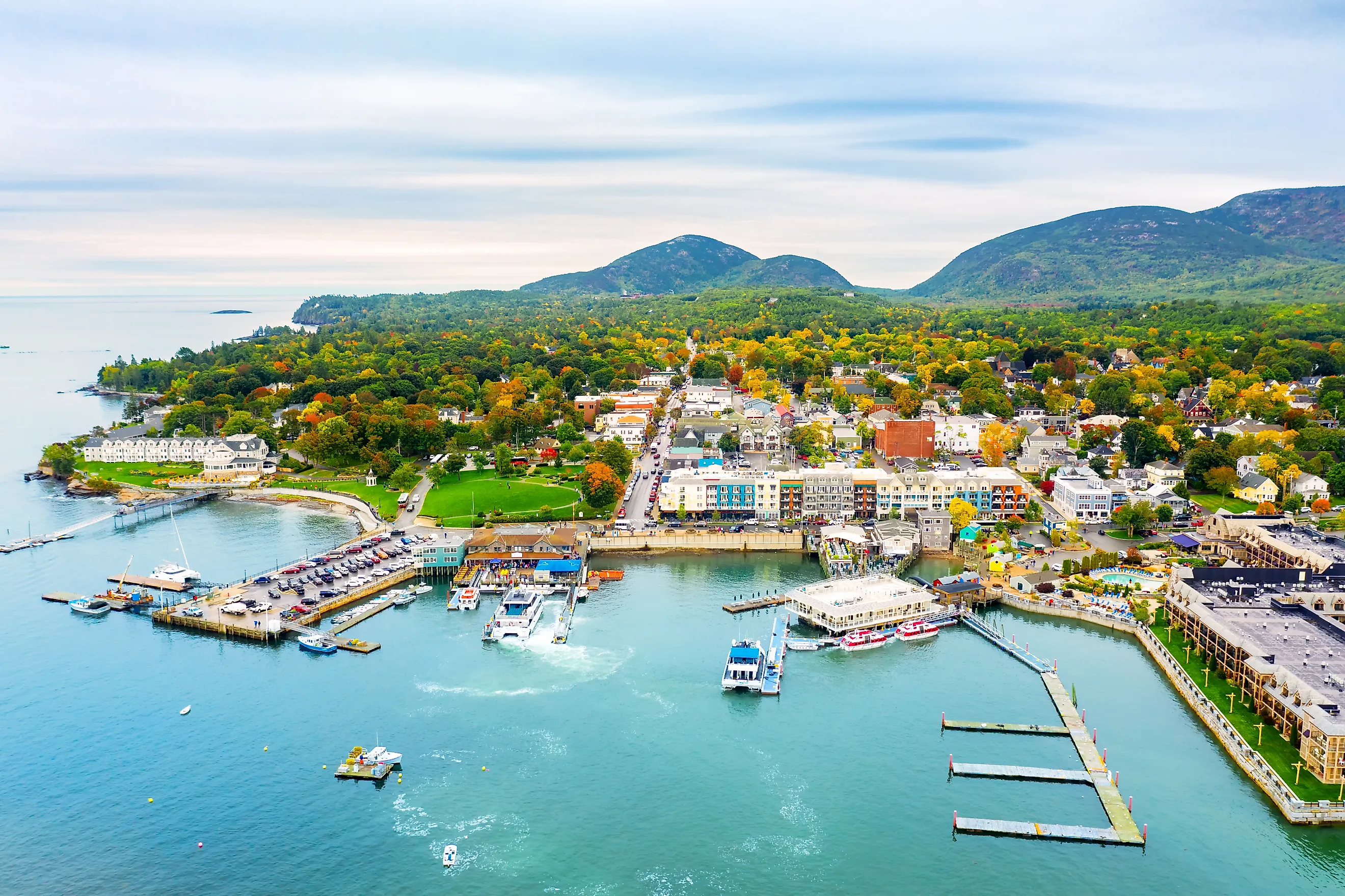
Bar Harbor sits on Mount Desert Island along Maine's Frenchman Bay, with about 5,500 year-round residents and a summer population that swells well past that. The town's main draw is its direct gateway access to Acadia National Park, the only national park in New England and one of the most visited in the country. Cadillac Mountain at the park's center is the first place in the continental United States to see the sunrise for most of the year, and the Park Loop Road, Jordan Pond House, and Sand Beach are all within a short drive of downtown. Back in town, Main Street runs to lobster shacks, ice cream stops, and outfitters for kayaking, whale watching, and the schooner sails that leave from the municipal pier. The Abbe Museum, the only Smithsonian-affiliated museum in Maine, focuses on the Wabanaki Nations whose homelands include all of present-day Maine.
Beaufort, South Carolina

Beaufort (pronounced BYOO-fert) sits on Port Royal Island roughly midway between Charleston and Savannah, with a downtown core defined by antebellum architecture and live-oak-lined streets. It is South Carolina's second-oldest city, founded by the British in 1711, and its Beaufort Historic District is one of the largest National Historic Landmark districts in the country. The Henry C. Chambers Waterfront Park runs along the Beaufort River with public swings, walking paths, and a stage that hosts summer concerts. The streets running back from the park hold the antebellum mansions: the John Mark Verdier House (1804), the Robert Smalls House (where the Civil War naval hero who later served in Congress lived), and the Tabby Manse. Two festivals anchor the year: the Beaufort Shrimp Festival in October and the Beaufort Water Festival in July. For dinner on the river, Saltus River Grill is a reliable choice.
Cape May, New Jersey

Cape May sits at the southern tip of New Jersey where the Delaware Bay meets the Atlantic. The entire city is a National Historic Landmark District, which protects roughly 600 preserved Victorian buildings packed into a few square miles, more than any other American town. The Cape May Lighthouse, an 1859 white-and-red tower at Cape May Point State Park, runs a 199-step climb up to a 360-degree view of the cape, the marshes, and the seagoing freighter traffic. The Washington Street Mall (three pedestrian-only blocks of shops and restaurants) anchors the central downtown. Cape May is also one of the best fall bird-migration sites on the East Coast, and the Cape May Bird Observatory runs guided walks during the September-November peak. For something specific to the place, hunt for Cape May "diamonds" (water-tumbled quartz pebbles) on the beach at Sunset Beach.
Kennebunkport, Maine

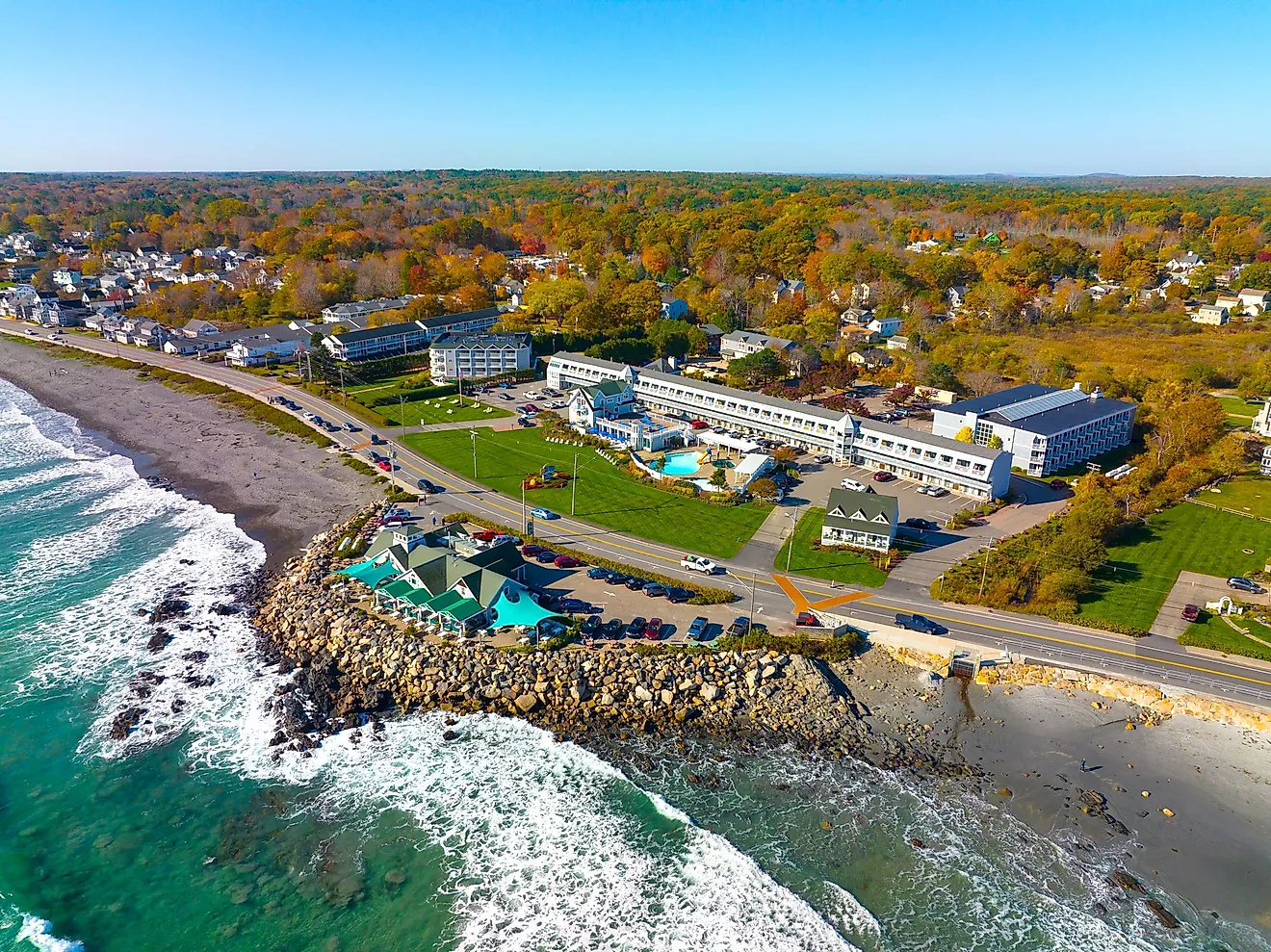
Kennebunkport sits at the mouth of the Kennebunk River in southern Maine, about 90 minutes north of Boston. The town has a working harbor, a compact Dock Square commercial center, and a year-round population of roughly 3,600. The Walker's Point compound on Ocean Avenue (the Bush family summer home, still owned by the family) is visible from the road and from boat tours leaving the harbor. The Seashore Trolley Museum, the largest electric railway museum in the world, runs restored trolleys on a track through the woods. Goat Island Light, established in 1833 in Cape Porpoise Harbor just east of the village, is owned by the Kennebunkport Conservation Trust and open seasonally for tours. Goose Rocks Beach and Gooch's Beach handle the swimming, and Mabel's Lobster Claw on Ocean Avenue handles the lobster rolls.
Kitty Hawk, North Carolina

Kitty Hawk sits on the Outer Banks just north of Kill Devil Hills and is best known as the broader town the Wright Brothers used as a base before making the first successful powered flight on December 17, 1903. The flight itself happened a few miles south at Kill Devil Hills, but the brothers stayed in Kitty Hawk and used the village's name in their telegrams home. The Wright Brothers National Memorial preserves the launch site and runs a visitor center with replicas of the 1902 glider and the 1903 Flyer. Kitty Hawk Woods Coastal Reserve covers 1,824 acres of maritime forest, swamp forest, and wetland trails accessible to hikers, bikers, and kayakers. The town's beaches run along Highway 12 with public access points spaced every few blocks, and the Outer Banks bridges connect the village south to Nags Head and Roanoke Island and north to the unbridged stretch of wild beach at Carova.
Marathon, Florida

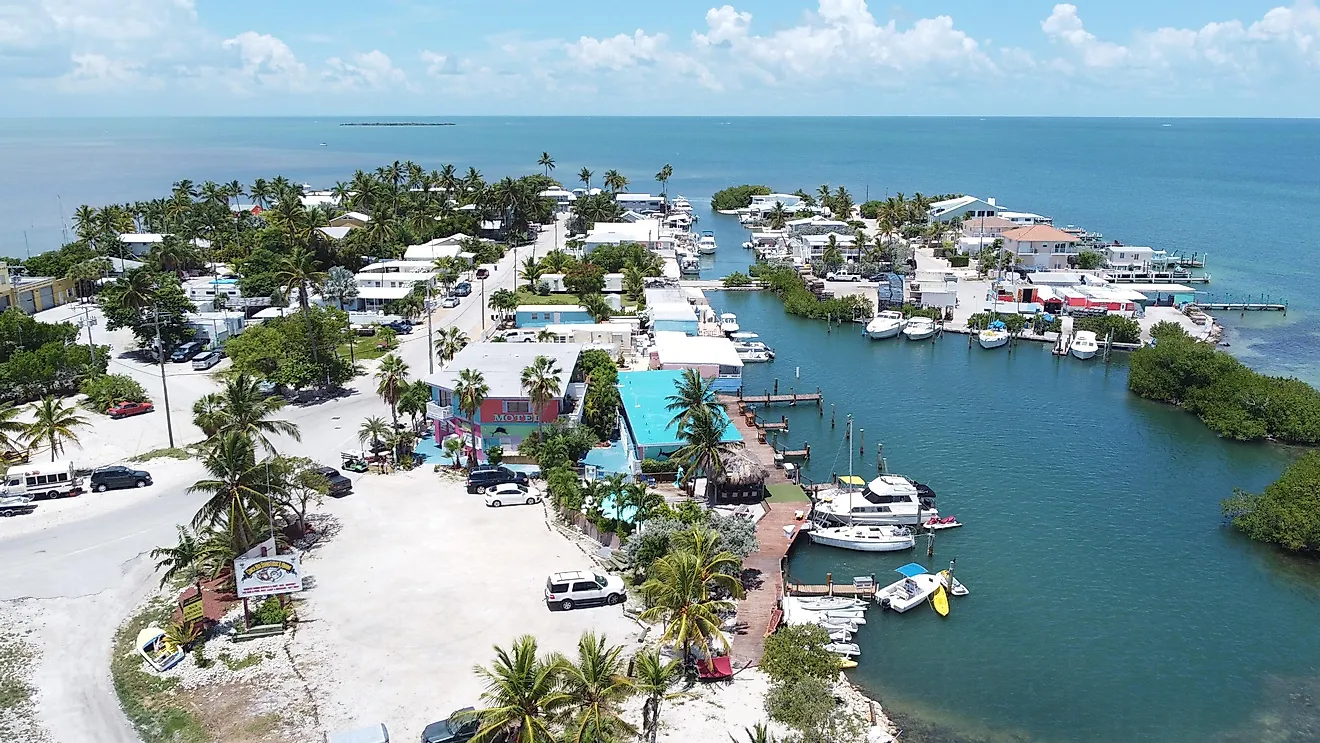
Marathon is a city in the Middle Keys that spans 13 islands across about 10 miles of US Highway 1, roughly halfway between Key Largo and Key West. The town's most recognizable landmark is the Seven Mile Bridge, the Atlantic-spanning structure connecting Marathon to the Lower Keys, with the historic Old Seven Mile Bridge (recently restored and reopened to pedestrians and cyclists in 2022) running parallel to the modern highway version. The Florida Keys Aquarium Encounters and the Dolphin Research Center on Grassy Key handle the on-land marine attractions. Sombrero Beach is the town's only sand beach, and the Turtle Hospital on Marathon (the world's first state-certified veterinary hospital for sea turtles) runs guided tours and rehabilitates injured sea turtles for release. For deep-sea fishing charters, Marathon's harbor at the City of Marathon Marina runs daily charters into the Gulf Stream.
Mystic, Connecticut

Mystic sits on the Mystic River between New London and the Rhode Island border, and is technically a village split between the towns of Groton and Stonington. The Mystic Seaport Museum (the largest maritime museum in the country) preserves the Charles W. Morgan, the last wooden whaleship in the world, alongside a recreated 19th-century coastal village with working shipsmiths, coopers, and printers. The Mystic Aquarium runs beluga whale, African penguin, and Steller sea lion habitats just north of downtown. The bascule drawbridge over Main Street, a 1922 landmark, opens for boat traffic every hour on the half-hour. Mystic Pizza on West Main Street is the actual restaurant that inspired the 1988 Julia Roberts film, and yes, it still serves the "slice of heaven" pies. Red 36 on the waterfront and the Engine Room are the local choices for dinner.
Newport, Rhode Island

Newport sits on the south end of Aquidneck Island, the largest of the three islands in Narragansett Bay, with about 25,000 year-round residents and one of the most concentrated collections of Gilded Age architecture in the country. The Breakers, the Vanderbilt family's 70-room summer "cottage" built in 1893-95, is the most visited of the Newport Mansions. The 3.5-mile Cliff Walk runs along the rocky shoreline behind the mansions with public access from the beach end at Easton's Beach all the way to Bailey's Beach. Newport is also one of the country's premier sailing centers, hosting major regattas including the Volvo Ocean Race stopovers, the New York Yacht Club Annual Regatta, and the Newport Bermuda Race that runs every other year. The International Tennis Hall of Fame on Bellevue Avenue holds the country's longest-running professional grass-court tournament. Bowen's Wharf and Bannister's Wharf handle the downtown restaurants and shops.
Provincetown, Massachusetts

Provincetown sits at the very tip of Cape Cod, the curled fishhook end of the peninsula. The Mayflower actually first anchored here on November 11, 1620 (before continuing to Plymouth) and the Pilgrims signed the Mayflower Compact aboard ship in Provincetown Harbor. The 252-foot Pilgrim Monument, completed in 1910, marks the spot and is the tallest all-granite tower in the country. Provincetown's year-round population sits at roughly 3,000, but summer visitors push that figure past 60,000. Cape Cod National Seashore covers 40 miles of protected Atlantic shoreline from Provincetown south, with Race Point Beach and Herring Cove Beach the closest swimming options. Provincetown is also one of the longest-running LGBTQ summer destinations in the country, with Carnival Week in mid-August drawing the largest crowds of the year. Commercial Street, the three-mile main artery, holds the galleries, restaurants, and guesthouses.
Rehoboth Beach, Delaware

Rehoboth Beach runs along a one-mile boardwalk on the Atlantic, with a year-round population of about 1,100 that climbs past 25,000 in summer. Funland, the family-owned amusement park on the boardwalk since 1962 (in a building that has held a small park since 1939), runs 18 rides including the custom-built Haunted Mansion dark ride and remains the only amusement park in Delaware. Dolle's Candyland (in business since 1927) is the standing icon for saltwater taffy. The Rehoboth Beach Boardwalk Arts Festival in September fills the boardwalk with juried artists. Just outside town, the Delaware Seashore State Park covers six miles of preserved Atlantic shoreline with the Indian River Inlet running through the middle. Two miles south on Highway 1, Dewey Beach handles the late-night bar scene that Rehoboth itself does not. Rehoboth also runs Delaware's largest concentration of tax-free shopping, since Delaware has no state sales tax.
Southport, North Carolina

Southport sits at the mouth of the Cape Fear River in Brunswick County, North Carolina. The town was settled around Fort Johnston, a colonial fort whose construction began in 1748 under royal Governor Gabriel Johnston, with the surrounding settlement chartered in 1792 as Smithville. The town renamed itself Southport in 1887 in an effort to attract major port traffic. The Fort Johnston Officers Quarters (built around 1805-1809) now houses the Southport History Museum, and the adjacent NC Maritime Museum at Southport covers shipwrecks, piracy on the Cape Fear, and the Civil War blockade running era. Southport's compact historic downtown around Howe and Moore streets has been used as a filming location for several productions, most notably Safe Haven (the 2013 Nicholas Sparks film). Take the Southport-Fort Fisher Ferry across the Cape Fear River for a 35-minute crossing to Kure Beach and the USS North Carolina battleship memorial.
What These Eleven Towns Have in Common
Each of these eleven towns runs on something the resort strips along the same coast do not deliver. Bar Harbor has Acadia at the door. Beaufort has the antebellum architecture and the South Carolina Lowcountry. Cape May has the Victorian preservation. Kennebunkport has the working harbor and the lighthouse. Kitty Hawk has the Wright Brothers history. Marathon has the Florida Keys reefs. Mystic has the seaport museum. Newport has the Gilded Age mansions and the sailing tradition. Provincetown has the Mayflower history and the LGBTQ summer scene. Rehoboth has the boardwalk and Funland. Southport has the fort and the Cape Fear River mouth. None of them require a long drive from a major metro, and each one delivers what a postcard town actually used to be.