Where People Are Moving To In The Great Lakes In 2026
Across much of the Great Lakes, deaths now outnumber births in a given year. That makes migration the deciding factor in whether a place gains residents or loses them. Around Indianapolis and the Twin Cities, the newcomers are young families spilling past the metro edge. They fill new subdivisions in places like Westfield and Rosemount within a short commute of the same jobs. Up on Lake Superior, the arrivals are remote workers and university hires replacing an aging population. These seven towns show where that arithmetic is tipping toward growth this decade.
Westfield, Indiana

Westfield is the runaway grower on this list. Its population has climbed 42.7% since 2020 to about 66,000 residents. Most of that surge is Indianapolis money moving north. Six in ten new arrivals came from elsewhere in Indiana, and nearly a third from Marion County alone.
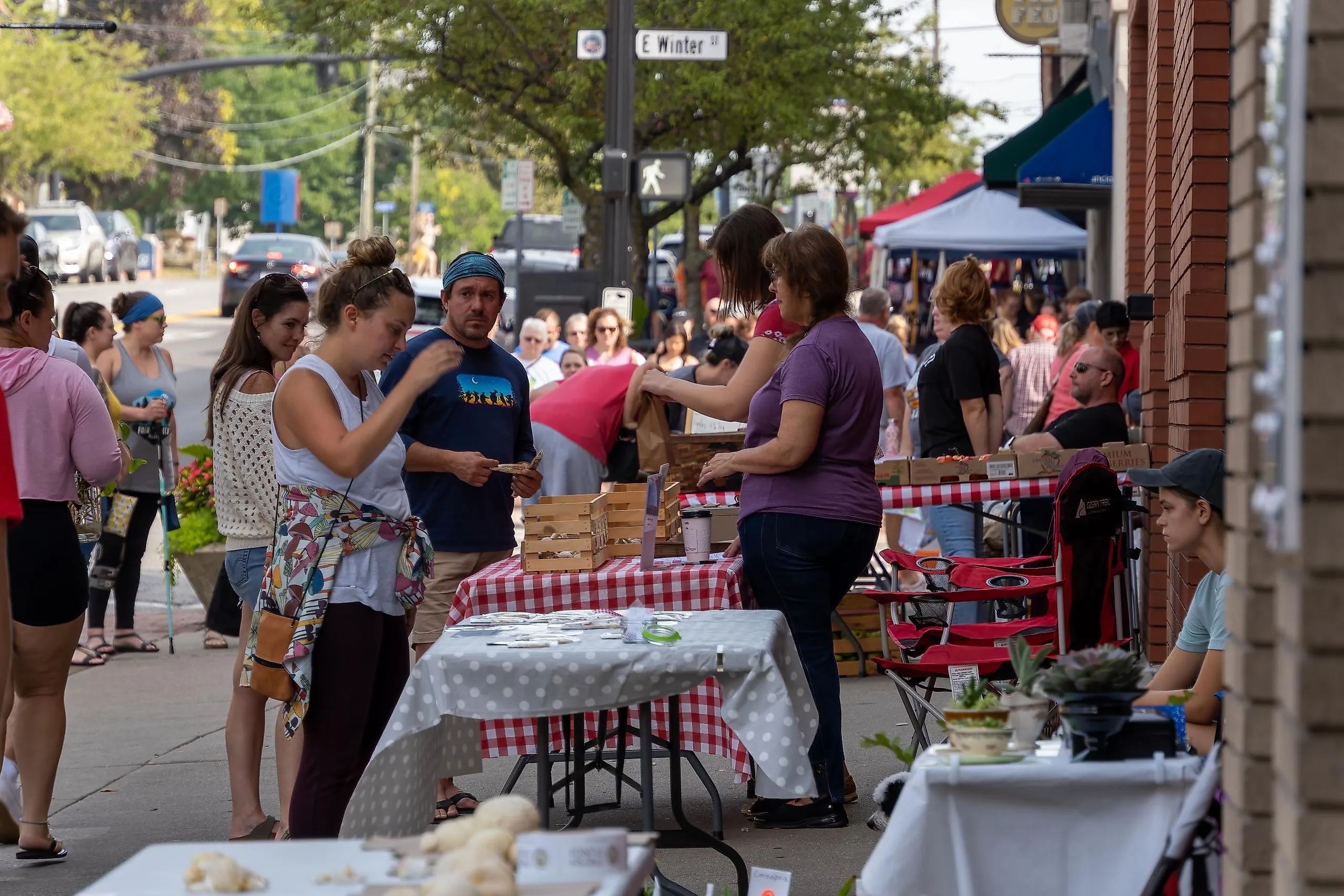
Buildable land and an easy shot into Indianapolis are only half the draw. The other half is Grand Park, a 400-acre sports campus on the north side of town. It hosts the Indianapolis Colts summer training camp and a nonstop run of youth tournaments. The Monon Trail cuts straight through town for cyclists and walkers. Grand Junction Plaza fills with market days and summer concerts. Park Street keeps the restaurants and locally owned shops that give downtown its center.
Yorkville, Illinois

Yorkville sits at the far end of Chicago's outward ripple. Its population is up 23.6% since 2020 to roughly 26,700 residents. This is almost entirely a regional reshuffle. More than eight in ten newcomers came from within Illinois, most out of Kane, DuPage, Will and Cook counties. They traded the crowded inner suburbs for more room while keeping their metro jobs.
Yorkville sits about 50 miles from downtown Chicago on the Fox River. The river runs right through the middle of town. Bicentennial Riverfront Park sits on its bank. The Marge Cline Whitewater Course sends kayakers through an engineered rapids run nearby. Raging Waves fills up on summer weekends as Illinois's largest water park. Silver Springs State Fish and Wildlife Area keeps its forested trails and lakes open for fishing and canoeing.
Rosemount, Minnesota

Rosemount grew 24.3% since 2020 to nearly 32,000 residents. The movers are mostly Twin Cities households shifting south. Roughly three-quarters came from elsewhere in Minnesota. Hennepin and Ramsey counties supplied close to half of them. Most kept their metro jobs while trading up for newer homes in Dakota County.
The result is a young, settled town. About a quarter of residents are under 18. Nearly nine in ten households own their homes. The Steeple Center books touring performances and community events. The Rosemount Ice Arena runs open skating through the winter. A city splash pad draws the kids all summer. A municipal disc-golf course sits open for anyone who wants to play a round.
Fitchburg, Wisconsin

Fitchburg breaks the exurban mold. It grew 11.7% since 2020 to about 34,600 on the strength of the Madison economy rather than cheap land. Its county's growth leaned heavily international. Among domestic movers, roughly four in ten came from elsewhere in Wisconsin, many from Milwaukee and Rock counties.
People come here for the work in technology, health care, education and research. The city trades on its educated workforce and its place in the Madison orbit. Off the clock, the Capital City Trail puts long rides at the doorstep. The Badger State Trail runs south from the same network. McKee Farms Park anchors the neighborhoods around it. The annual Agora Art Fair brings out the work of more than 100 artists.
Delaware, Ohio

Delaware grew 12.9% since 2020 to about 46,600 residents. One number tells most of the story. More than half its new county arrivals came straight from Franklin County, home to Columbus. That makes it a classic north-side spillover, with families chasing space and newer housing up the developing corridor.
What sets Delaware apart from the subdivisions down that corridor is that it was a real town first. Ohio Wesleyan University has sat at its center since 1842. Downtown kept its old bones as the subdivisions went up around it. Sandusky Street still carries the shops and cafes. The Strand Theatre has run as a movie house since 1916. Perkins Observatory opens its telescope nights to the public. Delaware State Park leaves room to boat and hike a few minutes from downtown.
Marquette, Michigan

Marquette's 3.9% gain looks modest until you see what it survived. Its county buried more people than it welcomed as newborns between 2020 and 2025. Every one of its roughly 1,400 new residents arrived from somewhere else, and then some. About half of them came from elsewhere in Michigan.
The pull is a rare mix of jobs and shoreline. Northern Michigan University, the hospitals and a growing remote-work crowd keep the paychecks coming. Lake Superior makes the case for staying. Residents circle Presque Isle Park on the water's edge. Others climb Sugarloaf Mountain for the overlook. Marquette Mountain draws skiers and mountain bikers in season. That same demand has tightened the housing market, a reminder that lifestyle migration arrives with a price tag.
Victor, New York

Victor's 3.6% climb is the smallest on this list and maybe the most telling. Its county lost far more residents to death than it gained through birth. Migration was the growth, not a bonus on top of it. About seven in ten of those movers came from within New York. Roughly a third came from Rochester's Monroe County.
The draw is Rochester jobs within reach and the Finger Lakes out the back door. Ganondagan State Historic Site marks a former Seneca town with walking trails. The Victor Hiking Trails link greenways across the town. The Valentown Museum keeps the local history in an 1879 hall built as one of the area's first shopping arcades. Eastview Mall covers the shopping and dining. The town is also putting state NY Forward money into its downtown, a reason to come for something other than a new house.
A Region Sorting Itself
Together, these seven places demonstrate that Great Lakes population growth is often driven by short-distance sorting rather than a single coast-to-heartland migration wave. Many households are crossing nearby county lines to find buildable land, better housing value, employment access, an established downtown or an outdoor lifestyle. Those migration gains are separating these towns and cities from slower-growing neighbors, even when the movers remain closely connected to the same metropolitan economies they left.