11 Best Towns In Louisiana To Retire Comfortably
Louisiana’s best retirement towns combine affordable housing with plenty of culture and recreation. In Natchitoches, retirees can walk beside the Cane River and explore a historic downtown, while Eunice offers Cajun music and museums close to home. Minden provides easy access to the trails and fishing at Lake Bistineau, and Morgan City adds waterfront parks, seafood festivals, and river views. These 11 towns show how retirees can stretch their budgets without giving up scenery, activities, or community.
Natchitoches

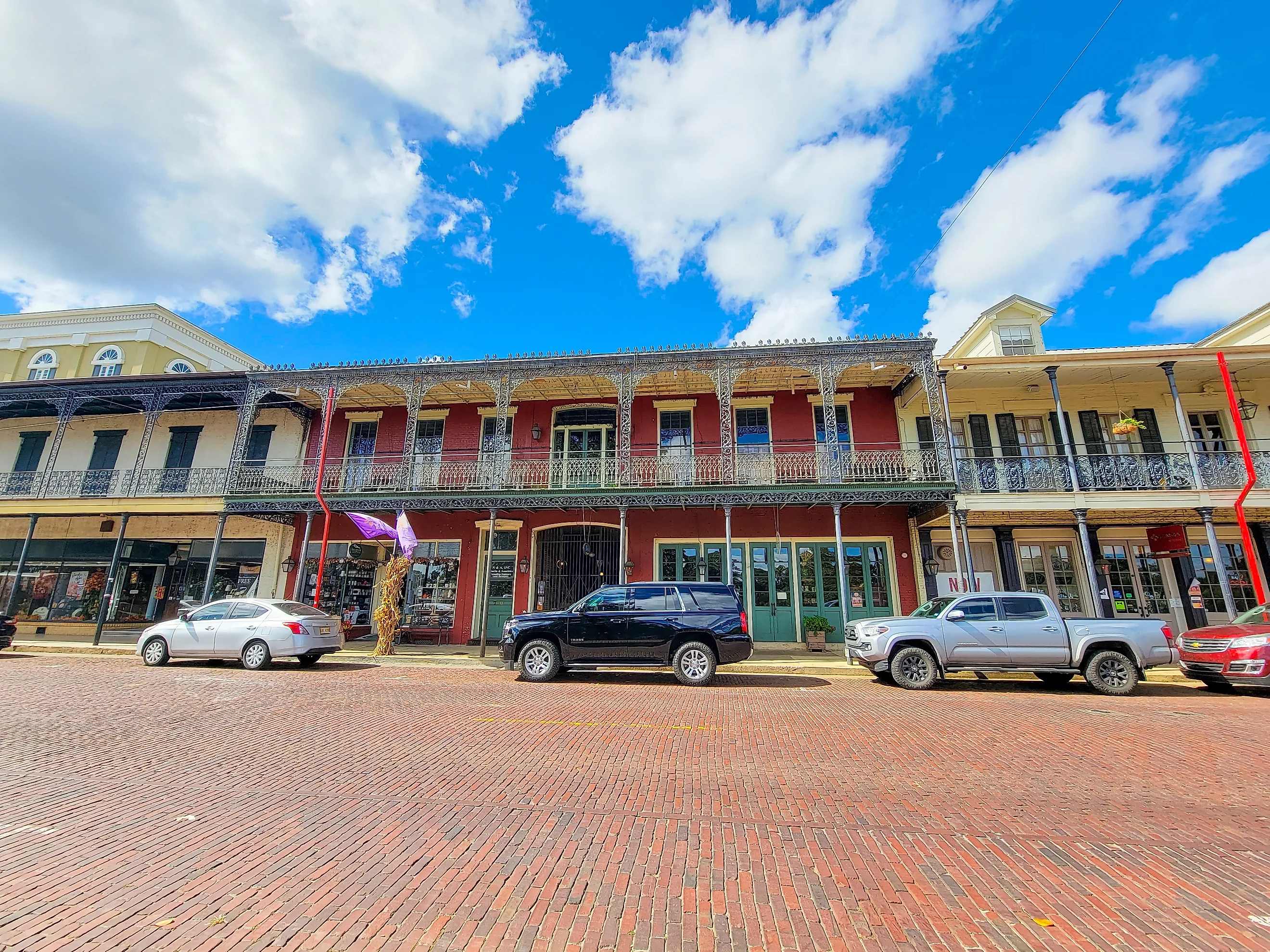
The water running through the middle of Natchitoches is not a river. Cane River Lake is a 35-mile cutoff channel of the Red River, stranded when the Red shifted course in the 1800s and sealed at both ends by dams around 1916. That accident of hydrology gave the town a still waterfront instead of a working port, which is why the brick storefronts of the National Historic Landmark District survived intact. French settlers founded the post in 1714, making this the oldest permanent European settlement in the territory the United States bought in 1803.
Median home values here sit near $190,000, and the daily walk along the lake costs nothing. Fort St. Jean Baptiste State Historic Site reconstructs the original French garrison a few blocks from downtown. The bousillage walls of the Prudhomme-Rouquier House show how builders packed mud, moss, and animal hair into walls that have held for two centuries. Northwestern State University keeps a calendar of lectures and concerts within a short drive of most neighborhoods. The Louisiana Sports Hall of Fame shares a building with the Northwest Louisiana History Museum, which gives grandchildren somewhere to go in the August heat. Natchitoches Regional Medical Center handles emergencies and surgery in town.
Abbeville

Père Antoine Désiré Mégret bought the land here in the 1840s and laid the town out around a public square, copying the Provençal villages of his childhood. Magdalen Square still works the way he intended. A gazebo and fountain sit at the center, the courthouse and St. Mary Magdalen Catholic Church frame it, and the benches fill up on their own. The town runs a spring concert series called Sounds on the Square, which is the sort of standing weekly event that makes a new address feel like a neighborhood inside a month.
On the first full weekend in November, dozens of cooks crack more than 5,000 eggs into a 12-foot skillet over an open fire, a tradition Abbeville borrowed from Bessières in France and has kept for roughly fifty years. The Sunday of that weekend opens with a French mass. The Sam Guarino Blacksmith Shop Museum preserves a working forge on a walkable block, and the Steen's cane syrup mill has been boiling down Louisiana cane on the edge of town since 1910. Palmetto Island State Park sits south of town along the Vermilion River for paddling and birding. This is Vermilion Parish, close to open water, so budget for flood insurance and read the elevation certificate before you buy.
Minden

A communal German settlement went up in the woods northeast of here in the 1830s, and its cabins survive as the Germantown Colony Museum. The immigrants who arrived alongside it helped establish Minden itself in 1836, and the town took the name of Minden, Germany. Roughly 11,900 people live here now. The Main Street district holds three designations at once. It is a Louisiana Main Street Community and a Cultural Products District, and the whole stretch is on the National Register. The red brick paving in front of the antique shops is original.
The Dorcheat Historical Association Museum covers Webster Parish history without asking for a whole afternoon. Lake Bistineau State Park lies southwest of town, among cypress, and offers fishing, camping, and shaded trails. Caney Lakes Recreation Area sits north in the Kisatchie National Forest. Christmas in Minden turns the downtown lights on in December and pulls the whole parish in. Shreveport is 28 miles west of Minden for medical specialists and air travel. North Louisiana winters bring occasional ice storms, which matter if you plan to drive to appointments.
Jennings

Louisiana's oil industry started in a rice field about seven miles northeast of Jennings. Jules Clement had noticed gas bubbling up when he flooded his land, lit it with a match to see what would happen, and told his neighbors. Scott Heywood drilled the well, and on September 21, 1901, it came in at 7,000 barrels a day. The Jefferson Davis Parish seat that grew on that money now holds about 10,000 people and two museums a few doors apart on North Main.
The Zigler Art Museum collects works by Louisiana painters and holds works by John James Audubon and Clementine Hunter. Down the block, the W.H. Tupper General Merchandise Museum kept the entire stock of a country store that closed in 1949, shelves and all, which is a stranger and better experience than it sounds. Lacassine National Wildlife Refuge spreads across the marsh south of town for birding and slow driving. Interstate 10 runs along the northern edge, putting Lafayette and its specialist care about an hour east.
Eunice

Every Saturday morning at nine, fiddlers and accordion players fill the front room of the Savoy Music Center on Highway 190 and play traditional Cajun tunes until noon. Marc Savoy started the jam in 1966 and still builds accordions in the back. Admission is free and a box of boudin counts as a good-faith contribution. The older musicians lead, which is the whole point, and anyone can sit in or just take a chair and listen.
Eunice is the best place in Louisiana to hear this music without paying tourist prices, and the housing market leaves room to go out. The Liberty Theatre hosted the Rendez-vous des Cajuns radio show every Saturday night for 33 years. It has been closed since 2020 while the city and a local association work through a full restoration, so check its status before planning around it. The Cajun French Music Hall of Fame and Museum stays open downtown, and the Prairie Acadian Cultural Center, run by Jean Lafitte National Historical Park, explains prairie Cajun life a block away. Mardi Gras here means the courir, a masked horseback run through the countryside rather than a parade route.
Opelousas

Opelousas was a French military post in 1720, which makes it the third-oldest city in the state, and its brick sidewalks date to the 1830s. For a stretch of the Civil War, it served as the Confederate capital of Louisiana after Baton Rouge fell, and the governor's mansion of that period still stands. Housing costs are among the lowest in this group. The population keeps sliding. The 2020 census counted 15,786 residents, down from 16,634 in 2010, and the 2025 estimate puts the figure near 15,100. Expect a buyer's market and a thin rental pool.
Le Vieux Village gathers relocated historic buildings at the eastern edge of town, including the Venus House, a bousillage cottage counted among the oldest Creole homes west of the Mississippi. The restored depot on the same grounds holds the Louisiana Orphan Train Museum, which documents the children sent by rail from New York to Catholic foster families here between 1873 and 1929. Many of its volunteers are descendants of those riders. Opelousas also gave zydeco its capital and Clifton Chenier his start, and the plate-lunch counters and seasoning shops downtown are the reason people drive in from Lafayette. It appears on our list of the state's most underrated cities for good reason.
Thibodaux

Two miles south of town on Highway 308, roughly forty original buildings stand in a row along Bayou Lafourche at Laurel Valley, the largest surviving 19th and 20th century sugar plantation complex in the country. Cane still grows in the fields around them. The quarters housed enslaved workers before the Civil War and Acadian, Creole, Irish, Italian, and Chinese laborers after it. The sugar strike of 1887 that ended in the Thibodaux massacre grew out of these fields. The plantation store operates as a museum with guided walking tours twice a day.
Life in town runs on the bayou and the university. Nicholls State University brings performances, lectures, and a culinary institute inside city limits. Its calendar is open to residents. The Wetlands Acadian Cultural Center covers bayou settlement and boatbuilding on the waterfront downtown. Thibodaux Regional Health System gives the Lafourche Parish seat more medical depth than most towns this size. Weigh that against the exposure: Hurricane Ida came ashore in this parish in 2021, and insurance here is priced accordingly.
Bastrop

Bayou Bartholomew runs about 360 miles before it reaches the Ouachita River, which is long enough that it is usually called the longest bayou in the world. Biologists have counted more than 115 fish species in it, one of the highest tallies of any stream in North America. Chemin-A-Haut State Park sits ten miles north of Bastrop on Highway 425, on a bluff above the water, and the French name records the high ridge that Native travelers used as a road. The park dates to 1935 and rents cabins alongside its campsites.
Housing in the Morehouse Parish seat is genuinely cheap, and that has a cause worth naming: the mill closures of the past two decades cost the town jobs and residents, and the population has fallen for years. Services are correspondingly thin, and Monroe is about 25 miles southwest for specialists and a wider grocery run. What Bastrop offers in exchange is quiet streets and a courthouse square. Churches and civic clubs here absorb newcomers quickly, and the Snyder Museum and Creative Arts Center handles local history and art classes. It is important to note that ice storms are a winter risk up here.
Morgan City

A concrete floodwall separates downtown Morgan City from the Atchafalaya River, and residents call it the Great Wall. Climb the walkway on top and you look down on shrimp boats, crew boats, and barges working the main distributary of the Mississippi. The wall is the single most important thing to understand about buying here. It exists because this is one of the most flood-exposed towns in Louisiana, and premiums reflect that.
What the risk buys is a waterfront town at inland prices. Mr. Charlie was the first transportable submersible offshore drilling rig and worked the Gulf for 32 years. Moored on Berwick Avenue since retirement, it is the only offshore rig anywhere that the public can walk aboard. The International Petroleum Museum and Exposition offers guided tours Monday through Saturday at 10 and 2. Lake End Park handles camping, fishing, and evening walks at the north end of town. The Louisiana Shrimp and Petroleum Festival has taken Labor Day weekend since 1936, making it the oldest state-chartered harvest festival in Louisiana.
Crowley

No city in the United States has milled more rice than Crowley, which is why it is known as the Rice Capital of the World. The Duson brothers founded the town in 1887 on prairie that turned out to suit the crop, and the money built more than 200 buildings now on the National Register, including a long run of Queen Anne houses on the residential streets. Two theaters anchor North Parkerson Avenue. The Grand Opera House of the South went up in 1901, spent decades as a hardware store, and has staged performances again since 2008; the Art Deco Rice Theatre opened in 1939 three blocks down.
The 1921 Ford dealership on Parkerson now serves as City Hall and holds several small museums inside. One is a rice interpretive center covering how the crop is grown, dried, and milled. The International Rice Festival takes place the third full weekend in October and has run since 1937, which makes it Louisiana's oldest agricultural festival and still one of its largest. Acadia Parish sits on flat ground that drains slowly, and Crowley took 40 inches of rain in a matter of days in 1940, so check drainage history street by street.
Franklin

Franklin installed ornamental street lighting along a divided Main Street boulevard early in the last century, and the cast-iron lampposts are still standing under the live oaks. The town holds an outdoor dinner beneath them each spring. Main Street runs parallel to Bayou Teche on the bayou's left bank, and the surrounding historic district packs roughly 420 noteworthy structures into three-quarters of a mile, listed on the National Register since December 1982. Six large Greek Revival houses dominate the south end between Gates Drive and Upperline Street.
About 6,700 people live in the St. Mary Parish seat, and prices are low even by this list's standards. The Grevemberg House Museum, an 1851 Greek Revival townhouse in City Park, serves as the official parish museum and opens Tuesday through Saturday. Shadowlawn dates to about 1850 and shares a lot with a tavern built in 1807, the oldest building in town. Cypremort Point State Park gives Franklin its Gulf access for fishing and beach afternoons, and the Bayou Teche Scenic Byway passes through the middle of town. The coastal caveat that applies to Morgan City applies here.
These 11 Louisiana towns make retirement more comfortable by offering affordable homes with meaningful ways to stay active. Natchitoches boasts riverfront walks and historic streets, Eunice brings Cajun music and cultural programs, and Morgan City adds fishing, festivals, and waterfront scenery. Retirees in Minden can enjoy Lake Bistineau’s trails, while Franklin offers oak-lined neighborhoods and easy access to Bayou Teche. Together, these towns provide the low costs, local character, outdoor recreation, and community connections that can make retirement both practical and rewarding.