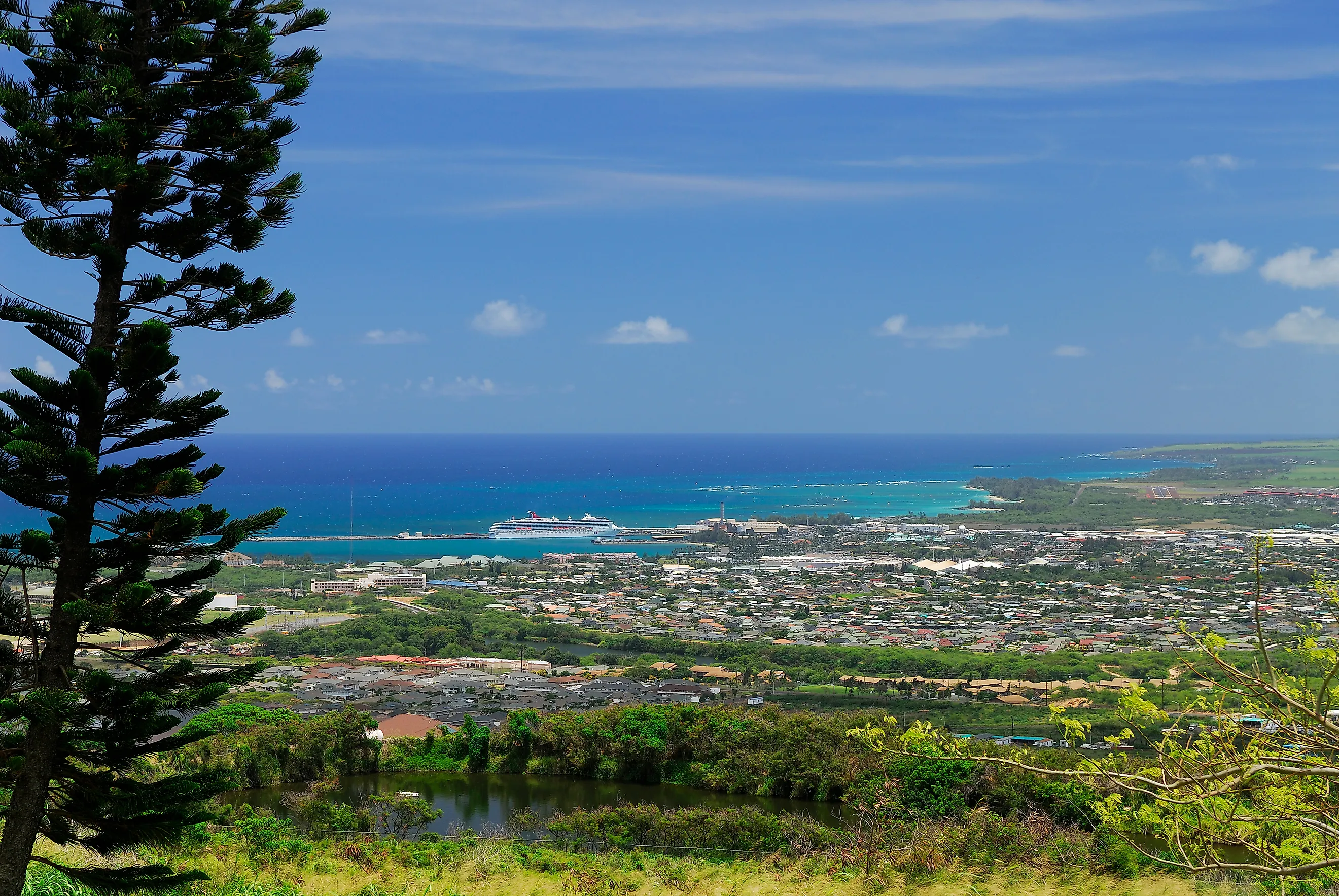
11 Best Towns In Hawaii To Retire Comfortably
Eleven Hawaii towns let retirees buy a home for less than the state average of $836,677 and still keep hospitals, senior programs, and active community calendars within reach. Most sit on the Big Island where Hawaii County's home values run hundreds of thousands below the state. Molokai adds two more towns where ownership would feel reasonable in much of rural America. Oahu and Kauai each contribute two. Maui adds one. The list works island by island.
Ocean View, Big Island

Ocean View sits at elevations between 1,500 and 5,000 feet on the Big Island's southern slope, which makes it cooler than most of Hawaii and notably more comfortable during summer than coastal Hilo. The average home value is $265,892 according to Zillow, the lowest figure on this list. At the last census, 25.5% of residents were 65 or older with a median age of 49.6, a clear signal that low prices have drawn older buyers. The 45-minute hike to Papakōlea Green Sand Beach leads to one of only four green sand beaches in the world, where olivine crystals eroded from a cinder cone above the cove give the sand its color. South Point Park (Ka Lae), a short drive down Ka Lae Road, marks the southernmost point in the United States.
Primary care runs through the Ka'ū Rural Health Community Association, Kona Community Hospital about 45 miles north, or Hilo Medical Center roughly 80 miles east for specialist work. Every May, the Ka'ū Coffee Festival in nearby Pahala brings the district together for several days of farm tours and cupping competitions with live music each evening. The Wood Valley Temple (Nechung Drayang Ling), a Tibetan Buddhist retreat center established in 1973, hosts meditation programs and public workshops throughout the year, a genuinely unusual cultural anchor for a small Hawaii community.
Pahoa, Big Island

Located on the eastern side of the island about 80 miles from Ocean View, Pahoa's wooden-front storefronts on Pahoa Village Road date to the early 1900s when the town served the surrounding sugarcane and timber economy. That character held. Pahoa carries a slightly counterculture identity, with farmers and artists arriving first and retirees following, drawn by the $289,537 average home value. The Pahoa Community Health Center handles primary care, with Hilo Medical Center 19 miles north for specialist work.
Lava Tree State Monument, five miles east, preserves the ghostly lava casts of an 'ōhi'a forest swallowed by a 1790 eruption. The walking loop costs nothing and takes under an hour. Every Wednesday and Sunday evening, Uncle Robert's Awa Club in nearby Kalapana pulls the Puna district together with live Hawaiian music and a community market. Retirees considering property in the Puna district should check Hawaii's lava flow hazard zone maps before purchasing. The 2018 Kilauea Lower East Rift Zone eruption destroyed over 700 homes in Leilani Estates, about four miles from downtown Pahoa. The town itself was unaffected, but volcanic risk varies significantly by parcel. Each February, the Pana'ewa Stampede Rodeo at the Pana'ewa Equestrian Center in nearby Hilo bills itself as the only outdoor tropical rodeo in the United States.
Volcano, Big Island

No other retirement address in the United States puts you within two miles of an active volcano caldera. Volcano Village sits right at the entrance to Hawai'i Volcanoes National Park, where the Kilauea summit crater glows from the rim overlooks at night and the Chain of Craters Road drops 3,700 feet to the coast in 20 miles. The average home value is $380,650 according to Zillow. The Volcano Art Center runs rotating gallery exhibitions inside the historic 1877 Volcano House, while its Niaulani Campus in the village hosts free weekly cultural demonstrations like lei making, lauhala weaving, and ukulele lessons. Volcano Winery, a short drive down Wright Road, produces estate wines from Symphony grapes and macadamia honey, open daily for tastings.
In July, the Experience Volcano Festival spreads across the village for two days of music, studio tours, food trucks, and cultural demonstrations. The climate runs consistently in the mid-60s year-round, which suits retirees who find coastal Hawaii's heat taxing. Hilo Medical Center is 30 miles east on Highway 11. The Kilauea Visitor Center runs free ranger-led talks that many village residents treat as part of their weekly routine.
Keaau, Big Island

Another 20 miles north toward Hilo, the Mauna Loa Macadamia Nut Visitor Center sits at the entrance to a 2,500-acre orchard two miles outside Keaau. The visitor center features a refreshed store, local treats, and samples Monday through Saturday. That kind of accessible agriculture at a $461,256 average home value, well below both the Big Island and state averages, is what Keaau quietly does well. Hawaiian Paradise Park, a large residential community adjacent to town, has paved paths through tropical vegetation that residents use for morning walks. The Keaau Community Center runs regular programs for older residents year-round.
Ten miles from Hilo, Keaau gives retirees easy access to Hilo Medical Center without paying Hilo prices. The Kūpuna Aging in Place Program, serving lower-income seniors across East Hawaii, provides caregiver support and adult day care in the area. Each April, the Merrie Monarch Festival in Hilo, the world's most prestigious hula competition, draws thousands for a full week of performances.
Maunaloa, Molokai

Situated on Molokai's quiet west end, the region holds some of the most affordable real estate in Hawaii, and Maunaloa is its smallest town. Papohaku Beach Park stretches three miles along the coast four miles below town, one of the longest white-sand beaches in Hawaii, and on most days it is empty enough to walk the full length without passing another person. The average home value is $284,234 according to Zillow. At the Big Wind Kite Factory, owner Jonathan Socher has been making handcrafted kites since 1980 and runs free beach flying lessons. It is the kind of business that only survives where the community actually supports it.
The annual Molokai Hawaiian Paniolo Heritage Rodeo at the Molokai Rodeo Arena celebrates Hawaii's cowboy tradition with competitions and live music that pull the island's west end together each year. Medical care requires a 17-mile drive east to Molokai General Hospital in Kaunakakai, a real factor for retirees managing ongoing health needs.
Kaunakakai, Molokai

Seventeen miles east of Maunaloa on Molokai's south shore, Kaunakakai has more services and a different kind of morning. The Kaunakakai Pier, at 1,765 feet, is the longest wharf in Hawaii, and watching the inter-island barge come in from the end of it is the kind of ritual that takes ten minutes and becomes a daily habit. The average home value is $413,403 according to Zillow, well below both the state median and Maui County's average of $992,117. The Kamakou Preserve, a 2,774-acre Nature Conservancy site with 250 rare native plants, runs seasonal guided hikes for those willing to navigate the 4WD road in.
Every summer, the Ka Hula Piko Festival honors Molokai's status as the birthplace of hula with cultural workshops and a Ka'ana site excursion, capped with evening performances. It is free and community-run, genuinely local in a way that larger festivals rarely are. The Molokai Community Health Center, the island's only federally qualified health center, handles primary care. For day-to-day community life, the Mitchell Pauole Community Center runs fitness classes and social events, and serves as the most direct entry point for new residents trying to meet people.
Wailuku, Maui

Wailuku's average home value of $918,823 sits $82,000 above the state median, and it is worth being direct about why it lands on this list: Maui Memorial Medical Center, the island's only acute-care hospital, sits in the center of town. For retirees managing serious health conditions, that proximity matters more than the price difference. The town also runs $73,000 below Maui County's average of $992,117, the only Maui community with legitimate affordability relative to the island. Kaunoa Senior Services, operated by Maui County for residents 55 and older, runs fitness programs and regular island excursions, with the Wailuku facility the more central of the two island locations.
For attractions, Iao Valley State Monument, three miles up the road, frames the 1,200-foot Iao Needle on a short paved walk that costs $5 per person. The Bailey House Museum at the Maui Historical Society, in an 1833 missionary home on Main Street, holds the most complete collection of pre-contact Hawaiian artifacts on the island. In October, the Maui Fair at the War Memorial Complex runs four days of livestock shows and local food vendors alongside live entertainment. It has been going since 1916. Every Saturday, the Maui Swap Meet at UH Maui College in nearby Kahului draws vendors and shoppers from across the island from 7 a.m. to 1 p.m.
Waianae, Oahu

The Makaha International Surfing Championships were first held at Makaha Beach in 1954, nearly two decades before the first contest at Pipeline. That history gives Waianae a surf culture identity that was not designed for tourists; it grew here independently, on a coast that still does not see many of them. The average home value is $577,506 according to Zillow, well below both the state median and Honolulu County's average of $850,356. Pokai Bay Beach Park, protected by a breakwater, has calm water for swimming and paddleboarding year-round without the windward-coast crowds.
The Waianae Coast Comprehensive Health Center, one of the largest federally qualified health centers in Hawaii, covers medical and dental care alongside behavioral health services in town. Kaena Point State Park, at Oahu's westernmost tip, is a 2.5-mile flat trail through active seabird and Hawaiian monk seal habitat, free and accessible without a 4WD vehicle. Each summer, the Waianae Ahi Tournament brings the coast together for a weekend of yellowfin tuna fishing and live music. Senior fitness and recreation programs run at the Waianae District Park on a regular schedule.
Ewa Beach, Oahu

Twenty miles east of Waianae on Oahu's southwest coast, Ewa Beach is the youngest community on this list, developed largely after 1990 as a planned residential area. Roads are maintained and parks are well-kept, with major shopping ten minutes away in any direction. The average home value is $828,631 according to Zillow, just below the state median. Oneula Beach Park gives residents direct shoreline access on the community's southern edge. The newer Wai Kai waterfront development, opened along the lagoon in recent years, adds dining, paddleboard rentals, and a regular live entertainment schedule close to home.
Hawaii's Plantation Village in Waipahu, 10 minutes north, preserves the multicultural story of Hawaii's sugar plantation era through restored worker homes from eight ethnic communities. It rewards a slower, longer visit than most museums demand. The annual Hispanic Heritage Festival and Health Fair, held each October at the AMVETS West Oahu center in Ewa Beach, combines live music and cultural performances with free health screenings. Pali Momi Medical Center in nearby Aiea handles cardiac and orthopedic programs alongside a full emergency department for the area.
Hanapepe, Kauai

Every Friday evening from 6 to 9 p.m., Hanapepe Road closes to traffic for the Friday Night Art Walk. Galleries and studios move onto the street alongside food vendors, and it has been running that way since 1997. That weekly walk is a clear signal of what Hanapepe is: a plantation-era community that rebuilt around arts and people after the sugar industry left. The average home value is $790,069 according to Zillow, below both the state median and Kauai County's average of $1,013,365. Salt Pond Beach Park west of town is one of the few places in Hawaii where traditional Hawaiian salt is still harvested in clay pans, and the protected swimming is calm enough for year-round use.
The Hanapepe Swinging Bridge, a pedestrian rope bridge over the Hanapepe River dating to the early 1900s, leads to a short riverside path. In July, Kōloa Plantation Days in nearby Koloa draws Hanapepe residents for a parade and multicultural heritage celebration honoring Kauai's plantation history. A short drive from town in Eleele, the Kauai Coffee Company runs free self-guided walking tours through the largest coffee farm in the United States. Medical care comes through Kauai Veterans Memorial Hospital in Waimea, seven miles west.
Lihue, Kauai

Eighteen miles east of Hanapepe, Lihue's average home value of $879,181 sits $43,000 above the state median and $134,000 below Kauai County's average of $1,013,365. That gap from the county figure is what makes it the most practical retirement town on the island. Wilcox Medical Center, Kauai's only full-service hospital with a Level III trauma center, is here. So is the island's main airport and its largest shopping centers. The Līhuʻe Neighborhood Center runs daily fitness classes and meal services alongside regular cultural programming for residents 60 and older. The Kauai Museum on Rice Street covers two floors of island history through plantation immigration and statehood.
Menehune Fish Pond (Alekoko), an ancient Hawaiian aquaculture structure visible from a State Parks overlook on Hulemalu Road, dates roughly 1,000 years and remains one of the best-preserved traditional fish ponds in the state. Kalapaki Beach at Nawiliwili Harbor is within walking distance of the town center, protected and calm. Each September, the Kauai Mokihana Festival brings a week of hula competitions and Hawaiian language workshops to Lihue with cultural performances running through the week. It is the island's most significant annual cultural event, and while the craft fairs are free, the main hula competitions require a ticket.
Before You Pack
Hawaii exempts qualifying pension income but does tax 401(k) and IRA distributions, so speaking with a tax advisor before relocating is worth the time. Property taxes rank among the lowest in the country across all Hawaii counties, which partially offsets that income tax burden. On most islands a car is a practical necessity. Bus systems operate on all the major islands (including the Big Island's Hele-On system), but coverage outside town centers is limited. Big Island retirees considering Pahoa or Ocean View should review USGS lava flow hazard zone maps before purchasing, as Puna district properties vary significantly by volcanic risk zone. Healthcare is most complete on Oahu, but every island on this list carries at least one hospital or federally qualified health center serving the towns covered here.