10 Prettiest Downtown Strips In Georgia
No two of Georgia’s small downtowns look the same. Dahlonega is wrapped tight around a courthouse, with bluegrass drifting between storefronts every spring at Bear on the Square. Helen committed to a Bavarian village in the 1960s and never broke character, right down to the Oktoberfest parades. Blue Ridge has a working railroad running through Main Street and a Blues and BBQ Festival in September. Ten towns, ten different ways of being a downtown.
Madison

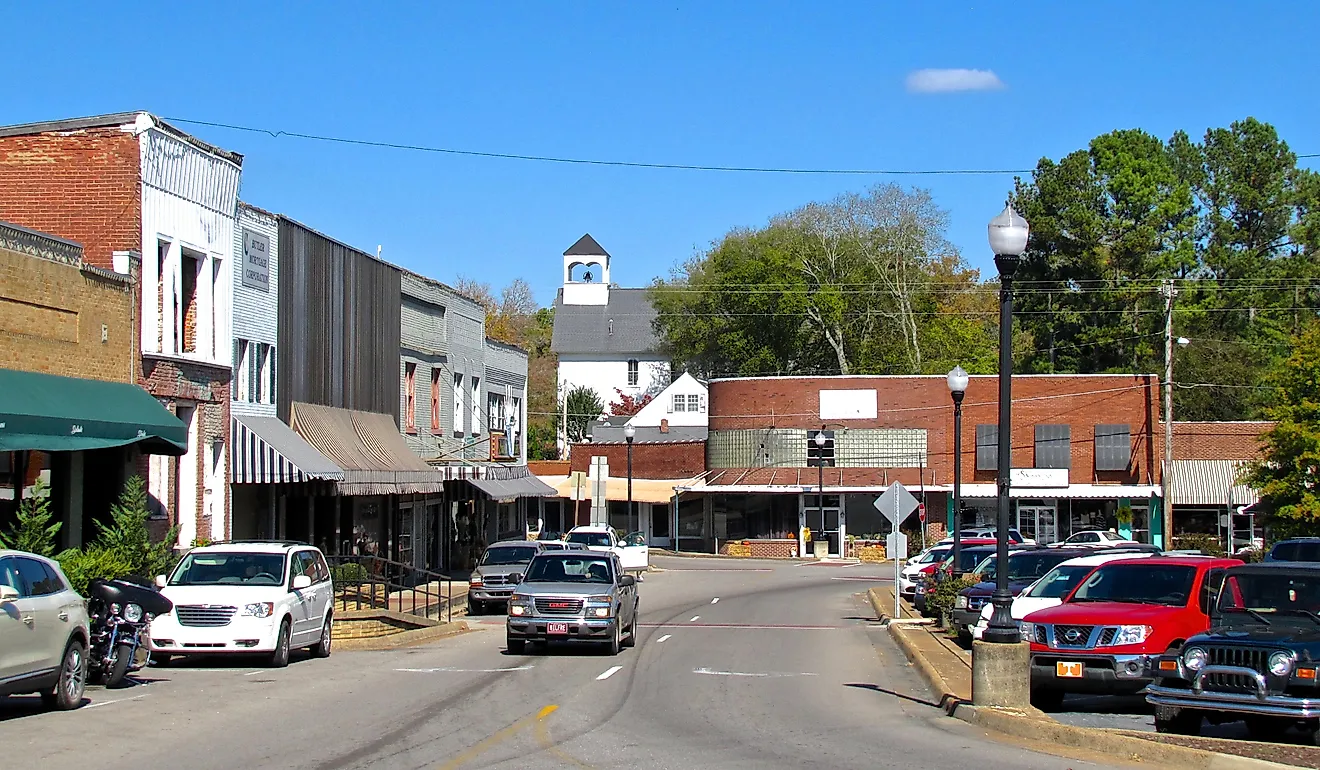
The downtown strip in Madison holds visual cohesion through its brick sidewalks, preserved storefronts, and consistent architectural pattern that extends across multiple blocks. Buildings maintain their original proportions rather than modern infill, keeping sightlines uninterrupted.
Beyond its preserved streetscape, the Heritage Hall tour moves visitors through interiors that reflect antebellum design choices, offering a closer look at the details behind the town’s architecture. Nearby, the Madison-Morgan Cultural Center rotates exhibits and hosts performances in a restored Romanesque Revival school building, providing downtown with a steady cultural anchor.
Outdoor time tends to center around the nearby Hard Labor Creek State Park, where hiking trails, lake access, and golf course views sit only a short drive from the square. The Madison in May Spring Tour of Homes opens historic residences for self-guided walking tours. During the annual Madison Fest, Town Park hosts music and vendors to kick off the spring season. Just blocks away, antique shops occupy deep, multi-room interiors, and cafés maintain steady foot traffic along shaded sidewalks. The historic district extends well beyond the commercial core, reinforcing continuity between residential and downtown space.
Perry

Perry’s appeal outside of festival season comes from how consistently its downtown and surrounding spaces stay in use. Carroll Street forms the backbone of daily activity, where brick storefronts house antique shops, small boutiques, and locally owned cafés that often change their inventory to reward repeat visits. The street reads as a continuous corridor rather than a scattered retail strip, helped by mature trees that shade sidewalks and soften the edges of the historic blocks.
The Perry Area Historical Museum adds context to that setting with exhibits focused on railroads, agriculture, and everyday life in Houston County. Just a few minutes away, Rozar Park is a center for recreation with walking trails, sports fields, and shaded picnic areas that stay busy with local use, youth sports practices, afternoon walks, and informal gatherings.
The activity in Perry centers around the Georgia National Fairgrounds & Agricenter, which draws steady waves of visitors into town for events that extend into downtown restaurants and shops. The Georgia National Fair brings rides, livestock shows, and concerts that spill energy outward without overwhelming the smaller-scale streets.
The Perry Dogwood Festival highlights one of the town’s most visible seasonal features, the dogwood blooms that frame sidewalks, medians, and neighborhood streets in soft white and pink each spring. Larger outdoor recreation areas like the Ocmulgee and Oconee Rivers sit just beyond town, with nearby access to regional parks that support hiking trails, fishing spots, and kayaking routes.
Dahlonega

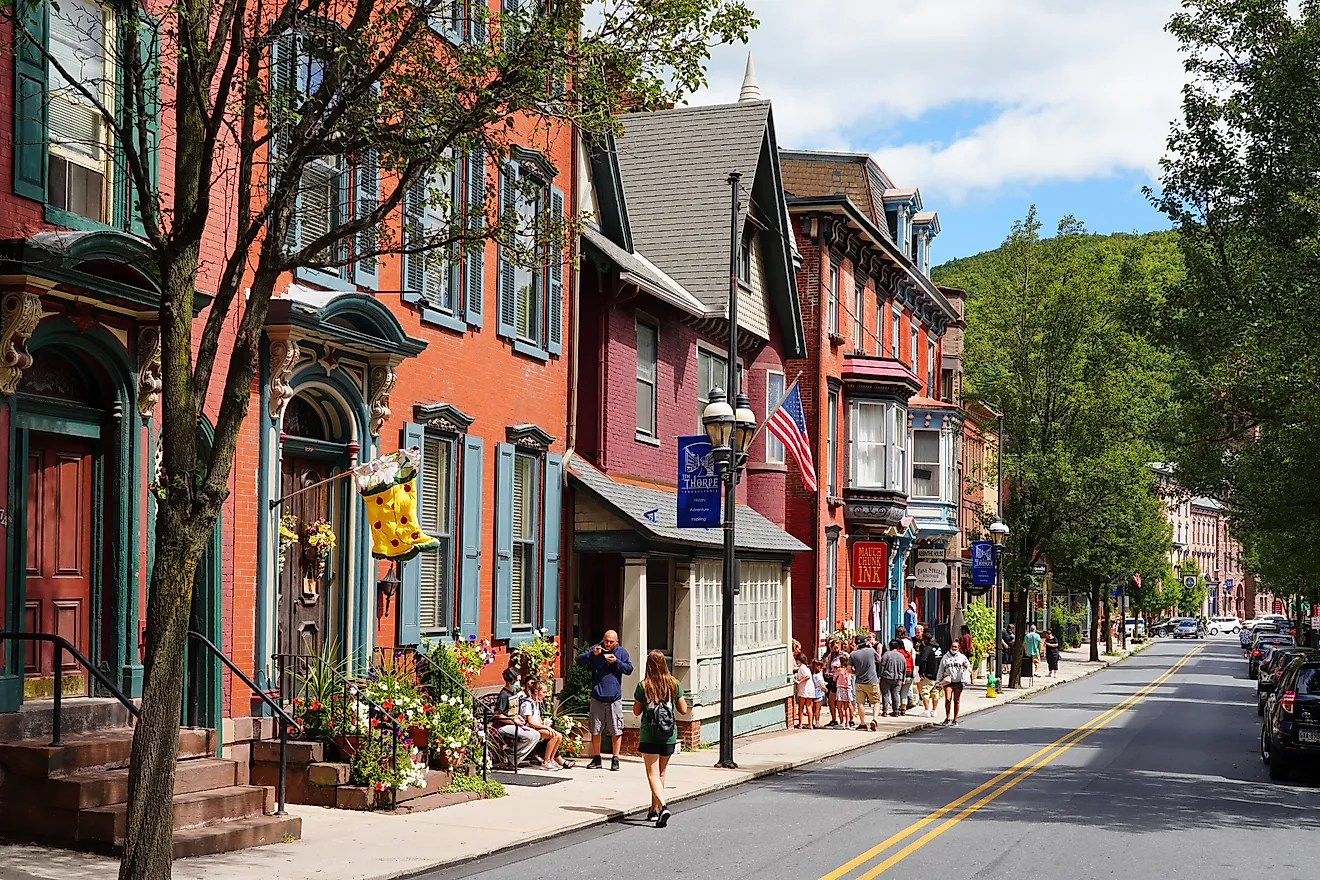
The downtown square in Dahlonega carries its appeal in the low, historic buildings wrapped tightly around a courthouse that sits at the center like an anchor rather than a monument. Brick sidewalks, hanging signs, and uneven storefront lines create texture without visual clutter, and the slight angles of converging streets keep sightlines constantly shifting toward the square.
In the spring, the Bear on the Square Mountain Festival fills porches and sidewalks with bluegrass music that drifts between storefronts instead of being confined to stages. In the fall, the Gold Rush Days Festival extends the compact grid with vendors and crowds, yet the courthouse remains visible from nearly every point, preserving the square’s visual structure.
Year-round, the Dahlonega Gold Museum inside the old courthouse enhances the setting with its preserved interior, tying directly into the architecture that surrounds it. A short walk away, the Consolidated Gold Mine extends the experience underground, reinforcing how the town’s history shaped both surface streets and subsurface tunnels. Wine tasting rooms and small restaurants fill gaps between historic buildings. The surrounding Blue Ridge foothills sit just beyond the edges of downtown, visible from side streets and reinforcing the feeling that the town is set in a natural basin rather than expanding outward.
Blue Ridge

Low-rise buildings, open sidewalks, and uninterrupted views of the surrounding mountains define the downtown corridor in Blue Ridge. The railroad tracks running through the center introduce movement without disrupting the street grid. The September Blue Ridge Blues and BBQ Festival spreads live music across downtown, while Light Up Blue Ridge takes place during the holiday season and features Christmas lights, a tree lighting, and a parade.
Art galleries, like the Blue Ridge Mountains Arts Association & Art Center, showcase regional artists from North Georgia and the Appalachian region, with rotating exhibits in painting, pottery, fiber arts, photography, and mixed media. Several privately run galleries function in a similar community-focused way, often occupying restored historic storefronts that preserve the scale of the original downtown.
Visitors often spend time at places like Blue Ridge Scenic Railway, which runs excursions along the Toccoa River and through surrounding mountain terrain, or browse local goods at Mercier Orchards, a working orchard known for its bakery items and cider tastings, where people can pick in-season fruit. Small restaurants and outfitters blend into the same streetscape, keeping activity evenly distributed. As seasonal foot traffic shifts with festivals and leaf season, mountain ridgelines remain visible from multiple vantage points, keeping the natural landscape present year-round in downtown.
Helen

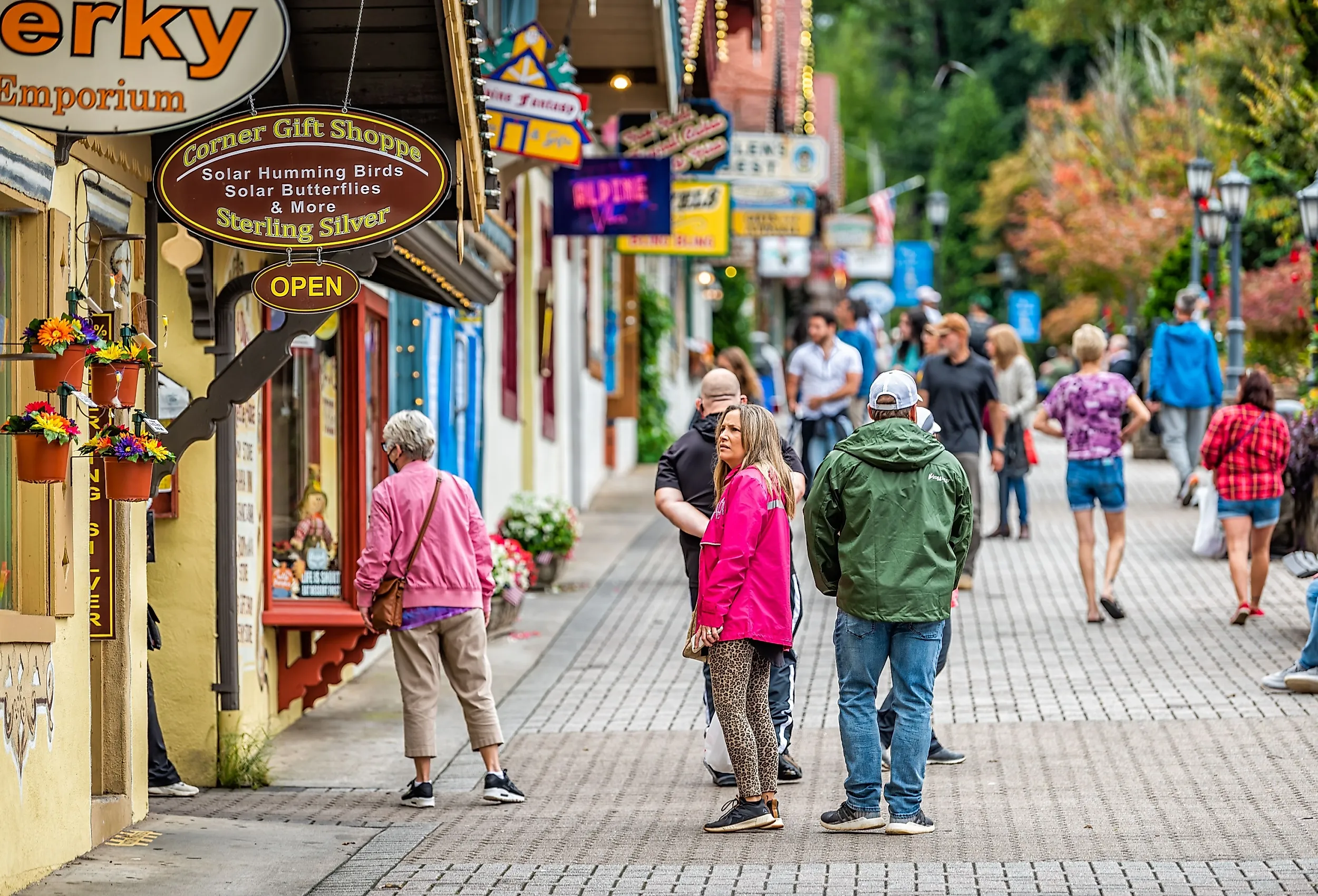
The downtown’s visual appeal comes from Helen’s commitment to Bavarian village design, with steep gabled roofs, timber framing, stucco walls, and painted detailing. That consistency turns the entire corridor into a single architectural scene rather than a mix of styles, with even the signage and balconies designed to match the alpine theme. The Chattahoochee River runs straight through this town, adding constant movement and reflection between tightly packed buildings.
The Helen Oktoberfest fills the same streets with music halls, parades, and traditional food stalls, supporting the existing Bavarian setting rather than altering it. In winter, the Helen Christkindlemarkt lines the riverwalk and sidewalks with lights and wooden vendor huts, drawing attention to rooflines and decorative trim.
Beyond festivals, visitors can tube the Chattahoochee River directly through downtown, passing under footbridges and alongside storefronts in a continuous flow of activity. Unicoi State Park sits just minutes away, offering hiking trails, a lake for kayaking, and access to Anna Ruby Falls. Downtown itself includes specialty German restaurants, bakeries, and beer gardens that reinforce the theme through food and atmosphere rather than decoration alone. Shops sell imported-style goods, ornaments, and crafts that continue the alpine aesthetic indoors.
Senoia

The downtown strip carries Senoia’s visual appeal with the consistency of low brick buildings, evenly scaled storefronts, and a tight street grid that avoids visual clutter. Facades sit close to the sidewalk, creating an enclosed corridor with clear sightlines, while mature trees soften the edges of the commercial core. The Senoia Alive After Five events extend activity into the evening with live music and late shop hours, allowing movement to stay concentrated within a few walkable blocks. During the Senoia Candlelight Tour of Homes around the holidays, residential streets open to visitors to showcase decorated homes in the downtown historic district.
Beyond events, the Senoia Area Historical Society Museum provides detailed exhibits on local history, photography, and regional development, all housed in a restored historic structure. Film tours tied to productions like The Walking Dead run through the same streets, offering guided activities. Small art galleries and rotating exhibits appear within existing storefronts, contributing to the easy downtown flow. The Art Escape, a community art studio and workshop, gives visitors a place to take classes and create art.
Rome

Downtown Rome draws its character from geography. Three rivers meet near the center, and bridges, hills, and street grids layer together into a setting with constant shifts in elevation and perspective. Broad Street runs long and continuously, lined with historic storefronts that maintain consistent scale, while views open toward the water at regular intervals.
The Rome International Film Festival in November activates multiple downtown theaters, restaurants, and public spaces rather than concentrating it in one block. During the Rome River Jam in the summer, attention shifts toward music as big-name stars fly in to perform among the open green spaces.
Along the water, the Rome Riverwalk runs as a parallel path, connecting parks, bridges, and overlooks without leaving downtown. Between those points of interest, restaurants, coffee shops, and boutiques line Broad Street in an unbroken stretch. Movement shifts naturally between elevated viewpoints, street-level storefronts, and river edges, giving the downtown a structure shaped by both terrain and architecture.
Darien

Darien’s downtown gains its visual identity from direct exposure to the coast, where open sky and waterfront views keep the horizon wide and unobstructed. Shrimp boats dock within sight of the main streets, and marshland edges frame the town rather than separating it from the water. Each spring, the Blessing of the Fleet centers on the shrimping industry, with decorated boats and waterfront gatherings that keep activity tied to the river. The connection continues during the Altamaha Seafood Festival, where food vendors and music line the docks.
Just outside the downtown core, the Fort King George State Historic Site presents reconstructed buildings and exhibits that highlight the area’s early history. Waterfront restaurants and small local shops line the streets closest to the docks on the Altamaha River, where daily activity revolves around tides, fishing, and boating schedules. The downtown remains open and lightly built, with wide gaps between structures and clear sightlines to the river, where tidal shifts, working boats, and the surrounding marshland shape daily activity.
Bainbridge

Bainbridge’s downtown stands out through the contrast of a structured town square and an expansive riverfront, which creates two distinct visual environments within a short walk. Willis Park forms the center, framed by consistent brick buildings and civic spaces, while the Flint River opens into wide, unobstructed views.
The River Town Days festival in March links these two areas, spreading vendors, music, and activity between the square and the riverwalk. Running along the water’s edge, the Flint Riverwalk connects parks, docks, and overlooks within minutes of the commercial core. A short drive extends that experience to Lake Seminole, known for boating and bass fishing that draw steady regional traffic.
Closer to downtown, the Decatur County Historical and Genealogical Society Museum tells the story of the region with exhibits on local agriculture, railroads, and early settlement. Historic homes and preserved buildings carry that same architectural character outward from the square, reinforcing continuity between the civic center and surrounding neighborhoods.
Douglas

Downtown Douglas relies on clarity and structure. Straight streets, closely spaced buildings, and uninterrupted storefront lines create a compact grid that is easy to navigate and visually coherent. There are few gaps or abrupt changes in scale, allowing the entire district to be read at a glance.
A defining landmark is the Heritage Station Museum, where preserved architecture frames exhibits tied to local history. The building adds a strong visual appeal to the downtown grid, contrasting with the surrounding storefront rhythm. Activity spreads evenly through the street grid during the Gopher Tortoise Festival in the fall, with vendors, performances, and community events occupying multiple blocks rather than clustering in a single space.
Live programming moves into focus at the Martin Centre, which introduces concerts, theater, and community events that extend activity into evening hours across the downtown core. Everything sits within a short walking distance, and the emphasis on layout and accessibility shapes the downtown more than decorative elements or large-scale attractions.
The Character of Georgia’s Small Towns
Across these downtowns, the most consistent thread is how close activity remains tied to place. In Darien, open streets and waterfront views shift with the marsh and tides, while in Bainbridge, the Flint Riverwalk connects a defined square to broad stretches of the river beyond. In Perry, everyday movement along Carroll Street flows naturally into larger regional activity at the Georgia National Fairgrounds and Agricenter. The result links local and regional rhythms within the same frame.
What varies is how each of these 10 towns organizes that relationship between the city center and the surrounding area. Dahlonega concentrates festivals and daily life around a compact courthouse square, while Blue Ridge extends activity across a corridor shaped by mountain views and railroad lines. In Helen, a unified architectural theme carries everything from river tubing to seasonal markets through a single, cohesive setting.
Taken together, these towns reflect a broader pattern in Georgia’s smaller downtowns: places where structure, landscape, and everyday use align in ways that give each one a distinct sense of character and visual appeal without relying on size.