10 Offbeat Mississippi Towns To Visit In 2026
Mississippi's backroads have produced some improbable claims to fame, like Leland, which bills itself as the birthplace of Kermit the Frog. Belzoni crowns itself the catfish capital of the world, and Flora guards a stand of trees that turned to stone millions of years ago. Kermit is not even the strangest origin story here, since Rolling Fork ties the teddy bear's invention to a 1902 Theodore Roosevelt bear hunt in the surrounding Delta.
Leland

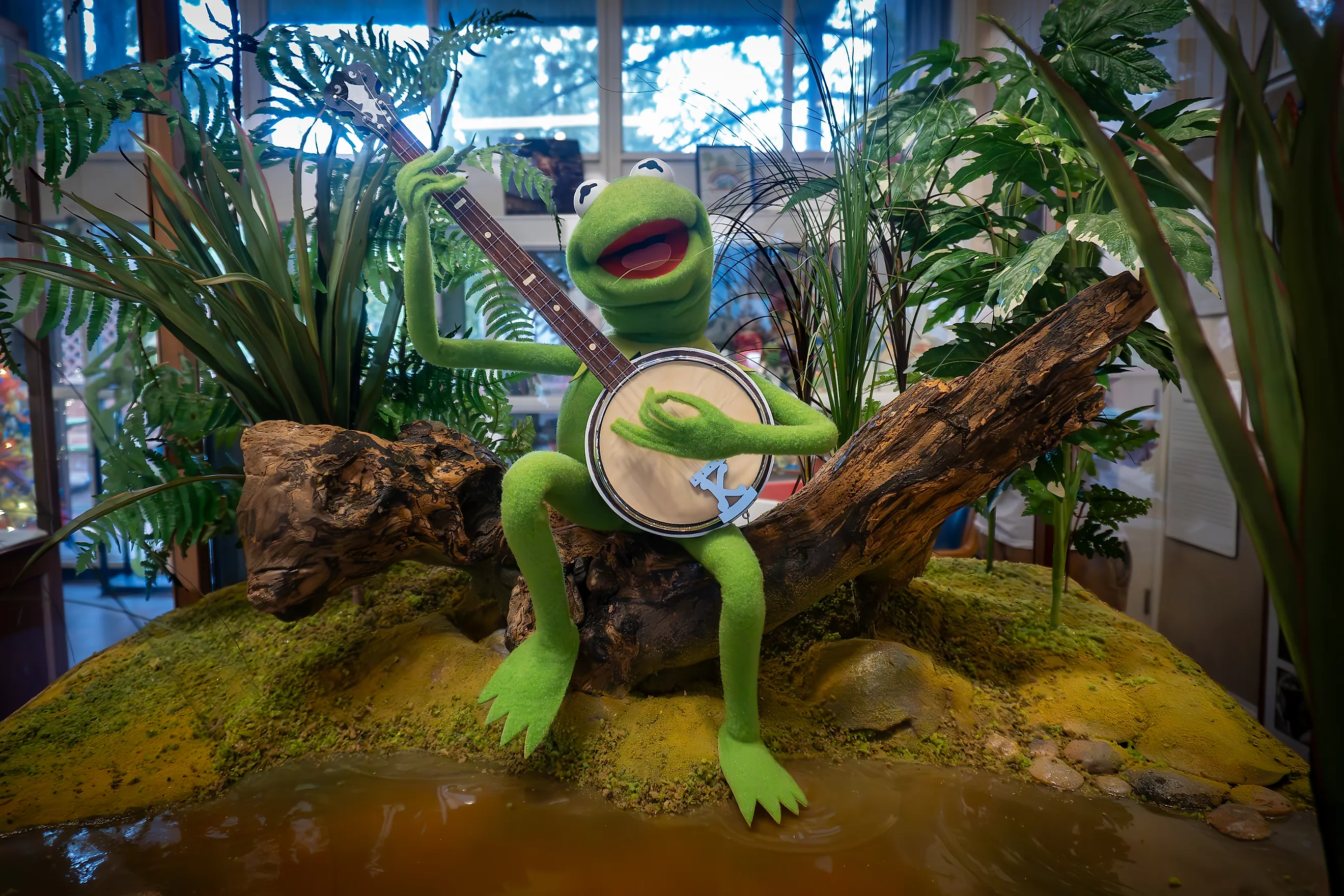
Leland proudly claims to be the birthplace of Kermit the Frog. Creator Jim Henson spent part of his childhood here, and the town celebrates that connection at the whimsical Jim Henson Delta Boyhood Exhibit. Visitors can learn about Henson's early life and see exhibits dedicated to his legendary creations.
Leland also sits deep in the Mississippi Delta, making it a useful base for blues history in a quiet small-town setting. Downtown's colorful Kermit-themed murals and public art add playful photo stops throughout the community. Nearby Highway 61, the "Blues Highway," connects many of the Delta's best-known music landmarks.
Port Gibson

Civil War history is everywhere in Port Gibson, but the town's strangest landmark is the golden hand pointed toward heaven atop First Presbyterian Church. Local legend says General Ulysses S. Grant admired the town so much during the Civil War that he declared it "too beautiful to burn."
Nearby Windsor Ruins add a memorable stop. The towering columns are all that remain of one of Mississippi's grandest antebellum mansions after a fire destroyed the home in 1890. Just outside town, Grand Gulf Military Park preserves Civil War fortifications, earthworks, and historic buildings.
Indianola

Few small towns have had a stronger connection to American music than Indianola. The B.B. King Museum celebrates the legendary blues musician through interactive exhibits and tells the broader story of Delta blues. It sits inside a restored brick cotton gin where King worked as a young man, and a later wing displays one of his touring buses.
B.B. King's gravesite sits beside the museum, a quieter stop alongside the exhibits. Blues-inspired murals run through Indianola's downtown as street-level tributes to the local musical heritage. Historic Club Ebony, now museum-owned, hosted King's annual homecoming concerts and still books occasional live acts.
Ocean Springs

Ocean Springs has built a reputation as Mississippi's artistic seaside town. Colorful galleries, murals, and independent boutiques line the walkable downtown streets near the Gulf Coast.
Among its signature events is the Peter Anderson Arts & Crafts Festival, one of the largest outdoor art shows in the Southeast. Every fall, hundreds of artists fill downtown. The coastal community turns into an open-air gallery. The Walter Anderson Museum of Art celebrates the Mississippi artist with exhibits inspired by Gulf Coast wildlife and landscapes. Visitors can also wander the Shearwater Pottery grounds, where generations of Anderson family artists have created distinctive ceramics for nearly a century.
Bay St. Louis

Bay St. Louis blends Gulf Coast scenery with an easygoing Old Town district. Brightly colored cottages, independent galleries, and waterfront restaurants give the town a relaxed personality distinct from Mississippi's larger coastal communities.
The annual Crab Festival celebrates one of the Gulf's signature seafood traditions with live music, arts vendors, and fresh local crab. The Alice Moseley Folk Art Museum adds a colorful stop, showcasing the paintings of one of Mississippi's best-loved self-taught artists. The historic train depot, built in 1928, now houses the area visitors' center and the Mardi Gras Museum.
Flora

Flora looks like a quiet rural town, but it holds one of Mississippi's most unexpected attractions: the Mississippi Petrified Forest. Visitors can follow the self-guided forest trail past ancient stone logs formed from trees that washed into an old river channel millions of years ago. The grounds earned National Natural Landmark status in 1965.
The site's Earth Science Museum explains the forest's geology and displays fossils, minerals, and petrified wood from Mississippi and beyond. Highlights include dinosaur footprints, whale bones, and a cast of a prehistoric camel. Gem mining activities let visitors search for colorful stones and fossils.
Holly Springs

Holly Springs has a large collection of preserved antebellum homes, many of which survived the Civil War. Their columns, porches, and landscaped grounds give the town one of north Mississippi's most distinctive architectural settings.
Each spring, the Holly Springs Pilgrimage opens private historic homes to visitors. The event gives travelers a rare chance to step inside residences usually closed to the public. Along the way, they learn about the families who had an impact on the town's history. History enthusiasts can also visit Hill Crest Cemetery, where Victorian monuments and notable graves deepen the sense of history.
Belzoni

Belzoni proudly calls itself the "Catfish Capital of the World." Giant catfish statues around town make for playful photo stops. They also nod to Mississippi's aquaculture industry. The Catfish Museum and Visitors Center covers that heritage in more depth, with exhibits on the region's fish-farming history.
The World Catfish Festival adds a quirky reason to visit. Each year, the event brings a catfish-eating contest, pageants, arts-and-crafts vendors, children's activities, and live music to town. Wister Gardens adds a quieter stop, with flower beds, shaded paths, and a small-town garden setting just beyond the catfish-themed landmarks.
Mound Bayou

Mound Bayou holds a remarkable place in American history as one of the nation's earliest all-Black incorporated towns. Founded in 1887 by formerly enslaved people seeking economic independence and self-governance, the town carries a story far larger than its size would suggest.
Visitors interested in civil rights and African American history will find heritage sites tied to one of Mississippi's most important Black communities. The Mound Bayou Museum of African American History and Culture preserves photographs, documents, and artifacts that chronicle the town's extraordinary growth. Peter's Pottery is worth a stop too, a working studio with national recognition for its Delta-inspired ceramics.
Rolling Fork

Rolling Fork is best known for its connection to Theodore Roosevelt's 1902 bear hunt, the story that helped inspire the teddy bear. The surrounding Delta landscape gives the town a strong outdoor identity. Carved bear figures and local heritage stops reinforce its link to that unusual piece of American pop-culture history.
The town also works as a starting point for exploring the Mississippi Delta, where back roads, agricultural landscapes, and blues history shape the setting. The nearby Theodore Roosevelt Visitor Center near Onward interprets the bear-hunt story and Delta wildlife, though the refuge lands themselves remain closed to public visitation. The actual hunt took place in the countryside near Onward, north of town, where a roadside marker stands along a quiet stretch of Delta road.
Mississippi Small-Town Stories Worth the Detour
Mississippi's offbeat towns turn small claims to fame into memorable stops. Leland honors Jim Henson with Kermit-themed landmarks, Belzoni decorates its streets with giant catfish, Flora preserves a petrified forest, and Mound Bayou tells a powerful story of Black self-governance. Rolling Fork adds one of the strangest connections of all, where a 1902 bear hunt helped give the teddy bear its name.