11 Stunning Small Towns In Texas
Texas is full of stunning small towns, from the limestone hills and spring-fed creeks of the Hill Country to the wide-open deserts of West Texas and the breezy Gulf Coast. In Marfa, contemporary art sits against open desert in a way that feels inseparable from the town itself, while in Wimberley, clear spring-fed water and cypress shade define a quieter Hill Country rhythm. Fredericksburg carries its German roots into a busy Main Street, and towns like Rockport show how closely life along the coast can still be tied to the waterfront. These 11 small towns are some of the most beautiful in the state.
Port Aransas

Located on Mustang Island along the Gulf Coast, Port Aransas is a small beach town shaped by water, wildlife, and a long-standing fishing culture. While the shoreline gives it its most visible identity, the town is not defined by the beach alone. Marshes, birding areas, and local history all contribute to a place that feels more layered than a simple resort stop.

The broad stretch of Port Aransas Beach remains the town’s central draw, bringing swimmers, anglers, and beachgoers to the edge of the Gulf. That coastal environment continues at the Leonabelle Turnbull Birding Center and the Nature Preserve at Charlie’s Pasture, where boardwalks and wetland trails highlight the island’s ecological side. The Port Aransas Museum adds historical depth by tracing the community’s roots in fishing, shipping, and island life. Together, these places show that Port Aransas is as much about its surrounding environment as it is about time spent on the sand.
Fredericksburg

Deep in Texas Hill Country, Fredericksburg is one of the state’s best-known small towns, recognized for its German heritage, scenic surroundings, and active downtown. Founded in 1846 by German immigrants, it still reflects that history through its architecture, food, and traditions. At the same time, its popularity today owes just as much to its landscape and cultural life as to its past.

A walk along Main Street reveals boutiques, galleries, and tasting rooms set within historic buildings that give the town much of its character. The National Museum of the Pacific War offers an extensive and carefully developed look at World War II history, adding a major cultural institution to a town of modest size. Outside town, Enchanted Rock State Natural Area draws hikers and sightseers to its massive pink granite dome and wide Hill Country views. The surrounding Texas Hill Country Wineries further shape Fredericksburg, helping make it one of the region’s best-known destinations for wine tourism.
Marfa

Set against the open landscape of West Texas, Marfa has built an international reputation that far exceeds its size. Originally established as a railroad water stop in the late nineteenth century, the town now draws visitors with its unusual combination of minimalist art, historic architecture, and desert atmosphere. Its remoteness is part of the appeal, giving Marfa a distinct sense of space that shapes nearly every part of the visitor experience.

That relationship between art and landscape is most visible at The Chinati Foundation, where large-scale contemporary installations are spread across a former military site. In the center of town, the Presidio County Courthouse remains one of Marfa’s most prominent historic landmarks, linking the community’s artistic present to its older identity. Beyond town, the Marfa Lights Viewing Area continues to attract visitors intrigued by the unexplained lights associated with the region, while Prada Marfa, located northwest of town, has become one of West Texas’s best-known roadside art installations.
Jefferson

In East Texas near the Louisiana border, Jefferson remains closely tied to its nineteenth-century past. Once a major riverport during the steamboat era, it developed into an important commercial center, and much of that earlier prosperity is still visible in its architecture. The town now feels like one of the state’s most complete historic settings, with its older identity still defining the experience of walking through it.

The Jefferson Historic District preserves homes and buildings that reflect the town’s earlier prominence as a river trade hub. The Historic Jefferson Railway remains part of the town’s identity, recalling an earlier era of excursion travel and adding to Jefferson’s period atmosphere. Scarlett O’Hardy’s Gone With the Wind Museum offers one of the town’s more unusual attractions, while the Excelsior House Hotel, the oldest hotel in Texas, provides a direct link to Jefferson’s long history.
Dripping Springs

Less than an hour west of Austin, Dripping Springs is one of the Hill Country’s most familiar destinations, known for its natural attractions and open landscapes. Although it is often approached as a day trip, the town works best as a base for exploring a wider cluster of parks, preserves, and scenic sites nearby. That broader setting gives it more range than a single famous swimming hole might suggest.

The area’s best-known landmark is Hamilton Pool Preserve, where a collapsed grotto and waterfall create one of the region’s most recognizable landscapes. In town, Dripping Springs Ranch Park reflects the area’s rural character through event grounds and open space. Nearby, Westcave Outdoor Discovery Center offers guided access to a sheltered canyon and grotto, while Pedernales Falls State Park, also a short drive away, expands the experience with trails, limestone riverbeds, and broader Hill Country scenery.
Rockport

Along the Texas Gulf Coast, Rockport has long drawn visitors with its waterfront setting and creative community. It feels quieter than some nearby coastal destinations, but that slower pace is part of what defines it. Rather than relying on a single attraction, Rockport’s appeal comes from the way its shoreline, arts scene, and maritime background work together.

That side of Rockport comes through clearly at Rockport Beach Park, where the clean, family-friendly waterfront helps define the town’s easy pace. The Rockport Center for the Arts reflects the town’s long connection to painters and makers, while the Texas Maritime Museum places it within the broader history of the Texas coast. A short drive away, Aransas National Wildlife Refuge extends that picture into the marshes and habitats that shape the surrounding area.
Salado

Located between Austin and Waco, Salado is a small village known for its artistic community and historic character. Established in the mid-nineteenth century, it retains a slower pace that sets it apart from nearby larger destinations. Its appeal comes less from any one attraction than from the way the town’s heritage, local businesses, and natural features overlap.
The Salado Historic District brings together preserved buildings, galleries, and locally owned shops in a compact area that reflects the village’s identity. The Stagecoach Inn remains one of Salado’s best-known landmarks and connects the town to its earlier role as a stopping point for travellers. Nearby, the Salado Sculpture Garden places outdoor works in a natural setting, while Salado Creek winds through town, adding another scenic element to the village center.
Alpine

In the high desert of West Texas, Alpine serves as both a destination in its own right and an entry point to the wider region. Its elevated setting, open skies, and relative quiet give it a different feel from some of the better-known stops nearby. For many visitors, Alpine works as an introduction to the scale and character of far West Texas.

One of its biggest advantages is its proximity to Big Bend National Park, where mountains, desert terrain, and stretches of the Rio Grande define one of the state’s most dramatic landscapes. Within town, the Museum of the Big Bend offers a strong introduction to the region’s history, geography, and culture. Kokernot Field, a historic baseball stadium, adds an unexpected landmark and is often noted for its scenic location. The broader Texas Mountain Trail region further connects Alpine to heritage sites and drives that reveal West Texas's distinct character.
Granbury

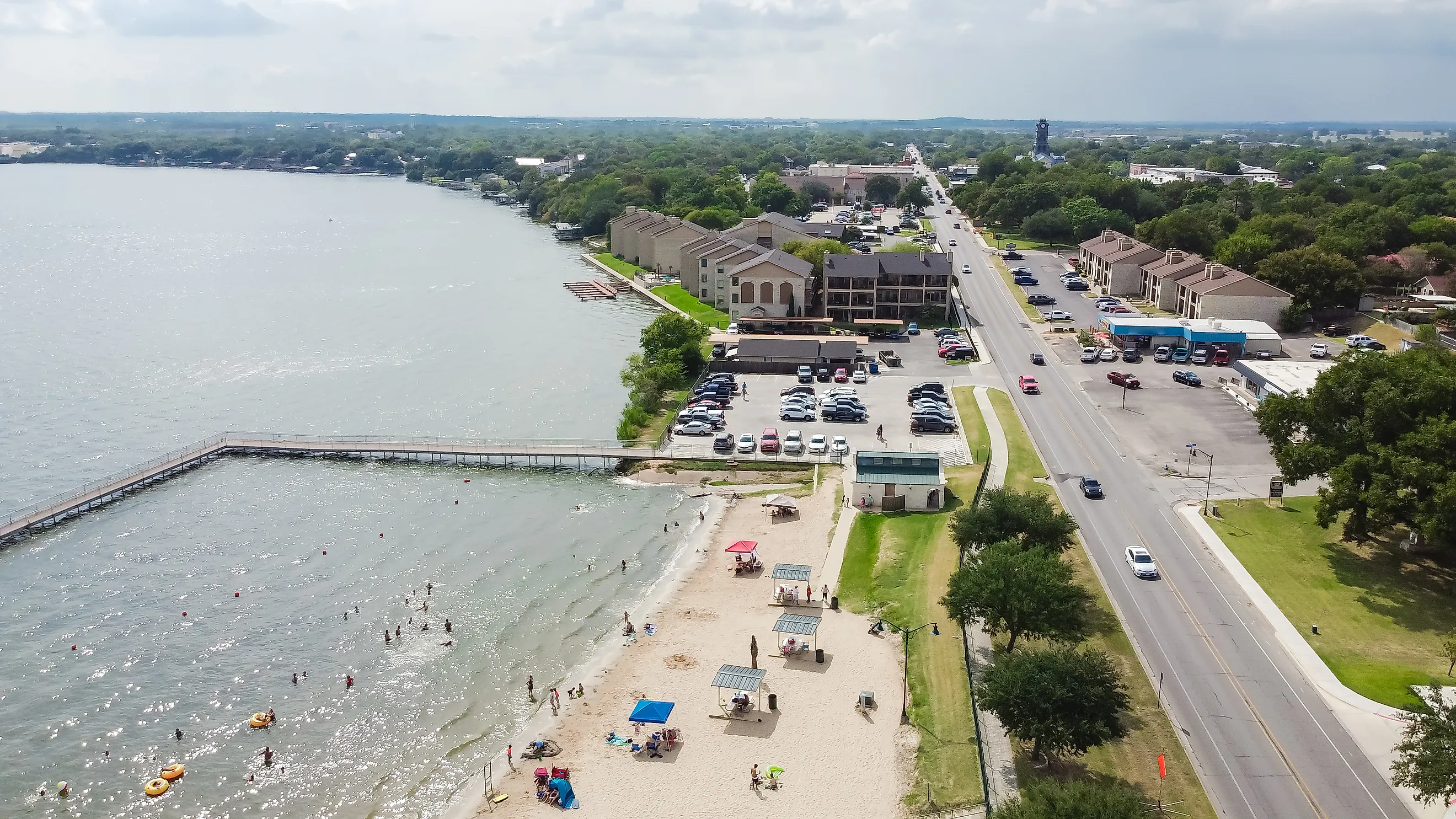
Southwest of Fort Worth, Granbury combines a well-preserved historic center with a prominent waterfront setting. That pairing gives it broader appeal than a typical courthouse-square town, since the experience shifts easily between downtown activity and the lake. The result is a place where history and leisure feel closely connected rather than separate.

The center of town is the Granbury Square and Historic District, where the Hood County Courthouse anchors a compact downtown lined with restaurants, shops, and older commercial buildings. The nearby Granbury Opera House reinforces that sense of an active public center rather than a purely preserved one. A short distance away, Lake Granbury opens the setting outward with boating, fishing, and waterfront views, while the Granbury Doll House Museum adds one of the town’s more unusual attractions.
Boerne

Just northwest of San Antonio, Boerne offers a Hill Country setting that remains accessible without losing its small-town identity. Its center is active and walkable, but the town also serves as a starting point for caves, trails, and open landscapes nearby. That combination gives Boerne a broader character than a shopping district alone would suggest.

The Hill Country Mile shapes the center of town with historic storefronts, galleries, and restaurants that keep the downtown lively. From there, Cibolo Nature Center and Herff Farm offers a more natural side of Boerne through trails crossing wetland, prairie, and woodland habitats. Cascade Caverns, located just outside town, adds another layer through guided tours of underground formations, while the AgriCultural Museum & Arts Center ties the community back to the farming traditions that shaped the surrounding area.
Wimberley

In the Texas Hill Country, Wimberley is shaped by clear water, limestone hills, and a compact town center. With Cypress Creek and the Blanco River close by, it has long drawn people looking for a slower pace and easy access to the outdoors. The town feels unhurried, with natural scenery and a small but visible creative presence shaping its character.

That balance begins with Jacob’s Well Natural Area, one of the region’s most recognizable spring-fed swimming spots. Nearby, Blue Hole Regional Park offers another inviting stretch of water beneath tall cypress trees, along with trails and shaded green space. For a broader view of the surrounding landscape, visitors can climb the stairs in Old Baldy Park, a familiar local landmark overlooking the Hill Country. Back in town, Wimberley Square brings together galleries, boutiques, and markets that reflect the community’s artistic identity.
Why These Small Texas Towns Are Worth the Detour
The biggest cities in Texas may get most of the attention, but these small towns reveal another side of the state. From the desert art of Marfa and Alpine to the waterfront settings of Port Aransas and Rockport, each destination reflects a different combination of history, geography, and local identity. Some preserve riverport and frontier heritage, while others are shaped by galleries, wineries, swimming holes, or coastal wildlife. Together, they show that some of the state’s most memorable places are found well beyond its major urban centres.