10 Best Towns In Utah To Retire Comfortably
Utah's reputation as a retirement destination is well earned. National parks sit within easy reach across the state. The towns on this list have home values at or below the statewide average. Each pairs affordability with recreational access. Cedar City sits near the Utah Shakespeare Festival. The ten communities ahead each combine cost, scenery, and character.
Cedar City

Cedar City consistently earns attention as one of southern Utah's most livable communities, and its housing market reflects that appeal without the price tag of more tourist-heavy towns. The median home value here sits around $403,487, over $110,000 below the state average. The town is home to the Utah Shakespeare Festival, a Tony Award-winning theater company that has operated on the campus of Southern Utah University since the 1960s. The festival runs three performance venues and draws visitors from across the country each season. Cedar Breaks National Monument sits just 20 miles from town at over 10,000 feet elevation, where a half-mile deep geologic amphitheater carved into the Markagunt Plateau offers hiking, wildlife, and some of the darkest skies in the Southwest. History enthusiasts will find the Frontier Homestead State Park Museum worth an afternoon, preserving the Iron County region's pioneer era history through an extensive collection of horse-drawn wagons, historic buildings, and exhibits on early iron production in Utah.
Logan

Logan sits at the northern end of Cache Valley and offers one of the lowest median home values of any mid-sized Utah city, approximately $391,667. Logan offers outdoor access and cultural amenities that are significantly better than what one would expect for a town of its size. Logan's Summer Citizens Program has welcomed nearly 600 seniors from across the country for nearly 50 years, offering Utah State University courses, local arts programming, hiking, and community events every summer. Hundreds of seniors already call Cache Valley a summer home, demonstrating Logan's high quality of life for those looking to settle down. The Logan Canyon National Scenic Byway begins just east of downtown and winds 41 miles northeast through limestone canyon walls dating back 500 million years, ending at Bear Lake on the Utah-Idaho border. The byway passes through campgrounds, fishing access points, and hiking trailheads year-round, with outstanding fall foliage. History and heritage fill the valley as well.
The American West Heritage Center, a nonprofit organization located in nearby Wellsville, operates a living history farm interpreting Cache Valley life between 1820 and 1920. Its programming includes Mountain Man Rendezvous events, seasonal celebrations, and guided farm experiences rooted in the region's pioneer and fur trade heritage. The center sits at the foot of the Wellsville Mountains and also features the Cache Valley History Museum. Logan also hosts Utah State University, giving the community an intellectual energy and arts calendar typical of much larger cities.
Vernal

Vernal is one of the most affordable towns in Utah, with a median home value of approximately $290,521, roughly half the state average. It sits in the Uinta Basin, and what it lacks in metropolitan amenities, it more than compensates for in geological spectacle and outdoor access. Dinosaur National Monument covers over 210,000 acres of canyon and river country. Its Quarry Exhibit Hall places visitors face-to-face with over 1,500 dinosaur fossils still embedded in the rock wall where they were discovered.

In town, the Uintah County Golden Age Center provides seniors 60 and older with billiards, weekly bingo, live music and dances, group outings, and daily noon meals. The Utah Field House of Natural History State Park Museum on East Main Street provides an accessible companion experience, with a 22,000 square foot building housing fossil specimens, a fluorescent minerals room, and an outdoor Dinosaur Garden of 17 full-size prehistoric animal replicas. Visitors can touch a 150-million-year-old dinosaur bone in the museum's hands-on exhibits. For those who want lake recreation alongside the paleontology, Red Fleet State Park offers a sandstone reservoir setting where hiking trails lead to 200-million-year-old dinosaur tracks preserved in Navajo sandstone.
Kanab

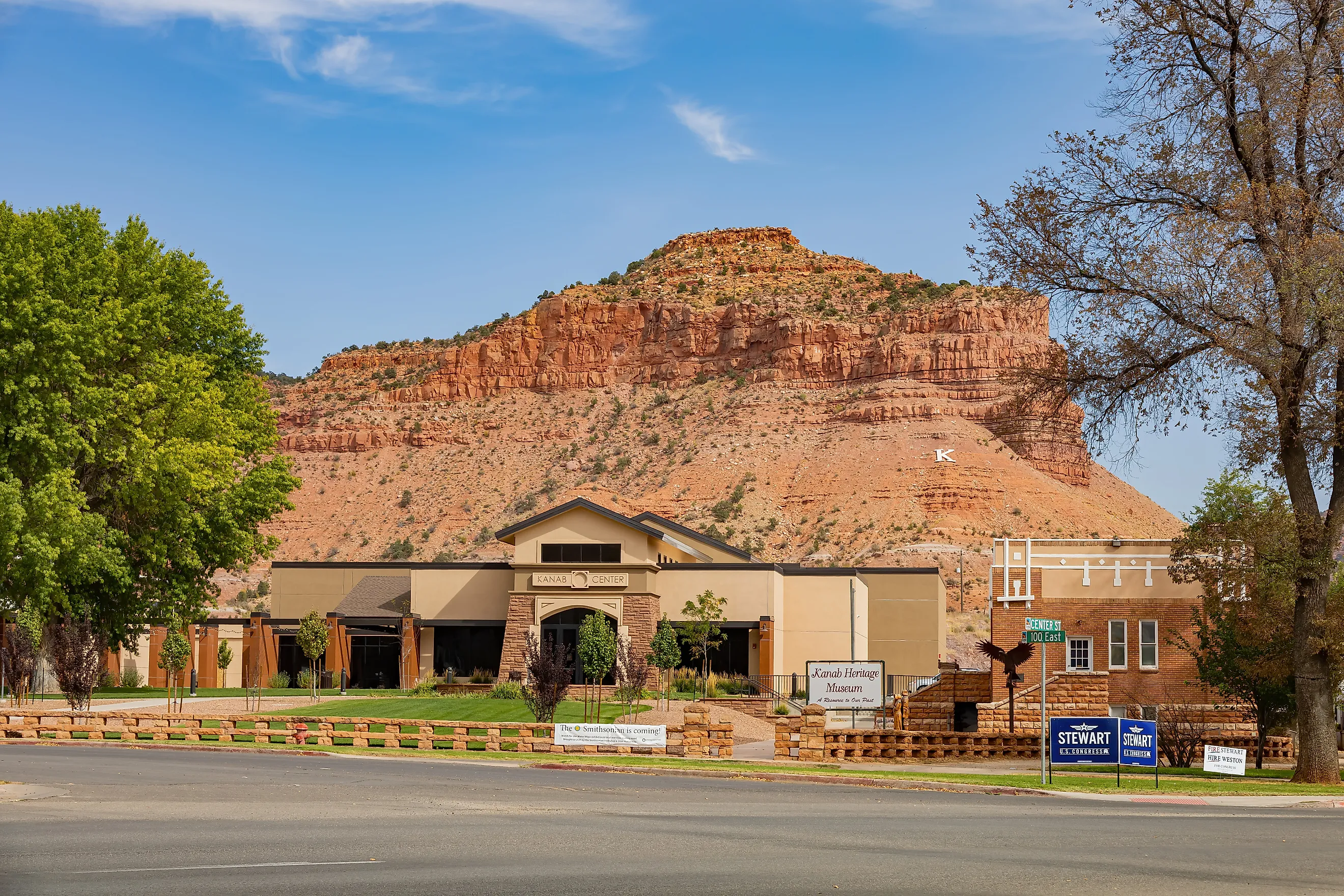
Kanab occupies an extraordinary geographic position in southern Utah, with the North Rim of the Grand Canyon and Lake Powell. Its median home value of approximately $432,201 makes it one of the more affordable entry points in this part of the state. Best Friends Animal Sanctuary operates a robust volunteer program across its 5,800-acre Angel Canyon campus, offering visitors a structured and meaningful way to spend their time caring for animals and participating in guided tours. Just five miles north of town, the sanctuary is open all year round. The Grand Staircase-Escalante National Monument covers nearly 1.9 million acres of canyon, plateau, and badland terrain. The BLM's Kanab Visitor Center on Highway 89 serves as the primary information hub for planning trips into the monument's Paria River District.

Just 22 miles west of town, Coral Pink Sand Dunes State Park preserves a rare geological feature, a field of iron-rich Navajo sandstone dunes, estimated to be 10,000 to 15,000 years old, shaped by a natural wind tunnel between the Moquith and Moccasin mountains. The dunes are the only major dune field on the Colorado Plateau and shift as much as 50 feet per year. Five miles north of Kanab, the Best Friends Animal Sanctuary in Angel Canyon operates as the largest sanctuary of its kind in the United States. It houses up to 1,600 animals on any given day and is open for guided tours and volunteer shifts year-round. Kanab is a quiet, character-rich town with remarkable natural surroundings.
Tooele

Tooele sits in the valley west of the Oquirrh Mountains, offering suburban scale and affordability within easy reach of Salt Lake City, with a median home value of approximately $432,504, well below the state median. For retirees who want access to natural landmarks without giving up amenities, Tooele strikes a practical balance. Oquirrh Hills Golf Course has served the community since 1949 and offers an 18-hole public course set in the foothills of the Oquirrh Mountains with a full practice range, pro shop, cart rentals, and county-wide views. The Bonneville Salt Flats spreads across 30,000 acres of hard white salt crust, one of the flattest surfaces on Earth. The flats are listed on the National Register of Historic Places and are open to the public year-round, outside of seasonal salt moisture closures. For hiking in a true wilderness setting, the Deseret Peak Wilderness in the Stansbury Mountains sits just west of Tooele. The U.S. Forest Service describes the 25,508-acre wilderness as ranging between 5,500 and over 11,000 feet in elevation, with trails accessing alpine basins and ridge terrain. The 11,031-foot Deseret Peak is the primary summit, while a wild horse herd occupies Big Creek Canyon within the same range.
Payson

Payson is a small city that has grown steadily while keeping its housing costs meaningfully below the statewide average, at $468,628. The town maintains easy access to both Salt Lake City and the central Utah wilderness. The Payson Senior Center offers daily noon meals for residents 60 and older, alongside weekly activities such as craft activities, wood carving, bingo, and group outings. The Nebo Loop of the Mount Nebo Scenic Byway, designated by the Federal Highway Administration, begins just one mile south of Payson and runs 35 miles through high-alpine terrain to Nephi. The route climbs to over 9,000 feet and delivers views of Utah Valley, the Wasatch Range, and the 11,933-foot summit of Mount Nebo, the highest peak along the Wasatch Front. Six overlooks with viewing scopes are positioned along the route, and the drive is nationally recognized for its fall foliage. The Payson Lakes Recreation Area, around 14 miles from town along the byway, provides paved hiking trails, fishing for rainbow and brown trout, canoeing, kayaking, and a small swim beach on Big East Lake.
Richfield

Richfield is a quiet central Utah agricultural town with one of the most affordable housing markets in the state, with a house median of $329,292, almost $250,000 below the state median, making it a standout option for retirees prioritizing financial comfort alongside recreational access. The Richfield Senior Center provides programming and services for older adults in Sevier County, while Richfield City also operates its own municipal golf course, giving visitors a memorable recreational experience. The Fishlake National Forest, headquartered in Richfield and spanning 1.8 million acres, provides the town's most immediate outdoor asset. Fish Lake, accessible about 40 miles east, is Utah's largest natural mountain lake, sitting at over 8,800 feet of elevation and renowned for trophy-sized lake trout that can exceed 50 pounds. The Lakeshore National Recreation Trail rings the lake's eastern shore, and wildlife, including deer, elk, black bears, and mountain goats, ranges through the surrounding forest.

Twenty-one miles southwest of Richfield, Fremont Indian State Park and Museum preserves the site of the largest known Fremont Indian village ever discovered, unearthed during I-70 construction in the 1980s. The park features thousands of rock art panels, hiking trails, ATV access to the Paiute Trail, and dark sky programming. The museum's indoor exhibits are currently undergoing renovations, with a reopening anticipated in 2026. Capitol Reef National Park lies roughly an hour east, making Richfield a practical base for one of Utah's most undervisited national parks.
Price

Price is one of the most affordable towns in Utah, with a median home value of approximately $310,716. Situated in Carbon County on the edge of the Colorado Plateau, it gives residents straightforward access to some of the most geologically and archaeologically significant public lands in the American West. Carbon Country Club Golf Course is a great recreational spot, with an 18-hole public course set within chiseled mountains and rocky canyon terrain between Helper and Price, featuring a fully stocked pro shop, practice facilities, and an on-site restaurant. Nine Mile Canyon, located nearby and often described by the BLM as "the world's longest art gallery," runs 46 miles through canyon terrain and contains hundreds of Fremont Culture rock art panels, historic homestead remnants, and scenic side canyon hikes accessible to the public at no cost. The canyon is noted for having the largest concentration of prehistoric rock art in North America, with an estimated 1,000 to 10,000 individual images.
Hurricane

Hurricane is a fast-growing southwestern Utah town positioned at the edge of Washington County's red rock landscape, with a median home value of approximately $504,102. The Hurricane Senior Citizen Center offers exercise classes, art classes, computer instruction, entertainment programming, and a daily lunch service, as well as a well-rounded support network for seniors settling into the community. Sand Hollow State Park is one of the most visited destinations in Utah's state park system. The 20,000-acre park centers on Sand Hollow Reservoir's warm blue waters against the red sandstone canyon walls. Boating, swimming, diving, OHV riding across Sand Mountain's 15,000-acre dune field, mountain biking, and equestrian trails all operate within the same park boundary. Quail Creek State Park, a short drive away, offers some of the warmest water in the state, great for boating and fishing for rainbow trout, largemouth bass, bullhead catfish, crappie, and bluegill in a reservoir that opened to the public in 1986. It boasts some of the warmest waters in the state and draws anglers and boaters in every season. Zion National Park, one of the most visited national parks in the country, sits approximately 20 miles east of Hurricane. Its canyon walls rise over 2,000 feet above the Virgin River and support extraordinary trail systems, including Angels Landing and The Narrows.
Nephi

Nephi is a small Juab County town with a median home value of approximately $452,334, and its position at the crossroads of I-15 gives residents quieter day-to-day living without sacrificing convenient access to the broader region. The town serves as the primary gateway to Little Sahara Recreation Area, a 63,000-acre dune complex located about 18 miles from town. Little Sahara draws more than 300,000 visitors annually and is known as Utah's largest sandbox. Mule deer, pronghorn antelope, and 15 bird species have been documented within the area. The East Juab Senior Center serves lunch, giving retirees a consistent community anchor in a town and a great opportunity to connect with others. For water-based recreation, Yuba State Park sits approximately 27 miles from Nephi. The reservoir offers camping on sandy beaches, boating, paddleboarding, and year-round fishing for walleye, northern pike, tiger muskie, perch, catfish, and carp. The park also connects directly to ATV trail systems, including the Paiute Trail.
Affordable and Well-Resourced
Retiring in Utah does not have to mean choosing between affordability and access to exceptional public land. The towns on this list demonstrate that the two can coexist without difficulty. Cedar City, with a median home value of $403,487, puts retirees within 24 miles of Cedar Breaks National Monument and walking distance of a Tony Award-winning theater company that runs three performance venues each season. Kanab, priced near $432,201, gives residents direct access to nearly 1.9 million acres of the Grand Staircase-Escalante National Monument, one of the largest national monuments in the United States. These are well-resourced, scenically positioned communities with specific, verifiable reasons to choose them. Utah's smaller towns reward the retirees who arrive with clear priorities, and every town on this list delivers against them.