10 Best Cities To Retire In Portugal
Americans who retire to Portugal tend to stay. The pull is rarely the postcard view. It is the man at the corner café who learns your coffee order by the second week. It is the neighbor who leaves a bag of oranges on your step. These ten cities reward people who want to belong somewhere, not just visit. Each one offers a real community to settle into, at a cost of living that still works on a fixed income.
Coimbra

The students keep Coimbra young, and retirees borrow that energy. The University of Coimbra is one of Europe's oldest, and it opens many of its public lectures and concerts to anyone who shows up. Plenty of older residents do, week after week, until the regulars know each other by name. The city sits roughly halfway between Porto and Lisbon, close enough to both for a day trip but far enough to keep its own pace. Its Portuguese culture runs deep, from the Fado tradition particular to the city to the markets that have set up in the same squares for generations.
A typical morning here means coffee in the historic center, then a walk along the Mondego River on the paths that run both banks. The cost of living undercuts Lisbon by a wide margin, which is part of why foreign retirees keep settling in. Healthcare is solid too, anchored by the university's teaching hospital. People who move to Coimbra talk less about the monuments than about how quickly strangers turned into people who wave back.
Leiria
Leiria is the kind of mid-sized city where the same faces turn up at the Saturday market and the evening concerts, which is exactly what makes it easy to settle into. It is large enough for real amenities, including shopping centers, restaurants, and music venues, yet small enough that newcomers stop feeling like newcomers within a season. The hilltop castle gives the city its anchor. Afonso Henriques, the first king of Portugal, founded it in 1135 during the Reconquista, and builders reused Roman stones from the nearby settlement of Collippo in its walls. Locals gather there for festivals and open-air events through the warmer months.
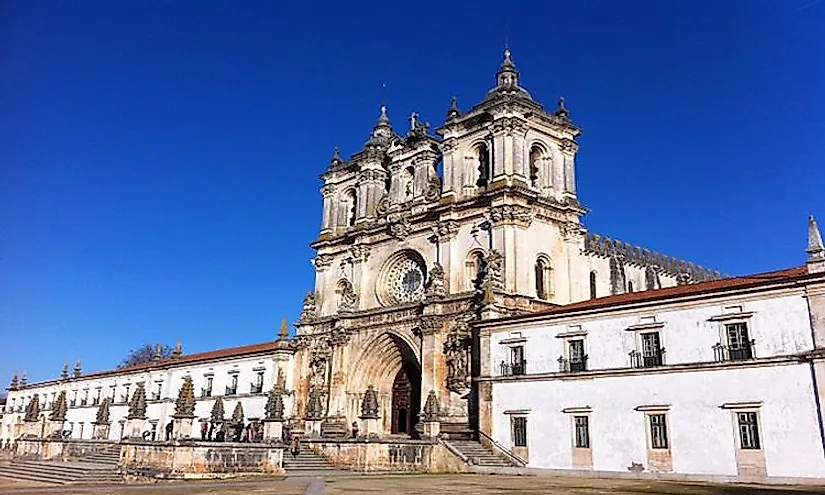
The coast is close, reachable through smaller beach towns like Nazaré and São Pedro de Moel. Two UNESCO World Heritage monasteries sit within easy reach as well, Batalha and Alcobaça, where royal tombs rest under carved pale limestone. The city's hospitals are reliable and rarely overrun. For retirees who want history, culture, and a beach day all inside an hour, Leiria delivers without the tourist crush of the bigger names.
Setúbal

Setúbal still works for a living, and that is its charm for retirees who want a real place rather than a resort. The fishing fleet comes in daily, and the catch goes straight to the Lota de Setúbal market and the grilled-fish counters that locals have loyalties to. Mornings run on small cups of strong coffee at cafés where the same retired crowd holds court. The waterfront is where the city socializes, a long stretch for walking, meeting friends, and watching the boats come and go. Arrábida Natural Park rises just outside town, with limestone hills and quiet coves hidden in the trees.
A short ferry crosses to the Tróia Peninsula, where the beaches run for miles and there is room to cycle or golf. Lisbon is close enough for the occasional outing without the capital's prices following you home. Setúbal draws people who want the sea, the produce, and the daily routine of a working coastal city.
Sesimbra

Down the coast from Setúbal, Sesimbra is a fishing town that never quite turned into a resort, and the people who retire here like it that way. The crescent bay holds golden sand and calm water, the kind of beach where mornings are for swimming and afternoons are for sitting with a book. The boats still go out, and the seafood restaurants along the front serve what they bring back. Outside the high season, the town belongs to its residents again, and that is when the community shows itself.
Arrábida Natural Park spills toward Sesimbra too, good for scenic drives, birdwatching, and slow walks. The medieval Sesimbra Castle stands above the town, its ramparts opening to long views over the bay and rooftops below. The pace is unhurried by design. People who choose Sesimbra are choosing space, salt air, and time.
Braga

Braga gives retirees city living without the city price tag. It carries the amenities of a much larger place, including hospitals, specialists, and a full cultural calendar, while keeping the crowds and costs well below Lisbon or Porto. Housing reflects that. Current Idealista listings put a two-bedroom apartment roughly in the €170,000 to €300,000 range, noticeably less than buyers pay in the two big coastal cities. The result is a steady community of residents, students, and a growing number of foreign retirees who chose value over flash.
Daily life centers on the Avenida da Liberdade, a broad promenade made for slow walks and café stops, and on green spaces like the gardens at the Nogueira da Silva Museum. Above the city, Bom Jesus do Monte draws everyone with its baroque stairway climbing to a hillside church. Braga rewards the retiree who still wants the buzz of a city and the option to walk home to a neighborhood that knows them.
Aveiro

Aveiro is flat, walkable, and built along a lagoon, which makes it one of the easiest Portuguese cities to grow older in. Residents handle most of their week on foot, and the Old Town becomes a daily habit rather than a sightseeing stop. The city sits on the Ria de Aveiro, a lagoon laced with canals and crossed by the colorful moliceiro boats that once hauled seaweed and now carry passengers on quiet tours.
Stop by the Igreja da Misericórdia de Aveiro to see the tiled historic church, then take a sunset boat across the water instead of walking the long way around. The city is medium-sized in the best sense, with the services people need and few of the crowds they would rather avoid. Strong local culture and an easy daily routine make Aveiro a comfortable landing spot for a calmer chapter.
Funchal

Funchal trades the mainland for an island, and the weather alone wins over plenty of retirees. The capital of Madeira sits about a 1-hour-45-minute flight off the coast, with winters that hover around 60 to 72°F (16 to 22°C) and summers in the 72 to 82°F (22 to 28°C) band. The city is well-developed for an island capital, with modern roads, shopping centers, and hospitals. A community of expatriates and locals mixes easily in the gardens and seaside cafés.
The famous Madeira levadas, centuries-old irrigation channels, double as walking paths into the forested interior, passing waterfalls and ocean overlooks along the way. The Madeira Botanical Garden is a favorite among older residents for an afternoon among the plantings. Down at the water, whales and dolphins pass close enough to spot from a café table on a good morning. Funchal suits people who want beauty, mild air, and a touch of island distance from everything else.
Évora

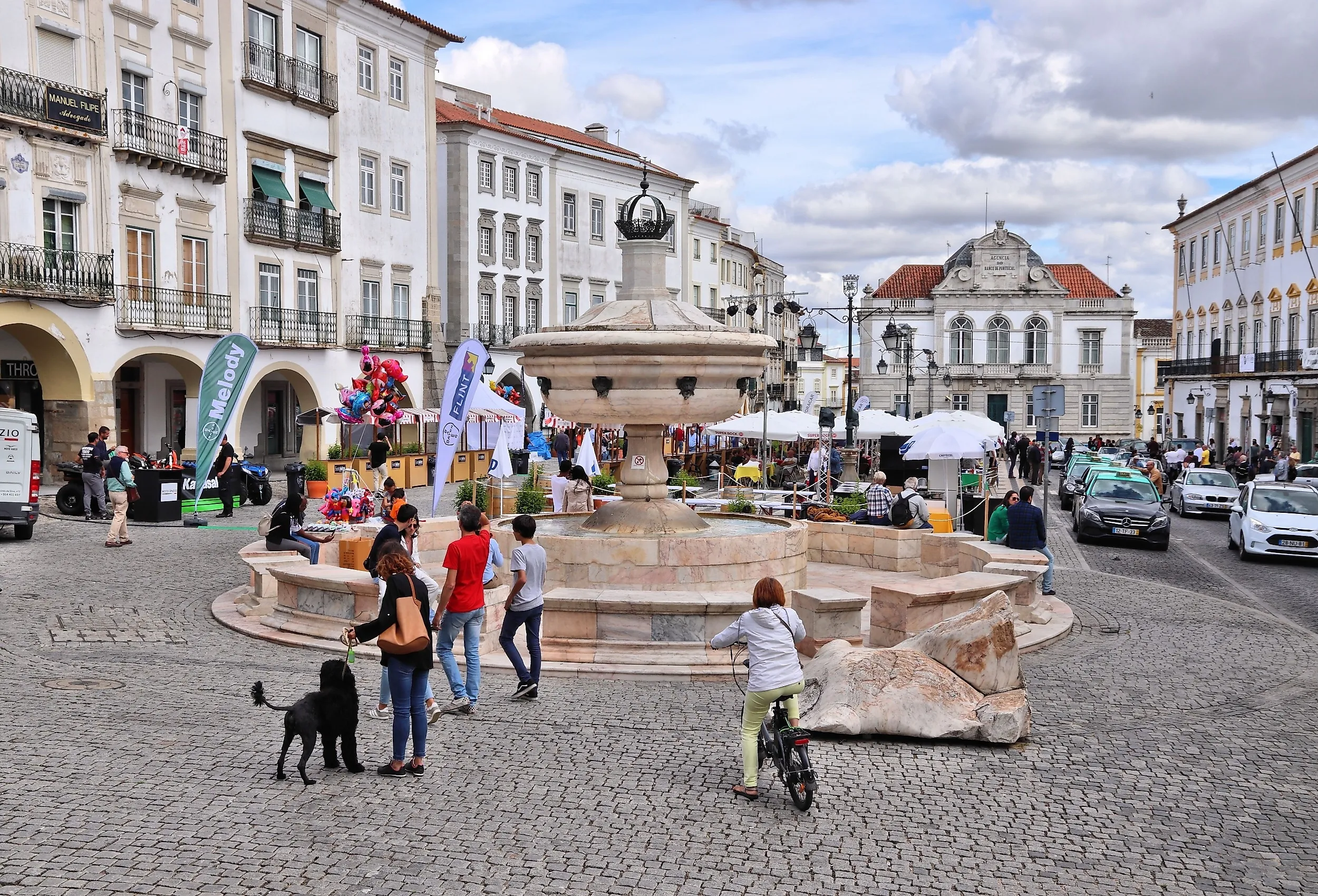
Évora packs two thousand years of history inside its old walls, and residents live right in the middle of it. Roman columns still stand at the Temple of Évora, medieval stone fills the Sé Cathedral, and the cobblestone lanes connect them like a museum nobody charges admission to. An hour and a half from Lisbon, the city is small enough that the same faces fill the cafés and the evening squares, which is how newcomers find their footing fast.
The setting is the Alentejo, Portugal's wine and olive country, so the food and drink are local and the meals are long and slow-cooked. Vineyards and olive groves ring the city, many open to visitors who want to taste before they buy. Évora draws people who feed on history and conversation and would rather a small city with deep roots than a big one with none.
Viseu

Residents call Viseu the garden city, and they mean it as a point of pride. The streets are clean, the parks are everywhere, and the place has a reputation among Portuguese retirees as one of the safest, greenest cities to land in. It runs on traditional markets, neighborhood cafés, and a calendar of local festivals, with far fewer tourists than the coastal hubs. An hour and a half southeast of Porto, it stays connected without losing its own character.
Value is a big part of the draw. Current Idealista listings put a modern two-bedroom apartment roughly in the €180,000 to €300,000 range, affordable next to its neighbors. Healthcare is strong, with the public Hospital de São Teotónio and the private Hospital CUF Viseu covering most needs that would otherwise mean a trip to a larger city. Viseu is the practical choice, a clean and friendly city where a fixed income stretches and an authentic Portuguese routine comes built in.
Porto

Porto is the splurge on this list, and the retirees who pick it decide the culture is worth the premium. The city carries museums, concert halls, universities, and theaters in the quantity people expect from a major capital, minus the noise and the ultra-high costs that usually come attached. The historic center tumbles down to the Douro River in a tangle of old streets that residents never quite stop discovering.
Across the river in Vila Nova de Gaia, the port wine cellars like Caves Cálem run tastings and tell the trade's long story, and locals treat them as a standing invitation. The food matches the setting, from the grilled meats at neighborhood steakhouses to the seafood the city is built on. Healthcare is excellent, with specialists in nearly every field and strong private networks. Porto is for the retiree who is not ready to give up a real city and wants every bit of the gastronomy and culture that comes with one.
Finding Your Place in Portugal
The thread running through all ten of these cities is community. A retirement abroad lives or dies on whether the new place feels like home, and Portugal has a long record of making foreign residents feel like they belong. Coimbra and Évora suit the people who want history and conversation in walking distance. Setúbal, Sesimbra, and Funchal answer to those who need the sea nearby. Braga, Viseu, and Aveiro reward anyone watching their budget without giving up city comforts. The right one is wherever the neighbors start waving back first.