5 Most Snake-Filled Bodies Of Water In New Jersey
New Jersey relies on its rivers, reservoirs, and lakes to sustain its gardens and its population of more than 9.5 million people. These same waters also provide prey and hiding places for the state's 22 native snake species.
Many of the rarer snakes in New Jersey tend to live in the heavily forested bodies of water within the New Jersey Pinelands, but others can wander up close to residential areas, including snakes that live in the water and those that rely on it for a water source or to travel in search of prey. Some believe that one of the most visited bodies of water in New Jersey once hosted a massive snake that escaped from a zoo or collector. But for those who enjoy viewing snakes, they can find them in these 5 snake-filled bodies of water in New Jersey.
Mullica River

The Mullica River is a 50.6-mile-long river that flows through the Pinelands into the Atlantic Ocean. The Pinelands itself is an Atlantic coastal pine barrens that encompasses 7 counties in New Jersey. It is the largest remaining ecosystem of its kind, and the Mullica River within it is one of the last few "wild" rivers left in New Jersey, which has been largely unimpacted by human development. Due to its forested environment, it provides habitats for many of New Jersey's snakes.

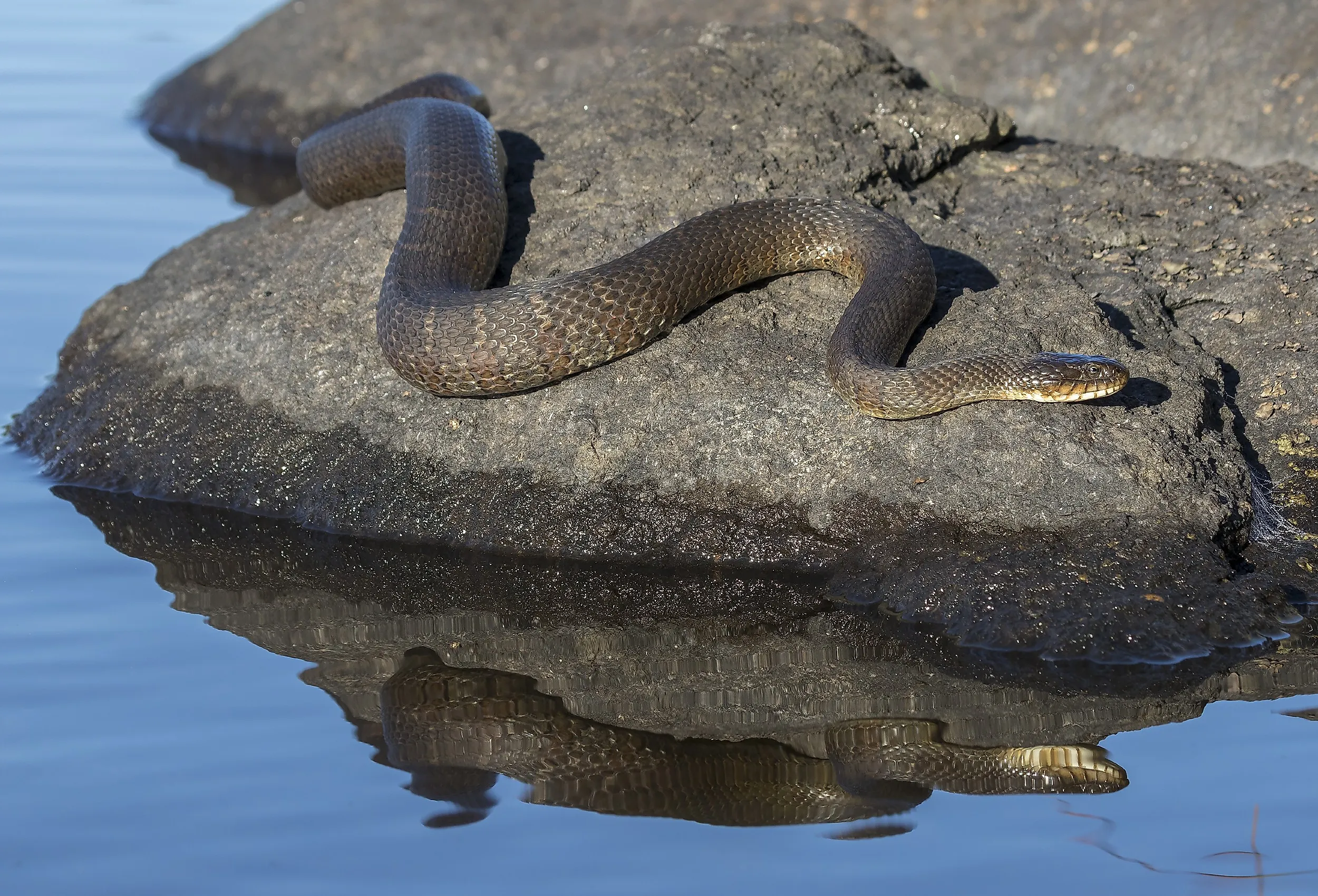
By far, the one people are most likely to see is the northern water snake, which can grow up to 42 inches long and regularly feeds on fish, although it tends to prefer the smaller streams and ponds around the river. In the trees amid the river, one might find the 32-inch rough green snake, which feeds on insects, or the rare corn snake, named after its corn-like scale pattern. This snake can grow up to 4 feet long and commonly feeds on small rodents.
Wading River

The Wading River is a 10.1-mile tributary of the Mullica River, which flows through the Pinelands. The name suits it as it has calm waters that pass through swamps, marshes, and pine forests, making it very popular among kayakers and fishers. Kayakers have noted that one can view many types of turtles and snakes while going through the Wading River.
Much like the Mullica River, one might see the eastern hognose snake, which gets its name from its hoglike nostrils, which is known to play dead when it is disturbed, the eastern king snake, which lives near swamps, or northern watersnakes. The only venomous snake one might encounter is the timber rattlesnake, which prefers to feed on rodents, rabbits, and birds, although its population is believed to be small.
Manasquan Reservoir

The Manasquan Reservoir provides recreational opportunities for those living in Monmouth County, with 1,381 acres to explore, of which 770 are the lake itself. The lake also provides drinking water for the county with its 4 billion gallons of water capacity, along with the snakes that live here.

Monmouth County is a big snake hotspot in New Jersey, home to 18 of the state's 22 native snake species. Of these, northern water snakes, DeKay's snake, and eastern garter snakes are the most likely to be seen out in the waters of the reservoir. Park authorities have noted that the 5-mile perimeter trail around the reservoir is a great place to go looking for water snakes. None of the snakes found here are venomous, but watersnakes might bite if threatened.
Delaware River

The Delaware River flows from New York to Pennsylvania and New Jersey, before ultimately emptying into the Delaware Bay in Delaware. At 282 miles, it provides drinking water for more than 17 million people, including the metro areas of New York City and Philadelphia, and flows through historic New Jersey communities such as Trenton, which George Washington's army captured in 1776 after crossing the river a short way upstream. The Delaware River has more than 60 fish species, which make for good prey for water snakes.

Northern water snakes are the most common snake one can find in the river. They spend nearly all of their life in or around water, catching fish. They tend to be brown, gray, or reddish. Many of them are confused for venomous snakes due to their tendency to flatten their bodies when threatened, which gives their heads a more triangular shape, which makes them look like the copperhead, another venomous snake sometimes found near the river. Copperheads live in the northern section of New Jersey, and although they prefer dry woodlands, they do stay close to water sources such as the Delaware River.
Lake Hopatcong

At six miles long and 2,600 acres, Lake Hopatcong is the largest freshwater lake in the state of New Jersey. It is also a naturally occurring lake, which was formed by a retreating glacier 12,000 years ago. However, its current size was influenced by human activity such as damming, which raised its water levels. Today, it's a popular place to go for recreation at Hopatcong State Park, which also puts humans into close contact with snakes, including northern water snakes, eastern milk snakes, and eastern garter snakes. However, in 2014, there were reports of a massive snake swimming through Lake Hopatcong, which caused a great deal of panic in the region.

Residents reported seeing a large green snake in the water that was up to 16 feet long. One wildlife expert claimed that this snake was a green anaconda that likely escaped from captivity. However, officials claimed they left out food in traps, and they never caught anything, leaving some to argue this report was nothing more than an urban legend.
A few notes on snake behavior
Fear of snakes is a very common behavior, especially in states that don't have a reputation for large snake populations. However, one need not fear these snakes as the vast majority are nonvenomous, and even the two venomous species, the copperhead and timber rattlesnake, do not prey on or seek out humans. Snakes only attack if they feel directly threatened by a human, such as if they step on them, throw something at them, or otherwise try to harass them. Snakes are also likely to show warning signs first, such as the timber rattlesnake shaking its rattle or the northern watersnake flattening its body and releasing a foul odor. In most cases, snakes will simply stay still or slither away from approaching humans.