7 Weird Discoveries About the Salem Witch Trials
Between the spring of 1692 and the end of 1693, the small Massachusetts town of Salem (present-day Danvers) was rocked by the original Satanic Panic. Over the course of a year, over 200 people were accused of consorting with the Devil to practice witchcraft in what would later become known as the Salem Witch Trials. It’s where we get the phrase “witch hunt,” and it has become a haunting cautionary tale about the dangers of collective panic.
After over 300 years of continual exposure in art, culture, and media, we’ve all heard plenty about the Salem Witch Trials. But the truth might be even stranger than you think. Not only is popular culture full of misconceptions about this haunting chapter in American history, but there’s also plenty of bizarre layers to this story that aren’t as widely discussed. Let's start with these seven strange facts about the Salem Witch Trials that you may never have heard before.
1. Poisonous Mold On Rye Bread May Have Triggered The Fits And “Bewitchings.”
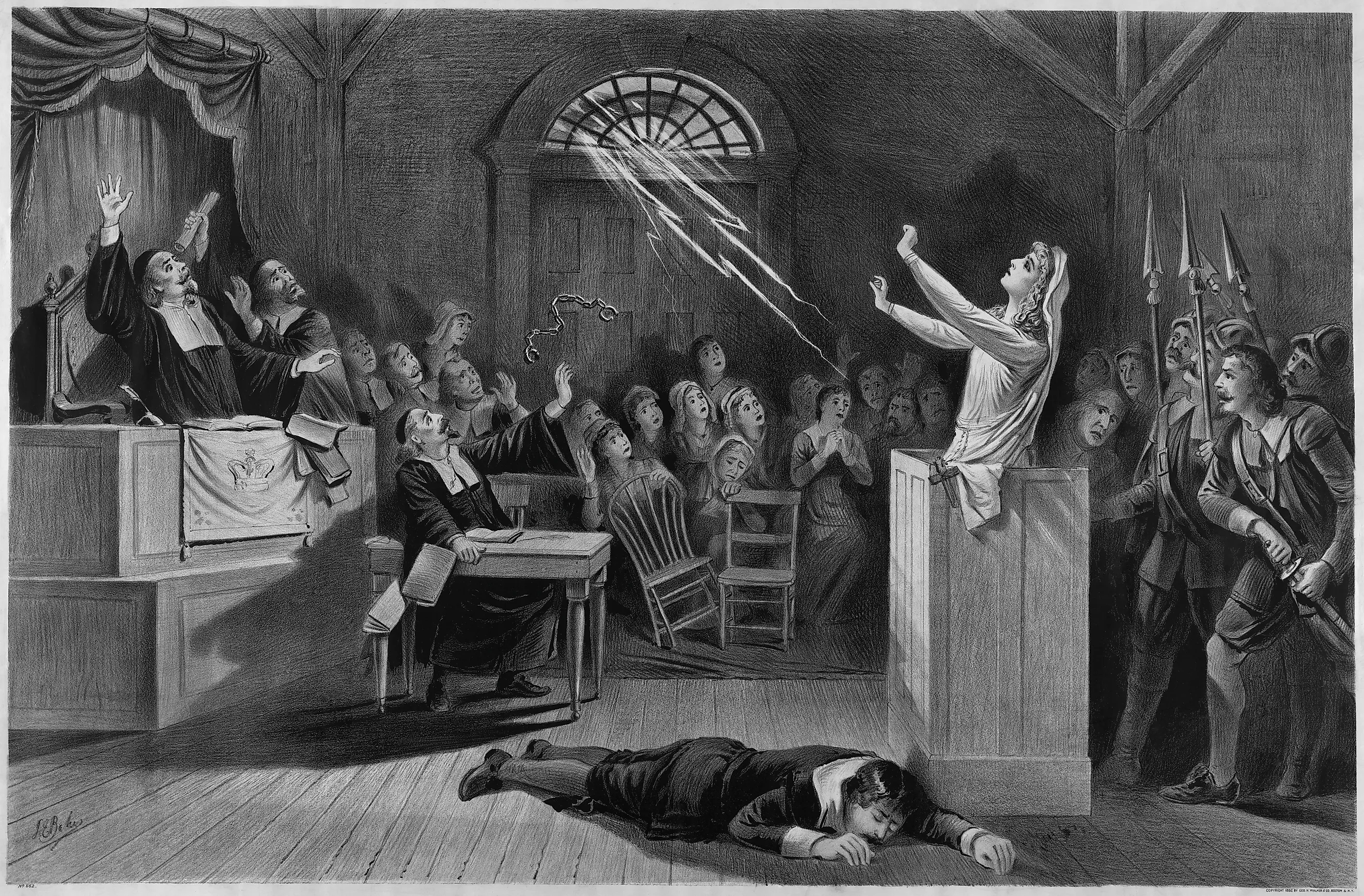
It took a convincing victim to make a good witch story. So when a citizen accused of witchcraft went on trial, it wasn’t uncommon to see their accuser exhibiting the same bizarre symptoms, like screaming, hallucinating, convulsing, that led to the initial accusation of “bewitching.” These fits, supposedly signs that a person had been bewitched, were a cornerstone of testimonies against the accused. However, the victims may not have been playing to the crowd.
Although its validity is hotly debated among scholars, a prominent theory among historians suggests that a fungus might have been responsible for some of the more extreme symptoms exhibited by the so-called “bewitching” victims. Ergot, a fungus that grows in the seed heads of rye plants, has been known to cause many of the symptoms exhibited by the accusers during the Salem Witch Trials. Acute ergotism was well-known in Europe by that time, with heavy spiritual connotations due to its bizarre symptoms. If ergot had invaded the area’s rye crop that season, as some scholars have suggested it did, then it might explain the odd behavior of those who were supposedly bewitched.
That said, this theory hasn’t been met with universal support from historians. The historical record notes multiple testimonies that accuse the victims of faking their symptoms, and the geographical spread of the witch hunts (which were not confined to the town of Salem) doesn’t match the supposed presence of ergot in the rye crop. So, while it’s a fascinating theory to know and influential in the study of the Salem Witch Trials, it’s likely not true.
2. Pets Were Accused Of Witchcraft And Killed As Supposed Witch Helpers

Over the course of the Salem Witch Trials, Salem’s courts executed fourteen women, five men…and two dogs. This was because the tradition of that time maintained that witches kept pets as familiars, or magical animal companions that would supposedly do their wicked bidding. One young girl accused the neighbor’s dog of trying to bewitch her, and another dog was shot when it began behaving strangely. Some local children declared that they’d seen a neighbor’s spirit trying to possess the dogs. Both dogs were shot and now number among the 25 victims of the Salem Witch Trials.
3. Bizarre “Witch Tests” Were Often Conducted

It’s a fairly well-known Witch Trials fact that many accused witches were thrown into water to test their innocence: those who floated were convicted and executed, while those who sank were declared innocent but usually drowned. But this was far from the only test used to determine the guilt or innocence of the accused.
One particularly unusual test was the cake test, in which the accused would be asked to bake a cake using the victim’s urine and then feed it to a dog. If the dog became sick, it was thought to be a witch’s familiar, therefore proving the so-called witch guilty. Equally bizarre was the weight test. Since witches were thought to be impossibly light, they were weighed against a Bible. The fact that no accused witch was ever lighter than the Bible did nothing to dissuade the courts from trying this test, as they could always try additional tests when it inevitably proved the accused innocent.
4. Witnesses Could Testify Using “Spectral Evidence.”

When you’re trying to prove that somebody is consorting with the Devil, the question of evidence can get pretty thorny. And given that witches were said to be able to project their spirits outside of their bodies to harm their victims, there were layers to this lack of evidence. That’s why the Salem courts allowed spectral evidence: testimonies from victims who claimed to have seen or been harassed by the spirits of the accused. This legally dubious practice was widely criticized even in its day. But still, as the only means of gathering “evidence” in many cases, it remained a staple of witch trials until they concluded in 1693.
5. An Early Harvard University President Was One Of The Most Prominent Opponents Of The Salem Witch Trials

One of the most prominent ministers in Salem at the time of the Trials, Cotton Mather, was the son of one of Harvard’s early presidents. He was also an early critic of the dubious legality of spectral evidence as testimony in a criminal case. Together, the father, Increase Mather, and his son, Cotton, advocated for the even application of legal standards. If spectral evidence wouldn’t be enough to convict a murderer or a thief, why should it be enough to convict an accused witch?
This logic eventually prevailed as public support declined and the Trials were starting to wind down. Abolishing spectral evidence from the courtroom led to many convictions being overturned and prevented many more. But, though the Mathers are widely noted as firm opponents of the hysterical, shoddy trials of the period, few are aware that the two of them connect the Trials to one of the nation’s most longstanding institutions.
6. Children Accused Most Suspects

The Salem Witch Trials kicked off with the 1692 trial of Tituba, an enslaved woman accused by 11-year-old Abigail Williams and 9-year-old Elizabeth “Betty” Parris. And they were not outliers in their young age. The vast majority of accusers in the Salem Witch Trials were girls and young women, with motivations ranging from unexplained illnesses and the desire to divert suspicion from themselves to sheer vindictiveness. Thus, the testimonies of children decided many a fate during the Salem Witch Trials.
7. …And Children Were Accused, Too

Though they made up most of the accusers, children weren’t safe from accusation themselves. One of the earliest accused was a four-year-old girl named Dorothy Good, who was jailed along with her mother. (Probably relevant: her mother had already been accused of Witchcraft as well.) The child was said to be exhibiting erratic behavior and coerced into confessing that she and her mother had both practiced witchcraft without fully understanding the charges. She spent seven months in jail, and her mother was executed before her release.
Strange Anecdotes from Strange Times
The haunting legacy of the Salem Witch Trials persists today in America’s fascination with one of the darkest and strangest chapters in its history, but truth is often even stranger than the stories we learned in school. But what’s really strangest of all is the haunting timeliness of all of these anecdotes. So long as those in power can exploit fear and mistrust, the Salem Witch Trials remain a salient cautionary tale about the capacity of mass panic to eclipse all reason. Even the strangest stories teach us important lessons for the contemporary world.