The Best Places To Visit On Maryland’s Eastern Shore
Maryland's Eastern Shore is a popular destination because of its working harbors, river ferries, and historic town centers that are within short drives of each other. Ferry service across the Tred Avon River at Oxford dates to 1683, and the crossing takes only a few minutes. In St. Michaels, a lighthouse built in 1879 now stands on the grounds of the Chesapeake Bay Maritime Museum. Farther south, Crisfield's city dock serves as the landing for passenger boats to Smith Island. These are the best places to visit on Maryland's Eastern Shore, and each stop provides historic streets and local traditions worth planning a day (or a weekend) around.
Chestertown

Originally developed as a Chester River port, Chestertown's grid was laid out in 1730 for its tobacco and wheat-shipping heyday. To see the historical town, visitors can start at the wharf area before exploring Water Street running parallel to the river and High Street, the main street running into the business area downtown. Along Water Street are some of the town's most important colonial houses: Widehall, a large brick Georgian house built around 1770, and the riverfront-positioned 1746 Custom House, originally built as Thomas Ringgold's residence and store, now housing Washington College's Starr Center.
While Chestertown is full of history, it also has a vibrant community today, built around Washington College. Founded in 1782 after receiving permission to use George Washington's name (and a small contribution from him), the 112-acre main campus is on the north side of town while still having buildings around the waterfront like the Starr Center and the Hodson Boathouse. Students and locals shop together every Saturday morning at the Chestertown Farmers Market, located in Fountain Park in the middle of town's historic district. Held year-round, the market is open from 8 am to noon.
Rock Hall

Drive just 20 minutes towards Chesapeake Bay, and visitors can arrive in Rock Hall, the working-harbor counterpart to Chestertown's colonial streetscape. Rock Hall is on a peninsula jutting out into the bay, and no matter which way visitors walk, the chances are they'll end up at one of the numerous marinas around town. At Haven Harbour Marina, there's a free museum, Waterman's Museum, which features exhibits showcasing the town's history with oystering, crabbing, and fishing through boats, local carvings, historic vessel plans, and a reproduction shanty. The museum is open daily, from 10 am to 4 pm. In the area of the museum, or on the south end of the peninsula along Rock Hall Harbor, visitors can view working harbors with commercial watermen, recreational boats, and charters all sharing the space.
A few miles south of the town, on an island in the mouth of the Chester River, is the Eastern Neck National Wildlife Refuge. This 2,285-acre island refuge has tidal marsh, upland forest, and grasslands covering the area. The outdoor areas are open daily from sunrise to sunset, admission is free, and the island offers trails for biking and hiking, marsh kayaking, fishing, and views of wildlife in every direction. However, trails in the Eastern Neck National Wildlife Refuge are restricted to only foot traffic and designated trail paths. For those with accessible needs, Tidal Marsh Trail, Tubby Cove Boardwalk, and parts of Bayview Butterfly Trail are all wheelchair accessible. The contact station, gift shop, and bookstore are open Friday to Sunday, 11 am to 3 pm, but weather, high water, or staffing can close the building during those hours.
St. Michaels

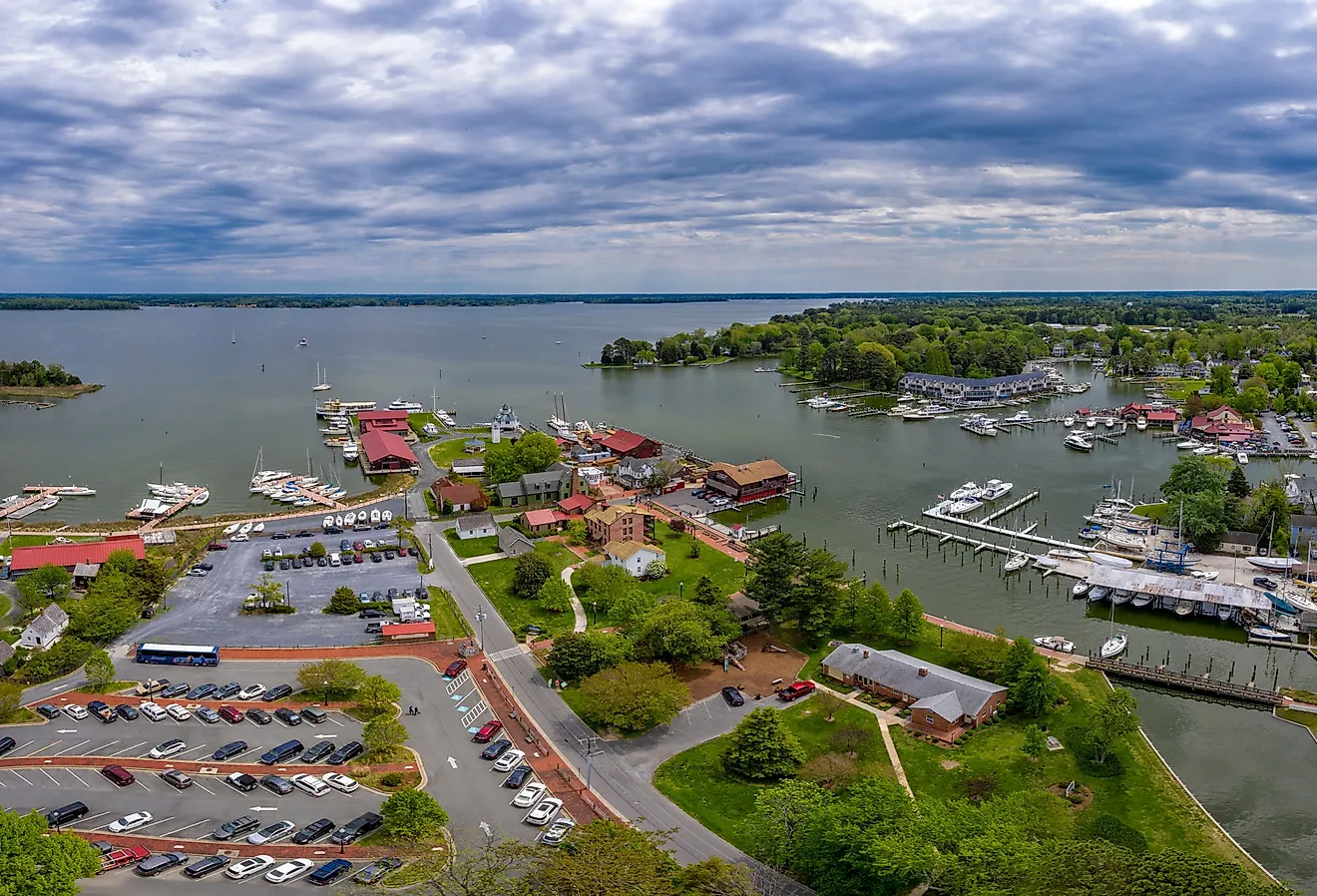
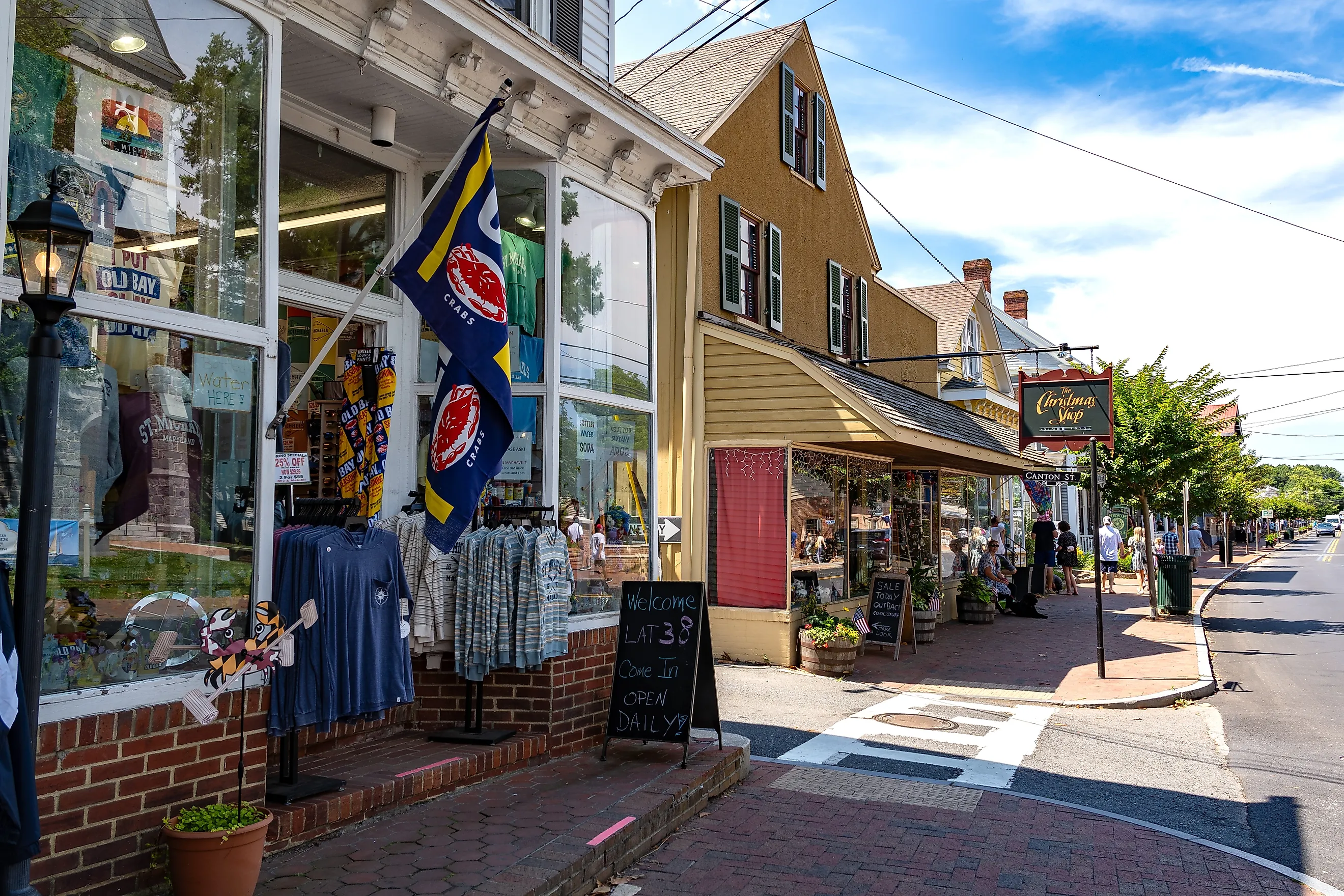
St. Michaels, located along the Miles River, provides a weekend of maritime experiences between the Chesapeake Bay Maritime Museum and Miles River cruises. The museum is along the waterfront and showcases Chesapeake boats, boatbuilding, seafood, and maritime work. The 18-acre campus is open every day and also has been the home of the Hooper Strait Lighthouse since 1966. The screw-pile lighthouse was originally commissioned in 1829 after an earlier light was destroyed by ice. It was deactivated in 1966 and moved by barge 40 miles to St. Michaels and now sits on the museum grounds, offering a lookout spot over the water.
Also at the museum are the docks for Patriot Cruises, offering a 70-minute narrated historical cruise on the Miles River. The cruises run to late November and stop for the winter, so verify opening dates before visiting. For visitors wanting to get away from the water, a walk down Talbot Street will bring them through the historic and commercial district of St. Michaels. With 250 years of history, the street is one of the most perfectly preserved Victorian-era main streets on the Chesapeake Bay. At the other end of Talbot Street is St. Mary's Square and the St. Michaels Museum, which is already closed for the 2026 winter. But the area is still worth exploring, just to see the 19th-century homes like Cannonball House, Sewell House, and Chaney House (built by three African American brothers in 1851).
Oxford

With a ferry across the Tred Avon River dating to November 1683, the town of Oxford is accessible from Bellevue without the extra 20 miles of driving between the areas. Daily service is usually from 9 am to sunset but can vary by seasons and can be closed because of weather. The ferry accepts vehicles, motorcycles, bicycles, and even walk-on passengers and takes around eight to 10 minutes to cross. The ferry arrives in Oxford on the north end of town, at the top of Morris Street. As visitors work their way down the street, many stop at Scottish Highland Creamery for their housemade ice cream, fudge, and chocolate truffles.
Right next to the Creamery is the Oxford Museum, a free museum covering local history. Only open from Friday to Sunday, from April to late fall, so this year's season is coming to a close. The current main exhibit is "Oxford and the American Revolution," detailing Oxford's history under British colonialism and its role played during the French and Indian War and the American Revolution. To continue the revolutionary history, visitors can head to Oxford Cemetery. Originally the private cemetery for the Tilghman family, this is the final resting place and location of a monument for Tench Tilghman, a prominent Revolutionary War officer and George Washington's longest-serving aide-de-camp. The cemetery also has a "Strangers Row" where sailors and oyster-dredgers who drowned in the area and whose identities were unknown are buried.
Easton

The "larger" town just a 15-minute drive north of Oxford, Easton is a good base for exploring Oxford, St. Michaels, and the town's own history and culture. Housed in a building from the 1820s, the Academy Art Museum is an impressive stop, especially since it's free. The museum has five galleries of rotating exhibits plus a permanent collection of over 1,700 objects. Opened Tuesday through Sunday, the museum also has a free public lot for parking and street parking that's free for two hours. On Tuesdays and Thursdays, the museum stays open later (to 7 pm), and evenings always give art museums a different, subdued vibe compared to the light of the daytime. Combine with the Zach Gallery and the Trippe Gallery, both a few blocks away, to continue the appreciation of art.
In between the museum and the galleries is Avalon Theatre. Completed as the New Theatre in 1922, the building originally featured leaded-glass doors, an 18-foot dome with 148 lights, and a 300-pipe electric-pneumatic organ. It was renamed Avalon and redesigned in Art Deco style in 1934. The venue highlights local talent along with touring music and theater acts, with performances held year-round. Avalon also focuses on arts education for children, with their own Children's Theatre, in-school programming, summer camps, and performances specifically curated for young audiences.
Cambridge

Jutting out into the Choptank River, the town of Cambridge combines waterfront architecture and activities with a deep history connected with Harriet Tubman. Born nearby into slavery around 1822, Tubman spent the first 27 years of her life working the local timber fields, wharves, and farms before escaping to freedom (and returning 13 times to rescue around 70 family members and friends). Today, Cambridge is an immersive living history museum for Tubman. Downtown, the Harriet Tubman Museum & Educational Center, open only Thursday to Saturday, is a grassroots space dedicated to Tubman's legacy. It features historical displays, artifacts, and a short film. Murals inside and out were painted by Michael Rosato, with the exterior wall containing a 28 by 14 foot mural of Tubman breaking through the brick facade.
Located about 12 miles south of Cambridge is the Harriet Tubman Underground Railroad National Historical Park in Church Creek. It's a 15,000-square-foot visitor center with exhibits on the Choptank River region, its connection to slavery, and how the Eastern Shore topography was used by Tubman to evade slave catchers. The center is on a 17-acre property next door to the Blackwater National Wildlife Refuge, ensuring the wetlands and forests look almost exactly as they did when Tubman was navigating them. For history not connected to Tubman, visitors can head to the Richardson Maritime Museum for local boatbuilding and maritime history.
Crisfield

Crisfield is the town to stay in for those wanting to explore the marshy archipelago of the lower Chesapeake Bay. Near the town are multiple out-islands like Smith Island, Janes Island, and Cedar Island. Smith Island is only accessible by passenger boats from Crisfield City Dock, and departures are infrequent enough that taking the ferry assumes an overnight stay. To explore the Smith Island area, there are cruises out of Somers Cove Marina for more of a touristic view. Janes Island is highly accessible and very visitor-friendly for paddlers, beachcombers, and campers. The mainland park is just two miles from downtown Crisfield, and once there, visitors can rent kayaks and canoes to explore the 2,900-acres of island wilderness.
Cedar Island is managed as the Cedar Island Wildlife Management Area and is a designated Maryland State Wildland. It is about 3,000 acres of untouched tidal marsh, creeks, and ponds designed to protect black duck habitats. The island has no park rangers, rental shops, restrooms, or marked trails. The area is primarily used for waterfowl hunting (during open seasons), crabbing, public fishing, and birdwatching. Those looking to access the island must have their own boat and can launch from the public ramps in Crisfield, like the Somers Cove Marina or the Jenkins Creek Boat Ramp.
Snow Hill

To experience the Pocomoke River uplands, and it's surrounding cypress landscape, the town of Snow Hill is a good starting place. The Pocomoke River Canoe Company offers self-guided trips with an upstream shuttle so paddlers can return to Snow Hill and not worry about their vehicle. The trip is expected to take around 2.5 to 3 hours, but they also offer a shorter trip up Nassawango Creek. Hourly rentals are also availalble, leaving from the company's dock not far from the town center. The Pocomoke River State Park, southwest of town, has a few landings. The nearest to Snow Hill is Shad Landing, open year-round and offering campsites, four miles of trails, a nature center, a marina, and canoe and kayak rentals.
Back in town, the Julia A. Purnell Museum is the destination for visitors looking for local history. The museum was founded in 1942 by William Purnell, the son of Julia, to preserve the legacy of her needlework. Born in 1843, Purnell didn't discover her artistic talents until the age of 85. The museum, now housed in the fromer 1891 St. Agnes Catholic Church, showcases Purnell's crafted pieces, local history artifacts, and the odd collection of William Purnell. The museum is open Thursday to Sunday, located in between the town center and Byrd Park, along the Pocomoke River.
Pocomoke City

Pocomoke City, a 15-minute drive south of Snow Hill and still on the river of the same name, gives visitors access to the river while providing a few more cultural institutions within city limits. Combining natural and cultural history, the Delmarva Discovery Museum is located in town and right next to the Pocomoke River. The 16,000-square-foot museum, open Tuesday through Sunday, gives visitors the chance to encounter North American river otters, brown-banded bamboo sharks, a walk-through steamboat, a cypress-swamp exhibit, boatbuilding displays, decoys, and even a children's room. Across Market Street is Mar-Va Theater, built in 1927, with its coffered pressed-metal ceiling, silver columns, decorative walls, and original folding seats; still showing movies.
The Pocomoke River is a "blackwater" river, stained a dark color by the natural tannins of the bald cypress swamps. Driving over the historic drawbridge over the river right into downtown, visitors are greeted with scenic waterfront vistas. Directly accessible from downtown is the Cypress Park and Nature Trail, providing an elevated boardwalk trail that loops through the wetlands. The park also has a fishing pier and public gazebo overlooks. Just north of that park is the Winter Quarters Nature Trail and the boat ramp, giving the town more access to nature. The river's calm surface makes it a perfect spot for kayakers and canoeists to navigate the local creeks.
Berlin

Although Berlin is close to the Atlantic coast, the town's appeal is not connected to water. It has a compact historic commercial district spanning about a quarter-mile, numerous museums, and local shops and antique stores. From May to October, the corner of Main Street and Pitts Street hosts a farmers market every Sunday, featuring live music, a petting farm, and stands for local farmers, food cultivators, bakers, distillers, and meat and seafood sellers. No matter the day, stop at Cafe Berlin for freshly made pastries and sandwhiches and a cup of coffee. On the north end of downtown is the Calvin B. Taylor House Museum, built in 1832 and now a museum with period furnishings, local history exhibits, and a local memorabilia gallery.
On the south end of downtown is the Atlantic Hotel, a three-story brick building that was rebuilt in 1895 after the fire that destroyed Berlin's commercial core. The hotel is featured on a film walking tour for the 1999 moive Runaway Bride, along with 15 other locations, including the Taylor House. The 2002 movie Tuck Everlasting was also shot in Berlin, transforming the downtown area into a fiction, early 20th-century village named Treegap, Maryland. During filming, modern life was hidden by taking down power lines, hiding telephone poles, and covering the asphalt roads with dirt. Scenes were focused on Main Street, the Calvin B. Taylor Banking Company building, the Atlantic Hotel, and one of the antique shops named Towncenter Antiques (which is now closed). Artifacts from the production are found at the Taylor House Museum.
Between The Chesapeake And The Atlantic
The small Delmarva Peninsula, sitting between the bay and the ocean, has Maryland sharing land with Delaware and Virginia. But the small town's of Maryland's Eastern Shore offers a chance to slow down, spend some time with nature, and learn about the big histories of little towns. Whether rowing a canoe down the Pocomoke River back into Snow Hill, exploring the wild Cedar Island near Crisfield, or fighting for freedom with Harriet Tubman in Cambridge, Maryland's Eastern Shore offers some of the best places to visit along Mid-Atlantic Coast of the United States.