The Hunger Games Filming Locations You Can Actually Visit
It has been three years since the last installment of The Hunger Games, The Ballad of Songbirds & Snakes, hit the big screen and for die-hard fans, that gap has been less an annoying break in continuity than a welcome excuse to hit the road and visit the real places where the fictional nation of Panem was brought to life.
There's still time before the latest installment, Sunrise on the Reaping, opens in theaters on November 20 to get caught up with the franchise's American film locations. Most of the locations are open to the public, including the real cotton mill village, state forest, and theater in North Carolina. And in Georgia, film shoots took place in a 1920s mansion, a downtown hotel with glass elevators, and the ruins of a Civil War-era cotton mill.
Here's what you need to know to squeeze in a visit to the Hunger Games' film locations in the United States. Pack accordingly, and may the odds be ever in your favor.
Henry River Mill Village, Hildebran, North Carolina

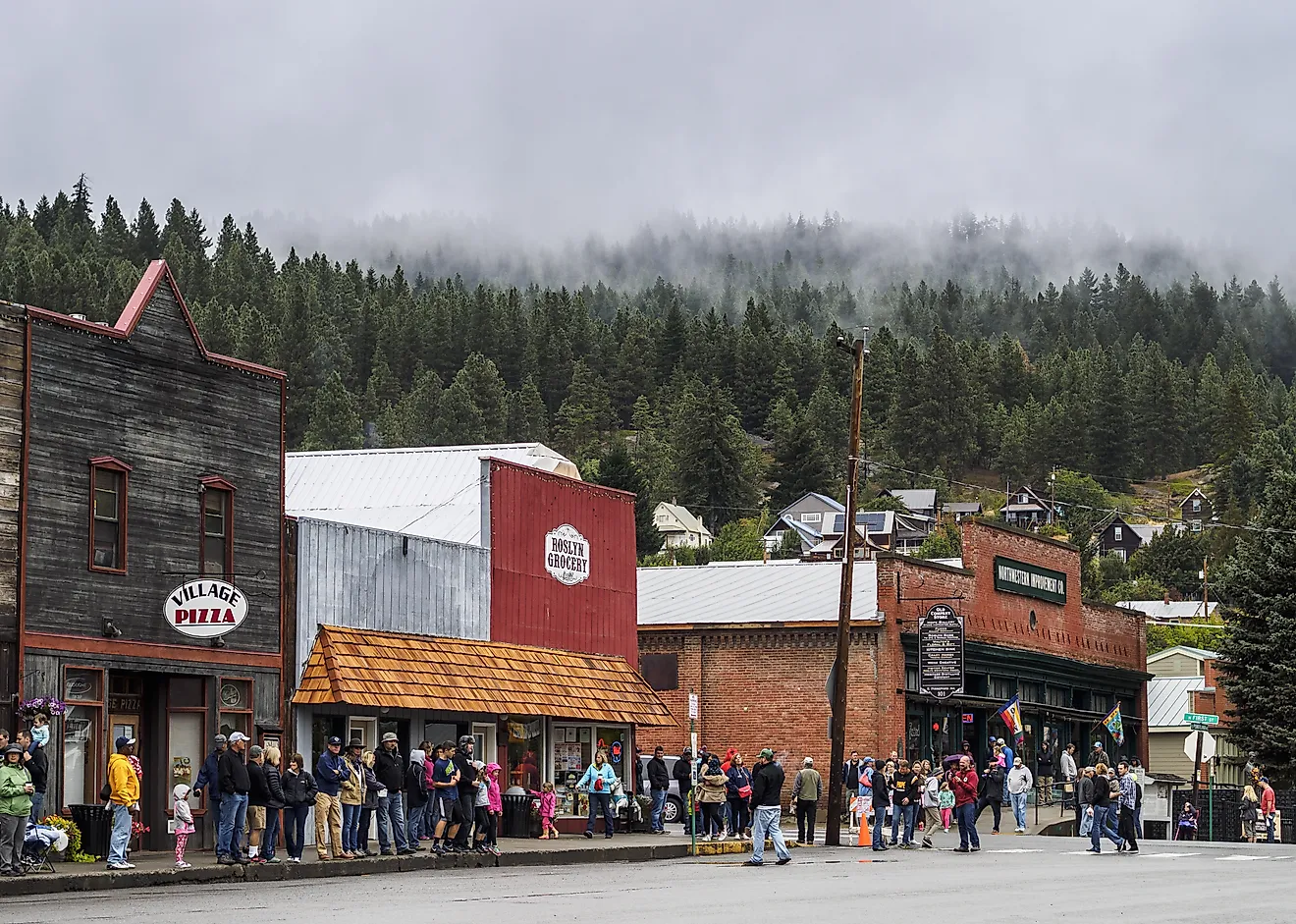
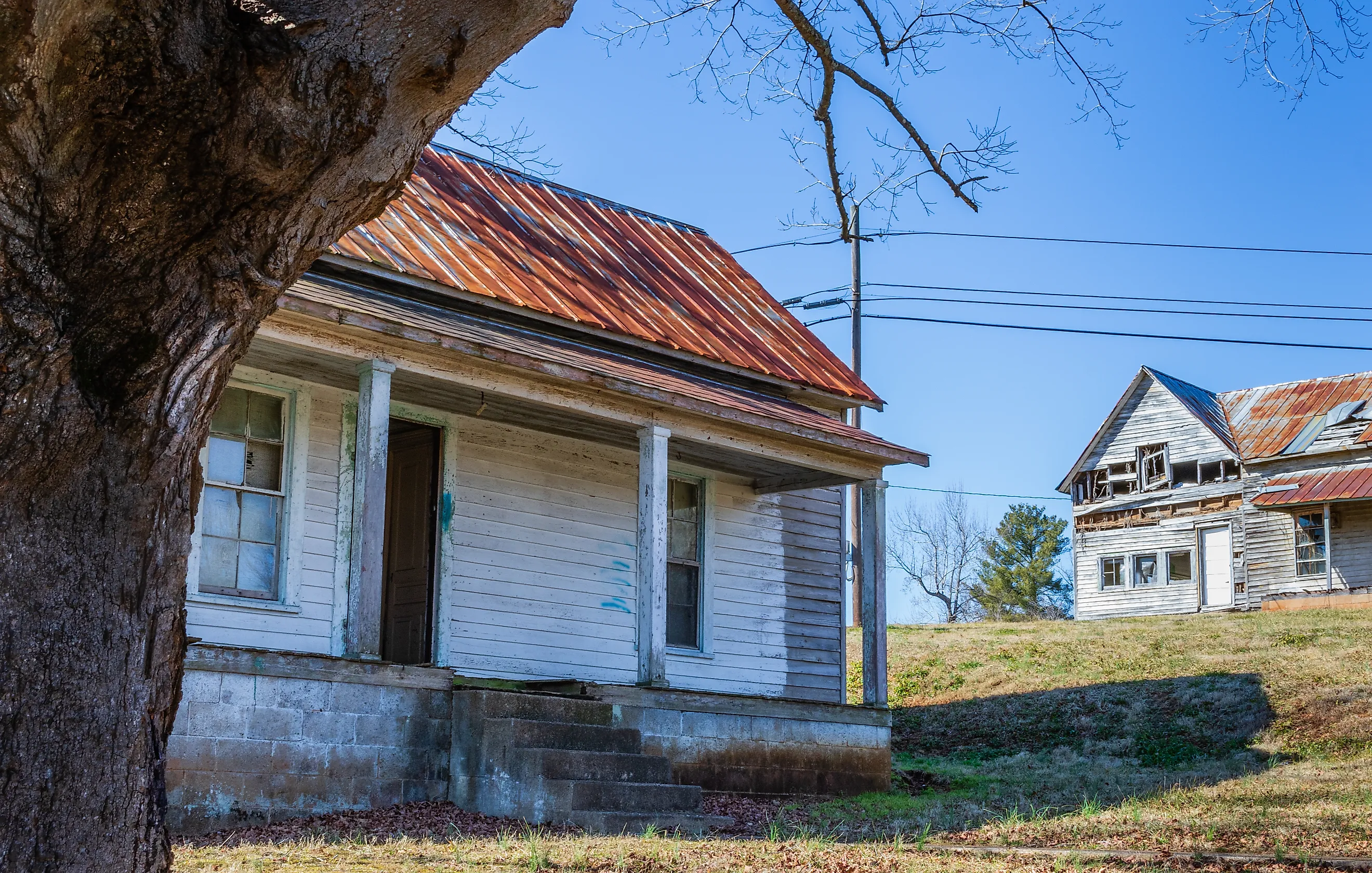
The Hunger Games' District 12 is a real place, and you can actually sleep in it. Henry River Mill Village in Hildebran, 60 miles northwest of Charlotte, was the Seam in the first Hunger Games film, shot in 2011. The brick company store became the Mellark bakery, and House 16 became the Everdeen home.
Opened by the Henry River Manufacturing Company in 1905 to spin cotton yarn, the workers' village comprised 35 houses, a boarding house, a dam, and a three-story brick mill. The mill had ceased production by 1970 and burned down in 1977 with only 20 of its original homes still stand.
Filming lasted nine days, and one of the empty mill houses was even blown up for the cameras during the flashback scene that explains how Katniss' father died in a mine explosion.
Set dressers bought props from The Depot at Gibson Mill, an antiques mall in Concord, to furnish the district. The village was added to the National Register of Historic Places in 2019.
Guided history tours of the property are available, as are after-dark ghost experiences. House 12, a restored two-unit mill house, can be rented through Airbnb. Each apartment sleeps four, with a queen bed, two twins, a kitchenette, and a full bath, and the stay includes village admission.
Uptown Shelby, North Carolina

The reaping scene where Katniss volunteers in place of her sister, was filmed in Shelby, just west of Charlotte, in 2011. The pivotal moment was brought to life outside of warehouses near South Lafayette Street and South Morgan Street that was transformed the Hall of Justice.
As was the Hob, District 12's black market. Both sets were built inside private warehouses along the railroad tracks a few blocks west of South Lafayette Street in Shelby's historic core, and the production of more than 300 cast and crew spent six weeks in town. The warehouses are still private property, and there's no marker, so the best you can do is look at them from the sidewalk and then head into town.
Pleasant City Wood Fired Grille on South Lafayette Street was one of the crew's regular stops, and the Shelby Cafe on the same street has been serving Southern breakfasts for more than 100 years. On the same street, Newgrass Brewing is the newer arrival. Out on East Dixon Boulevard, Red Bridges Barbecue Lodge has been smoking pork since the 1940s.
Shelby's music history is a bigger deal locally than its film history. The Earl Scruggs Center in the restored county courthouse, built in 1907, tells the story of the banjo player from nearby Flint Hill who popularized the three-finger picking style that defines bluegrass. Nearby, the Don Gibson Theatre opened as the State Theatre in 1939 and reopened in 2009 as a 400-seat concert hall named for the Shelby-born country singer who wrote Oh Lonesome Me, and I Can't Stop Loving You.
Knight Theater, Charlotte, North Carolina

Caesar Flickerman's (played by Stanley Tucci) televised interviews with the tributes were filmed on the stage of the Knight Theater at 430 South Tryon Street in uptown Charlotte. Hundreds of costumed extras filled the seats as Capitol citizens. It's part of the Levine Center for the Arts, a cultural campus it shares with several other cultural attractions. It's also the main stage of Charlotte Ballet. Buy a ticket to a performance, and you'll be seated where Flickerman's studio audience sat.
A few blocks away, the underground loading dock of the Charlotte Convention Center on South College Street was where the tributes' chariots rolled out for the opening parade, the scene that made Katniss The Girl On Fire. The production's main studio was the former Philip Morris cigarette plant in Concord, 20 miles northeast, and has since been demolished. It was here that the training center and the Capitol interiors were built.
The cast was known to have hung out at several locations around Charlotte. Woody Harrelson (Haymitch Abernathy) played chess at Amelie's French Bakery in the NoDa arts district and climbed at the U.S. National Whitewater Center, Lenny Kravitz (Cinna) played a private concert at Bojangles' Coliseum, and the wrap party was held at what's now the Queen City Quarter.
DuPont State Recreational Forest, North Carolina

The waterfalls in the first film's arena was filmed in DuPont State Recreational Forest, a 12,489-acre state-owned woodland between Hendersonville and Brevard, 40 miles south of Asheville. It also appears in the 1992 film, The Last of the Mohicans, starring Daniel Day-Lewis.
It was its appearance in The Hunger Games, though, that drove visitor traffic from 250,000 in 2011, the year of the shoot, to 327,000 by the end of October 2012, the year of the release. Nowadays, that figure tops 1.2 million visits a year.
It's at the base of Triple Falls, where the Little River drops in three stages, that Katniss finds Peeta camouflaged in mud. Bridal Veil Falls, a wide slide of rock a few miles farther in, is the pool where she cools her burns after the fireball attack, and the burning forest scenes were filmed along Camp Summit Road near the forest's old airstrip.
Craggy Pinnacle and the North Fork Reservoir, Blue Ridge Parkway, North Carolina

The Cornucopia, the golden horn where the 74th Hunger Games begin, was built on private land beside the North Fork Reservoir in Black Mountain, 20 miles northeast of Asheville. The reservoir is closed to the public, so the only legal way to see it is from above, via the Craggy Pinnacle Trail. It's accessible off the Blue Ridge Parkway, the 469-mile National Park Service road that stretches from Shenandoah National Park in Virginia to Great Smoky Mountains National Park.
The trail starts from the parking area at milepost 364.1 and climbs 250 feet in a 20-minute walk to a 5,892-foot summit with a 360-degree view (the reservoir is the long lake you'll see to the east). Craggy Gardens Visitor Center is at milepost 364.5, and the Catawba rhododendron that covers these ridges peaks in June.
The hunting scenes Katniss and Gale share before the Games were filmed nearby in the Coleman Boundary area of Pisgah National Forest, also known as Big Ivy, though the cave was a soundstage set.
Swan House, Atlanta, Georgia

Swan House, a mansion in the Atlanta neighborhood of Buckhead, was used as President Snow's opulent home. Completed in 1928 and now a museum, it stood in for the Capitol's seat of power in Catching Fire, Mockingjay Part 1, and Mockingjay Part 2, inside and out. The living room was Snow's office in Catching Fire and became a guest bedroom in the finale, and the dining room was where he shared a scene with his granddaughter.
Look carefully, and you can see the swan-shaped console tables, one of several swan motifs that gave the house its name, seen behind actor Donald Sutherland (President Snow) in several shots. Jennifer Lawrence (Katniss Everdeen), Josh Hutcherson (Peeta Mellark), Woody Harrelson, and Elizabeth Banks (Effie Trinket) all filmed here.
It's now one of three historic houses on the 33-acre campus of the Atlanta History Center, along with the Smith Farm and the Wood Cabin. The History Center launched a Capitol Tour of the rooms used in filming when Catching Fire opened in 2013.
Spivey Splash at Clayton County International Park, Jonesboro, Georgia

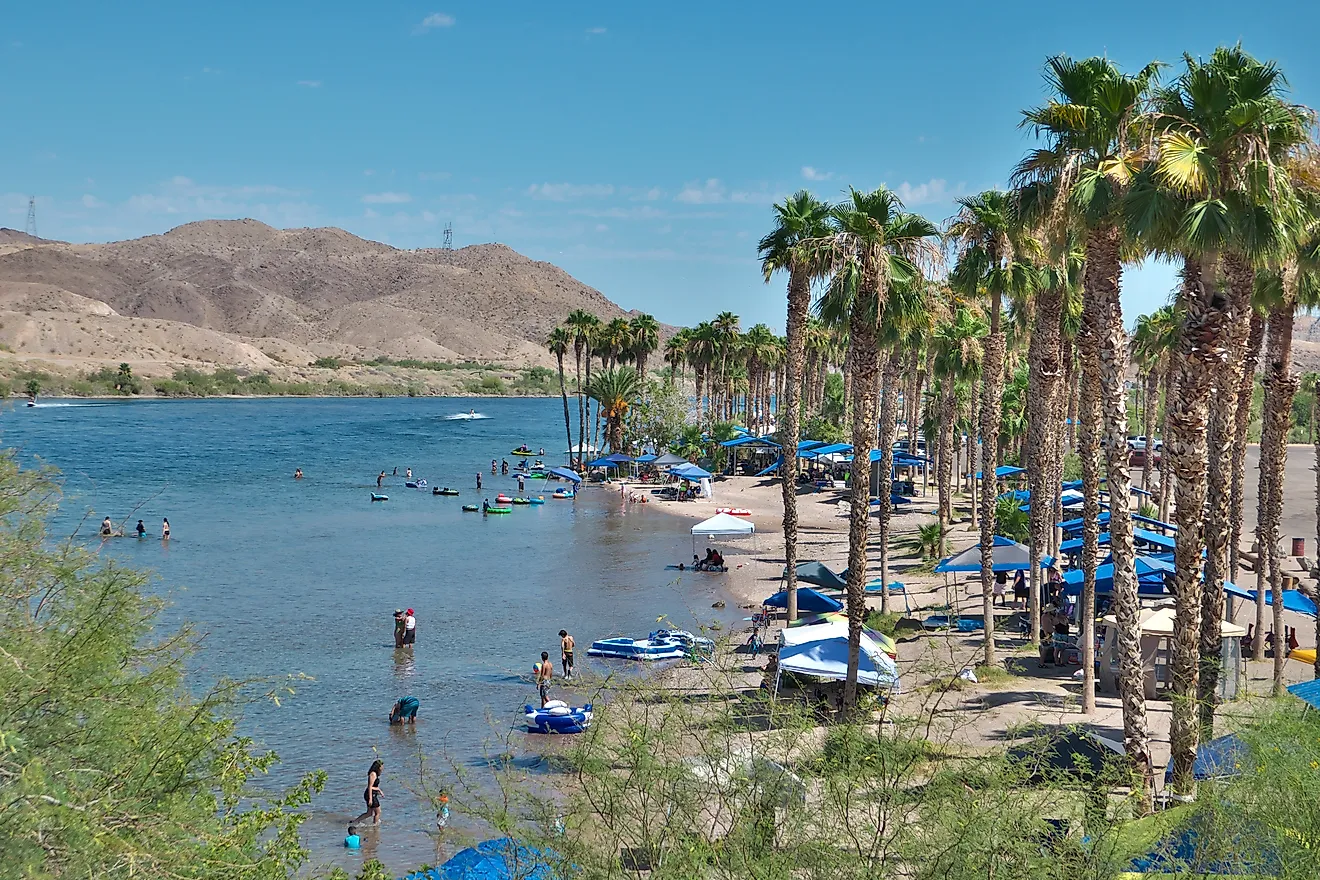
The Quarter Quell arena in Catching Fire, the saltwater lagoon with the Cornucopia on an island at its center, was a man-made beach in Jonesboro, south of Atlanta. Clayton County International Park was built as the beach volleyball venue for the 1996 Olympics, when the sport made its Olympic debut, and the site was marketed as Atlanta Beach. Production crews drained the lake for filming in 2012, built the arena set on the sand, and then refilled it.
The crews did extensive work to turn the area into 12 distinct areas that would become the basis for survival for Katniss, Peeta, and their allies during the 75th Hunger Games.
Since 2022, it has been Spivey Splash Water Park, open from Memorial Day weekend through the summer. The water park's centerpiece is a 1,279-foot lazy river that's said to be the longest in Georgia, along with a FlowRider surf simulator, four slides, a splash pad, and a Sky Trail ropes course above the water.
The rest of the county park is open year-round. Other highlights include a 17-court tennis center, fishing lakes, walking trails, and softball and soccer fields.
Atlanta Marriott Marquis, Georgia
The tributes' quarters in Catching Fire are a hotel you can check into while exploring Georgia's Hunger Games sites. The Atlanta Marriott Marquis opened in 1985 and supplied the film with its 10th-floor training center suites, the rooftop, and the glass elevators that rise through its atrium. The elevators on the main floor were used to film Johanna Mason's elevator scene with Katniss, Peeta and Haymitch.
The atrium that you'll see from the elevator is certainly impressive, and rises 50 stories, providing access to the hotel's 1,663 rooms. So impressive, in fact, that it has since appeared in the Disney Plus show Loki, Spider-Man: Homecoming, and A Man in Full.
The lobby's free to walk into, and the glass elevators are in full view from the atrium's floor. The hotel is also included on Explore Georgia's six-stop Hunger Games film tour, along with Swan House, Sweetwater Creek, and Jonesboro, making it a handy base for a weekend of location hunting in the city.
Catching Fire left its mark on other Atlanta-area locations, some of them easy to miss. The tributes' chariot parade was filmed at EchoPark in Hampton, one of the country's largest speedways, and a reaping stage was built at The Goat Farm Arts Center in West Midtown. The Hob's exterior was shot at Pullman Yard in Kirkwood, the former railcar repair works that's now an entertainment complex.
Sweetwater Creek State Park, Lithia Springs, Georgia

Katniss and Gale's (played by Liam Hemsworth) conversation by the river in Mockingjay Part 1 was filmed at Sweetwater Creek State Park in Lithia Springs, 18 miles west of downtown Atlanta. Lawrence also shot scenes inside the ruined mill that stands beside the creek.
The New Manchester Manufacturing Company opened the five-story brick mill in 1849 to spin cotton, and Union cavalry seized it in July 1864 during General Sherman's Atlanta campaign.
Union troops burned it a week later and arrested its workers (mostly women and children), who were sent north to Louisville. The walls have stood empty ever since, but ranger-led Inside the Ruins tours are available on select dates, and the ruins are visible from the trail the rest of the year.
The Odds Are in Your Favor
These locations in two states cover a lot of Panem and are for the most part accessible to Hunger Games fans. North Carolina gives you an excuse to hit the road for two days, with a night at Henry River Mill Village and a morning on the Blue Ridge Parkway. While Atlanta covers the rest of the films in a single weekend from a room at the Marriott Marquis.
As for the highly anticipated Sunrise on the Reaping? Well, you'll have to stay tuned for more news about the European locations used in the film.