Discovering the Middle East’s Misunderstood Paradise
In Cyprus, a winding Mediterranean shoreline shifts between rugged coves and calm beaches, while the mountains inland offer something wilder. This island nation sits where Europe and Asia meet, with deep Greek roots, Ottoman influence, and traces of British rule that make it one of the more distinctive members of the EU and the Commonwealth. But here's the twist: floating just west of Syria and Lebanon, Cyprus is also part of the Middle East. For many Westerners, that region brings to mind decades of unsettling headlines, which raises an obvious question about whether it's safe to visit. And yet, with over 4.5 million arrivals, 2025 was a record year for Cyprus. That momentum stopped on March 1st, 2026, when an Iranian drone struck a British military base just outside Limassol.
I happened to be in nearby Larnaca when it hit. I was set to board a bus to Limassol the very next day. Rather than cancel my trip, as many travelers did, I took a breath, set the alarming headlines aside, and looked at the actual situation. The locals weren't worried, and neither was I. So I got on the bus. After a few quiet days jogging along Limassol's sunny promenade and wandering its Old Town, I continued to the UNESCO World Heritage city of Paphos for more beach time, a 10K race, and a tour of its ancient ruins. The drone strike was an isolated incident, and a misread one at that. Cyprus is still an island paradise, and it deserves a full return of its visitors. In the meantime, there are deals and open rooms for travelers willing to come. Here's a snapshot of what's waiting for you.
A Bit of Housekeeping

Before I walk you through my Cyprus highlight reel, I thought it would be useful to cover a few basics. Where is Cyprus? What is it like? And what were the main events that took it from a Neolithic civilization to a Middle Eastern EU member?
Cyprus hovers in the Eastern Mediterranean Sea, south of Turkey, southeast of Greece, and west of (predominantly) Syria. While it has been part of the Commonwealth since 1961 (a year after it gained independence from British colonial rule), and a member of the European Union since 2004 (though not yet a part of the Schengen Area), Cyprus is still within Western Asia, and more specifically, a subsection of the Middle East known as the Levant.

Two-thirds of Cyprus's 9,251 square kilometers (3,572 sq mi), and the majority of its 1.38 million residents, are governed by the internationally recognized Government of the Republic of Cyprus. This is the part of the island where tourists go. The northern third has been governed by the so-called "Turkish Republic of Northern Cyprus" since 1974. This government is only recognized by Turkey. As such, a UN Buffer Zone divides the ethnically distinct populations of Greek Cypriots and Turkish Cypriots. Taken as a whole, Cyprus is a mix of Orthodox Christians (63%) and Sunni Muslims (23%), but again, these religious groups tend to be segregated by the geo-political border. With that said, there is still palpable cultural blending across southern Cyprus, which is one of its many appeals for open-minded travelers.
Travel Tips:

Speaking of traveling to Cyprus, here's what you need to know:
- International airports can be found in Larnaca (Larnaka) and Paphos (Pafos).
- Greek and Turkish are the official languages, but English is widely spoken.
- The official currency is the Euro, and ATMs are prevalent.
- Everyday costs are higher compared to Greece and Turkey, but there are certainly opportunities to save, given this year's travel hesitations.
- Buses run regularly between coastal cities, but since taxis are limited in rural areas, it is necessary to rent a car to visit the interior mountain towns.
- Tourism increased by 12.2% in 2025 but dropped by around 30% in March, stayed down by 28% YTD through April, and canceled summer bookings still haven't shown signs of replenishment.
- Historically, most of Cyprus' 4.5 million annual visitors come from the United Kingdom, Israel, Poland, Germany, Greece, and Sweden.
First Impressions from Larnaca

Arriving in Larnaca is a traveler's dream. A mere 12-minute taxi ride from the airport brought me past the flamingo-flocked lake and into the tranquil, criss-crossing streets of downtown. My girlfriend and I stayed right behind the Larnaka Medieval Fort and Djami Kebir Mosque, where, from the rooftop patio, we could see the sea shimmering beyond terracotta tiles. From there, we were able to quickly access the lively Finikoudes beach and boardwalk (where buses depart for Limassol), as well as the Old Town attractions orbiting Zouhouri Square and the Holy Church of Saint Lazarus.

Though still firmly in the winter season, the benevolent Mediterranean sun brought beachcombers, streetside cafe goers, and farmers' market vendors out of hibernation. As it turned out, this was also the time to see the last of thousands of pink flamingoes that migrate to Larnaca Salt Lake between November and March. But hey, even if you miss these flamboyant wading birds, the trails, vegetation, Roman aqueduct, and wild pigs are still worth the modest wander out from the Old Town.
Living it Up in Limassol

Even though it is the second-largest city in Cyprus, Limassol's tourist core maintains much of the small-town vibe established in Larnaca. It has a delightfully edgy Old Town filled with graffiti, weathered storefronts, traditional taverns (MEZE Taverna being the standout), cool coffee shops (namely, Black Rooster Espresso Bar), and lots of little pop-up markets. Out on the waterfront, Limassol's Promenade passes green parks with sculptures, pools, and outdoor gyms, wooden piers peering out to the steady stream of freighters (as well as the aforementioned British base), and open-air cafes that are, evidently, well-attended come hell or high water. This whole stretch is bookended by a sandy beach on the east end and a commercialized port to the west.

Even though the drone struck mere days before, my time in Limassol wasn't coloured in any way. The sun was still shining, couples were sipping coffee by the marina, parents were pushing baby strollers along the promenade, and singles were mingling in the Old Town bars. On the third evening, there was a small gathering opposing the presence of the British base (i.e., RAF Akrotiri). Still, even that was perfectly peaceful and proved an excellent opportunity to meet some locals and learn about their global perspective.
Paphos is Perfection

Larnaca set the tone, Limassol carried the torch, and Paphos brought it home. Settled in the Neolithic period and the purported birthplace of Aphrodite, this third coastal Cypriot city oozes personality. From the hilltop Old Town to the waterfront ruins, the lighthouses and shipwrecks, and modern-day resorts, you can feel the intersection of time, space, and culture.

On my first day, I beelined for the Archeological Site of the Tombs of the Kings. This expansive necropolis blends mysterious subterranean realms with dazzling naturescapes that face the setting sun. Exiting on the waterfront side, Irina and I were able to enjoy that soft afternoon glow while we caught our first glimpse of Paphos' endless Coastal Boardwalk. We strode a click or two north in an effort to get within view of the MV Dimitrios II shipwreck — a rusting vessel that haunts the shallow waters just offshore.

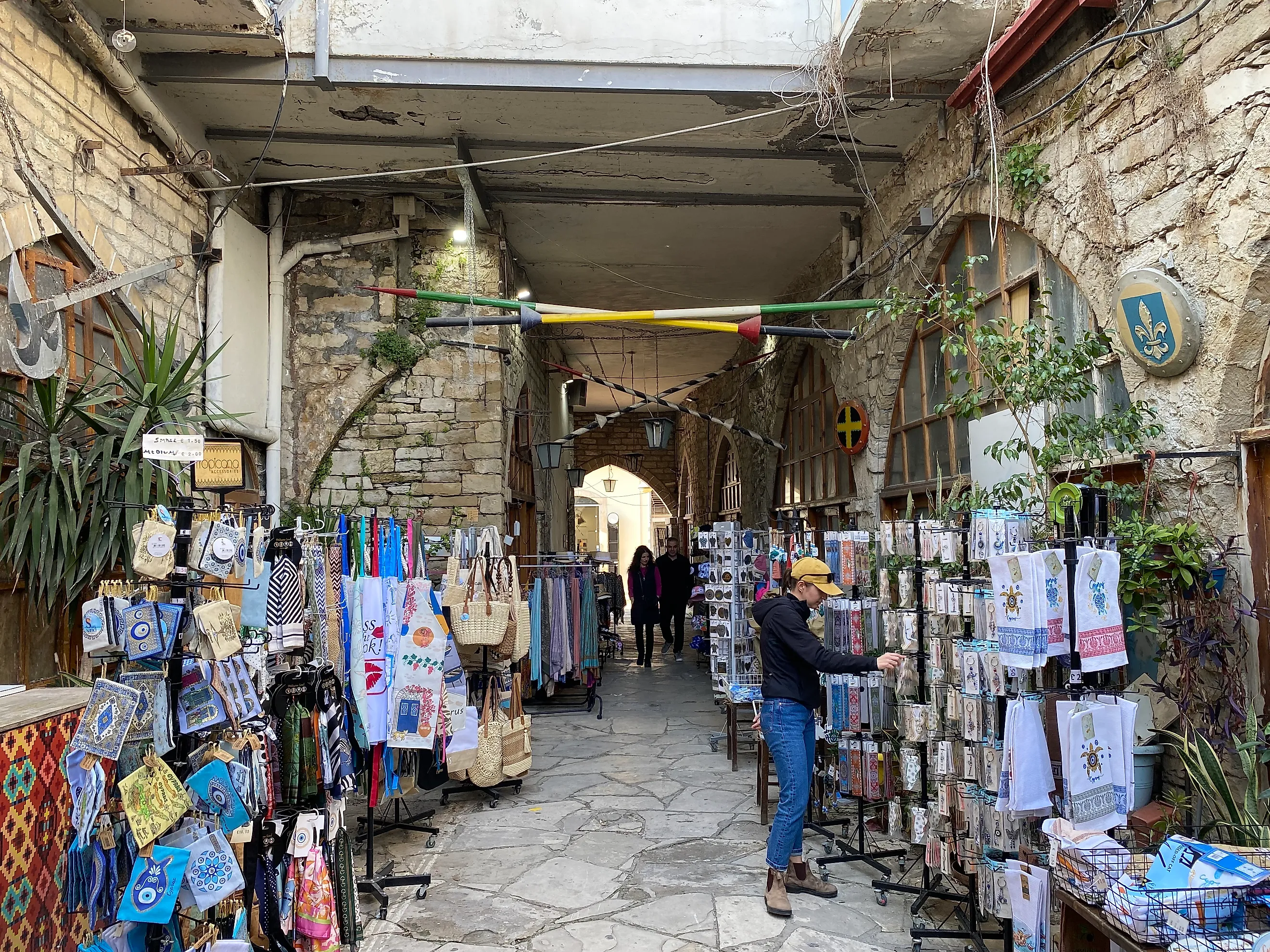
Day two was dedicated to the Old Town. It's a grunt to walk up from the water, but the shop-lined and spit-shined streets and panoramic views are worth the effort. Each little segment is appealing for a different reason. The markets are great places to pick up some sentimental silver products, simple souvenirs, or maybe even a fresh green smoothie. The residential streets show off everyday life in Paphos. And the intermittent historical architecture, such as the Hammam Baths, continues to drive home the mosaic of cultures this island has hosted.

Day three, we dropped down to the southern reaches of Paphos' waterfront, where we were able to explore the Archeological Site of Nea Paphos, the House of Dionysus, the House of Orpheus, the stalwart Paphos Lighthouse, and Paphos Castle — all significant contributors to the overarching UNESCO World Heritage Site. While passing through Paphos Port, I noticed that the Cyprus Marathon was just booting up. Always keen to run international races, but lacking the necessary time before my late-morning flight the following day, I registered for the 10k. I wondered how successful the event would be given current events, but to my delight, thousands of runners showed up — many from abroad. This proved to me that Cyprus is alive and well, ready to accommodate any and everyone who can push past a now-past fear-bait headline.
So Long, Cyprus

Rocky shorelines and manicured beaches, Greek temples and Ottoman mosques, fine wine and Mediterranean menus, Cyprus is nothing short of paradise. This small island showed me a side of the Middle East that I never knew existed - far from the deserts and conflicts. In Cyprus, summer comes early. In Cyprus, you can experience Europe from Asia (while simultaneously resetting your Schengen visa). And in Cyprus, you can forget all about the modern world over a plate of seafood, while investigating millennia-old architecture, or while simply digging your feet into the sand. All you have to do is disregard the news.