The Unhealthiest Presidents In American History
Forty-five men have held the presidency across forty-seven terms, and the job has a way of grinding down even the ones who arrived looking robust. Plenty of them ate sensibly, kept up their exercise, and pushed public fitness campaigns. A smaller group did the opposite, or simply drew a bad medical hand and then went to great lengths to keep the country from finding out. What follows is not a ranking, since health is too slippery a thing to rank cleanly. It is a tour of the presidents whose lifestyles, appetites, and diagnoses left them the least well of the bunch, sometimes spectacularly so.
Grover Cleveland

Cleveland's own nieces and nephews called him Uncle Jumbo, and the nickname was earned. At better than 280 pounds he was the second-heaviest man to hold the office, trailing only Taft. He loved rich food, cigars, and beer, and in his younger days he reportedly tried to hold himself to four glasses of beer a day. The limit did not survive contact with reality. Gout left him limping, and the cigars caught up with him in the worst way. Early in his second term, in 1893, he noticed a rough patch on the roof of his mouth that turned out to be cancer.
What he did next is one of the strangest episodes in presidential medicine. With the country sliding into financial panic, Cleveland decided the public could not be allowed to learn he was ill. He boarded a friend's yacht under the cover of a fishing trip, and on July 1, 1893, a team of surgeons removed much of his upper left jaw and five teeth while he sat strapped to a chair at sea. He instructed them to spare his mustache so that no one would notice anything had changed. The secret held for roughly two decades, confirmed only after one of the surgeons wrote it up years later. Cleveland lived until 1908, when a heart attack finally caught him at 71.
Dwight D. Eisenhower

Eisenhower reached the White House already carrying abdominal trouble, the legacy of an old appendectomy and the adhesions it left behind. The bigger problems came in office. He had a serious heart attack in 1955, surgery for ileitis, a form of Crohn's disease, in 1956, and a mild stroke in 1957. He won a second term anyway, against his doctors' misgivings, and the wear showed. A man still in his sixties looked considerably older by the end, and a steady fondness for steak and bourbon did his arteries no favors.
Warren G. Harding

Harding took office as the 29th president already in poor shape, with high blood pressure and early signs of diabetes, and by 1918 he had pushed past 200 pounds. He chewed tobacco, smoked a couple of cigars a day, and was fond of a long night at the poker table. Through his presidency he grew steadily more tired and short of breath, troubled by chest pains, and in August 1923 he died suddenly of a heart attack while traveling. He remains one of only four presidents to die in office of natural causes, alongside William Henry Harrison, Zachary Taylor, and Franklin Roosevelt.
Andrew Jackson

Few presidents collected as many injuries as Jackson. He joined the Revolution as a courier at about 13, was captured by the British, and contracted smallpox in a prison camp that killed his brother and nearly killed him; his mother died soon after, leaving him an orphan at 14. Years of frontier campaigning during the War of 1812 left him with chronic dysentery and recurring fevers that troubled his gut for the rest of his life.
Then there was the dueling. In 1806 Charles Dickinson put a bullet in Jackson's chest, close to his heart, where it stayed for nearly forty years and ached the whole time; surgeons finally dug part of it out in an 1832 operation at the White House. A Nashville brawl with the Benton brothers in 1813 shattered his left shoulder and lodged a second ball in his arm. The lead and mercury often blamed for poisoning him came less from those bullets than from his own physicians, who dosed him for decades with calomel and sugar of lead. For all of it, the six-foot Jackson, who rarely weighed more than 145 pounds, lived to 78.
John F. Kennedy

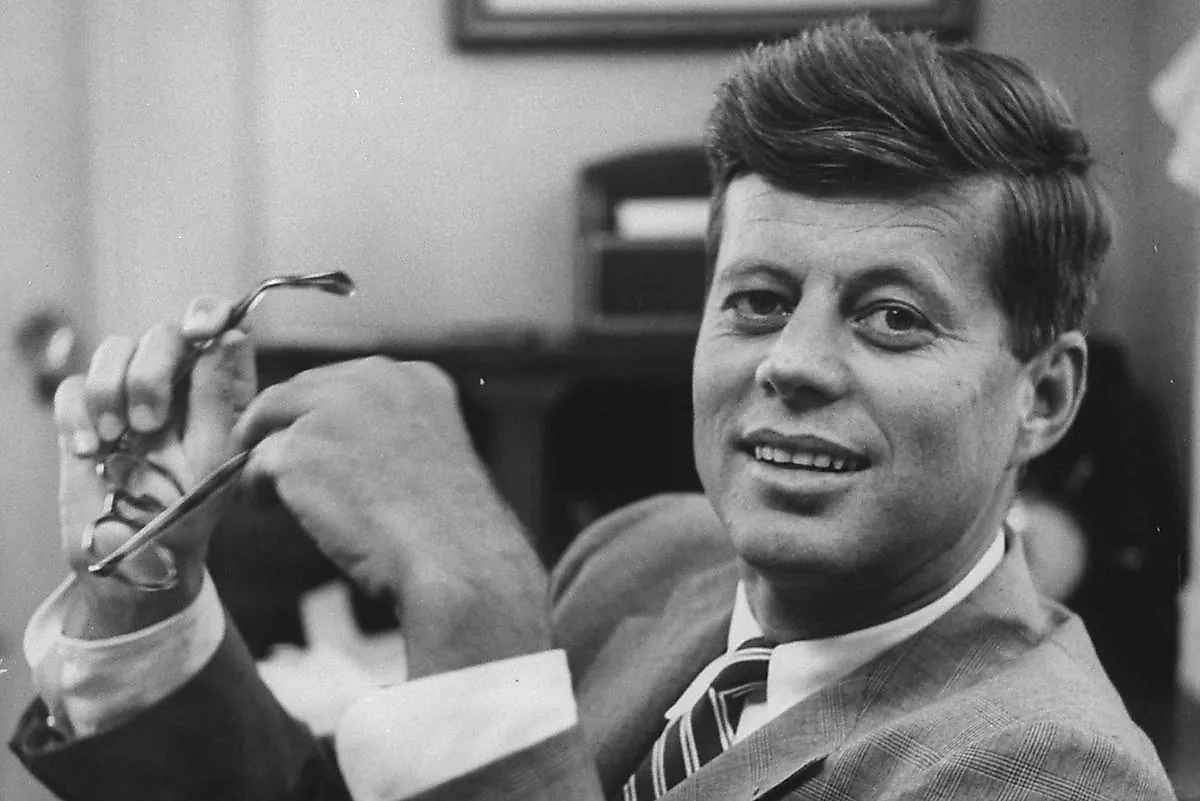
Elected at 43, the youngest man ever voted into the office, Kennedy projected vigor while living in near-constant pain. He had serious gastrointestinal problems as a young man and was diagnosed in 1947 with Addison's disease, a failure of the adrenal glands that was managed quietly with steroids. Separately, a degenerative and unstable lower spine, made worse by his World War II service when his patrol boat was rammed and sunk, put him through several risky operations. He was given last rites more than once. Sleep was difficult and the medications many, and almost all of it stayed hidden to preserve the image of a young and healthy leader.
James Madison

Madison was the smallest president the country has ever had, standing about 5 feet 4 inches and rarely topping 100 pounds, and he spent much of his life convinced he was dying. His doctors steered him away from nearby William and Mary toward Princeton partly out of fear he would catch malaria in tidewater Virginia. In 1775 he collapsed during a militia drill, one of what he called sudden attacks resembling epilepsy, and the episodes kept him out of combat and recurred for years. He battled exhaustion, low spirits, and a hypochondriac's certainty that some hidden illness had him. History then supplied the punchline: the fragile worrier outlived nearly all of his hardier contemporaries, dying in 1836 at 85.
James Monroe

The fifth president and the last of the run of Virginia men who held the early office, Monroe picked up malaria during his travels through the western frontier in the 1780s, and the fevers returned for years afterward. His real decline came later. By around 1830 he had developed a chronic lung illness, most likely tuberculosis, that left him breathless and coughing up blood. He died of heart failure and that underlying disease on July 4, 1831, becoming the third president to die on Independence Day after John Adams and Thomas Jefferson, who had both gone exactly five years earlier.
Ronald Reagan

The smoking story usually told about Reagan is backwards. He had been a cigarette pitchman in his Hollywood days, but he quit the pipe in 1966 while running for governor of California, and the thing he reached for instead was jelly beans. The habit followed him into the White House, where a jar sat on the Cabinet table, 720 bags a month arrived by standing order, and three and a half tons turned up for the 1981 inaugural. The candymaker even mixed a blueberry flavor so the spread could be red, white, and blue. His favorite was licorice.
The actual health scares were real enough. Surgeons removed a cancerous polyp from his colon in 1985 and a patch of skin cancer from his nose in 1987. He was diagnosed with Alzheimer's disease in 1994, five years after leaving office. Whether the signs were already present while he was still president has been argued over ever since, without resolution.
William Taft

Taft is the heaviest president on record, near 340 pounds at his peak, and his size was a genuine medical problem rather than a punchline. He had what doctors now recognize as obstructive sleep apnea. He snored thunderously, his blood pressure ran dangerously high, and he could fall asleep mid-sentence, in meetings, and reportedly even on the golf course. The famous picture of him wedged in a White House bathtub is mostly folklore, though it grew out of a real detail, because a custom tub large enough to hold several grown men was in fact built for him.
The appetite was enormous and the weight stubborn, but the ending is the surprising part. Within a year of leaving office he dropped 60 to 70 pounds under the long-distance guidance of a British diet doctor, and his daytime sleepiness eased. He went on to become Chief Justice, the only person ever to lead two branches of the government. One exchange captures the man. Before his presidency he wired a colleague that he had taken a long horseback ride and was feeling fine, and the colleague wired back to ask how the horse was holding up.
Woodrow Wilson

Wilson is remembered as one of the hardest-working presidents, and that drive came at a steep cost to his body. His physician, Cary T. Grayson, worried about his health from the start of the term. In October 1919 Wilson suffered a severe stroke that left him partially paralyzed and largely out of public view. Too stubborn to resign, he tried to conceal how badly he had been hit while his wife, Edith, screened his work and decided what reached him, an arrangement later critics called a kind of unofficial regency. The strain only deepened his decline.
Joe Biden

Biden belongs here for reasons that became fully clear only once he had left office, which is the fair way to judge a president's health. He took the oath at 78 and left at 82, the oldest person ever to hold the job, and questions about his stamina and sharpness followed him throughout the term, growing louder after a halting debate performance in June 2024 that preceded his exit from that year's race. His medical history was already serious. Two brain aneurysms in 1988 nearly killed him and required surgery, and doctors removed a basal cell skin cancer in 2023.
Then, in May 2025, a few months after his presidency ended, his office announced that he had been diagnosed with an aggressive prostate cancer, with a Gleason score of 9 and spread to the bone. His doctors described it as hormone-sensitive, which makes it manageable, though disease that has reached the bone is generally considered advanced and not curable. It is the kind of news the public tends to learn only after a president has left office, which is exactly why he earns a place on this list.
What the Office Does to a Body
Read together, these cases say something consistent about the presidency. The job is punishing, the people who take it are often older and already worn, and for most of American history the instinct was to hide the damage rather than admit it. Cleveland sailed off to have his jaw rebuilt in secret, Wilson governed through a curtain held up by his wife, and Kennedy bounded up gangways on a spine that was failing him. What has changed is less the toll the office takes than how much of it the country eventually gets to see, and how long the seeing takes.