The Deadliest Dictator Regimes In History
The figures behind any list of "the deadliest dictators in history" trace mostly to political scientist R.J. Rummel, who in the 1990s compiled running death-toll estimates under a methodology he called democide: the murder of any person or people by a government, including deaths from state-engineered famine, forced labor, and concentration camps. Rummel's specific figures are now treated as upper-bound estimates by most modern historians, who tend to give ranges rather than single numbers. The ten regimes below are arranged in roughly descending order of Rummel's totals, with modern revised ranges noted where they materially diverge. They span the 1880s to the 1990s and produced a combined death toll somewhere between 130 and 200 million people, the largest single contributor being the famine that followed Mao's Great Leap Forward.
Mao Zedong: People's Republic of China (1949-1976)
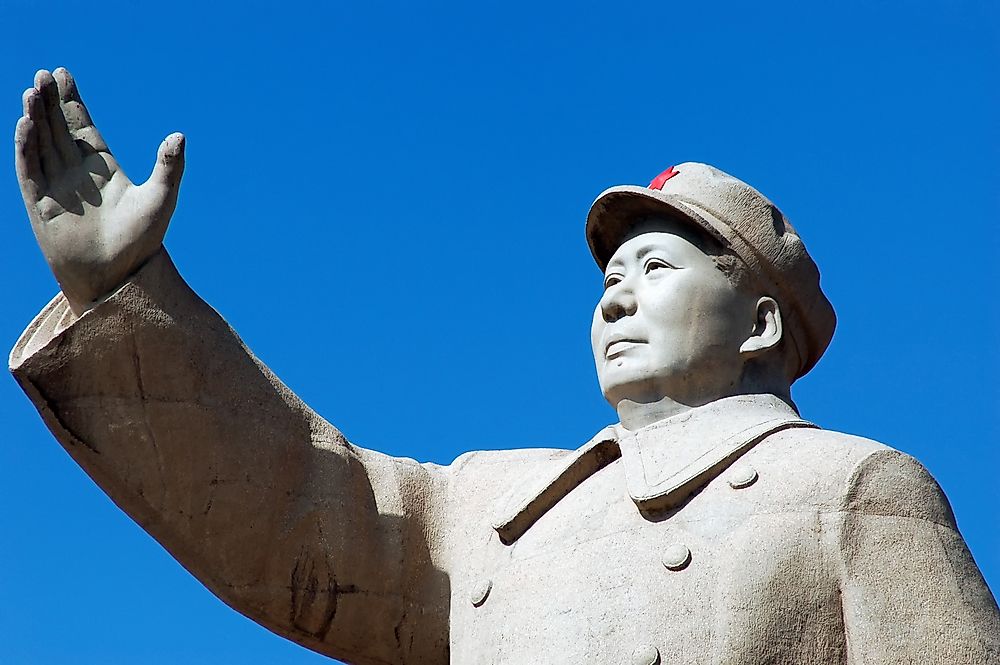
Mao Zedong proclaimed the founding of the People's Republic of China in Tiananmen Square on October 1, 1949, ending the Chinese Civil War with the Chinese Communist Party in control of the mainland. The Mao era killed an estimated 40 to 70 million people. The largest single contributor was the famine of 1959 to 1961 caused by the Great Leap Forward (1958-1962), Mao's economic campaign to industrialize China through forced collectivization and backyard steel production. Modern estimates for the famine death toll range between 15 and 55 million, with most academic estimates clustering between 30 and 45 million; Frank Dikötter's Mao's Great Famine (2010), based on newly opened provincial archives, settled on around 45 million. The famine was made worse by the government's continued grain exports during the worst years and by the falsification of harvest reports up the bureaucratic chain.
The Cultural Revolution (1966-1976) was a separate campaign, distinct in method and target from the Great Leap Forward. Mao launched it in May 1966 to purge the Communist Party of rivals (notably State Chairman Liu Shaoqi and General Secretary Deng Xiaoping) and to mobilize Chinese youth, organized as Red Guards, against what he called "the four olds" (old ideas, old culture, old customs, old habits). The death toll from the Cultural Revolution proper is usually placed between 1 and 2 million, with mass struggle sessions, school closures, and the destruction of pre-revolutionary cultural heritage as defining features. Earlier in his rule, Mao had also conducted the anti-rightist Hundred Flowers Campaign of 1956 to 1957, in which intellectuals were initially invited to criticize Communist Party rule and were then arrested or sent to labor camps for having done so.
Adolf Hitler: The Third Reich (1933-1945)
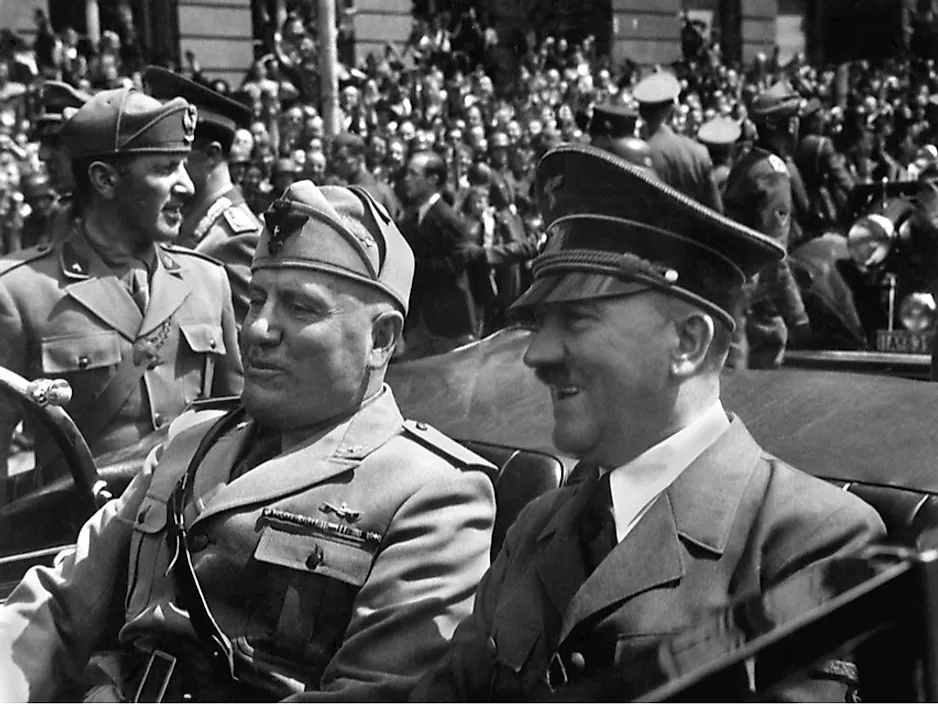
Adolf Hitler was appointed Chancellor of Germany on January 30, 1933 by President Paul von Hindenburg, who hoped to control the Nazi leader through a cabinet dominated by conservatives. The Reichstag Fire Decree of February 28, 1933 and the Enabling Act of March 23, 1933 transferred legislative authority to Hitler's cabinet within two months. Hitler combined the offices of chancellor and president on August 2, 1934, the day Hindenburg died, taking the title Führer und Reichskanzler. The Nazi regime's defining ideology, Lebensraum ("living space"), called for the conquest of Eastern Europe and the displacement or extermination of its Slavic, Jewish, and Romani populations to create a racial empire for Germans.
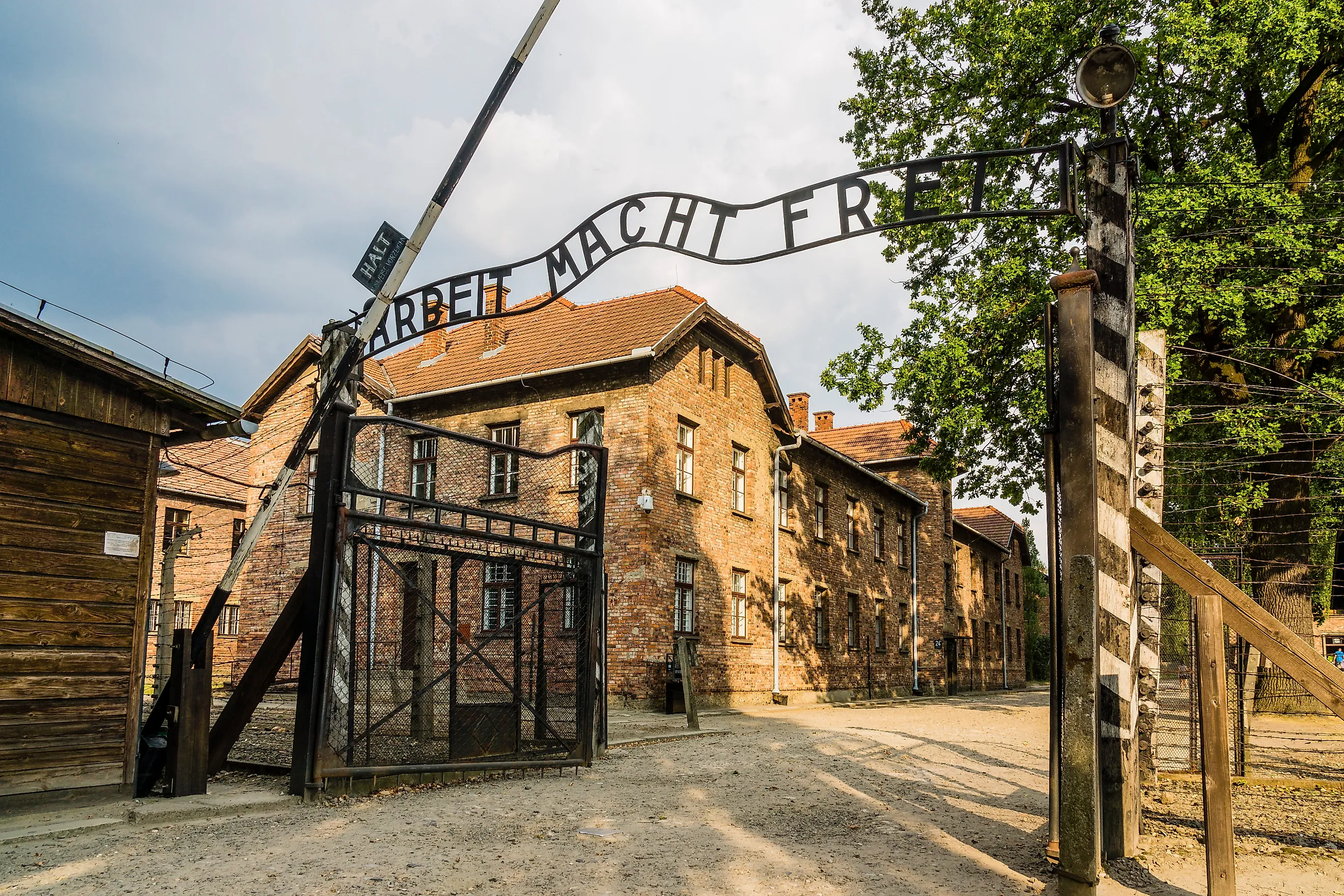
The Holocaust killed approximately 6 million Jews and an additional 5 million non-Jewish victims (including Roma, Polish and Soviet civilians, Soviet prisoners of war, disabled people targeted under the T4 euthanasia program, Jehovah's Witnesses, homosexuals, and political prisoners) between 1941 and 1945. The killing apparatus combined the mobile Einsatzgruppen death squads (responsible for roughly 1.5 to 2 million murders in occupied Soviet territory, primarily by mass shooting) with the network of extermination camps in occupied Poland (Auschwitz-Birkenau, Treblinka, Sobibor, Belzec, Chelmno, Majdanek), where industrial-scale gas-chamber killing was the main method. Operation Reinhardt, the German effort to murder the Jews of the General Government zone of occupied Poland, killed approximately 1.7 million people between March 1942 and November 1943. Including civilian deaths in occupied Europe outside the camps and Holocaust system, the Nazi regime's total death toll is conventionally estimated at 11 to 17 million. Hitler shot himself in his Berlin bunker on April 30, 1945. Germany surrendered unconditionally on May 7-8, 1945.
Joseph Stalin: Soviet Union (1924-1953)

Joseph Stalin emerged as the dominant figure in the Soviet Politburo in the years after Lenin's death on January 21, 1924, consolidating power between 1924 and 1929 through the expulsion of Trotsky (exiled 1929) and the gradual sidelining of Kamenev, Zinoviev, and Bukharin. The first major mass-death event of the Stalin period was the forced collectivization of agriculture, which began in 1929 and triggered a famine across the Soviet grain belt between 1932 and 1933. The Ukrainian portion of that famine, the Holodomor, killed roughly 3.5 to 7 million Ukrainians and has been recognized as a genocide by Ukraine and over 30 other countries. The kulaks (peasants categorized as wealthier landowners) were targeted as a class for "liquidation" and were either executed, deported to Central Asia or Siberia, or sent to forced-labor camps.
The Great Purge of 1936 to 1938, run by NKVD chiefs Genrikh Yagoda, Nikolai Yezhov, and Lavrentiy Beria in sequence, executed roughly 750,000 to 1.2 million people and sent more to the Gulag (the system of corrective labor camps that operated from 1930 to 1960 and held an estimated 18 million prisoners over its existence, with roughly 1.5 to 1.7 million dying in custody). Stalin also ordered the deportation of entire ethnic groups during and after the Second World War: the Volga Germans (1941), the Chechens and Ingush (1944), the Crimean Tatars (1944), and others, with combined deportation deaths in the hundreds of thousands. He signed the Molotov-Ribbentrop non-aggression pact with Hitler on August 23, 1939, which included secret protocols dividing Eastern Europe into spheres of influence; the Soviet Union subsequently invaded Poland (September 1939), Finland (Winter War, November 1939 to March 1940), the Baltic states (1940), and parts of Romania (1940). Stalin died on March 5, 1953, four days after a stroke. His total democide is estimated at 6 to 20 million depending on which famine deaths and which forced-labor deaths are attributed to direct state policy.
Chiang Kai-shek: Republic Of China (1928-1949)
The Kuomintang's Nanjing decade began in 1928 when Chiang Kai-shek's Northern Expedition reunified mainland China under nationalist control, ending the Warlord Era. The death toll attributed to the Chiang regime by Rummel (approximately 10.5 million) is largely a function of two events. The first was the 1938 Yellow River flood: in June 1938 the Kuomintang army deliberately breached the river's southern dikes near Huayuankou in Henan to slow the advance of Japanese forces during the Second Sino-Japanese War, flooding 54,000 square kilometers of farmland and killing an estimated 500,000 to 900,000 Chinese civilians. The second was the suppression of communist sympathizers and other political opponents, beginning with the Shanghai Massacre of April 12, 1927 (in which thousands of Communist Party members and labor organizers in Shanghai were killed by Kuomintang forces) and continuing through the Encirclement Campaigns of the 1930s.
The Kuomintang lost the resumed Chinese Civil War to the Communists between 1946 and 1949, and Chiang retreated to Taiwan in December 1949. The White Terror (1947-1987) on Taiwan, beginning with the February 28 Incident of 1947 (in which an estimated 18,000 to 28,000 Taiwanese were killed by Kuomintang forces), continued under Chiang's leadership until his death in 1975.
King Leopold II Of Belgium: Congo Free State (1885-1908)

The Congo Free State was the private property of King Leopold II of Belgium, not a colony of the Belgian state. Leopold acquired it through diplomatic maneuvering at the Berlin Conference of 1884-1885, where he presented his project as a humanitarian and free-trade enterprise. From 1885 to 1908 he ran the territory (about 76 times the size of Belgium itself) as a personal commercial concession devoted primarily to rubber extraction. The Force Publique, the colonial military, enforced rubber quotas through hostage-taking, village burnings, and the well-documented practice of severing hands of villagers (and of children, as proof to officers that bullets had been used in the field rather than stolen).
Modern estimates for the death toll in the Congo Free State between 1885 and 1908 range widely. Adam Hochschild's King Leopold's Ghost (1998) cites approximately 10 million deaths (roughly half the pre-colonial population), drawn from anthropologist Jan Vansina's work; some scholars argue the figure may be lower (3 to 8 million) once disease mortality is separated from direct violence and famine. International outrage following the Casement Report of 1904 and the campaigning of journalist E.D. Morel's Congo Reform Association forced Leopold to transfer the territory to the Belgian state in November 1908, when it became the Belgian Congo. Leopold himself was never tried.
The Empire Of Japan (1895-1945)
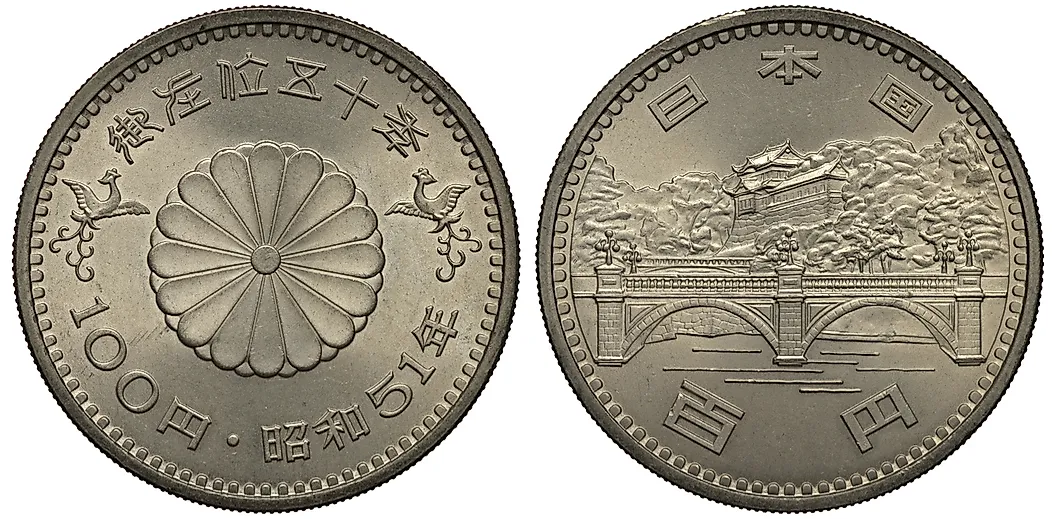
The Empire of Japan annexed Taiwan in 1895 (after the First Sino-Japanese War), Korea in 1910, and Manchuria in 1931. Civilian death tolls attributed to the Japanese Empire under Emperor Hirohito's reign (1926-1989) and the wartime cabinets of Prime Minister Hideki Tojo (1941-1944) and others include the Nanjing Massacre of December 1937 to January 1938, in which an estimated 40,000 to 300,000 Chinese civilians and prisoners of war were killed (the lower estimates come from Japanese revisionists, the higher from the Tokyo War Crimes Tribunal). The Three Alls Policy ("kill all, burn all, loot all"), authorized in 1940 in response to the Communist Hundred Regiments Offensive, killed an estimated 2.7 million Chinese civilians in North China between 1940 and 1945. Unit 731, the Imperial Japanese Army's biological and chemical warfare research unit based in Harbin, conducted lethal experiments on at least 3,000 prisoners and field-tested weaponized plague, anthrax, and cholera on Chinese villages.
The system of "comfort stations" forcibly recruited an estimated 50,000 to 200,000 women, primarily from Korea, China, the Philippines, Indonesia, and Taiwan, into sexual slavery for the Japanese military. The Bataan Death March of April 1942 killed thousands of Filipino and American prisoners of war forcibly marched between Mariveles and Camp O'Donnell. The total civilian and prisoner death toll of the Japanese Empire across its half-century of expansion is conventionally estimated at 6 to 10 million. Japan surrendered on August 15, 1945 (formal signing September 2, 1945) following the atomic bombings of Hiroshima (August 6) and Nagasaki (August 9) and the Soviet declaration of war on August 8.
Pol Pot And The Khmer Rouge: Democratic Kampuchea (1975-1979)

On April 17, 1975, Khmer Rouge forces under the leadership of Pol Pot (born Saloth Sâr) entered Phnom Penh and took control of Cambodia. The regime renamed the country Democratic Kampuchea and immediately ordered the forced evacuation of all urban populations to the countryside. The Khmer Rouge declared 1975 to be Year Zero and announced an attempt to restart Cambodian civilization on an agrarian Maoist model. Money, markets, schools, hospitals, religious practice, foreign languages, and most family ties were abolished. The regime targeted ethnic minorities (Cham Muslims, Vietnamese, Chinese), Buddhist monks, educated professionals, anyone with eyeglasses or with calloused hands inconsistent with peasant work, and ultimately its own cadres in successive purges.
Of a Cambodian population of about 7.8 million in 1975, an estimated 1.5 to 2.2 million people died between April 1975 and January 1979, equivalent to roughly 20 to 25 percent of the population. Deaths came from execution (often at sites collectively known as the Killing Fields, the best-documented being Choeung Ek outside Phnom Penh), forced labor, starvation, and untreated disease. The S-21 detention center at Tuol Sleng, a former Phnom Penh high school converted into a torture and execution facility, processed an estimated 17,000 to 20,000 prisoners, of whom only a handful survived. The Khmer Rouge regime was overthrown by a Vietnamese invasion in January 1979. Pol Pot escaped capture and lived until 1998; he was never tried by an international court.
The Three Pashas: Late Ottoman Empire (1913-1923)
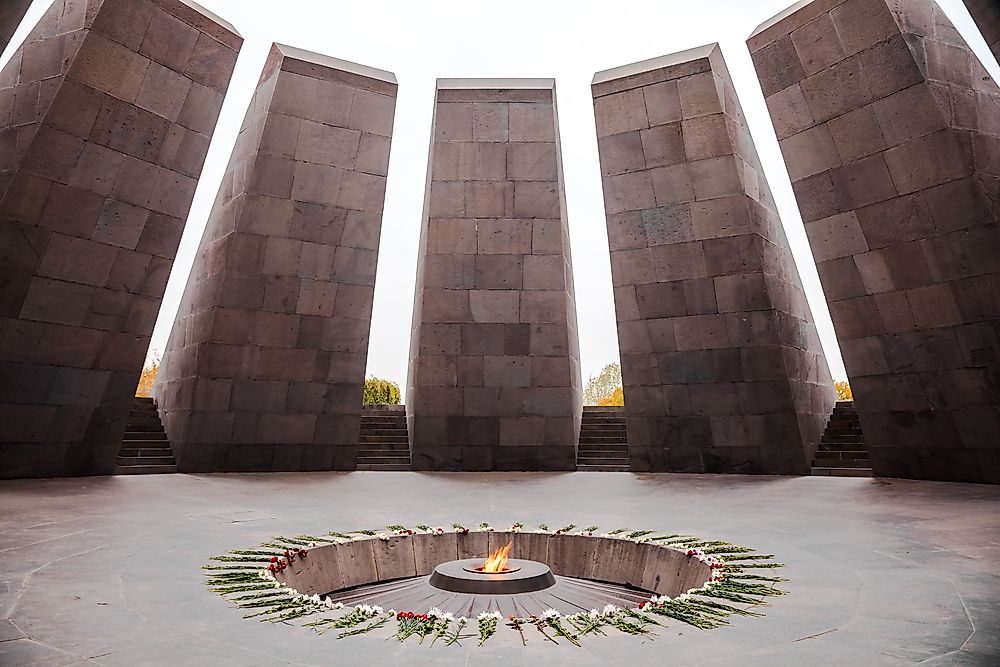
The Committee of Union and Progress (CUP), the political organization of the Young Turks movement, took de facto control of the Ottoman Empire following the coup of January 23, 1913. Power was concentrated in the so-called Three Pashas: Enver Pasha (Minister of War), Talaat Pasha (Minister of the Interior, later Grand Vizier), and Djemal Pasha (Minister of the Navy). Under their direction, the Ottoman state carried out the Armenian Genocide of 1915 to 1923, in which an estimated 1 to 1.5 million Ottoman Armenians were killed through mass deportation to the Syrian Desert, death marches, massacre, and concentration in camps such as Deir ez-Zor. The standard scholarly start date is April 24, 1915, when several hundred Armenian intellectuals and community leaders were arrested in Constantinople.
Parallel campaigns targeted other Christian minorities of the empire: the Assyrian Genocide (Seyfo, "the Sword") killed roughly 250,000 to 750,000 Assyrians during the same years, and the Greek Genocide killed an estimated 300,000 to 900,000 Ottoman Greeks, mostly in Pontus and Anatolia. Combined estimates for the late-Ottoman democide range from about 2 million to over 3 million. The Three Pashas fled the country in November 1918 after the Ottoman defeat in the First World War; Talaat Pasha was assassinated in Berlin in March 1921 by an Armenian survivor, Soghomon Tehlirian, in an act later termed Operation Nemesis.
Kim Il-sung: Democratic People's Republic Of Korea (1948-1994)
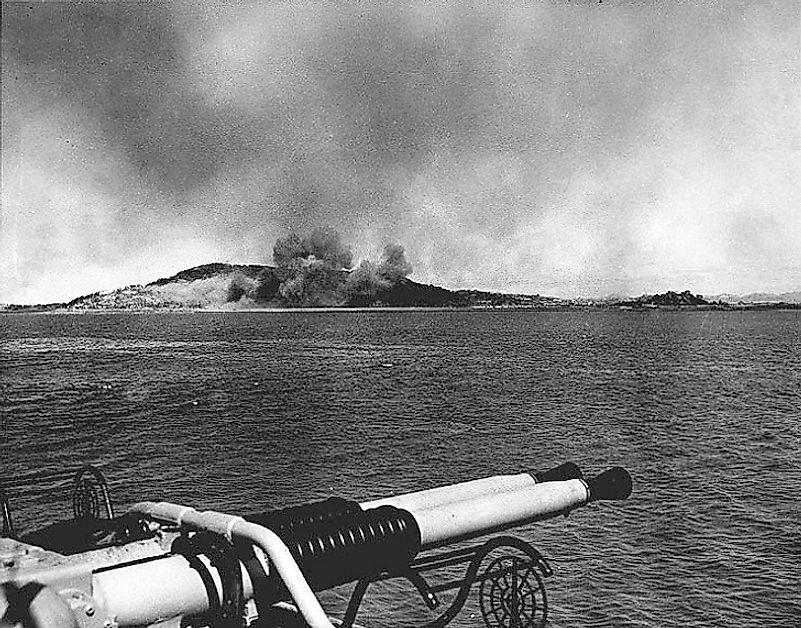
Kim Il-sung established the Democratic People's Republic of Korea on September 9, 1948 and ruled it until his death on July 8, 1994. He approved the invasion of South Korea on June 25, 1950 (with prior consent from Stalin and Mao), initiating the Korean War, which killed an estimated 2 to 4 million Korean civilians and combatants from both sides before the armistice of July 27, 1953. Rummel's democide figure of approximately 1.6 million for the Kim Il-sung regime covers political executions, deaths in the kwanliso political prison camp system (still operating in the 2020s, with an estimated 80,000 to 120,000 detainees), and famine-related deaths during recurring food shortages of the 1980s and early 1990s.
The more severe North Korean famine, the Arduous March of 1994 to 1998, killed an estimated 600,000 to 2.5 million people but mostly post-dated Kim Il-sung and occurred under his son Kim Jong-il. The Kim dynasty has continued in power since (Kim Jong-il, 1994-2011; Kim Jong-un from 2011), making the North Korean state the longest-running single-family dictatorship of the modern era.
Nicholas II: Russian Empire (1894-1917)

Nicholas II was the last tsar of Russia, reigning from his father Alexander III's death on November 1, 1894 until his forced abdication on March 15, 1917 (he and his immediate family were executed by Bolshevik guards at Yekaterinburg on July 17, 1918). His inclusion on lists of dictators is the most contested entry of the ten; he is more commonly remembered for political ineptitude than for ideological murder. Rummel's figure of approximately 1.16 million attributable deaths covers the suppression of the 1905 Revolution (including the Bloody Sunday massacre of January 22, 1905, when troops fired on a peaceful workers' procession petitioning the Winter Palace and killed an estimated 200 to 1,000), the Russo-Japanese War of 1904 to 1905, the violent repression of the 1905-1907 unrest, and the prison and exile system of Imperial Russia.
Nicholas's reign also coincided with a series of pogroms against the Jewish population of the Pale of Settlement (notably the Kishinev pogrom of April 1903), though the extent of state organization versus state tolerance of these events remains a matter of historical debate. The Russian Empire's entry into the First World War in 1914 produced military casualties that are not typically included in democide totals.
A Note On The Numbers
Rummel's totals were a 1990s academic project that has not been comprehensively redone since, and the figures should be read with that in mind. Subsequent archival work has tended to revise the Soviet numbers downward (the work of historians such as J. Arch Getty and Stephen Wheatcroft) and to revise the Chinese famine numbers upward (Dikötter, Yang Jisheng). The Congolese figures remain heavily contested. Different methodological choices about whether to attribute famine deaths to government policy, whether to count wartime civilian casualties as democide, and whether to use baseline mortality rates from the pre-conflict period or from contemporaneous neighboring populations all change the totals by tens of millions across the full list. Notable regimes not in the top 10 by Rummel's count but often cited in similar lists include Vladimir Lenin's Russian Soviet government (1917-1924, perhaps 4 million Russian Civil War and Red Terror deaths), the Derg regime of Mengistu Haile Mariam in Ethiopia (1974-1991, several hundred thousand killed and an additional famine death toll of about a million), Saddam Hussein in Iraq (1979-2003, roughly 250,000 to 500,000), and Idi Amin in Uganda (1971-1979, roughly 300,000 to 500,000).