8 Most Rattlesnake Infested Areas in Mississippi
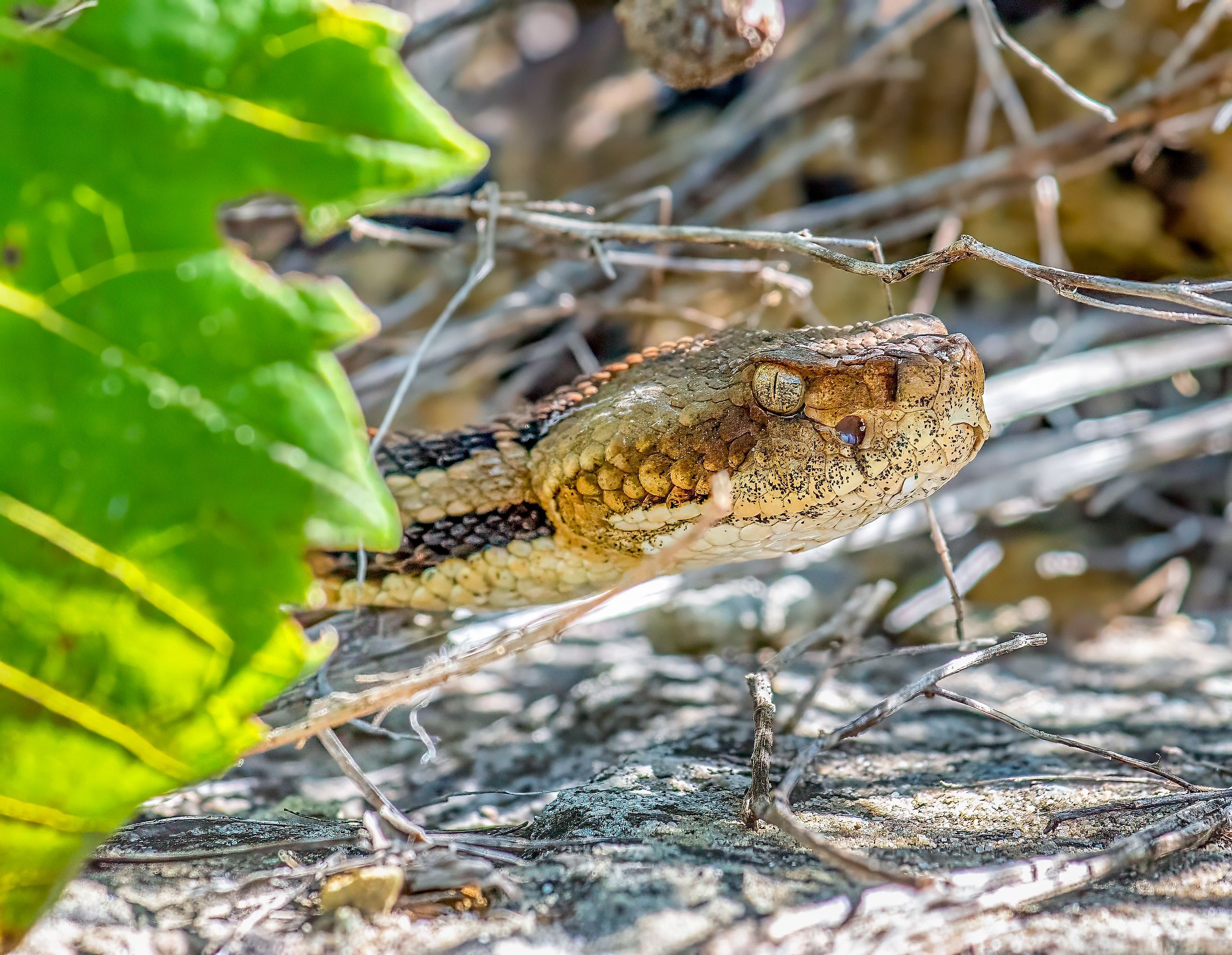
With their cat-like eyes, facial pits, and loud rattling tails, rattlesnakes are the most viscerally frightening and visually striking venomous snakes in Mississippi. Three of only six venomous species in the state, pygmy, timber, and eastern diamondback rattlesnakes, present a formidable risk to humans enjoying the many state and federal parks across Mississippi.
With conflicting findings from experts on whether most rattlesnake attacks are caused by intentional contact or accidental encounters, outdoor enjoyers should bet on avoiding snakes altogether by being aware of their characteristics and prevalence. Pygmy and timber rattlesnakes appear in the majority of the state, from Trace State Park near Tupelo down to the De Soto National Forest by Hattiesburg, while eastern diamondbacks are more threatened, sticking to the coastal south. These eight rattlesnake-infested areas highlight snake strongholds and the steps visitors can take to avoid harm.
Tishomingo State Park

Tishomingo State Park is a popular natural resource in the northeastern corner of the state at the foot of the Appalachian Mountains. The park’s over 1,200 acres of land, which make it the largest state park in Mississippi, are enjoyed by countless visitors and animals, including both venomous and nonvenomous snakes. Hikers traversing the 13 miles of trails are directed to stay on the path by following the colored paint and plastic markers left on trees and assigned to each trail. Fishers heading to Haynes Lake and Bear Creek should be especially aware when standing near the water’s edge or ground with high foliage.

Venomous species like the copperhead, cottonmouth, pygmy rattlesnake, and timber rattlesnake call northeast Mississippi home. Pygmy rattlesnakes specifically prefer forested environments near swamps where they can catch prey like mice, frogs, smaller snakes, and lizards. While no deaths directly related to the pygmy have been recorded, presumably due to their small size, these snakes cause serious injury and should be known to hikers, pet owners, and anyone looking to spend time in Tishomingo State Park. Despite misconceptions that they do not have working rattles, and thus make no noise, pygmy do indeed have rattles that they can break off and regrow when necessary. With their speckled black and grey coloring and smaller bodies, pygmy may be mistaken for juvenile black racer snakes or eastern Hognose snakes, both nonvenomous species in the area, although it is best to stay away from any encountered snake.
Clarkco State Park

Clarkco State Park is in east central Mississippi near the Alabama border and comprises 815 acres of woodlands loved by snakes, including all three of Mississippi’s rattlesnake varieties, the pygmy, timber, and, though more rarely, eastern diamondback. Timber rattlesnakes, also known as canebrakes, prefer to hunt in forests and near water where they have access to the rodents that make up most of their diet. With over 65 acres of fresh water perfect for fishing and water sports, like Ivy Lake, and 14 miles of trails, like the Chickasawhay mountain bike path, Clarkco State Park guests should be aware of their surroundings at all times and avoid interacting with any snakes discovered.

The Mississippi Department of Wildlife, Fisheries, & Parks states that although timber numbers are at an all-time low due to human intervention and an already low birth rate, bites from this species continue to occur, mostly when people try to handle or attack the snake. Timber are known to be calm and slower than other rattlers, often staying motionless and silent when encountering humans. Timber behavior is centered around strictly designated shelter areas called hibernacula, such as caves, burrows, brush piles, or rocky surfaces common along mountain bike trails. During colder temperatures, timbers have been known to use the same hibernacula over multiple years, where they group together with other snakes until temperatures rise. On sunny days, timbers can be found sunning on top of their hibernacula.
Gulf Islands National Seashore

The Gulf Islands National Seashore stretches across Florida, Alabama, and Mississippi and is known for its picturesque mix of grassy sand beaches, lush marshes, popular campsites, and serene trails perfect for all outdoor activities, as well as rattlesnakes. Along the Mississippi area of the seashore, which includes the Davis Bayou Area and Cat, Horn, Petit Bois, Ship, and West Petit Bois islands, eastern diamondback rattlesnakes are very prevalent and can pose an imminent threat to hikers, pets, and campers, especially.

The eastern diamondback is the largest variety of Mississippi rattler, with the longest ever recorded coming in at 7 feet and the average length being 4 to 5.5 feet. Eastern diamondbacks typically hide in foliage and shrubs or within tree roots and near burrows. Eastern diamondbacks generally stay hidden and use their noisy rattles to warn approaching humans, but they can and will strike when pushed too far or accidentally stepped on, administering a deadly venom. Ecologists following the species’ activity report that habitat loss, specifically to the sandhill and pine savannas they are native to, has affected the number of snakes currently in the wild. Visitors to the Gulf Islands National Seashore should be aware of their footing, path edges, and tree stumps, especially in sandy areas, and plan on avoiding any encounters with rattlers in the area.
LeFleur’s Bluff State Park

LeFleur’s Bluff State Park in Jackson is a haven for pygmy and timber rattlesnakes who thrive in the park’s deep forests and rock-lined Pearl River. The park features 305 acres of woodland trails, lively swamps, and grassy prairielands all teeming with native frogs, reptiles, and rodents, the ideal prey for rattlers. The Cypress Swamp Trail takes visitors up steep sections supported by boardwalk steps and platforms to get to the bottom of a bluff. Especially rocky areas with more difficult footing, like this trail, can attract rattlesnakes looking to hide in nearby hibernacula, and trail guests should be especially careful.

The Pearl River is approximately 444 miles long, ultimately feeding into the Gulf of Mexico. Its intersection with LeFleur’s Bluff is a main attraction for park visitors who enjoy kayaking, fishing, and wading. Unfortunately, its rocky banks surrounded by forest floors are the prime environment for pygmy and timber rattlers, especially during summer days when snakes are able to soak up much-needed heat from the sun. Rattlesnakes are also proficient swimmers and can be seen gliding along the top of the water. Park-goers who spy a snake swimming should refrain from entering the water and avoid the immediate area, as it may be experiencing a period of increased stress, either hunting, moving habitats, or being threatened by a predator.
Percy Quin State Park

Percy Quin State Park sits in southern Mississippi on the 490-acre Lake Tangipahoa, which is the location’s main attraction for boaters, water skiers, and fishers. Although the area has gone through significant environmental changes after being drained due to damage from Hurricane Isaac in 2012, water was restored, and the lake reopened for fishing in 2016. The return of lake water and, consequently, fish, reptiles, frogs, and small rodents, also supported the return of pygmy and timber rattlesnakes and other species of snakes.

Due to the risk of rattlers hiding in tall grasses and rocky piles along the lakeshore, it is recommended that families enjoying time at campsites and fishermen getting in and out of boats wear protective leg gear and thick, close-toed shoes. With an average size of only 18 to 20 inches, pygmy rattlesnakes can stay especially hidden at the base of pine trees or among the tangled reeds and coarse grasses next to docks. Timber rattlesnakes are much harder to miss with their light tan coloring, loud rattler, and larger size at 3 to 4.5 feet long, but the risk is always there, especially in ideal conditions like those at Percy Quin State Park.
Trace State Park

Trace State Park is located in northern Mississippi near the city of Tupelo, well within pygmy and timber rattler territory. The park is divided into an upper portion of wooded trails and a bottom portion centered around the 565-acre Trace Lake. As a sign of the large snake population, the lake is a favorite hunting ground for numerous bald eagles, many of which were raised by a mated couple living in the area for over 13 years. Eagles regularly hunt snakes by swooping down and using their talons to grab their heads, often killing them quickly or dropping them from a height large enough to kill them. Even though rattlesnakes are venomous, the swift power and strength of eagles allow them to avoid being bitten altogether. Birdwatching is a popular activity at Trace State Park, and eagles are often photographed gripping fish, small rodents, and snakes.

While the banks of the lake are typically well-maintained to avoid foliage overgrowth, especially near the park’s 76 RV campsites, adventurous visitors traveling to more remote fishing spots and docks should avoid entering areas with ground hidden by long grass, roots, or rocks. Hikers traveling on the Baker’s, Moroney, or Nester Trails, especially those who plan to walk dogs, should stay on designated paths and look for areas of potential rattler danger, like piles of dried leaves, fallen logs, or old tree stumps.
De Soto National Forest

The De Soto National Forest is more rugged and less maintained than many state parks, but beloved by avid outdoorsmen and nature lovers. Eastern diamondback rattlesnakes are native to this area and rely on the 518,587-acre national forest to preserve key parts of their habitat, specifically pine forests with sandy soil. Pygmy rattlers can easily be found here as well, and visitors may see timber rattlers occasionally, as the location is towards the edge of their designated territory.

The area’s regulations strictly prohibit harassment of wildlife and encourage the purchase of firewood instead of collection in the forest, two activities with the highest associated risk for rattlesnake bites. Solo travel is not recommended, another key way to help avoid serious injury or death after a potential bite from a hidden eastern diamondback curled up against dead trees deep in the forest. In more remote areas like this, extra caution should be taken to avoid rattlesnakes, and nearby medical facilities should be noted before entering the area. In the event of a bite, victims should remain calm, keep the bite at or below heart level, prepare for shock, and call emergency services before heading to a medical facility if possible.
Yazoo National Wildlife Refuge

The Yazoo National Wildlife Refuge, located near the banks of the Mississippi River near Hollandale, provides much-needed habitat protection for native species, with a specific focus on birds and waterfowl. As the oldest national wildlife refuge in the state, spanning 12,941 acres, thousands of migratory birds and waterfowl have passed through the refuge over time. Timber rattlesnakes are the only species of rattler reported along the Mississippi Delta region and include nesting birds and eggs in their diet. To hunt fast-moving targets, like birds, timber rattlers lie in wait until the right moment to strike. After a successful bite, venom quickly neutralizes the target prey.

As the only rattlesnake associated with the region, the more docile timbers exist alongside venomous cottonmouth and copperhead water snakes, as well as numerous nonvenomous species. Because female timbers only reproduce once every third year and are already fighting habitat loss, experts say their numbers are threatened, making the Yazoo National Wildlife Refuge essential for the survival of the species as it provides an abundance of prey with limited human intervention.
Rattle On By
These eight rattlesnake-infested Mississippi locations shed light on the pygmy, timber, and eastern diamondback species feared by many. While their venomous bite warrants extreme caution, maintained trails in places like Tishomingo State Park and dedicated areas of preservation at the Yazoo National Wildlife Refuge help to keep contact between rattlers and humans at a low. Trail hikers and campers to the Gulf Islands National Seashore and De Soto National Forest should take special caution, as the areas are more rugged and primed for accidental encounters. The state and federal parks of Mississippi play a key role in the conservation of these species and give visitors the unique opportunity to see rattlesnakes in the wild, hopefully from a safe distance while walking the other way.