7 Old-Timey General Stores In New Mexico
New Mexico's mining boom in the 19th and 20th centuries led to many small towns sprouting up quickly. A major feature of these towns was the general store. They sold food and clothing alongside housewares and tools. While general stores may be a thing of the past, many of these old-timey buildings remain intact today. Some transformed into a different type of business like the Hillsboro General Store Café while others became museums like The Pioneer Store. In either case, these stores offer a nostalgic view into New Mexico's not-so-distant history.
Hillsboro General Store Café
Built in 1879, the adobe structure that houses Hillsboro General Store Café originally served as a bank, telegraph office, stagecoach stop, and storeroom for the neighboring Miller Drug Store. After a flood destroyed the drug store's main building in 1914, operations moved to the current structure, which still stands.
For the past 30 years, the building has been home to a cafe well loved by the community. They serve breakfast and lunch, including specialties like red and green chile dishes and several varieties of homemade pie. Artifacts from the building's early days still adorn the space, and the owner has committed to maintaining the site's historical integrity. You can still shop here too, with offerings like jewelry, blankets, and other souvenirs made by local artisans.
Winston General Store

Settled in 1881, Winston is a historic mining town that boomed until the silver panic of 1893. Originally called Fairview, the town was renamed for Frank H. Winston after he died in 1929. Winston was a miner, businessman, and eventual state legislator who owned several businesses in Fairview, including Frank Winston Company General Merchandise. Today, Winston General Store operates in town and sells fuel, groceries, coffee, sandwiches, and showers.
Today, only a few families remain in the area, but Winston General Store remains essential as the only place to fuel up nearby. The shelves carry quintessential general store offerings like groceries, livestock feed, and hunting supplies, plus more modern fare like hot coffee, grab-and-go sandwiches, and souvenirs. A few other historic buildings remain as a draw for tourists to the area, like Winston's home and carriage house, the 1890 schoolhouse, and the historic post office.
Henderson Store

Originally called the Golden General Store, the Henderson Store has been family-owned since 1918. After gold was discovered in 1825, the area that would become Golden experienced the first gold rush west of the Mississippi River. The town of Golden was officially established in 1879, and it grew into a major mining district with several saloons, businesses, a school, and even a stock exchange. Ernest & Lucy Riccon opened the Golden General Store to service the mining town's growing population with their everyday needs.
The store passed down the family line and, in the 1960s, shifted toward selling high-quality Southwestern American Indian jewelry, rugs, and pottery. Today, Golden is officially recognized as a ghost town, and the Henderson Store is the only business left.
J.P. Holland General Store

The formerly booming mining town of Mogollon has a rowdy reputation as a classic Wild West town, thanks to its remote location in the wilderness. Peaking at a population of 6,000 during its prime years, the town drew in miners with the discovery of ore in the 1800s. Mining slowly declined and finally halted in the 1970s, officially transforming Mogollon into a ghost town with only a few permanent residents.
Many of the old-timey shops, adobe buildings, and mining sites remain today, drawing in tourists to experience the history firsthand. The best spot to stay in town is the Silver Creek Inn, housed in the former J.P. Holland General Store. Built in 1885, the two-story adobe structure was first called the Mogollon House and had boarding rooms on the second floor and a shop on the first. In 1914, J.P. Holland purchased the property and added a barbershop to the main floor alongside the general store. His name still adorns the outside of the historic building to this day.
Pioneer Store

The town of Chloride became a central mining area after the discovery of high-grade silver ore. During its boom in the 1880s, the town grew to 100 homes and 2,000 residents. The population supported eight saloons, three general stores, a hotel, restaurants, butcher shops, a candy store, a lawyer's office, a doctor, and boarding houses. Following the silver panic of 1893, the town eventually became a ghost town, but 27 of the original buildings remain.
The Pioneer Store, which operated as a general store from 1880 to 1923, is among the surviving structures. When it finally closed, the owner sealed the building, leaving all the contents inside, including the original furnishings and merchandise. In 1998, it opened as the Pioneer Store Museum, showcasing the leftover items and displays about the lives of former Chloride residents.
The Tunstall Store

The town of Lincoln is famous as the site of the Lincoln County War, which took place between 1878 and 1881. The Tunstall Store, still standing today, plays an important part in that history. John H. Tunstall built the general merchandise store in 1877 with his business partners, Alexander McSween and John Chisum. This venture created tension with a rival business in the area. Tunstall's murder on February 18, 1878 helped spark the Lincoln County War, and McSween was killed later during the conflict in July 1878.
After Tunstall's death, a series of new owners took over the property, and the store continued to operate until 1957. The State of New Mexico then turned it into a public museum showcasing the store's historic merchandise in its original shelving and cases. The Tunstall Store is part of the larger Lincoln Historic Site, which encompasses 17 structures highlighting the area's tumultuous history and original adobe architecture.
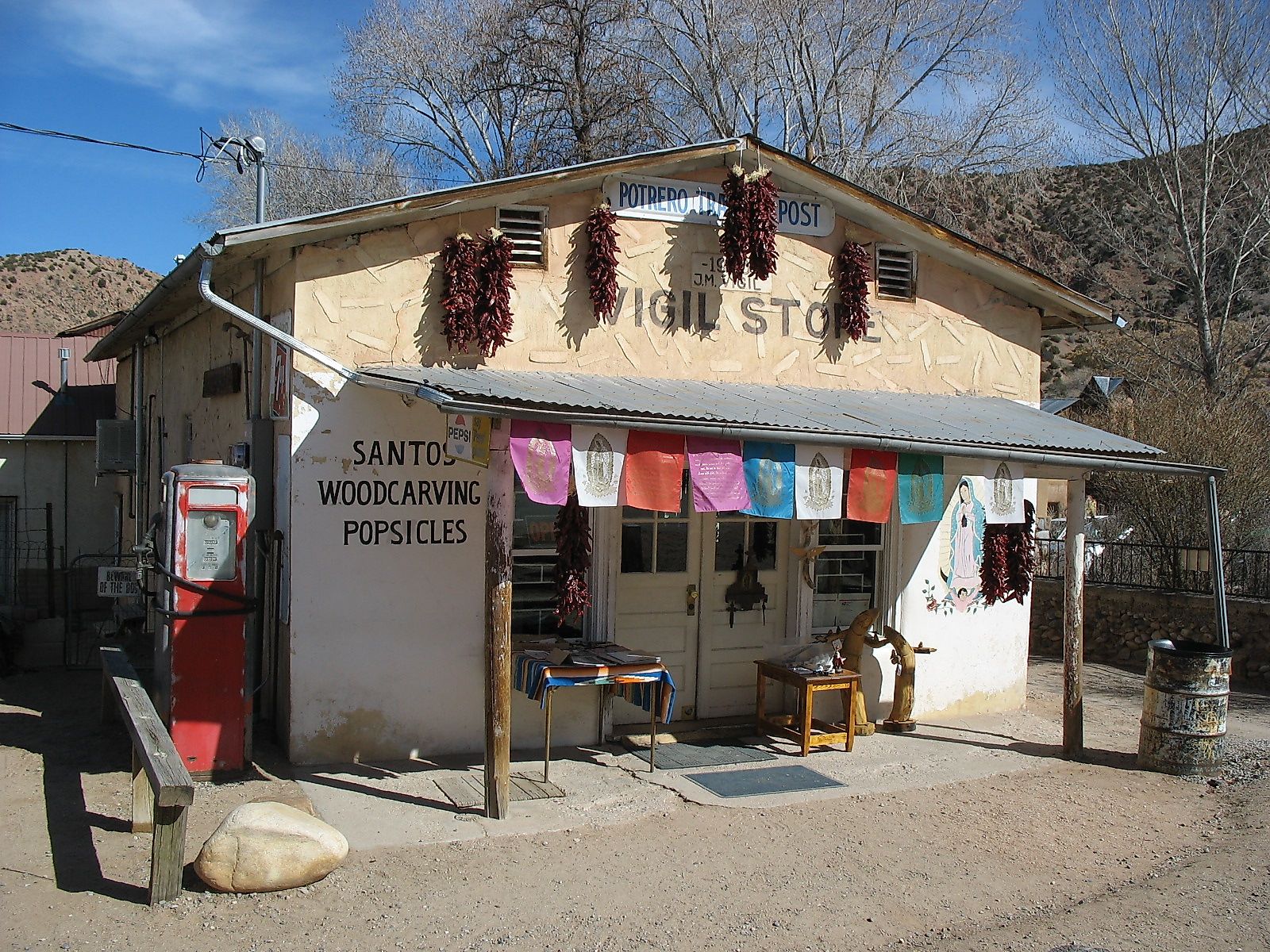
El Potrero Trading Post

Originally opened in 1921 by Alfonsa Vigil, El Potrero Trading Post was a small grocery store for the local community of El Potrero. The store stands in the village of Chimayo near El Santuario de Chimayo, which is renowned for the healing powers of el pocito, the small pit of holy dirt inside the chapel. Around 300,000 visitors make the pilgrimage to this National Historic Landmark each year.
El Potrero Trading Post remains family-run. Raymond Bal is currently the official owner, carrying on the business begun by his grandmother, Alfonsa Vigil. Instead of groceries, they now sell traditional religious articles, like retablos (saints painted on wood), bultos (carved saints), tin crosses and mirrors, milagros, and Mexican tin retablos. They also have a selection of green and red chile, New Mexican folk art, Zuni fetishes, and containers to hold the sacred dirt from El Santuario.
More Than A General Store
Whether you are grabbing a coffee from Winston General Store or shopping for Southwestern American Indian jewelry at the Henderson Store, New Mexico's general stores have unmatched historic character. While most of these locations no longer sell "general merchandise," they all keep some element of the original stores' old-timey identity. The hotels, boutiques, cafes, and museums that have made a home in these historic buildings are worth a visit for a unique peek into the past.