7 Ideal Georgia Destinations for a 3-Day Weekend
Georgia is a three-day state. Mountains collapse into foothills, blackwater rivers slip toward salt marsh, and old rail towns still tick to the timetable, all within the distance of a Friday tank of gas. In a year packed with easy long weekends, the state shines brightest not in its big cities but in its small, self-contained places where a single main street, a courthouse lawn, and a trailhead can carry an entire escape.
Every destination on our list keeps its character intact, and its highlights close, so the clock favors exploration instead of logistics. Seven towns, seven distinct moods, one shared promise: 72 hours that feel complete.
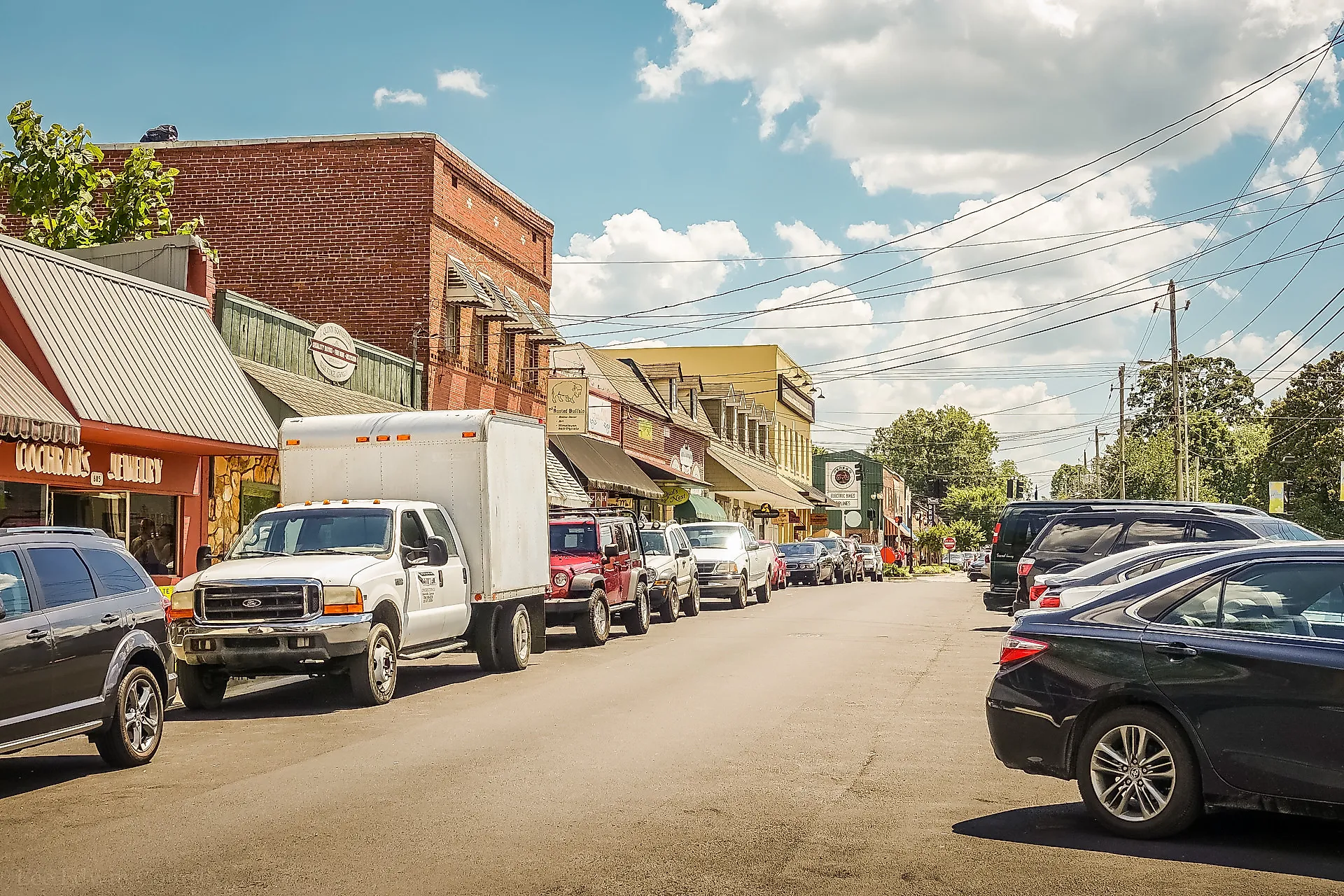
Blue Ridge

Set in the Blue Ridge Mountains near the Tennessee-North Carolina border, Blue Ridge, Georgia, is best known for something few southern towns can claim: it is a serious train town. The Blue Ridge Scenic Railway departs from a 1905 depot right on Main Street, carrying passengers through a narrow river gorge lined with sycamore and sourwood. Unlike most heritage trains, it runs almost year-round and ends at a pair of small sister towns straddling the state line on the Toccoa River. The town itself was once a whistle stop built around mineral springs, which is why its walkable downtown is so unusually linear and closely built along the tracks.
Blue Ridge's core is less than a dozen blocks, but it is packed. Huck's General Store stocks old-fashioned penny candy by the scoop and live bait. At Blue Ridge Cotton Company, everything is Georgia-made, including goat milk soap and longleaf pine syrup. Just outside town, the trails at Fall Branch Falls are short and steep, with a double cascade less than a mile in. Stay at the Blue Ridge Inn Bed and Breakfast, one of the oldest wooden hotels in north Georgia, restored but original to the 1890s.
Dahlonega

Dahlonega is where the first major U.S. gold rush began twenty years before California, and the entire town still revolves around that buried past. Beneath the historic square lies a defunct commercial gold mine with original shafts and rail lines, now open to visitors at Consolidated Gold Mine. The town's name comes from a Cherokee word for yellow metal, and its 1836 courthouse, the oldest surviving in Georgia, anchors the main square. Inside, the Dahlonega Gold Museum holds panned flakes, original assay scales, and tintypes of miners who never struck it rich.
The square's storefronts are intact. The Picnic Cafe serves chicken salad and cornbread on china, no matter the season. Cranberry Corners sells hand-painted Appalachian pottery and signed folk-art quilts. At Canopy + Roots, a wine bar in a basement greenhouse, there is live music nearly every night. Montaluce Winery, ten minutes outside town, runs tastings in a stone villa overlooking its vines and hosts forested trail hikes down to the Etowah River. For lodging, The Smith House offers rooms in a former boarding house above a no-menu dining room that has been serving fried okra, pot roast, and sweet tea since 1922. The mine shaft under the inn is original and still partially open.
St. Marys

Founded in 1787, St. Marys is the second-oldest city in Georgia after Savannah, and one of the few places in the Southeast where you can board a ferry to an undeveloped barrier island with no roads or hotels. Cumberland Island National Seashore lies just 45 minutes offshore, home to feral horses, loggerhead turtles, and the tabby ruins of the Carnegie family's Dungeness mansion. The ferry leaves from the downtown dock near the original waterfront grid, where live oaks hang over wide sidewalks and clapboard storefronts from the early 1800s.
The town's core is compact. St. Marys Submarine Museum sits in a two-story brick building on St. Marys Street and holds Cold War-era sonar panels and models of Ohio-class vessels. Seagle's Restaurant, inside the Riverview Hotel, has served shrimp creole and blackened flounder since Prohibition. At Once Upon a Bookseller, an independent shop in a blue cottage, the selection leans toward local maritime and Southern naturalist writers. Howard Gilman Memorial Park stretches along the river and hosts the shrimp festival and seasonal concerts. Lodging at Spencer House Inn includes access to a screened veranda and clawfoot tubs. The inn was built in 1872 and sits across the street from the Cumberland Island Visitors Center.
Thomasville

Thomasville was once the final stop for wealthy Northerners fleeing winter by rail, and remnants of that brief Gilded Age migration still define the town. By the late 1800s it had drawn a remarkable concentration of luxury hotels, but instead of developing into a resort, it stabilized as a self-contained hub of South Georgia agriculture, longleaf pine conservation, and quail hunting. The Big Oak, a live oak dating to around 1680, still stands at the edge of downtown, supported by steel braces and monitored by remote sensors. Its limbs span more than 160 feet, making it one of the largest live oaks east of the Mississippi.
Pebble Hill Plantation lies five miles south, with a 20th-century main house and original stables, dairy, and kennels. The grounds hold quail fields, camellia trails, and a small family cemetery. In town, the Thomasville History Center inside a former grammar school displays an 1800s log house. Grassroots Coffee on Broad Street roasts in-house and supplies nearby restaurants, including Jonah's Fish and Grits, known for its sweet tea-brined catfish. The Paxton, an 1884 white-columned inn on Remington Avenue, offers large corner rooms and wraparound porches within walking distance of the rose garden and downtown brick arcades.
Madison

Madison was spared by Sherman's troops during the March to the Sea and remains one of Georgia's best-preserved antebellum towns. Nearly every block near the town square includes Greek Revival cottages, Victorian manors, or brick commercial buildings dating to the 1800s. The local historic district covers more than 100 structures, including the stately Heritage Hall, which still contains original furniture and gasoliers. The town's layout follows the old rail and stagecoach lines, with unusually deep residential lots and original hitching posts along Academy Street.
Inside the square, The James Madison Inn offers rooms with wrought iron balconies and local art, and sits steps from Town 220, a restaurant built into a converted cotton warehouse. Across the street, Madison Markets holds 20,000 square feet of antiques in a former cotton mill. At the Steffen Thomas Museum, just outside town in Buckhead, the collection includes sculptures, stained glass, and murals from the Bavarian-born Georgia artist. Hard Labor Creek State Park, a 15-minute drive east, offers access to a lake, equestrian trails, and one of the darkest skies in the state, home to a public observatory operated by Georgia State University.
Helen

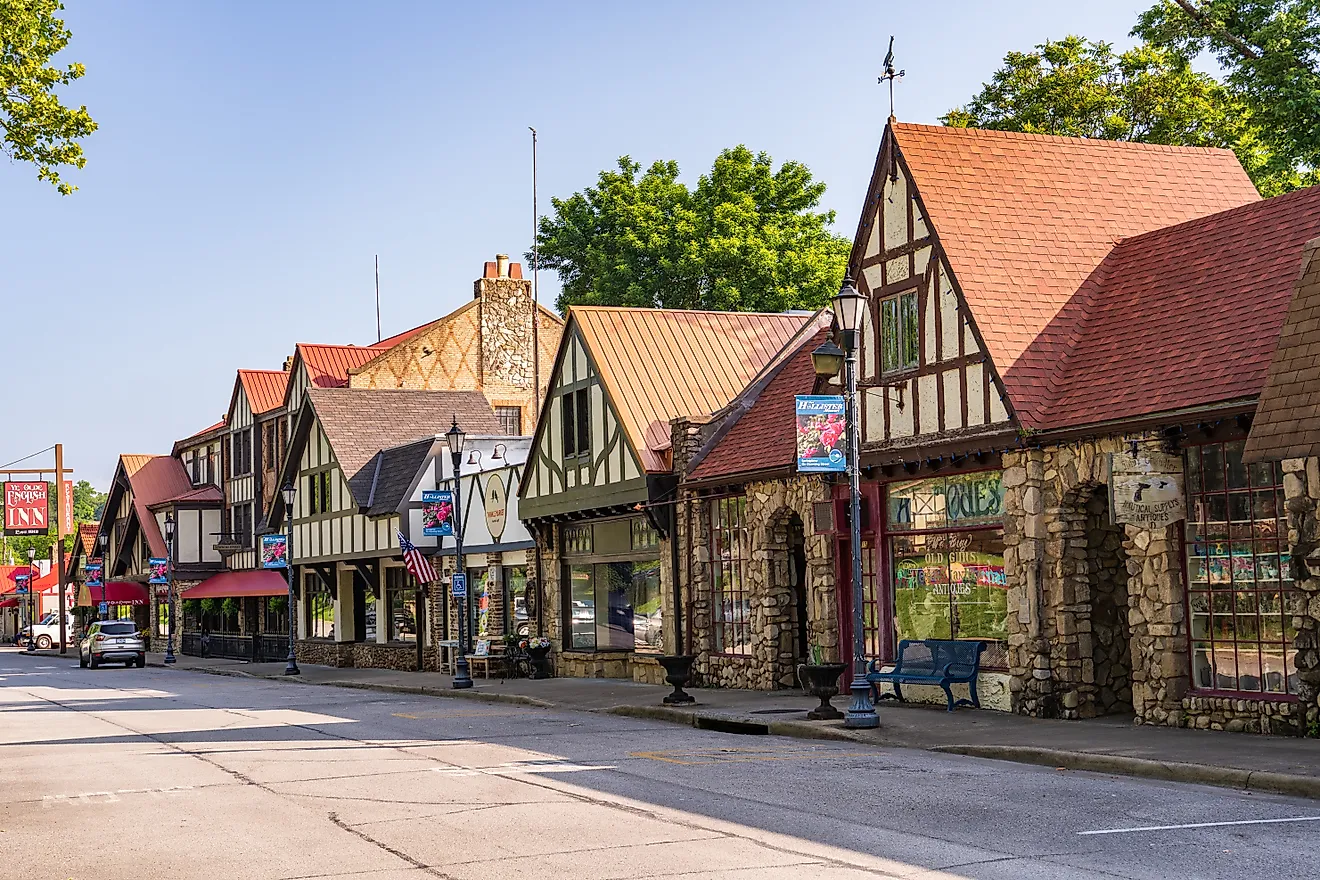
Helen was a failing logging town until 1969, when local business owners agreed to rebuild every downtown structure in the style of a Bavarian alpine village. It remains the most extensive themed town in Georgia, with stucco facades, timbered balconies, and hand-painted signs, even at the post office and police station. The Chattahoochee River runs directly through downtown, where tubing outfitters lease inner tubes by the hour and drop riders upstream for a float that cuts through the heart of the village.
On Main Street, Hofbrauhaus Restaurant and Pub serves pork schnitzel, sauerkraut, and German beer in liter steins. At Lindenhaus Imports, shelves are stacked with cuckoo clocks, hand-carved nutcrackers, and smoked glass steins made in the Black Forest. Alpine Mini Golf winds through a hilltop garden planted with geraniums and ornamental cabbages. The trail to Anna Ruby Falls begins just outside town, where two creeks meet in a pair of adjacent waterfalls, the taller dropping about 150 feet. Lodging at Valhalla Resort Hotel includes a mountaintop golf course and rooms with stone fireplaces. The hotel sits just above Unicoi State Park, which has a swim beach, zipline course, and lake loop trail. Helen hosts Oktoberfest across the autumn months, with oompah bands in the Festhalle nightly.
Tybee Island

Tybee Island is Georgia's easternmost point and one of the few Atlantic beach towns in the state where the shore is walkable from nearly every part of town. It was once the site of a 19th-century quarantine station, a military battery complex, and the 1958 crash of a B-47 carrying a still-missing nuclear bomb, one of the few unaccounted for in U.S. history. The island's grid of small cottages, palm-lined lanes, and one-off shops has remained mostly intact due to strict zoning and limited beachfront development.
The Tybee Island Light Station, established in 1736 and rebuilt repeatedly, remains operational and includes a climbable tower, a keeper's house, and its original first-order Fresnel lens. At The Crab Shack, tables are set over a salt marsh lagoon and the menu leans toward boiled seafood platters, deviled crab, and gator stew. Sea Kayak Georgia rents boats from its dock on Chimney Creek and leads tours into the estuaries at sunset. The Tybee Beach Pier extends out into the Atlantic and hosts live bands and vendors under its pavilion. DeSoto Beach Hotel sits directly on the sand, includes retro tilework from its original 1930s motor court days, and offers direct access to the quieter mid-island stretch of beach.
Three Days, Seven Moods
Across these seven towns, Georgia turns a long weekend into a complete story. Railcars, gold shafts, lighthouse beams, quail country, preserved squares, alpine facades, and Atlantic surf all sit close to main streets and beds you can walk to. Every one of these places holds well under 50,000 residents, which means local voices lead. The reward for three days is clarity: focused places, short drives, and memories built at human scale.