7 Best National Parks In Europe
Europe has more than 400 national parks, and the range across them is broad. The continent's protected areas cover Caucasus glaciers, Mediterranean cliffs, Atlantic dunes, alpine valleys, and primeval beech forests, with much of the landscape doubling as UNESCO World Heritage or Biosphere Reserve territory. The seven parks ahead mix the obvious classics with a few that travelers usually overlook in favor of the more famous Alpine routes. Each has earned its place a different way, from the highest peak on the continent to a 38.6 sq km stretch of color-painted Italian coast.
Cinque Terre National Park: Italy

Five painted fishing villages strung along 38.6 square kilometers of Italian Riviera cliffside make up Cinque Terre National Park. The villages (Corniglia, Manarola, Monterosso al Mare, Riomaggiore, and Vernazza) hold a combined population of about 5,000 and are connected by hiking trails that thread the cliffs and coves of the Ligurian Sea coast. Italy designated the park in 1999, two years after UNESCO inscribed the same coast as a World Heritage Site (paired with the offshore islands of Palmaria, Tino, and Tinetto, and the historic town of Portovenere).
The park is also a case study in overtourism. Pre-pandemic visitor numbers passed 5 million per year, and the park authority now caps trail access on the busiest stretches and discourages private cars. Visitors are encouraged to arrive by boat or via the La Spezia-Levanto rail line, both of which run frequent service through the warm-weather months. The villages are a half-hour or less apart by train, which makes a multi-village day trip the most common itinerary.
Central Balkan National Park: Bulgaria

Botev Peak rises to 2,376 meters at the heart of the Stara Planina range and gives Bulgaria's Central Balkan National Park its high point. The park covers a 720 sq km strip of the central Balkan Mountains, 85 kilometers long and 10 kilometers wide, with elevations stepping up from around 550 meters to the Botev summit. Nine nature reserves sit inside the park boundary. Together, the protected areas of Bulgaria's Central Balkan, Pirin, and Rila national parks plus surrounding nature reserves form roughly 5% of the country's total area.
Above the alpine meadows and the free-grazing cattle, the park preserves some of Europe's last primeval beech forests. Components of those forests were added to the UNESCO transnational World Heritage Site "Ancient and Primeval Beech Forests of the Carpathians and Other Regions of Europe" in 2017, joining a network of beech forest fragments protected across more than a dozen European countries. For trail runners, the annual Balkaniada Sky Race climbs through the steepest stretches of the park each summer.
Prielbrusye National Park: Russia

Mount Elbrus, at 5,642 meters, is the highest peak in Europe, and Prielbrusye National Park (also known as Mount Elbrus National Park) was created in 1986 to protect the dormant volcano and its surrounding terrain. The park covers about 1,010 square kilometers of the Caucasus Mountains in southwestern Russia, with roughly 15% of its area under permanent snow and glaciers that feed the regional river systems. All ten of Europe's tallest peaks sit in the Caucasus, and Prielbrusye holds the most famous of them.
The summit climb is a serious mountaineering objective, but Prielbrusye also operates as a working ski resort. Chairlifts and snowcats reach significant altitudes on the lower mountain, which makes Mount Elbrus accessible to skiers and day-hikers as well as alpinists. Below the snowline, gorges, alpine meadows in Caucasian rhododendron, and traditional villages anchor the park's everyday character. Wildlife includes Syrian brown bears, wolves, wild boars, lynxes, and the Caucasus-endemic Caucasian viper.
Picos de Europa: Spain

Picos de Europa was Spain's first national park, established in 1918 (originally as Mountain of Covadonga National Park) and expanded in 1995 to its current 64,315 hectares. The park straddles three autonomous communities of northern Spain (Asturias, Castilla y León, and Cantabria), and 11 working agricultural settlements with a combined population of around 1,400 people sit inside the boundary, which is unusual for a Spanish national park.
The three limestone massifs of the Picos de Europa form part of the broader Cantabrian Mountains, with hundreds of millions of years of glaciation and karstification responsible for the bare limestone towers that rise sharply over the meadows and forests below. The Iberian wolf and the Cantabrian brown bear (one of the most isolated brown bear populations in Western Europe) both still hold territory here. Picos de Europa was added to UNESCO's Biosphere Reserve list in 2003.
The proximity of the Atlantic Ocean and the Bay of Biscay just to the north produces fast-changing weather, and layers are essential. The 800 km Camino del Norte (the northern route of the Camino de Santiago) skirts the park on its way west to Santiago de Compostela. Inside the park, three visitor centers, around 30 self-guided routes, 17 marked viewpoints, and the basilica and holy cave at Real Sitio de Covadonga (commemorating the early 8th-century Battle of Covadonga and the founding of the Kingdom of Asturias) cover most visitor itineraries.
Killarney National Park: Ireland
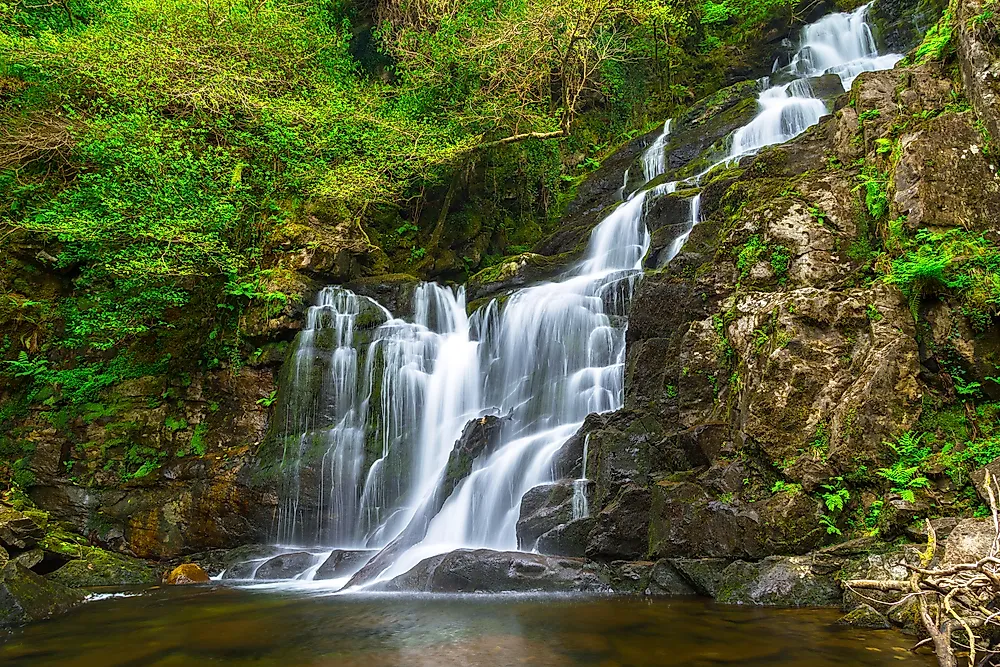
Ireland's first national park, designated in 1932, covers about 102.89 square kilometers of County Kerry just south of the town of Killarney. Moorland, heath, bog, waterfalls, and the modest Purple Mountains give the park the kind of mixed Irish landscape that nineteenth-century landscape painters sent home in postcards. Killarney was added to the UNESCO Biosphere Reserve list in 1981.
The park's three lakes anchor everything else. Lough Leane, the largest at 19 sq km, holds about 30 islands (Innisfallen, with its early Christian monastic site, is the best known) and is the focus of most of the park's boat traffic. Killarney also preserves one of the largest remaining tracts of native woodland in Ireland and is home to the country's only continuous native red deer herd, the genetic descendants of the original Irish red deer that once ranged across the island. Birders count 114 recorded species inside the park.
The visitor center is in the town of Killarney, on the east side of Lough Leane, and Highway N71 (the Ring of Kerry route) cuts through the heart of the park between Muckross Lake and Torc Mountain, which makes Killarney one of the more accessible national parks in Europe.
Triglav National Park: Slovenia

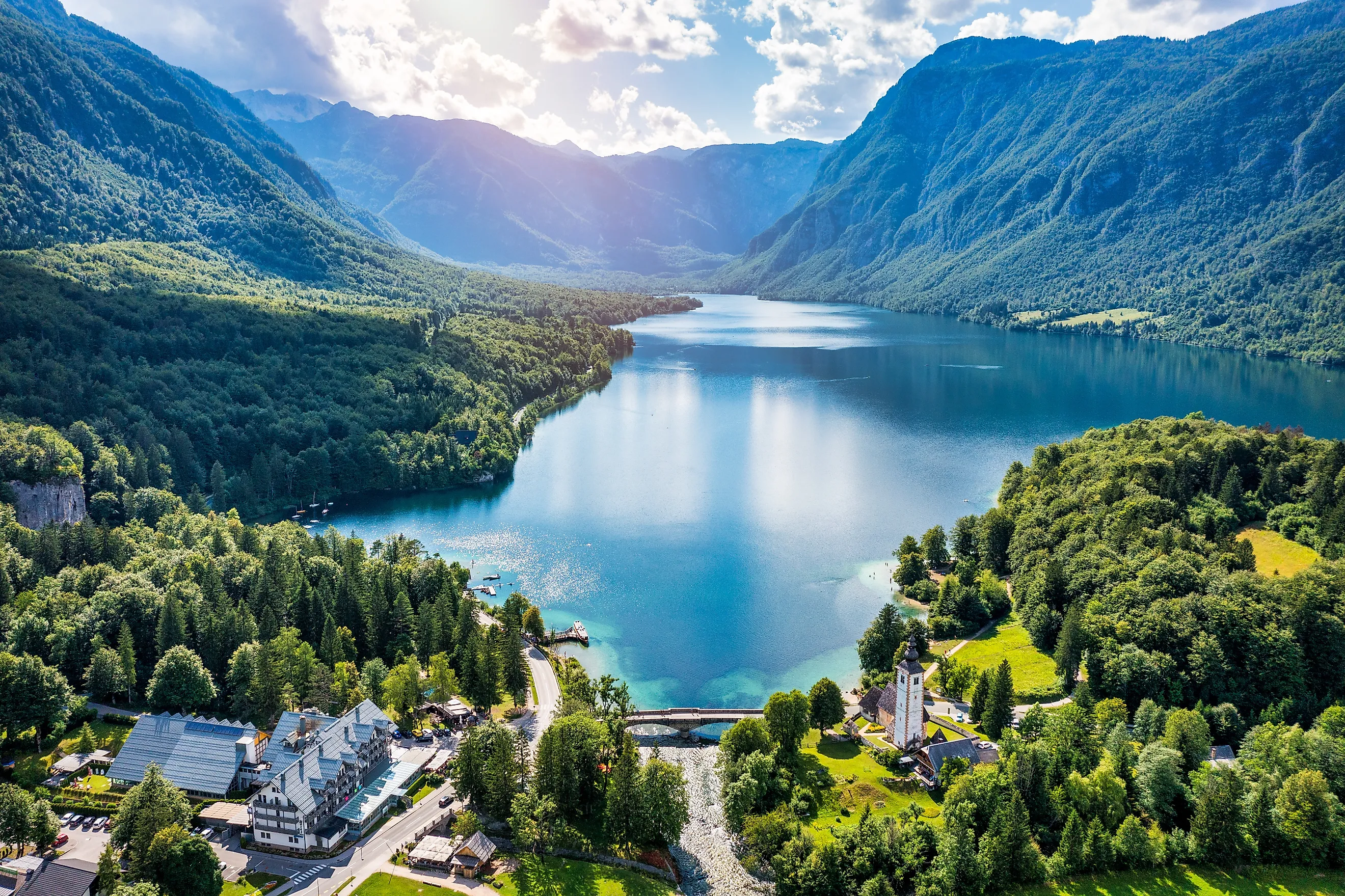
Mount Triglav, at 2,864 meters, is Slovenia's highest peak and gives the country's only national park its name. Slovenia's Triglav National Park covers about 838 square kilometers of the Julian Alps, roughly 4% of the country's total area, and forms the core of the larger Julian Alps UNESCO Biosphere Reserve. The park's modern boundaries were established in 1981, but the protection traces back to June 1, 1924, when the Alpine Conservation Park was founded along Lake Bohinj as the predecessor reserve.
Limestone ridgelines fan out from the central mountain, with glacial lakes (the most famous being Lake Bled just outside the eastern boundary), cascading waterfalls, blue-green river valleys, and well-marked hiking trails throughout. Vintgar Gorge, a 1.6 km boardwalk through a slim glacially-carved canyon at the eastern boundary of the park, is the easiest introduction for first-time visitors. Triglav handles around 2 million visitors per year, roughly the population of Slovenia itself.
Dunes of Texel National Park: Netherlands

Thirty kilometers of beach run along the western edge of Texel, the largest of the Dutch Frisian Islands, and Dunes of Texel National Park (Duinen van Texel) protects 43 square kilometers of dune, beach, and wet-dune-valley along that coast. The island sits inside the broader Wadden Sea UNESCO World Heritage Site, designated in 2009 for its unbroken stretch of intertidal flats, mudflats, and salt marsh. The beaches here are dog-friendly, lifeguarded in summer, and lined with rentable beach huts (which fill in for the limited tree cover on the dunes).
The park's color-coded trail network covers coastal plains, woodlands, and the dunes themselves, with paths suitable for hikers, cyclists, and equestrians. Wet dune valleys behind the beach line are important spoonbill breeding grounds, and the salt marshes and inland freshwater zones support sea lavender and several orchid species. Lighthouse Texel, a red tower with a white lantern room at the north end of the island, marks the channel for Wadden Sea sailors and works as an evening photo anchor when the lighthouse beam comes on at dusk.
Why These Seven
The list balances classics that have earned their reputation against parks that travelers tend to skip. Cinque Terre, Killarney, and Triglav handle volume and need careful scheduling. Central Balkan, Prielbrusye, Picos de Europa, and Texel run quieter, and the trip-planning logistics work in the visitor's favor. The shared thread is that all seven sit at the intersection of strong landscape and active human history, with castles, settlements, working agriculture, and centuries of trail networks woven into the protected boundaries. None of these parks read as wilderness in the North American sense. They are landscape and people, together, kept open for the next round of visitors.