6 Rattlesnake Hotspots In Alberta
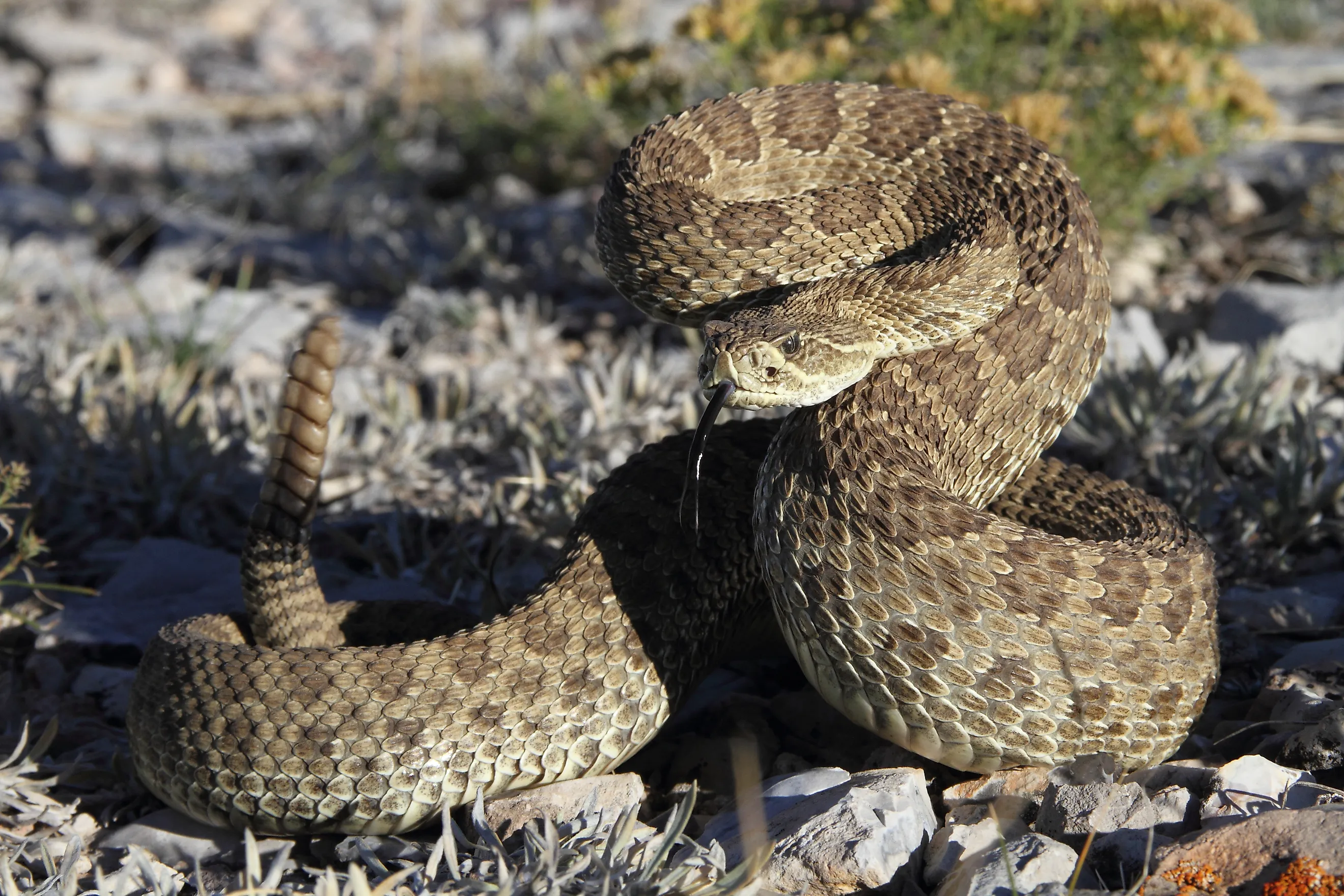
Prairie rattlesnakes (Crotalus viridis) number in the thousands in Alberta, with the entire provincial population confined to the southeastern corner, where eroded coulees, river valleys, and stretches of mixed-grass badlands provide the rocky, sun-exposed terrain the species requires. Alberta represents the northern edge of the prairie rattlesnake's global range, and the species is listed as Special Concern under Canada's Species at Risk Act. Lethbridge sits near the center of the range, with rattlesnakes living in the coulee slopes and cottonwood forests of West Lethbridge. Dinosaur Provincial Park's exposed rock ledges and sun-warmed sandstone provide the basking surfaces snakes seek after emerging from their winter dens, and the park's trail system puts visitors close to that terrain from April through early October.
Dinosaur Provincial Park

Dinosaur Provincial Park sits in the middle of Alberta's badlands and is home to one of the richest dinosaur fossil sites on earth. Around 75 million years ago, what is now eastern Alberta was a coastal plain at the western edge of the Western Interior Seaway, a shallow sea that split North America in two during the Late Cretaceous. The subtropical climate allowed many species of fish, amphibians, reptiles, birds, primitive mammals, and dinosaurs to thrive. When the animals died, they were buried in river channels and mud flats, and over time new layers of sand and mud covered them and produced fossils. UNESCO inscribed Dinosaur Provincial Park as a World Heritage Site in 1979 in recognition of those finds.

Visitors can view fossils at the visitor center, join guided excavations at some of the bone beds within the park, try fossil casting, or hike along the park's trails. Park staff advise visitors to stay on established trails, where a basking rattlesnake is easier to spot, and to take extra care before stepping onto or off rock ledges and other places with ground debris, since rattlesnakes use those areas to bask or hide. Rattlesnakes are most commonly seen in the park between April and September, with occasional sightings in early October.
Writing-on-Stone Provincial Park

Writing-on-Stone Provincial Park, known in Blackfoot as Áísínai'pi, was inscribed as a UNESCO World Heritage Site in 2019. The park sits in the mixed-grass prairie region on the northern edge of the Great Plains and holds the largest concentration of rock art on the Great Plains. The Milk River valley and its coulees (large, steep-sided ravines) define the topography. The site is sacred to the Niitsítapi (Blackfoot people), who have left engravings and paintings on the sandstone walls for centuries.
Prairie rattlesnakes are occasionally seen within the park, occupying the open grassland and rocky outcrops. Alberta's northern climate forces rattlesnakes to spend a large portion of the year in a dormant state, huddled in dens below the frost line to wait out the winter, though they may emerge on especially warm days. The activity threshold is roughly ten degrees Celsius (50°F) of air temperature, which means rattlesnakes have occasionally been spotted on unseasonably warm December days at the park.
South Saskatchewan River

The South Saskatchewan River is a major waterway in southern Alberta and Saskatchewan. It is formed at the Grand Forks by the confluence of the Bow and Oldman Rivers west of Medicine Hat, then flows east past Medicine Hat and across the provincial border into Saskatchewan. The river begins in a prairie environment of grasses such as spear grass and wheat grass, with the river valley lined with cottonwood trees and shrubs.
Protecting prairie rattlesnake habitat (and hibernacula in particular) is central to the species' survival in Canada. Prairie rattlesnakes return to the same hibernacula each fall to enter their dormant winter phase, and during the summer they often remain within 2 to 20 kilometers of their den. The rolling grasslands along the South Saskatchewan, particularly west of Medicine Hat, are core rattlesnake habitat. In 2019, a team led by a provincial biologist fitted a prairie rattlesnake with a tracker and followed the snake for several days before it led the team to coulees near the river, where it was basking on the rocks beside an opening into a hibernaculum.
Red Deer River
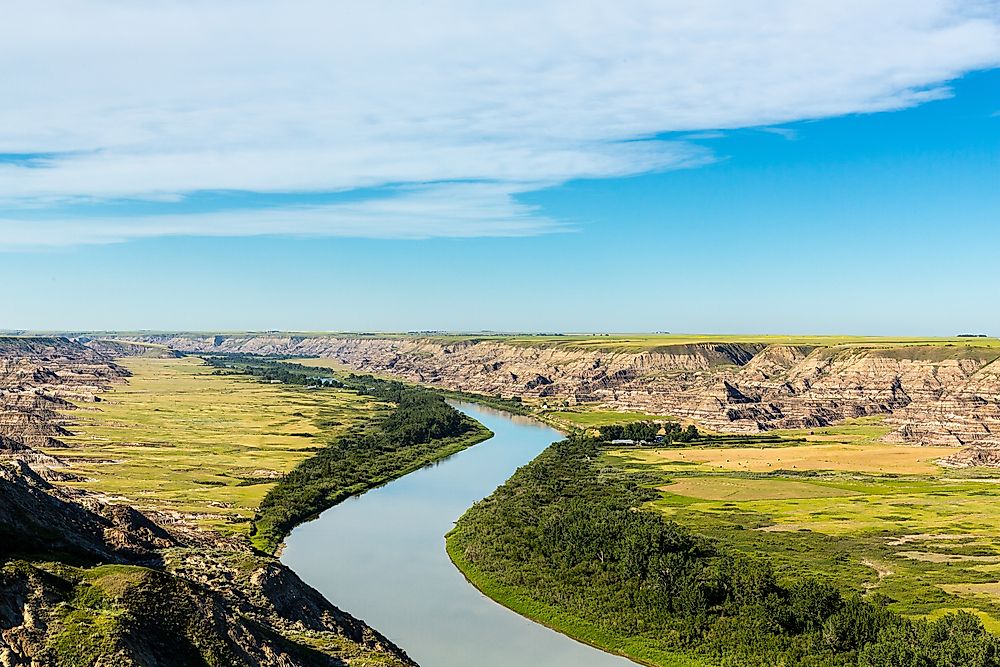
The Red Deer River rises in the Rocky Mountains of Banff National Park, near Lake Louise. It is fed primarily by snowmelt with minimal glacial input, and several tributaries join it on its course. The river runs about 740 kilometers before entering the South Saskatchewan River. Despite passing through a relatively dry region of Alberta, the river's banks and riparian edges support dense vegetation that creates suitable habitat for many wildlife species, including rattlesnakes.
Rattlesnakes occupy the lower river valleys and coulee slopes south of the Red Deer in both short-grass and mixed-grass prairie. Ranchers occasionally encounter rattlesnakes on their land, and many are willing to share the territory because the snakes help manage rodent populations. Adult prairie rattlesnakes can reach more than four feet in length, large enough to take mice, rats, gophers, and ground squirrels that damage crops.
Red Rock Coulee Natural Area

Red Rock Coulee Natural Area is a day-use park with extremely hot and dry summers. The hilly grassland coulee landscape carries aromatic sagebrush and flowering plants such as gumbo primrose, prickly pear cactus, and prairie crocus. The area takes its name from the spherical red sandstone concretions, some up to 2.5 meters in diameter, that lie across the landscape; the site also features eroded coulees and hoodoos. Prairie rattlesnakes use the rocky terrain and vegetation cover for hunting and basking.
The combination of hot, dry summers and rocky cover gives prairie rattlesnakes optimal habitat at Red Rock Coulee. Snakes are most active in the mornings and afternoons; during particularly hot weather they may shift to nocturnal activity to avoid the worst heat.
Oldman River

The Oldman River is one of the major headstreams of the South Saskatchewan River. It rises in the Rocky Mountains, flows east through Lethbridge, and joins the Bow River near Grassy Lake to form the South Saskatchewan. In and around Lethbridge, rattlesnakes are most often reported in West Lethbridge, with additional sightings on the east side of the Oldman River. Lethbridge is home to a small population of prairie rattlesnakes, with estimates from over a decade ago suggesting 200 to 400 individuals.
While the Lethbridge rattlesnakes are most commonly observed on dry coulee slopes, in cottonwood forests, and on the Oldman River floodplain, they sometimes move into residential areas. To reduce conflict, Lethbridge operates an annual rattlesnake mitigation program from April through December, during which rattlesnakes found on public or residential property are relocated to suitable natural habitat away from people and pets.
Protecting Alberta's Rattlesnakes
Rattlesnakes are feared by many but are timid by disposition, and will try to retreat from humans when given the chance. Bites are rare and occur most often as defensive responses when a snake is surprised, stepped on, cornered, or handled. Despite the frequent overlap between people and rattlesnakes in southeast Alberta, many residents have grown to respect the species. Ranchers near the Red Deer River and residents of Lethbridge understand that prairie rattlesnakes play a meaningful role in local food webs, preying on mice, rats, voles, shrews, gophers, and other small mammals while themselves serving as prey for red-tailed hawks, golden eagles, badgers, and coyotes. Alberta lists the species as one for which habitat protection and den-site stewardship remain ongoing conservation priorities, in line with the prairie rattlesnake's Special Concern status under Canada's Species at Risk Act.