9 Most Hospitable Towns In Arizona
Arizona hospitality looks different in each of its towns. Whether it beckons with the rowdy history of Prescott's Whiskey Row or a family-focused safari through the ponderosa pines at Bearizona, the state offers an authentic welcome. In Tubac, doors open onto shaded art courtyards and sculpture gardens woven into one of southern Arizona's most celebrated arts communities. Jerome pairs historic hotels and mountain views with copper-mining heritage perched high above the Verde Valley. The hospitable Arizona towns ahead each prove that the reception here is as adventurous and varied as the landscape itself.
Bisbee

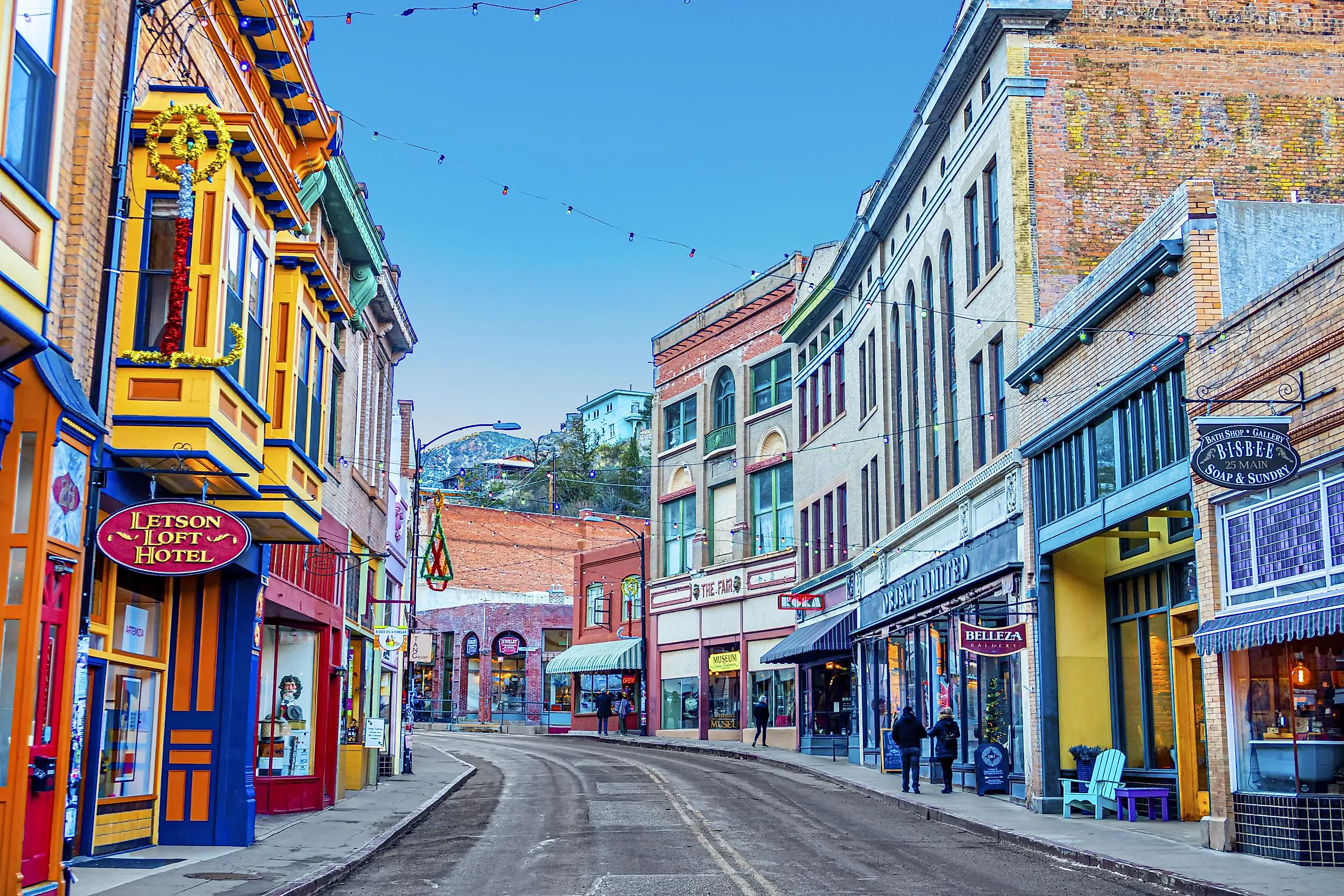
Bisbee is a particularly quirky little town, consisting of multi-story brick buildings and storefronts built directly against steep rock slopes. Because the terrain lacks flat ground for standard blocks, concrete staircases serve as the primary thoroughfares between residential levels and the canyon floor. The town's original layout was guided by the Copper Queen Mine, which still occupies a central position, offering underground tours led by former miners through the original haulage tunnels. Guests are provided with mining lanterns and helmets before boarding a single-file train ride 1,500 feet into the mine. On the surface, the Copper Queen Hotel stands above the surrounding 1900s commercial buildings near Main Street, for a comfortable and convenient stay in the heart of town. To cap off the day, reserve a table at Café Roka for fine dining and signature cocktails.
Cottonwood

Former feed stores and hardware businesses now operate as wine bars and restaurants in Cottonwood's Old Town along Main Street. Bocce Pizzaria and Belfry Brewery are two local favorites. Rising above the valley on a limestone ridge northwest of downtown is Tuzigoot National Monument, where the Sinagua people lived between roughly 1000 and 1400 CE. The settlement spreads across the summit through 110 connected stone room blocks arranged around elevated lookout points and narrow passageways. Several walls still stand high enough to show the compact layout of the hilltop community, while footpaths around the structure lead to broad sections of farmland, river corridors, and volcanic ridges across the Verde Valley. Nearby, the Verde Canyon Railroad departs Clarkdale beside old freight sidings and maintenance sheds left from the mining era. Passenger cars move through narrow canyon sections where exposed rock walls rise directly above the Verde River, and tracks run close to the waterline for long stretches.
Prescott

The Courthouse Plaza is the nucleus of daily traffic, sitting between cafes, bookstores, and the Yavapai County Courthouse. Visitors gather on the shaded lawn for festivals, art fairs, and live music, while the surrounding streets offer easy access to local shops, restaurants, wine tasting rooms, and historic walking tours. Whiskey Row stands one block west with brick facades rebuilt after the fire of 1900. The canopy of covered saloon and restaurant entrances welcomes passersby into historic interior layouts that boast balconies overlooking the plaza. Stop in for a drink at the Palace Saloon, Arizona's oldest frontier saloon, known for having hosted such notorious guests as Wyatt Earp and Doc Holliday. North of the downtown area, Watson Lake spreads between granite formations broken into narrow channels. Small launch points and fishing docks sit between the boulders while trails continue through exposed rock fields beyond the main parking areas.
Jerome

Jerome is a town that demands a visit at least once. Sitting on Cleopatra Hill's steep ground, the town has former mining infrastructure directly beneath the business district. Ground movement and erosion shifted the famous Sliding Jail several feet downhill over the decades, leaving the structure tilted awkwardly beside Hull Avenue with cracked masonry and a partially displaced foundation. For a sweet spot to lay your head, head to The Clinkscale, where historic appeal, craft cocktails, and mountain views come together inside one of the town's most distinctive buildings.

Above town in Jerome State Historic Park, the Douglas Mansion overlooks the former mining district. Built in 1916 for mine manager James Douglas, the structure used advanced fire-resistant construction methods uncommon for its time, including poured concrete walls and thick steel reinforcement. Interior exhibits trace the mechanics of copper extraction through ore carts, drilling equipment, mineral samples, and rail transport displays tied to Jerome's mining economy. Outside the mansion, picnic areas and more displays are set against hillsides that still bear abandoned cuts, tunnel entrances, and terraced waste piles.
Wickenburg

Ranching is alive and well as ever in much of downtown Wickenburg. Hitching posts and horse-friendly businesses remain part of the town's everyday character along Frontier Street and Wickenburg Way, while nearby arenas and rodeo grounds keep equestrian culture closely tied to the historic center. Inside the Sigler Western Museum, visitors can explore exhibits on ranching culture, Western art, Native history, and the development of desert communities across Arizona. Rotating galleries, educational programs, and guided exhibits sit alongside collections of saddles, firearms, and historic artifacts, while the museum's downtown location makes it an easy stop near local shops, cafés, and walking tours through Wickenburg's historic district.

South of town, Vulture City Ghost Town gives visitors a chance to tour the remains of one of Arizona's most productive gold mines. Self-guided and guided tours lead through restored buildings, mining equipment, and the old assay office, with stories covering the town's boom-era history, mining operations, and frontier life. Visitors can also explore the blacksmith shop, hanging tree, and mill site, attend seasonal events, or take photography and history tours across the surrounding desert property.
Payson

Payson is a popular base for hiking, fishing, camping, and scenic drives through the Rim Country region. Downtown visitors can explore local breweries, western shops, and antique stores, while the town also hosts seasonal festivals and one of the longest-running continuous rodeos in the country each summer.

At Tonto Natural Bridge State Park, visitors can hike trails leading beneath one of the world's largest natural travertine bridges, where Pine Creek flows year-round through narrow canyon passages below the rock formation. Viewing areas, picnic sites, and short but steep trail systems give access to waterfalls, creek crossings, and overlooks throughout the park. Closer to downtown, Green Valley Park offers fishing lakes, paved walking paths, playgrounds, picnic areas, and open space for community events and outdoor recreation. The park regularly hosts local gatherings and serves as an easy stop for kayaking, birdwatching, or relaxing beside the water before heading deeper into the surrounding forests and mountain trails.
Williams

Williams maintains its role as a rail and highway town through freight traffic and train horns, but do not let that fool you. Its neon motel signs, diner counters, and restored gas stations line the main corridor, inviting visitors for a casual drop-in and some local American comfort food. Along the western edge of downtown Williams, visitors gather at the historic Grand Canyon Railway depot to board vintage trains bound for the South Rim of the Grand Canyon. Daily departures include onboard musicians, western-themed entertainment, and restored passenger cars that recreate the experience of early 20th-century rail travel, while the surrounding depot district offers hotels, restaurants, gift shops, and Route 66 attractions within walking distance.

East of town, Bearizona gives visitors the chance to drive through forested wildlife habitats filled with bison, black bears, wolves, mountain goats, and other North American animals. The park also includes a walk-through section with animal encounters, keeper talks, smaller exhibits, and dining areas, making it a popular stop for families traveling between Williams and Grand Canyon National Park.
Globe

In downtown Globe, old hotel and bank buildings still dominate several intersections, repurposed to serve modern needs. Visitors can browse antique stores, western outfitters, cafés, and galleries inside the historic district, while the restored Cobre Valley Center for the Arts hosts rotating exhibits, concerts, and community performances throughout the year. Just outside downtown, the historic Old Dominion Mine Park offers walking trails, mining exhibits, and viewpoints tied to Globe's copper industry, giving visitors a closer look at the region's long mining history.

At Besh-Ba-Gowah Archaeological Park, reconstructed Salado masonry outlines room blocks arranged around shared plazas once occupied between the 13th and 15th centuries. Inside the museum, pottery fragments, shell jewelry, woven textiles, and trade goods trace historical commerce between the Salado people and settlements extending across the Southwest and northern Mexico.
Tubac

Tubac's commercial district spreads through adobe-style buildings, shaded courtyards, and art galleries clustered along narrow pedestrian walkways beneath mesquite trees. Sculpture gardens, working studios, and boutique shops fill many of the historic properties throughout the village, reinforcing the town's longstanding identity as one of southern Arizona's best-known arts communities. One of the town's standout stops is K Newby Gallery and Sculpture Garden, where visitors can wander through outdoor installations, bronze sculptures, and rotating fine art exhibits displayed across landscaped garden paths in the heart of Tubac's arts district.

Tubac Presidio State Historic Park preserves part of the original Spanish colonial settlement established along the Santa Cruz River corridor in the 1700s. Here, you can explore reconstructed buildings, excavated foundations, and museum exhibits detailing the presidio's role in regional trade, travel, and settlement, before heading into the surrounding village for Sonoran and Mexican-inspired cuisine at local favorites like Sonora Mía Restaurante and Soto's Outpost.
Hospitality in Arizona can look like a wildlife tour with a steaming hot dog in hand. Or it may be a cafe view, counting the cars of a passing freight train, or a saloon-style bar crawl. Whether you are in it for the food, the drinks, or the views, these Arizona towns deliver a generous welcome.