6 Most Rattlesnake Infested Areas in Missouri
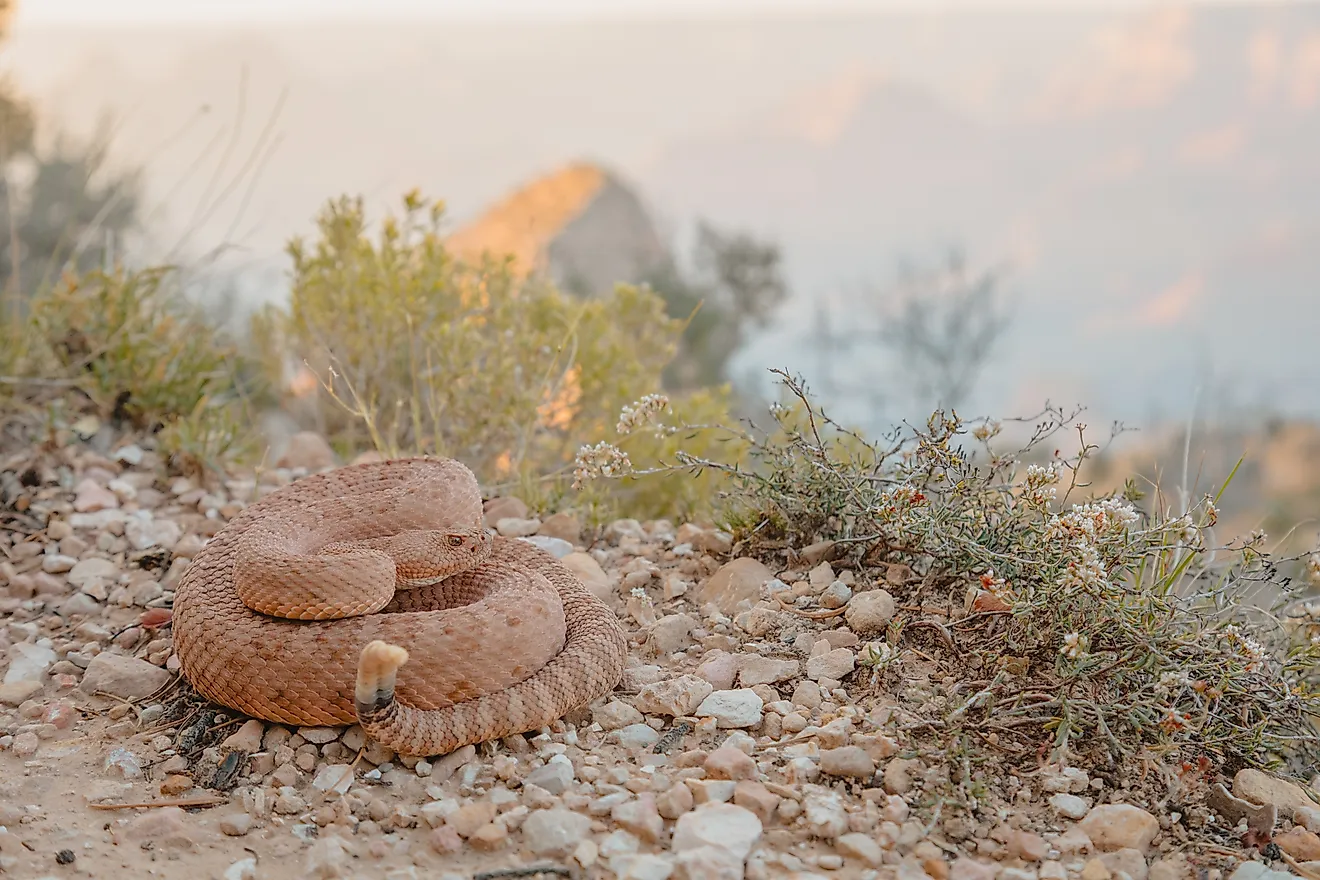
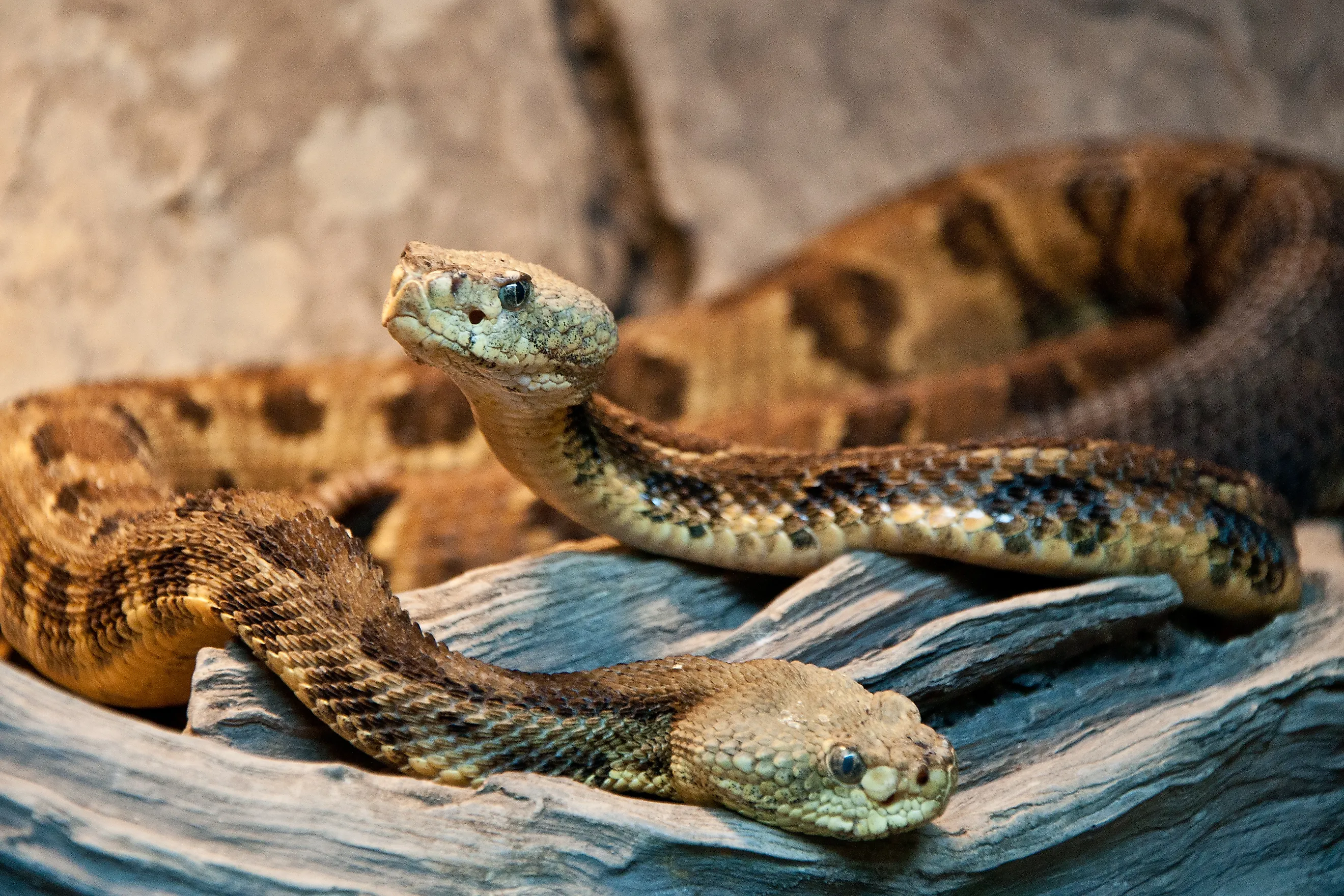
Missouri is home to three types of rattlesnakes: timber rattlesnakes, western massasauga rattlesnakes, and western pygmy rattlesnakes. Of these three, the timber is by far the most common, found in almost every county in the state, while the pygmy is limited to the southern third, and the massasauga is endangered in the state.
These snakes are most often found in specific environments such as rocky mountain terrain and forested lakeshores, as well as river bluffs and protected wetlands. From the high elevations of Taum Sauk Mountain to the marshes of Loess Bluffs National Wildlife Refuge, certain areas in Missouri consistently provide the right conditions for rattlesnakes to thrive. To make sure you don’t end up face-to-face with a rattler, here are the six most rattlesnake-infested areas in Missouri to be on the lookout for these three species of snakes.
Taum Sauk Mountain

Taum Sauk Mountain is the highest point in Missouri at 1,772 feet within the Saint Francois Mountains. The mountain is quite old, believed to date back to Precambrian days, and is now a part of the Taum Sauk Mountain State Park. The 7,450-acre park features rocky hills and forests that provide habitat for a variety of creatures, including black bears, copperhead snakes, and timber rattlesnakes.
The timber rattlesnake is a resourceful creature and can survive in mountains, hills, forests, and even swamps. It generally prefers mountainous wooded areas, which accurately describes the landscape around Taum Sauk Mountain. They can climb trees up to 80 feet tall and retreat into holes during the winter months. During spring and fall, these snakes often hide under logs or rocks, waiting for prey and blending well with the rocky terrain. Hikers have seen these snakes out on trails, basking in the sun. The timber rattlesnake is more likely to do this on cool days, as they are naturally cold-blooded. They are easy to spot as the largest venomous snake in Missouri, measuring up to 5 feet long.
Table Rock Lake

Table Rock Lake is a 43,000-acre reservoir created by the Table Rock Dam on the White River in 1958. The dam was built as a flood control measure, and today it is a popular destination for residents and visitors in nearby Branson. Surrounding the lake are oak and hickory tree forests and glades. In these glades, there have been multiple sightings of the smallest rattlesnake in Missouri: the western pygmy rattlesnake.
As its name suggests, the pygmy rattlesnake is the smallest of the three species found in Missouri, typically measuring between 15 and 24 inches. Due to its size, its rattle is faint and often only audible from a few feet away, making it easy to miss even when nearby. The pygmy rattlesnake will take shelter under rocks, logs, shrubs, or other spots around the lake. At times, they may venture out right to the edge of the lake.
These rattlesnakes are found only in the southern third of Missouri and are identified by a brownish-grey background and numerous darker dorsal blotches. Despite their size, these snakes can be quite aggressive at times, shaking their rattle or striking at anything or anyone that moves past them. Others will stay still and attempt to escape if touched.
Mississippi River

The Mississippi River forms the eastern border of Missouri with Illinois and a small portion of Kentucky. It is the second-longest river by length, topped only by the Missouri River, but it is the largest river in North America by discharge flow. It has its source in Lake Itasca in Minnesota, and it empties much further south into the Gulf of Mexico. Along its shore are many different types of snakes: mostly nonvenomous. The main rattlesnake found along the Mississippi River and hiding in its hilly river bluffs is the timber rattlesnake.
Some refer to the timber rattlesnake as a canebrake when it lives in lower elevations to distinguish it from the rattlers that live higher up, but both are the same species. They frequent the bluffs and wooded areas along the river, where they can remain hidden among leaf litter and rocks. These snakes are also strong swimmers and can move through the water with ease, using their tails as rudders while keeping their heads above the surface.
They may enter the water to cool off during hot summer days or to escape predators, making encounters possible both on land and near the shoreline. Anyone hiking or fishing along the Mississippi River should be aware that timber rattlesnakes can be found throughout this corridor. Avoiding timber rattlesnakes is essential, as they have one of the highest venom yields among vipers, delivering up to 300mg in one bite. As their venom is hemotoxic, bites can cause tissue damage, nausea, weakness, sweating, and other symptoms. While the mortality rate is very low, bites require immediate medical attention to avoid permanent damage.
Mark Twain Lake

Located in northeastern Missouri, Mark Twain Lake was formed by the Clarence Cannon Dam on the Salt River, providing power to the wider region. It is a part of the larger Mark Twain State Park, which itself is close to the author's birthplace. Surrounding the 18,600-acre lake are multiple bluffs and forests of oak, hickory, and maple trees. Over the last few years, there have been growing reports of timber rattlesnakes being spotted at and around the lake, including along the six miles of hiking trails overlooking the lake.
The bluffs and wooded areas are ideal for timber rattlesnakes, which prefer these environments for both shelter and hunting. They often rely on camouflage to remain undetected, blending into leaf-covered ground or rocky surfaces. During cooler spring and fall days, they may be more visible as they come out to bask in the sun along trails or open areas. Timber rattlesnakes can live for more than 20 years in the wild, allowing them to return to the same den sites year after year in areas like these.
Although none have been officially sighted here yet, the western massasauga could potentially inhabit nearby wetter areas. The timber rattlesnake, however, remains the primary species observed around the lake and will typically avoid humans unless it feels threatened.
Johnson's Shut-Ins State Park

The Johnson's Shut-Ins State Park sits on the East Fork Black River in southeastern Missouri. The name comes from the hard igneous rock that "shuts in" the river as it is heavily resistant to natural erosion from the water. The park covers more than 9,000 acres of wilderness, with ample opportunities for rock climbing on the unique formations and hiking on the Ozark Trail. It is close to Taum Sauk Mountain State Park, making it a popular stop for hikers and swimmers visiting both parks.
It has the same sorts of habitats as Taum Sauk, such as glades, rocky ledges, and high-elevation woodlands, as it is part of the larger St. Francois Mountains natural area. Within the paved trails around the Black River, hikers have found both copperheads and timber rattlesnakes. Hikers are most likely to run into or step on a copperhead, as these snakes freeze in place rather than move away from a threat. This is why copperheads cause the most venomous snake bites. However, bites from timber rattlesnakes are still dangerous, as they can inject significantly more venom. They can strike people over half their body length away in a single, swift motion, so always give them plenty of space.
Loess Bluffs National Wildlife Refuge

Located in northwestern Missouri, this refuge comprises 7,400 acres and serves as a protected environment for migratory birds, including bald eagles, waterfowl, swans, and other wildlife. The refuge was established by President Franklin D. Roosevelt in 1935 and consists of wetlands, forests, and prairie grasslands. Park authorities have documented more than 310 bird species and 37 reptile species, including the state-endangered western massasauga rattlesnake, which can grow up to four feet long.
This rattlesnake prefers marshes or wetter prairies such as the Loess Bluffs, and today is limited to only a few populations in northwestern and north-central Missouri. During winter, it will seek crayfish burrows or ant mounds to escape the elements. It is typically light gray to tan with a row of dark brown, rounded blotches along its back and smaller side spots, helping it blend into prairie grasses and wetland edges. In the refuge, they are commonly found in the prairies adjacent to the wetlands. The refuge has one of the largest known populations of massasaugas in the entire state.
Missouri’s Top Rattlesnake Hotspots
The best way to stay safe while visiting these rattlesnake-infested areas in Missouri is to give these snakes space if you see them. You should also not try to throw objects at them or attack them in any way, as it is illegal to harm rattlesnakes, especially the state-endangered western massasauga. In most cases, you won't see these snakes on well-traveled trails, except on cooler days. Just in case, always watch where you are walking, and if you see a snake, don't interact with it in any way.