12 Amazing Alabama Day Trips That Are Worth The Drive
Alabama packs a lot into a short drive from its main cities. An hour from Mobile, a full-scale fiberglass Stonehenge sits in a field next to four giant dinosaurs and a 50-foot woman floating in a pond. Birmingham’s old Sloss Furnaces shut down in 1971 and now host art festivals and chicken cookoffs on the same grounds where iron was made for nearly a century. Cheaha State Park crowns the highest point in the state at 2,407 feet, about 90 minutes east of Birmingham. Twelve day trips below from coast to high country.
Cheaha State Park (90 minutes from Birmingham)

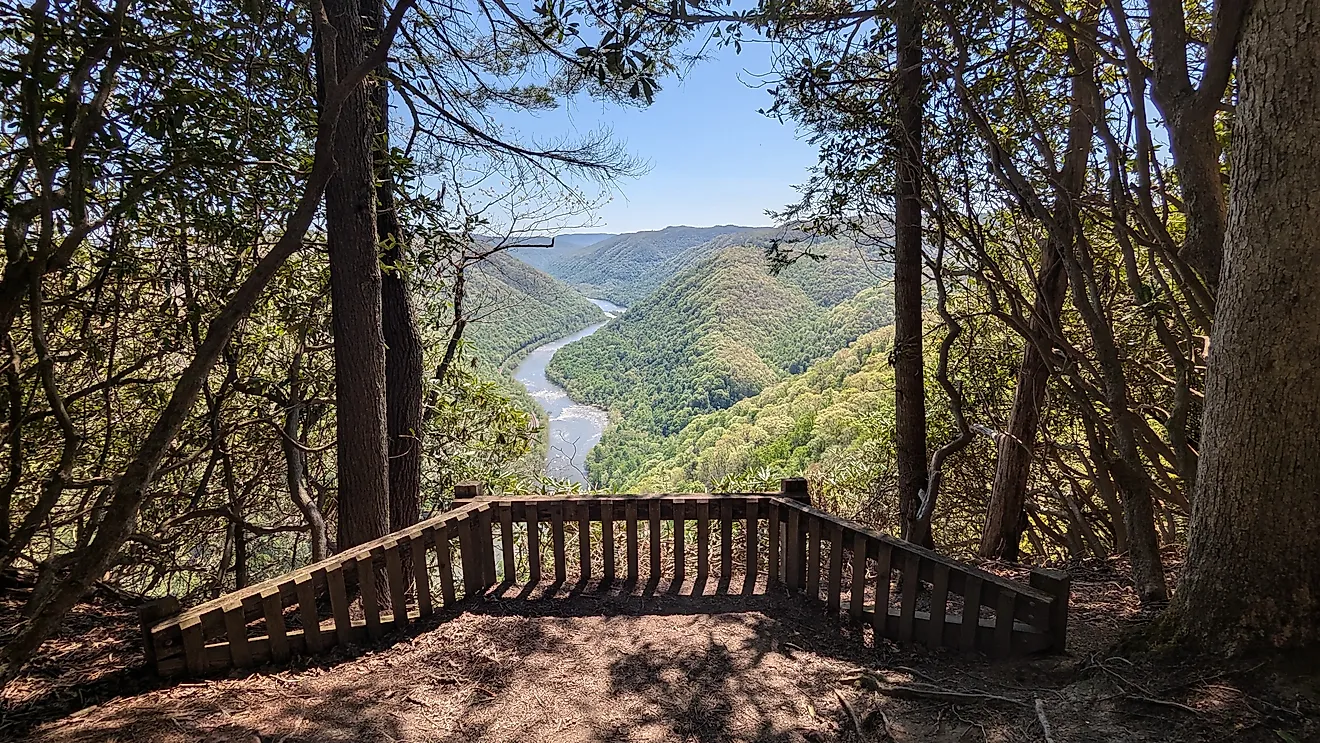
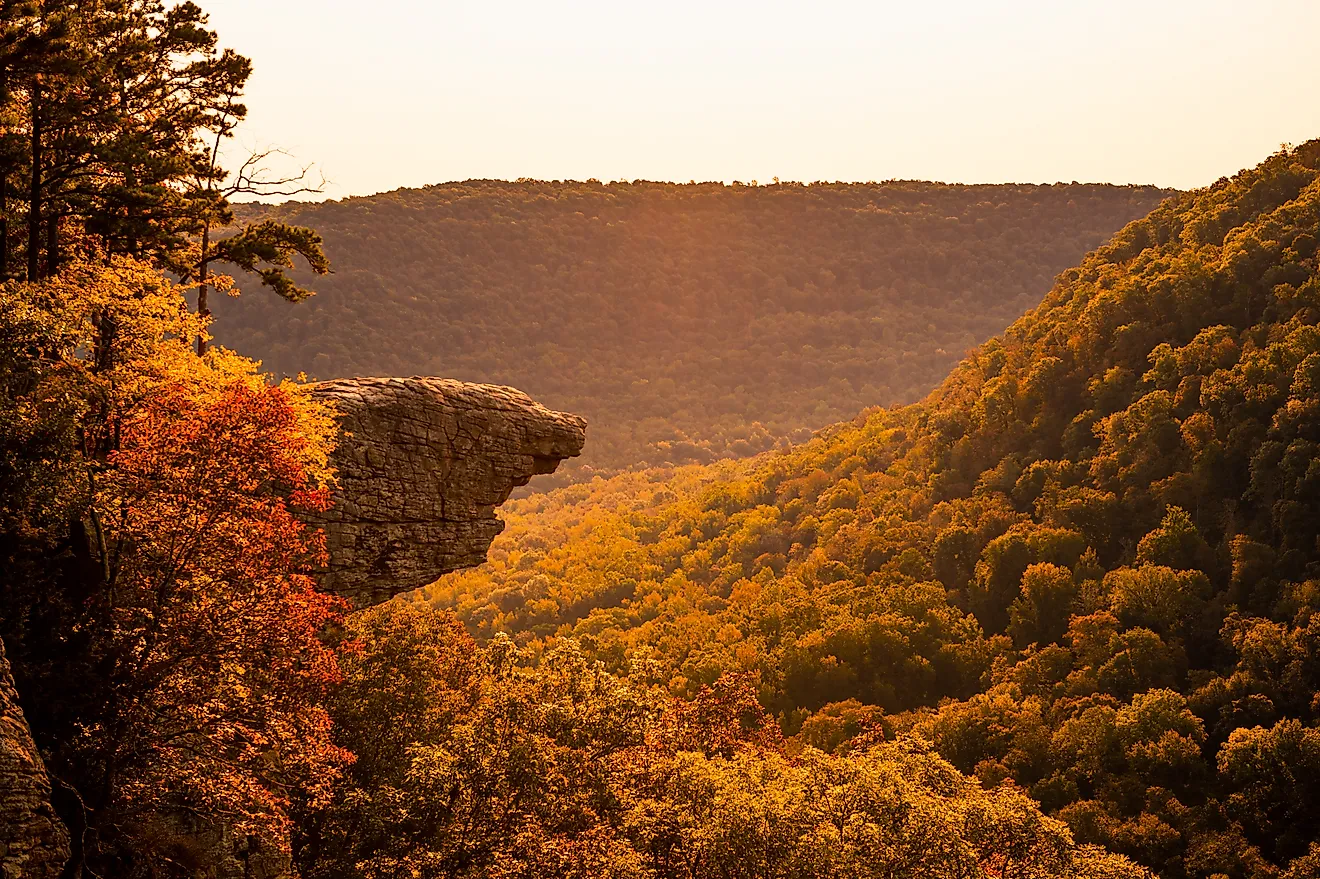
Cheaha State Park crowns the highest point in Alabama at 2,407 feet and is also the state’s oldest state park, established in 1933. The headline view from the summit is at Bald Rock, reachable by a short 0.3-mile boardwalk. The Civilian Conservation Corps built much of the park’s infrastructure in the 1930s, and the Bunker Tower at the summit holds the CCC Museum. A nearby interpretive center covers the corps’ work in Alabama. Picnic pavilions are available for reservation.
Several routes lead to the park, but the most direct from Birmingham is via I-20 east, exiting at US 431 or Heflin. The drive takes roughly 90 minutes. The real scenery starts on Highway 281, the Talladega Scenic Drive, which curves through the 392,567-acre Talladega National Forest up to the summit. The best time to visit is fall (mid-October to early November) when the foliage peaks across the highest mountains in the state. Sunrise or sunset delivers the best light whenever you go.
Sloss Furnaces National Historic Landmark, Birmingham

Tied directly to Birmingham’s identity, Sloss Furnaces National Historic Landmark helped turn the city into a steel-making powerhouse, drawing on local iron ore from Red Mountain, coal from the nearby Warrior Coal Field, and abundant limestone. Hour-long tours of the 32-acre site (book online) walk you through how iron was made between 1882 and 1971, when the furnaces shut down. Tours cover the industry that built Birmingham and the lives of the workers who ran it. Most of the tour is outdoors, so dress for the weather. Tours don’t run in bad weather.

Sloss hosts events year-round. The Magic City Art Connection brings working artists to the site each spring. The Furnace Chicken Festival fills a full day with food and arts vendors, live music, and chicken dishes from regional cooks. The 205 Festival celebrates Birmingham’s area code with a music lineup at the same site.
Cahaba River National Wildlife Refuge (1 hour from Birmingham)

Established in 2002, the 3,500-acre Cahaba River National Wildlife Refuge protects endangered freshwater species, including 17 mussel and 18 fish species found only in the Cahaba River system. The refuge is small but ecologically significant. The Cahaba lily blooms along the river’s shoals from mid-May through mid-June, drawing photographers from across the South.
The refuge sits under an hour from Birmingham, making it a strong day trip. Over 6.5 miles of trails crisscross the property. Paddlers and anglers can launch a kayak or canoe from River Trace Road and fish for largemouth bass, sunfish, and catfish. Wildlife watching along the Piper Trail is the most popular activity. Spring brings nesting songbirds and wildflowers; fall brings white-tailed deer and bald eagles.
Old Cahawba Archaeological Park (1 hour from Montgomery)

For paranormal enthusiasts and fans of Gothic architecture, a trip to Old Cahawba Archaeological Park is essential. Cahawba was Alabama’s first permanent state capital (from 1820 to 1826) and is now the state’s most famous ghost town. Its location at the confluence of the Cahaba and Alabama rivers made it a prosperous river town, but repeated flooding and the loss of its capital status (the seat of government moved to Tuscaloosa in 1826) led to decline, and most residents had left by the 1870s.
The park is about an hour from Montgomery. Stop at the Visitor Center for exhibits and artifacts before exploring. Borrow one of the on-site cruiser bikes to cover five miles of historic cemeteries, building ruins like the Barker-Kirkpatrick Mansion, and the standing 1854 St. Luke’s Episcopal Church, a Gothic Revival structure relocated to the site in 2007. Pack a picnic, fish, birdwatch, or launch a kayak from the river access. Snacks, souvenirs, and restrooms are at the Visitor Center.
Cherokee Rock Village (90 minutes from Birmingham)

Cherokee Rock Village (CRV) is a 200-acre public park atop Lookout Mountain in Leesburg, with massive sandstone boulders and rock formations that look like a stone city. The 200-foot-high formations overlooking Weiss Lake are estimated to date back roughly 300 million years. Visitors can geocache, birdwatch, and hike, bike, or ride 14 miles of trails including the 1.2-mile Green Forest Trail and the 1.4-mile Rock City Trail.
CRV is one of the premier rock climbing destinations in the southeast, with over 200 established routes for all skill levels. There are no climbing guides on site, but Chattanooga Guided Adventures runs outdoor climbing classes at CRV. Turn the day trip into an overnight by booking one of about 100 primitive tent sites with fire rings and picnic tables. A heated bathhouse, kids’ playground, and observation deck are also on site.
Montgomery Zoo, Montgomery

The Montgomery Zoo sits in a wooded area just north of the city, about 20 minutes by car. The zoo started as a small children’s zoo in Oak Park but grew into 40 acres of barrier-free, multi-species exhibits divided into five regions: Africa, Asia, Australia, North America, and South America. Explore on foot, by train, or on the Zoofari Skyride. Zookeeper talks run twice daily, and the Overlook Cafe is the on-site dining option.

Pair the zoo with a visit to the Mann Wildlife Learning Museum next door. The interactive museum lets visitors touch and feel antlers, fur, and skulls of animals collected by hunter George Mann. Mounted animals are displayed in recreated habitats, with rocks, trees, and sand from the original environments. Museum entrance is included with zoo admission.
Ave Maria Grotto (1 hour from Birmingham)

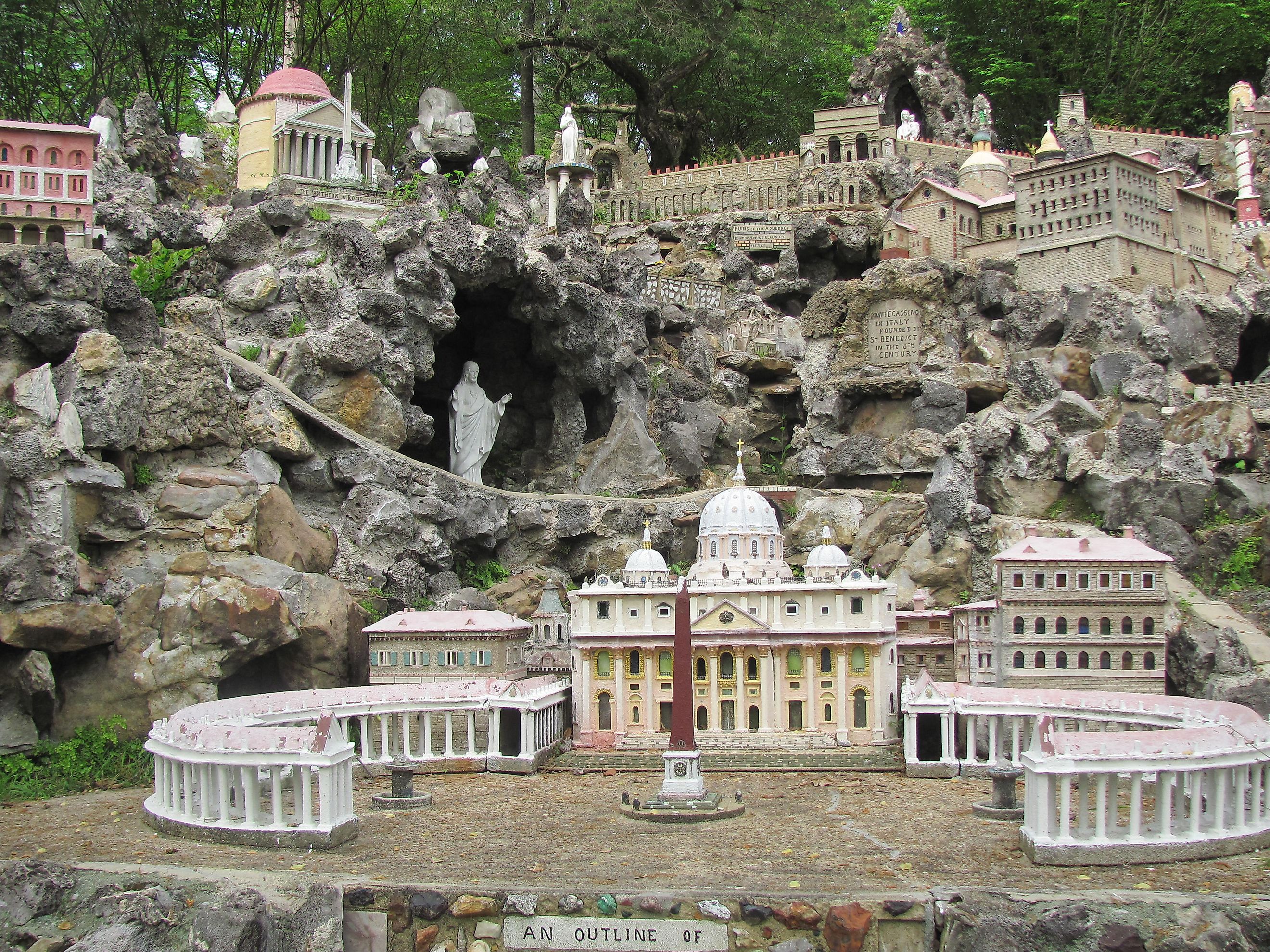
Ave Maria Grotto is a four-acre garden in Cullman with miniature shrines built between roughly 1912 and 1958 by Brother Joseph Zoettl, a Benedictine monk from Bavaria who lived at St. Bernard Abbey, Alabama’s only Benedictine abbey. The site features about 125 miniature replicas of famous religious landmarks, including St. Peter’s Basilica, the manger at Bethlehem, and the abbey of Montserrat in Spain. Brother Joseph built each one from found materials: beads, broken plates, bottle caps, and seashells. The site is sometimes called “Jerusalem in Miniature.” Brother Joseph is buried in the nearby Abbey Cemetery, near the abbey itself and the Grotto Gift Shop.
Cathedral Caverns State Park (90 minutes from Birmingham)

Kids won’t be able to resist a day trip to the 493-acre Cathedral Caverns State Park, especially when you tell them its original name was the “Bat Cave.” The cave was first commercially opened in the 1950s and renamed for its cathedral-like appearance, with an entrance 126 feet wide and 25 feet tall. Guided tours run about 90 minutes and cover roughly 1.5 miles round-trip, ending at the cave’s signature 45-foot stalagmite, “Goliath,” one of the largest in the world.
Beyond the cave, the park offers over 5 miles of hiking trails, primitive camping, and gemstone mining. Cathedral Caverns hosts events through the year, like a celebration of bees on World Bee Day, where families meet beekeepers and taste honey. Campfire Nights brings overnight visitors to the park for s’mores and stories.
USS Alabama Battleship Memorial Park, Mobile

USS Alabama Battleship Memorial Park opened in January 1965 after a campaign by Alabama citizens and schoolchildren saved the aging warship from the scrapyard. USS Alabama (BB-60), nicknamed the “Mighty A,” is moored along the shore of Mobile Bay, just outside downtown Mobile. The park is a National Historic Landmark and a memorial to all branches of the U.S. Armed Forces. The visit is mostly self-guided, walking through narrow passageways and up ladders to the crew quarters, kitchens, engine rooms, and bridge. Alongside the ship, USS Drum (SS-228) is one of the oldest American World War II submarines on public display. Stop for lunch at nearby Stevie’s Kitchen or pack a picnic for the park, where over 30 military aircraft are also displayed.
Bamahenge, Dinosaurs in the Woods, and Lady in the Lake (1 hour from Mobile)

For a quirky day trip about an hour from Mobile, head to a string of roadside artworks by sculptor Mark Cline near the Barber Marina on Wolf Bay. Start with Bamahenge, a full-scale fiberglass replica of England’s Stonehenge, similar in concept to Cline’s earlier “Foamhenge” in Natural Bridge, Virginia. From the marina entrance, you’ll see the dinosaur crossing sign before spotting four giant fiberglass dinosaurs in the woods: a Brontosaurus, T. Rex, Stegosaurus, and Triceratops.

The Lady in the Lake is a 50-foot fiberglass woman floating in a pond, a tribute to John William Waterhouse’s 1888 painting of the Lady of Shalott. The pieces are accessible from US Highway 98 and County Road 95 with free roadside parking, easily folded into a trip to the beaches and trails at the nearby 6,150-acre Gulf State Park.
Little River Canyon National Preserve (1 hour, 45 minutes from Birmingham)

The 15,288-acre Little River Canyon National Preserve protects Little River, which flows for much of its length atop Lookout Mountain. Spend a day exploring the 45-foot Little River Falls, Grace’s High Falls, and 26 miles of trails through canyons, forests, and rivers. A few worth following: the 0.75-mile Bridge Trail from the Jacksonville State University Little River Canyon Center over a scenic walkway, the half-mile Path to Learning Trail with stations on botany, ecology, and wildlife, and the 0.75-mile Eberhart Trail overlooking the ruins of the former Canyonland Park and Zoo.
The Little River Canyon Rim Parkway is an 11-mile scenic drive with eight overlooks including Hawks Glide and Wolf Creek, with views of the falls and the river through the canyon. The sandstone cliffs are a strong backdrop for nature photography, especially during fall foliage and spring wildflower seasons.
McWane Science Center, Birmingham

McWane Science Center is a strong family day trip in downtown Birmingham, with hands-on exhibits, aquariums, an IMAX Dome theater, and four floors of Adventure Halls. Start on the lower level with the World of Water aquariums, then head to the first floor for kid-focused exhibits like an anti-gravity mirror, a distortion room, and a tennis ball launcher. The second floor covers Alabama dinosaurs, the science of birds and bugs in the Audubon Cabin, and Itty Bitty Magic City for younger kids.
For food, stop at the Bean Sprouts Cafe for kid-friendly meals, muffins, and organic iced coffee. Tickets are sold for the museum only, the IMAX only, or the combo Adventure Halls plus theater.
Nature, History, and Quirky Day Trips Across Alabama
It’s hard to believe this whole roundup of day trips sits within two hours of Alabama’s main cities. The list mixes well-known attractions with off-the-radar finds, from scenic overlooks at Cheaha State Park to roadside art at Bamahenge. Outdoor highlights include Little River Canyon National Preserve and wildlife at Cahaba River National Wildlife Refuge, and family-friendly stops range from the Montgomery Zoo to the McWane Science Center. Together, these trips cover Alabama’s full range: nature, history, and the quirky.