8 Most Rattlesnake Infested Areas in Kansas
Kansas is home to four types of rattlesnakes: timber, prairie, western massasauga, and the western diamondback. Which one you will encounter will largely depend on the region of Kansas you visit.
Timber rattlesnakes tend to live in rocky or forested areas of eastern Kansas, while the smaller western massasauga can be found throughout most of Kansas, except the northwestern region. Prairie rattlesnakes are only found in the western part of the state in the drier Great Plains region, and Western Diamondback rattlesnakes are limited to tiny regions in south-central Kansas and one eastern Kansas park, where they were illegally introduced in the '90s and have flourished ever since.
These snakes inhabit diverse ecosystems in Kansas, including marshes, lakes, and tallgrass prairie trails. While rattlesnakes are typically elusive, there have been many sightings across Kansas due to unusually warm weather, flooding, and human activity in the state's many scenic parks. You are most likely to find one of these snakes at one of these 8 most rattlesnake-infested areas in Kansas.
Kanopolis State Park

Kanopolis State Park sits within the Smoky Hills section of north-central Kansas. The park has 1,585 acres of hills, bluffs, sandstone canyons, and Kanopolis Lake. There are more than 31 miles of trails throughout the park, along with opportunities for fishing, boating, and wildlife watching, including bald eagles and western diamondback rattlesnakes.

While western diamondbacks have lived in the park's borders since at least 1993, they have begun wandering out onto trails. Biologists have noted that these snakes are not native to the park and were likely introduced illegally. They tend to hang out at the Horsethief Canyon section of the park. These snakes can grow up to 5 feet long and, at times, even 6 feet. They are typically solitary creatures, except during mating season, but they do hang out with other snakes in burrows during hibernation, from October to March.
Flint Hills

Sometimes called the Bluestem Pastures, the Flint Hills cuts through eastern Kansas in a series of hills and prairies. There are several unique ecological features in this region, from the flint found at or near the surface to a very dense tallgrass prairie, which is a very rare site in the Great Plains due to human development. The state of Kansas has preserved several prairie preserves in the hills to protect these lands and has reintroduced species such as the bison. The grass here is ideal for snakes to hide in, including venomous copperheads and timber rattlesnakes.

Hikers have reported seeing timber rattlesnakes out on prairie trails in the Flint Hills. Growing from 36 to 60 inches long, the timber rattlesnake has a very wide range, stretching throughout most of the Eastern United States and into the eastern section of Kansas in the Flint Hills. They are ambush predators, meaning they will find good cover in the grass or in a hole and wait for prey to come to them. Humans don't count among their prey, but the snakes will still strike humans if threatened.
Tallgrass Prairie National Preserve

The Tallgrass Prairie National Preserve ecosystem once stretched across much of eastern Kansas, but today, less than 4% remains. This fragile environment mainly lies in the Flint Hills and was established in 1996 as an effort to preserve Kansas's older ecosystems. Within its 11,000 acres are animals ranging from large bison to irritating pests such as ticks and chiggers. Visitors should wear sturdy clothing and shoes when walking through tall grass to help prevent tick bites and rattlesnake bites. Within the prairie are copperhead snakes and western massasauga rattlesnakes.

In Kansas, the western massasauga is a rattlesnake found mainly in prairie and wetland habitats. They are smaller than other rattlesnakes, typically ranging from 14 to 36 inches long, and their coloration is gray with dark blotches. Park authorities note that these snakes can be found in historic buildings in the preserve.
Lake Scott Stake Park

This park sits around the freshwater Lake Scott, which is fed by springs. Lake Scott State Park is of immense historical importance to Kansas, as it is home to the only known pueblo town in Kansas. The pueblo is called El Cuartelejo, built in 1664 by the Taos Pueblo. The pueblo would be occupied by various groups over time, until it was eventually abandoned and has since largely eroded, leaving ruins. Amid these ruins and alongside lake trails, prairie rattlesnakes have found a good home.

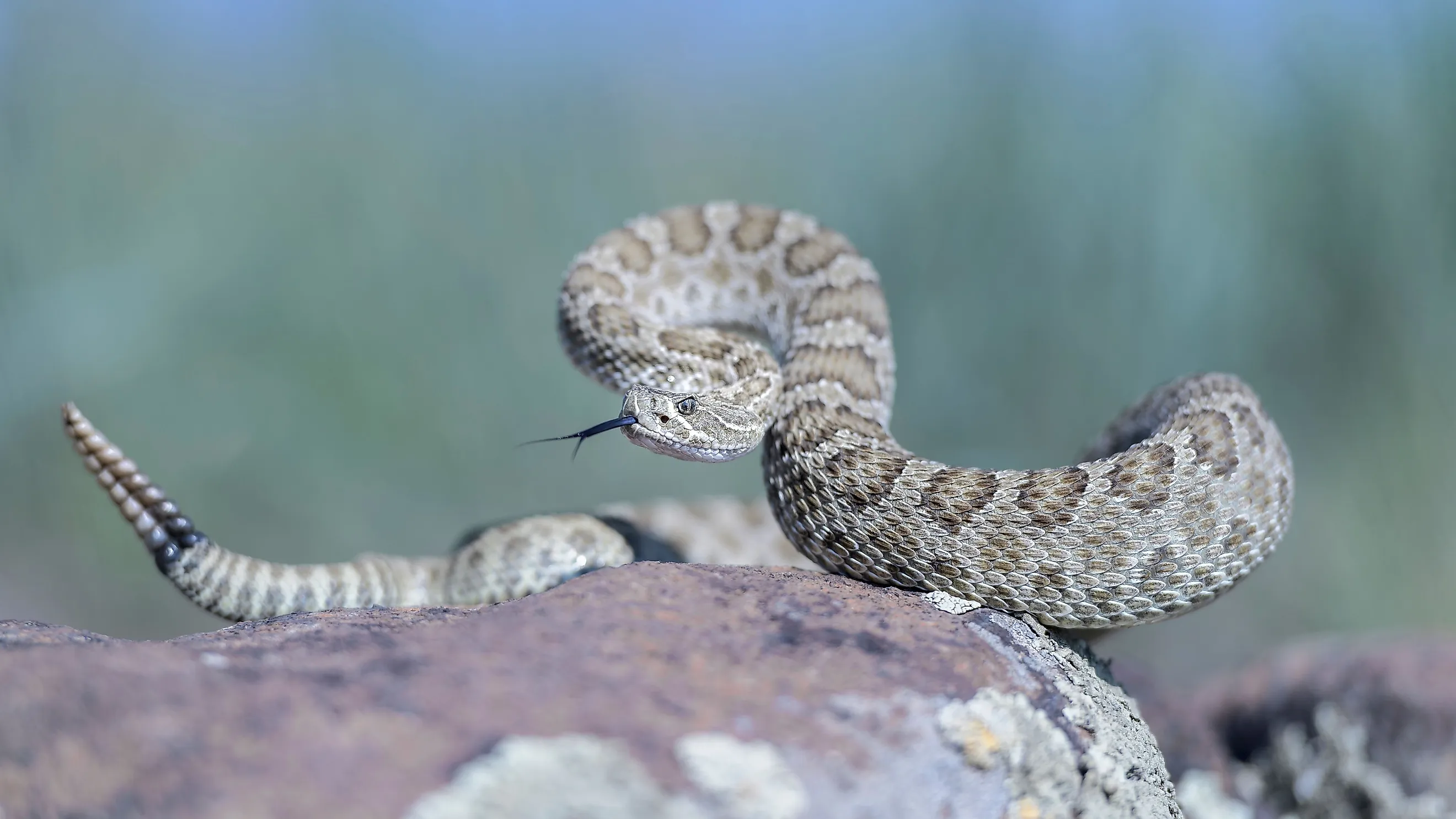
Hot temperatures and flooding have driven a larger population of these rattlesnakes recently, with hikers and wildlife authorities reporting increased sightings. The prairie rattlesnake has the largest distribution of any rattlesnake, from Canada to the northern border of Mexico. They can grow up to 5 feet long and are identified by light brown colors and dark dorsal blotches. They tend to stay on the ground, but will climb up trees. During scorching summer days, they will turn nocturnal.
Clinton State Park

Clinton State Park sits close to the eastern border of Kansas on Clinton Lake, providing water and hiking recreation for residents of Douglas County. At times, the University of Kansas hosts shows and events, such as the Ironman Kansas 70.3 triathlon. Park authorities diligently work to keep visitors aware of the venomous snakes that can be found in the park: the copperhead, western massasauga, and timber rattlesnake.

The park occasionally displays live rattlesnakes for visitors to see and learn how to identify them. The snakes are commonly spotted in the bluffs, prairies, and even at times near the shore of Lake Clinton. In fact, Douglas County has recorded the largest number of timber rattlesnake sightings in the state, with 105 confirmed sightings in 2024. Some visitors to Clinton State Park come here just for a chance to see these venomous snakes (from a safe distance).
Cheyenne Bottoms Wildlife Area

This wildlife area lies in the center of Kansas and is home to the largest wetland in the interior United States, covering 41,000 acres. Due to this status, it's part of the National Wetlands & Wildlife National Scenic Byway, which consists of many marshes home to 320 species of birds, ranging from the Whooping Crane to the Piping Plover.

During the spring, western massasaugas emerge in large numbers in many counties contained within the Cheyenne Bottoms, with 124 documented sightings in Barton County in 2023. Due to their small size, their rattles often don't make a loud enough sound for humans to hear. These snakes are typically fairly shy, but can run into humans during mating season or while looking for a good hunting spot. It's easier to step on one of these smaller snakes than larger ones, which is why Kansas wildlife experts recommend always taking proper precautions when visiting known massasauga hotspots like the Cheyenne Bottoms.
Milford Lake

At 15,700 acres, Milford Lake is the largest reservoir in Kansas. It was created by the construction of the Milford Dam on the Republican River. The primary place to visit the lake is Milford State Park, which spans 1,084 acres and offers trails, camping sites, and facilities for boating and fishing. Hikers and explorers should be aware that there are many timber rattlesnakes and copperheads located in this region.

Timber rattlesnakes are commonly found in the leaves and brush around the lake, but they can swim in the lake as well, which can be quite a scare for an unprepared boater. Timber rattlesnakes may swim either to cool off, escape danger, or reach a new hunting ground. It may be tempting to shoot these snakes, but hunters and visitors should keep their guns holstered, as all rattlesnakes are federally protected and it is illegal to kill or harm them.
Quivira National Wildlife Refuge

This central wildlife refuge is similar to Cheyenne Bottoms with its inland marshes. Located close to Stafford, Kansas, its salty marshes are regularly visited by migratory birds, including more than 35 shorebird species. The marshy land is ideal for federally protected birds like the whooping crane, and bald eagles can come here to winter as well. But some folks don't come here to find birds; they come here to find western massasauga rattlesnakes.

Western massasauga rattlesnakes are commonly seen here in the summer, especially in the evening hours at the refuge. Sometimes these snakes come out to bask in sunny weather, but in cooler weather, they shift to more nocturnal activity during the summer. These snakes will try to blend into their environment through camouflage when a human first approaches them and will only strike if they sense an immediate danger.
Watch Where You Step In Kansas
A rattlesnake bite can be very painful and dangerous. Common symptoms include severe pain, nausea, numbness, and, at times, difficulty breathing. Most of the time, the best way to avoid being bitten is to give these snakes space and avoid approaching them with ill intent. The best way to stay safe in these Kansas rattlesnake hotspots is to wear footwear that covers your entire foot, not hike alone, and avoid reaching into crevices or under leaves. None of these four rattlesnake species is aggressive towards humans, but their venom can still kill if left untreated.