6 Best Natural Wonders To Visit In Oklahoma This Year
Oklahoma packs more landscape variety into its borders than many residents expect. Red rock canyons sit within a short drive of ancient granite peaks, tallgrass prairie runs to the horizon, and clear springs cut through limestone hills. The state also holds features found almost nowhere else, including rare gypsum caves and some of the largest surviving stretches of tallgrass on the continent. For Oklahomans looking to spend more time outdoors, these six natural landmarks are a reminder of how much country fits inside a single state.
Black Mesa

Rising to 4,973 feet, Black Mesa marks Oklahoma's highest point. A cap of erosion-resistant basalt, left by lava flows millions of years ago, hardened across the top and shielded the mesa while the surrounding plains gradually wore away. Today, the 8.4-mile round-trip Black Mesa Summit Trail crosses open grasslands and volcanic rock to the state's highest elevation marker, with wide-reaching views into New Mexico and Colorado from the summit.
The area is also known for its dark skies, which make it one of Oklahoma's best places to watch the Milky Way on clear nights. Pronghorn and golden eagles share the mesa, adding to the sense of isolation in this corner of the panhandle. Spring and fall are the best times to visit, when daytime temperatures are comfortable for the exposed hike and the prairie is either dotted with wildflowers or colored by autumn grass. August is a particularly good window to catch the Perseid meteor shower.
Turner Falls

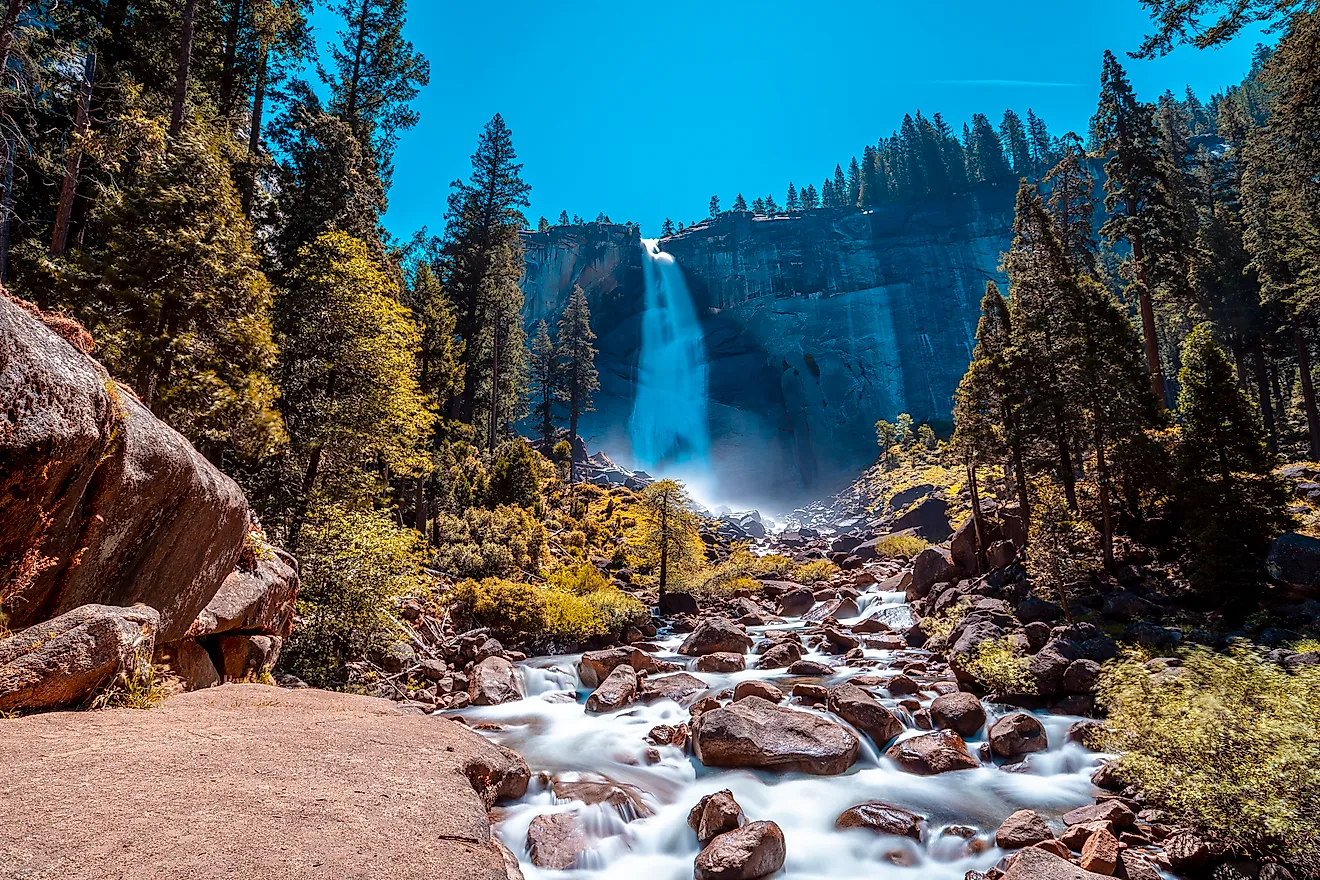
Fed by Honey Creek as it spills over a limestone cliff, Turner Falls drops 77 feet, ranking it among Oklahoma's tallest waterfalls. The falls sit within the Arbuckle Mountains, where clear spring-fed water has carved pools, small caves, and rocky ledges into one of the state's most recognizable landscapes. Beyond the main cascade, trails run through the park to natural overlooks, and nearby caves and the stone ruins of Collings Castle round out the scene.
Honey Creek continues below the falls, feeding clear swimming areas and gentle rapids that rise and fall with seasonal rainfall. Late spring is the ideal time to visit, when steady flow keeps the waterfall at its fullest and the surrounding trees are bright green. Summer is peak season, with visitors packing the park grounds, though the strength of the fall itself depends on that season's rain. Early fall is another strong choice, with cooler temperatures and lighter crowds along the creek and canyon.
Alabaster Caverns State Park

Unlike most caves, which form primarily from limestone, Alabaster Caverns State Park protects one of the world's largest natural gypsum caves open to the public. The cavern runs roughly three-quarters of a mile, with white, pink, and rare black alabaster deposits that formed over millions of years and give each chamber a distinct look. Guided tours pass tall rock formations, narrow passages, and colonies of bats that use the cave seasonally. Above the cave, park trails cross gypsum hills, with chances to spot wildlife on the open prairie.
Aboveground, the warm, dry landscape contrasts sharply with the cool underground air, so a single visit takes in two very different natural settings. Spring and fall are the best seasons to explore, with comfortable temperatures for hiking before or after a cave tour. The winter months are the time to see part of the local bat population hibernating along the cave ceilings.
Wichita Mountains Wildlife Refuge

Ancient granite peaks rise abruptly from the surrounding prairie at Wichita Mountains Wildlife Refuge, one of Oklahoma's most distinctive areas. Formed more than 500 million years ago, these weathered mountains rank among the oldest exposed rock in North America, with rounded summits, massive boulders, and clear streams cutting through the valleys below. Trails lead to landmarks such as Elk Mountain, the Charon's Garden Wilderness Area, and the summit of Mount Scott, which opens onto broad views of southwestern Oklahoma.
The refuge is known just as much for its wildlife, with free-ranging American bison, elk, Texas longhorn cattle, prairie dogs, and hundreds of bird species across the protected grasslands. Spring is the best time to visit, when wildflowers blanket the prairie and temperatures are comfortable for hiking. Elk rutting season peaks in October, adding daily chances for wildlife spotting.
Tallgrass Prairie Preserve

The Tallgrass Prairie Preserve protects nearly 40,000 acres of one of the largest surviving expanses of tallgrass prairie on Earth, a glimpse of the landscape that once covered much of central North America. Through late spring and summer, big bluestem, Indian grass, switchgrass, and hundreds of native wildflowers grow shoulder-high and ripple in the wind. A free-ranging herd of more than 2,000 American bison grazes the preserve, helping maintain the prairie ecosystem as grazing did for centuries.
Visitors can drive the scenic route or take hiking trails through open grasslands, creek crossings, and seasonal wildflower displays. Late May through early July is best for wildflowers, while the grasses reach their fullest height in September.
Gloss Mountain State Park

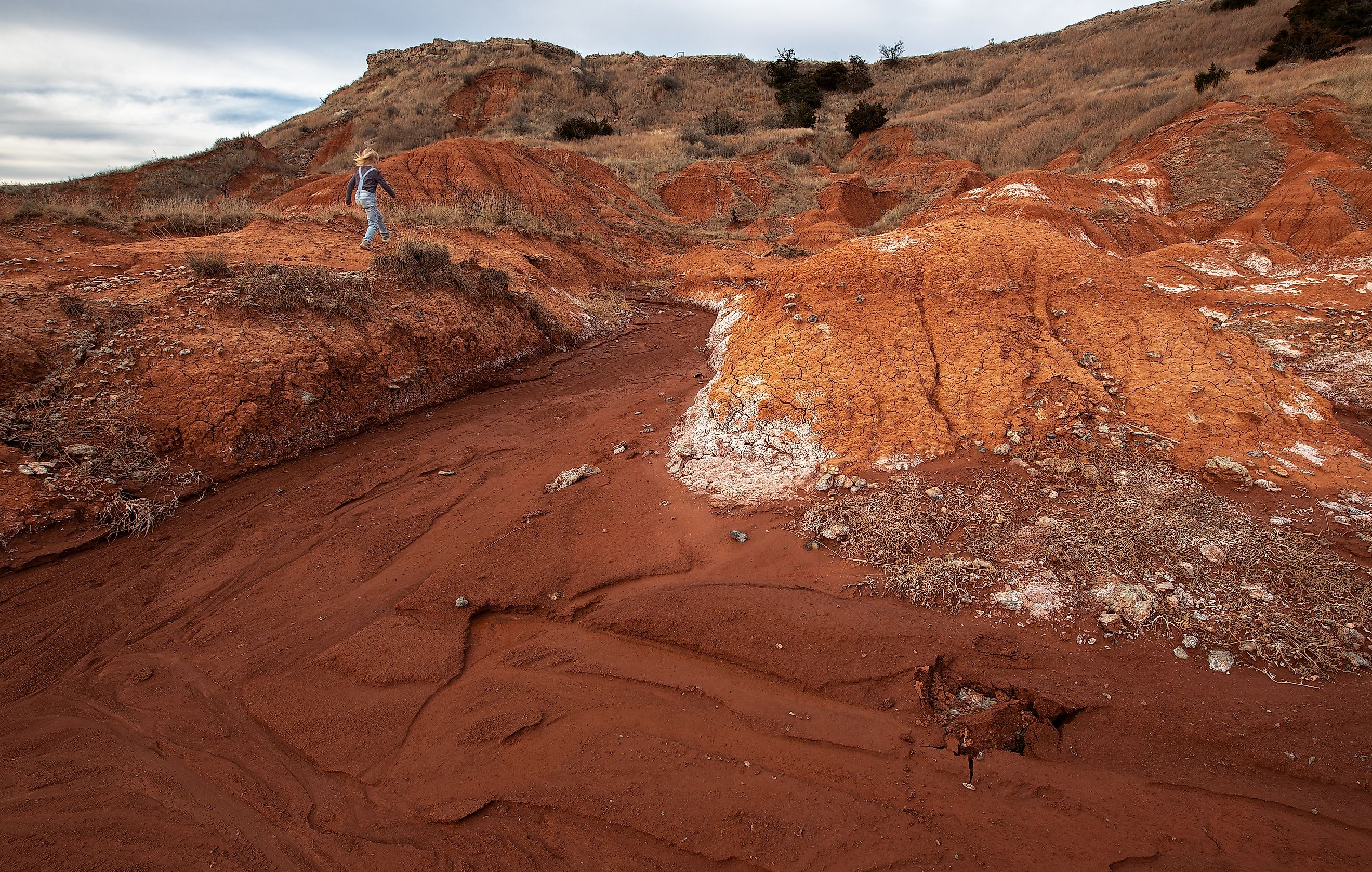
Gloss Mountain State Park stands apart for its mesas capped with layers of selenite gypsum, which catch the sunlight and give the hills their glossy sheen. Erosion has cut the terrain into steep buttes, narrow ridges, and flat-topped mesas above the surrounding plains. The Cathedral Mountain Trail climbs to the top of the park's signature mesa, where the view stretches across the surrounding countryside.
Along the way, exposed gypsum crystals and a deep red rock layer record millions of years of geological history. Spring and fall are the best times to see the formations, with cooler temperatures for the climb, while early-morning and late-afternoon light bring out the bright whites of the gypsum and the deep reds of the surrounding cliffs.
Discover Oklahoma's Wild Side
Lava flows, granite peaks, waterfalls, gypsum caves, and grasslands that run to the horizon each mark a different chapter in how Oklahoma's terrain formed over millions of years. Every destination shows a different side of the state, and a return trip in another season brings a different view as the grasses, wildflowers, and light shift month to month. Together, these six places make the case that some of Oklahoma's best outdoor experiences are in the land itself.