6 Best Natural Wonders To Visit In New Jersey This Year
New Jersey holds an impressive range of natural landmarks, from Paterson Great Falls to the sheer cliffs of the Palisades. The state also includes the river-cut Delaware Water Gap and the long forested sweep of the Pine Barrens. High Point State Park adds broad mountain views, while Buttermilk Falls brings one of the prettiest cascades in the region. Glacial lakes, ancient rock formations, and rare ecosystems give New Jersey far more variety than many travelers expect. These six destinations highlight the places that best reveal New Jersey’s wilder side this year.
Paterson Great Falls

An impressive 77 feet high and 260 feet wide, the Great Falls of the Passaic River in Paterson is second only to the mighty (and massive) Niagara Falls by volume east of the Mississippi River. More than two billion gallons of water rush over the falls on a high-flow day, creating a spectacular display for those smart enough to include the experience on their New Jersey itinerary.
Shaped by glacial activity 13,000 years ago, the falls’ hydraulic power potential was recognized in the late 1700s, when Alexander Hamilton decided to found the town of Paterson there. Today, the falls are part of the Paterson Great Falls National Historical Park. This area of outstanding natural beauty features two well-positioned overlooks: Overlook Park on the south side and Mary Ellen Kramer Park on the north. Adding to the experience is a pedestrian footbridge that spans the gorge, providing exceptional views over this natural phenomenon. The falls are most impressive in late winter and early spring when snowmelt and rain push water volumes to their peak. The parks are accessible year-round and free to enter.
The Palisades

Palisades Interstate Park preserves a 12-mile stretch of some of the most geologically distinctive cliffs in the eastern United States. Formed by volcanic activity followed by the erosion of softer rock, the Palisades consist of a near-vertical cliff face rising between 300 and 500 feet above the Hudson River. Devastating quarrying led to the formation of the Palisades Interstate Park Commission to protect the area.
There are over 30 miles of trails to explore here, with the most popular starting points at State Line Lookout off the Palisades Interstate Parkway. From the stone-walled overlook there, you’ll see across the Hudson as far as the Manhattan skyline. Summer fun includes kayaking and hiking, while fall foliage along the cliff tops typically peaks from mid-October to mid-November.
Delaware Water Gap

Formed by the Delaware River as it cut through the Kittatinny Ridge hundreds of millions of years ago, the Delaware Water Gap is one of the most dramatic natural passages in the eastern Appalachians. The surrounding Delaware Water Gap National Recreation Area, which spans both New Jersey and Pennsylvania, protects an area of 70,000 acres, including 40 miles of the Delaware River corridor, some of it within Worthington State Forest.

The best way to see this natural wonder is by exploring the over 150 miles of hiking trails built up around it. The best on the New Jersey side is the ascent of Mount Tammany, a three-mile round trip with incredible views from the top of Indian Head. The park is also good for paddling, with 40 miles of protected river and wildlife, including bald eagles, black bears, and river otters. Fall brings with it stunning foliage along the Kittatinny Ridge, while spring sees heavy water flows in creeks and waterfalls.
Buttermilk Falls

New Jersey's tallest waterfall, Buttermilk Falls, is accessible via the back roads of the Delaware Water Gap National Recreation Area near Layton. Standing around 85 feet tall, water cascades over a tiered rock face in the frothy white pattern that gives the falls their name. It’s especially attractive in spring when it’s flanked on both sides by dense stands of rhododendron… so have your camera ready.
The falls are accessible from a parking area on Mountain Road, just steps from the road, making them manageable for those with limited mobility. A wooden staircase to the left of the falls climbs the rock face with several observation platforms, and a trail continues past the top of the falls and connects with the Appalachian Trail. Spring, following snowmelt, and the days after significant rainfall, all make for optimal cascades. From December 15th to April 15th each year, the roads leading to the falls are closed, so visitors should note that the falls are not accessible by vehicle during this time.
High Point State Park

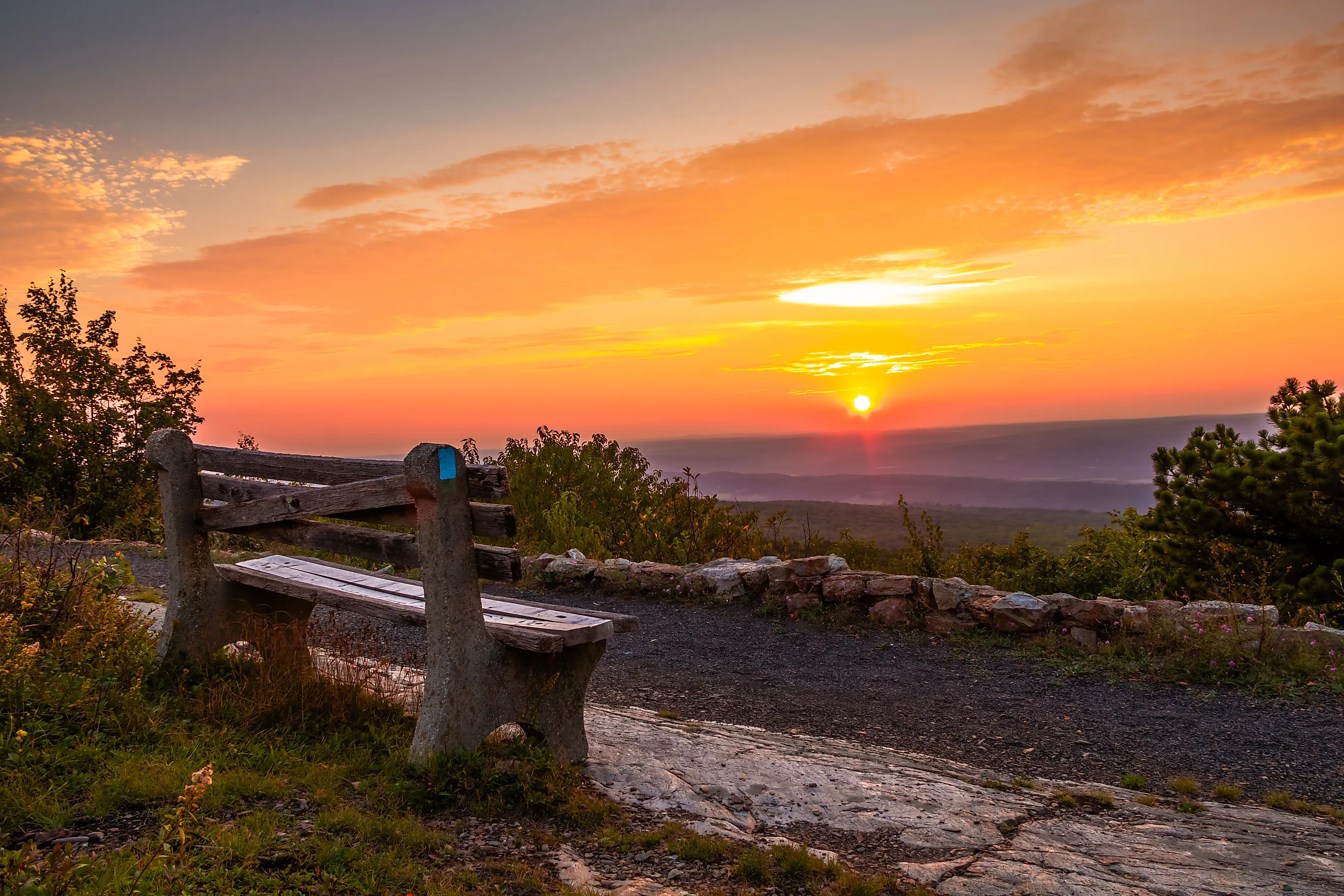
At 1,803 feet above sea level, you’ll not be surprised to learn that High Point is just as it claims: the highest point in New Jersey. Visible for miles in every direction, the massive obelisk monument that marks the summit of High Point State Park stands 220 feet tall and is modeled after the Washington Monument. Even without climbing the tower, the views from this natural wonder are spectacular.
The Dryden Kuser Natural Area, part of the park, features an Atlantic white cedar bog at an elevation of 1,500 feet, the highest known such swamp in the world. Lake Marcia, a glacial lake within the park, is good for swimming, along with kayaking and canoeing. Sawmill Lake and Steeny Kill Lake are both stocked with trout, largemouth bass, and other species. In winter, the park operates as a cross-country ski center. Fall foliage along the Kittatinny Ridge typically peaks in mid-October. Summer is the best season for hiking, while winter is all about snowshoeing, cross-country skiing, and snowmobiling.
The Pine Barrens

The New Jersey Pine Barrens (aka, the Pinelands) covers a vast area of over a million acres of coastal plain across seven counties in southern New Jersey. All told, it accounts for about 22 percent of the state's total land area. It’s also the largest surviving contiguous tract of open space on the eastern seaboard.
It’s also the world's largest pitch pine forest, a unique ecosystem with some 850 plant species, including wild orchids. Now designated as the Pinelands National Reserve and an International Biosphere Reserve, it sits atop the Kirkwood-Cohansey aquifer, a 17 trillion-gallon freshwater reserve that’s considered among the purest in the country. Autumn brings with it cranberry bogs and those stunning fall colors. Spring is also good for a visit, with wildflower season bringing orchids and other rare species into bloom.
New Jersey's Natural Wonders Are Worth Seeing
New Jersey's natural landscape occupies a significant portion of the state. Stretching between densely populated cities, this state contains natural wonders that just might surprise you. Together, these six places are some of the best places to visit in the Mid-Atlantic region, with hiking, paddling, and wildlife viewing set against some of the most incredible natural wonders in New Jersey.