5 Rattlesnake Hotspots In Louisiana
As a Deep South state with not-so-deep bayous supposedly teeming with dangerous snakes, Louisiana is not as snaky as you may think. Sure, it does harbor approximately 47 snake species, many of which are aquatic and some of which are venomous. But when it comes to America's most iconic serpent, the rattlesnake, Louisiana has just three kinds. The timber rattlesnake (Crotalus horridus) is relatively common and big; the pygmy rattlesnake (Sistrurus miliarius) is scarce and tiny, and the eastern diamondback rattlesnake (Crotalus adamanteus) hasn't been sighted in so long that it is believed to be extirpated in the state. That said, Louisiana does have hot spots like Chicot State Park and Big Branch Marsh National Wildlife Refuge that are rattlesnake-prone.
Chicot State Park

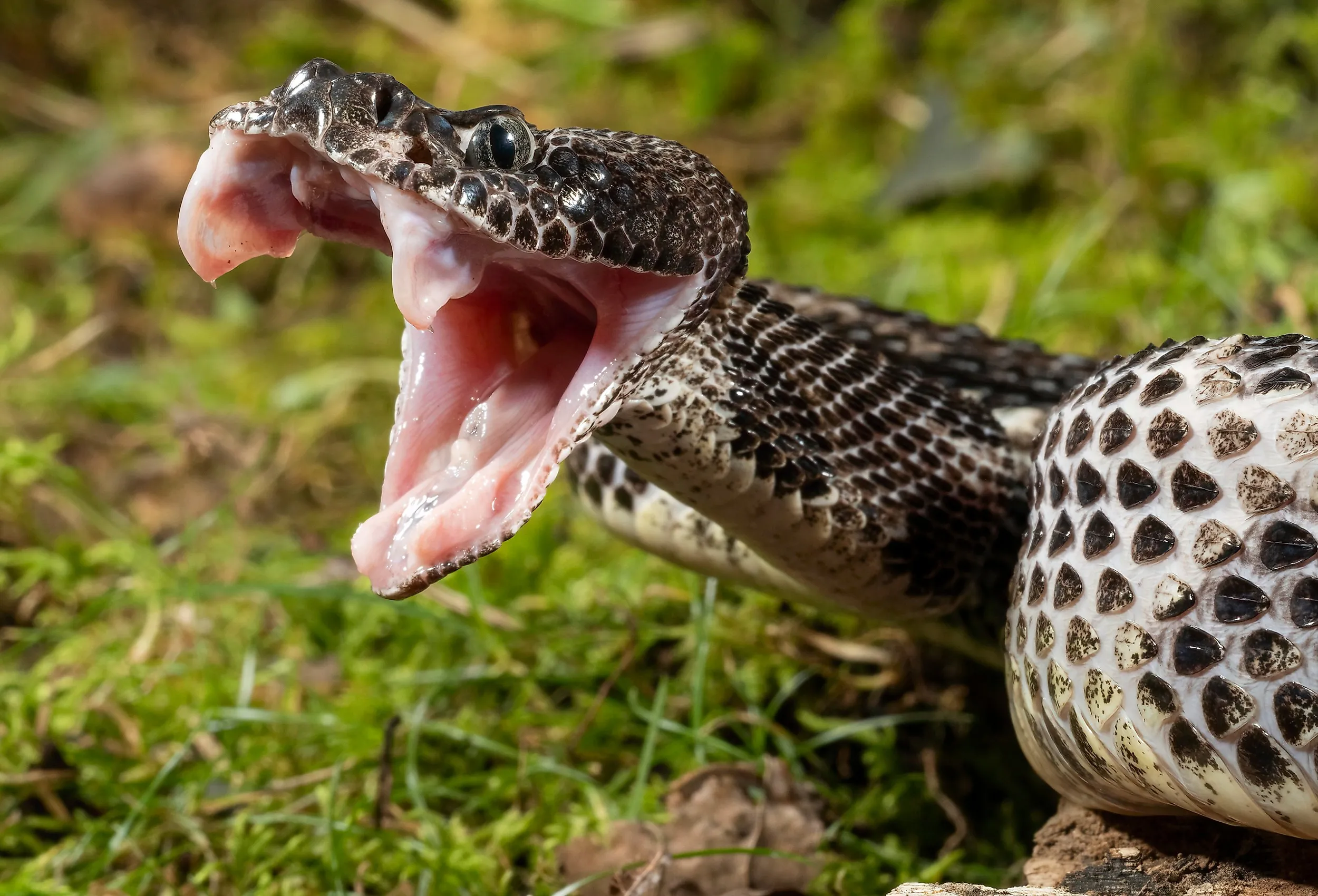
Located in south-central Louisiana's Evangeline Parish, Chicot State Park is a 6,400ish-acre lakeside preserve known to shelter Louisiana's most common species of rattlesnake. Parkgoers must watch their step, especially while off namesake Lake Chicot and hiking its adjacent forests, to avoid surprising the timber rattlesnake (Crotalus horridus), AKA the canebrake rattlesnake. Like all rattlesnakes, the timber rattlesnake will only bite if threatened, but that bite packs a wallop. As one of the largest crotalines, the timber rattlesnake unloads a copious amount of venom through its hypodermic fangs. Yet deaths from a timber rattlesnake, or any venomous snake, in Louisiana are extremely rare. In 2023, there were 334 venomous snake bites in Louisiana, all of which were successfully treated.

Chicot State Park also claims many species of non-venomous snakes. One is the great plains rat snake (Pantherophis emoryi), an individual of which, named Jezebel, was kept in captivity as an ambassador and educational tool at the park's Louisiana State Arboretum. Before her passing at age 26, she had warmed the hearts of thousands of park visitors toward snakes.
Big Branch Marsh National Wildlife Refuge

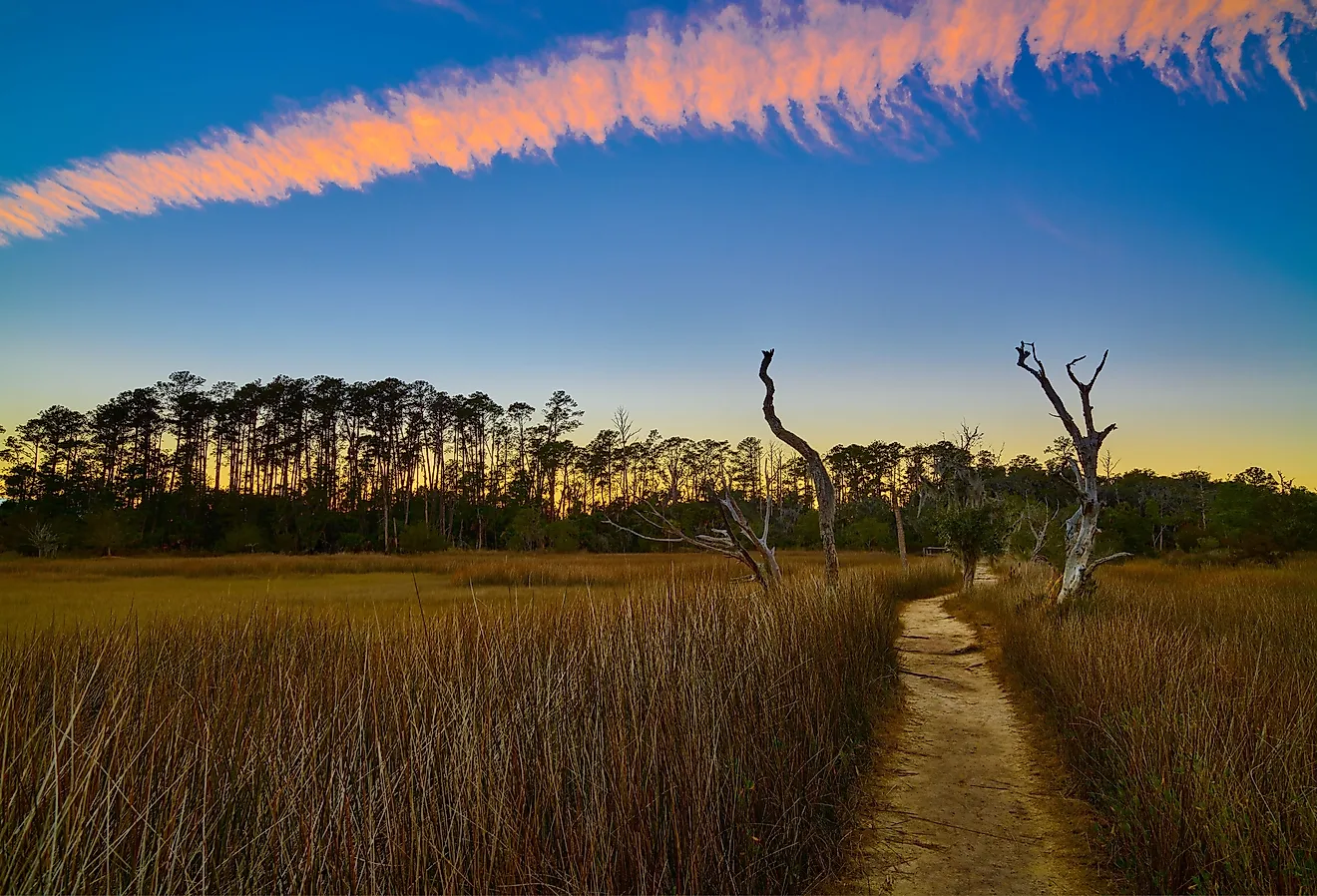
Instead of the timber rattlesnake, the Big Branch Marsh National Wildlife Refuge houses a much smaller, much less dangerous rattler: the pygmy rattlesnake (Sistrurus miliarius). Capped at about 24 inches, this species is well-hidden within the 18,000-plus acres of bald cypress-tupelo forests, hardwood hammocks, pine savannahs, bayous, and namesake freshwater and brackish marshes comprising this southeastern LA refuge. Under such cover, the pygmy rattlesnake hunts for frogs, lizards, and other snakes until it is coaxed out by the odd reptile enthusiast searching Big Branch for elusive species.

North of Big Branch are the possibly historic slithering grounds of Louisiana's largest but most elusive rattler: the eastern diamondback rattlesnake (Crotalus adamanteus). Designated as "critically imperiled" in Louisiana and considered by many to be extirpated from the state, its last verifiable sightings occurred well over a decade ago in Washington Parish.
Tunica Hills Wildlife Management Area

The Tunica Hills are a tiny range of highlands tucked beside the Mississippi River near the Louisiana-Mississippi border. Its hills, plus ravines, bluffs, waterfalls, forested canyons, and other unique formations in a famously flat state, are explorable via preserves like the Tunica Hills Wildlife Management Area.
With two tracts totaling more than 6,000 acres, the Tunica Hills WMA is renowned for flora and fauna rarely found elsewhere in Louisiana, including the pyramid magnolia and the American black bear. But it is less renowned for venomous snakes, notably the timber rattlesnake. Like humans, this rattlesnake enjoys the striking landforms and striking animals (especially the eastern chipmunk) in the Tunica Hills. So does the eastern copperhead (Agkistrodon contortrix), which also frequents the preserve. Considered safer than those from timber rattlesnakes, copperhead bites are seldom severe and rarely fatal.
Bayou Sauvage Urban National Wildlife Refuge

True to its name, the Bayou Sauvage Urban National Wildlife Refuge is a wild bayou blocking urban sprawl. It's 25,000ish acres occupy the eastern end of New Orleans along Lake Pontchartrain, on whose opposite bank sits the Big Branch Marsh National Wildlife Refuge. Despite their proximity, each refuge harbors a distinct rattlesnake species. Big Marsh has the pygmy rattlesnake. Bayou Sauvage, on the other bank, boasts the timber rattlesnake.

Though New Orleaners may not be happy about a big rattlesnake species living in their midst, the timber rattler is largely confined to Bayou Sauvage and its undeveloped surroundings. Some timbers do slither deeper into the city; however, most notably a five-footer found in the suburb of Harahan in 2019 (it is believed to have hitchhiked from Texas) and a near-six-footer discovered in New Orleans East, near the abandoned Six Flags, in 2017. But the timber rattlesnake is not the only venomous serpent that New Orleaners should look out for. The northern cottonmouth (Agkistrodon piscivorus) also inhabits Bayou Sauvage and greater NOLA.
Kisatchie National Forest

Different from other snaky Louisiana preserves, the Kisatchie National Forest boasts more than one species of rattler. Knowing the size of Kisatchie, it is easy to see why. Louisiana's only national forest spans seven parishes, five ranger districts, and more than 604,000 acres in the north-central swath of the state. Both the timber rattlesnake and pygmy rattlesnake have plenty of space to hunt, hide, and hydrate, even when accounting for Kisatchie's myriad other snake species.
Three additional venomous snakes are known to inhabit the forest: the eastern copperhead, northern cottonmouth, and Texas coral snake (Micrurus tener). Yet all those infamous Kisatchie serpents pale in notoriety to the Louisiana pine snake (Pituophis ruthven). This non-venomous species, once on the brink of extinction, has made a comeback thanks to hundreds of captive-bred individuals released into Kisatchie. Perhaps the same can be done for the eastern diamondback rattlesnake, though with probably far less fanfare.
Despite its location and reputation as a Deep South snake-infested state, Louisiana has only three species of rattlesnakes, one of which is likely extirpated. But if you wish to admire or avoid LA's two extant rattlers, make note of Chicot State Park, the Big Branch Marsh National Wildlife Refuge, Tunica Hills Wildlife Management Area, Bayou Sauvage Urban National Wildlife Refuge, and Kisatchie National Forest. Those are five rattlesnake "hotspots" in a lukewarm rattlesnake state.