5 Most Alligator-Filled Swamps In Florida
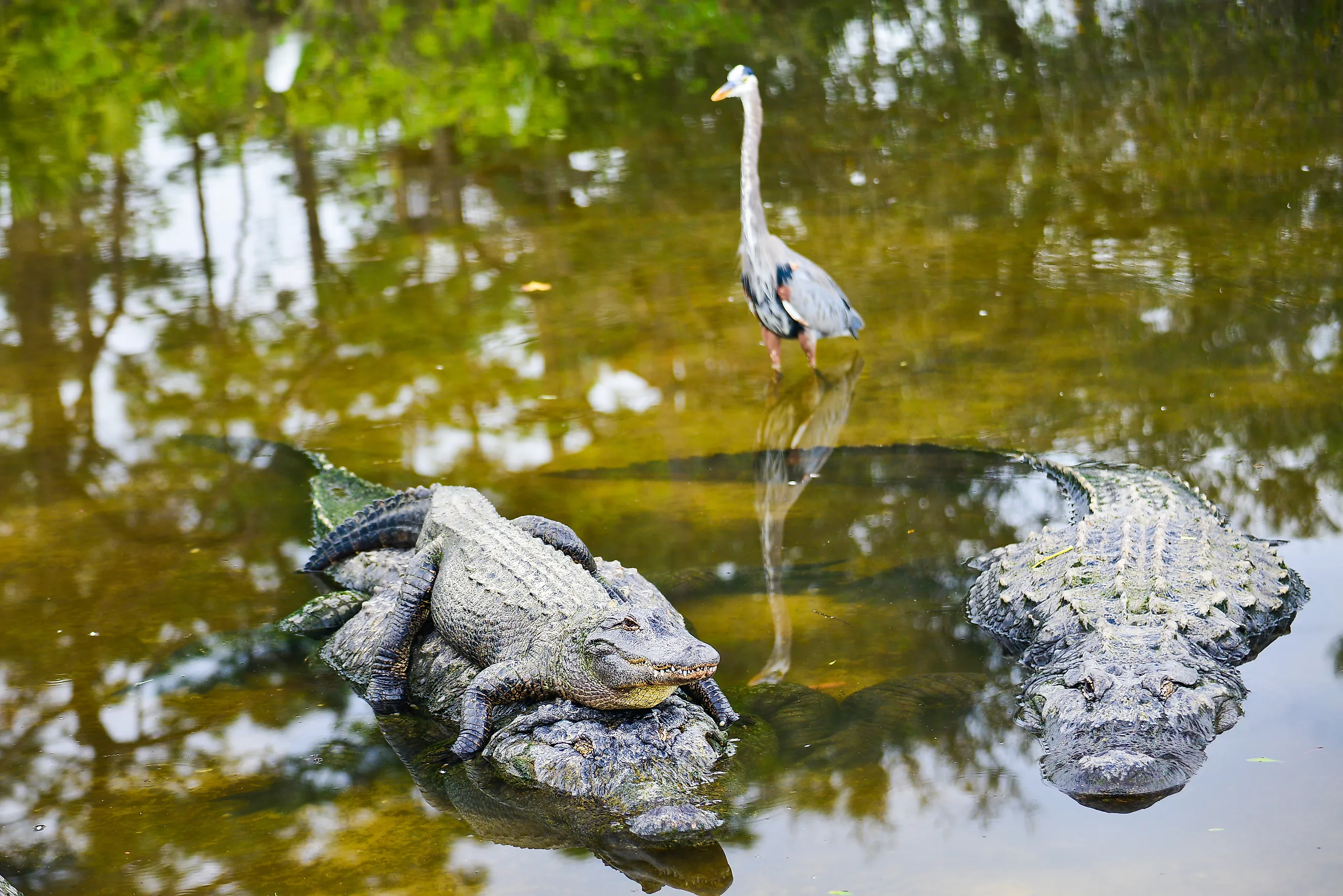
Florida’s plethora of swamps supports the largest wild population of American alligators in the United States. An almost always temperate climate, lively waters, and dense wetlands here create the ideal conditions for breeding, feeding, and overall long-term survival for these large, cold-blooded predators.
From vast river floodplains to cypress-blanketed marshes, these landscapes allow alligators to thrive year-round, and many of Florida’s most alligator-filled swamplands are protected areas in part because of this, while others sit near growing communities, highlighting how closely people and these apex predators coexist. The following swamps stand out for hosting consistently high alligator densities and prime habitat conditions for all sorts of other diverse flora and fauna.
Okefenokee Swamp

Shared with Georgia, the Okefenokee Swamp lies just north of Florida’s border but directly influences alligator populations in far northern Florida watersheds. This massive peat-filled wetland is known for its dark, tannin-stained water and floating peat mats, which alligators use as stable basking and nesting platforms. The acidic conditions also reduce fish diversity, pushing alligators to rely more heavily on food sources like turtles, birds, and small mammals.

Okefenokee's alligators are also known for constructing elevated nests to avoid flooding, a behavior shaped by the swamp’s unstable ground. What also makes this landscape stand out is the fact that during droughts, fires can burn directly through the local peat, altering channels and creating new pools that alligators often quickly occupy.
The swamp’s isolation and limited human access have allowed its alligator population to remain large, remarkably old, and unusually undisturbed compared to most wetlands in the Deep South.
Apalachicola River Floodplain

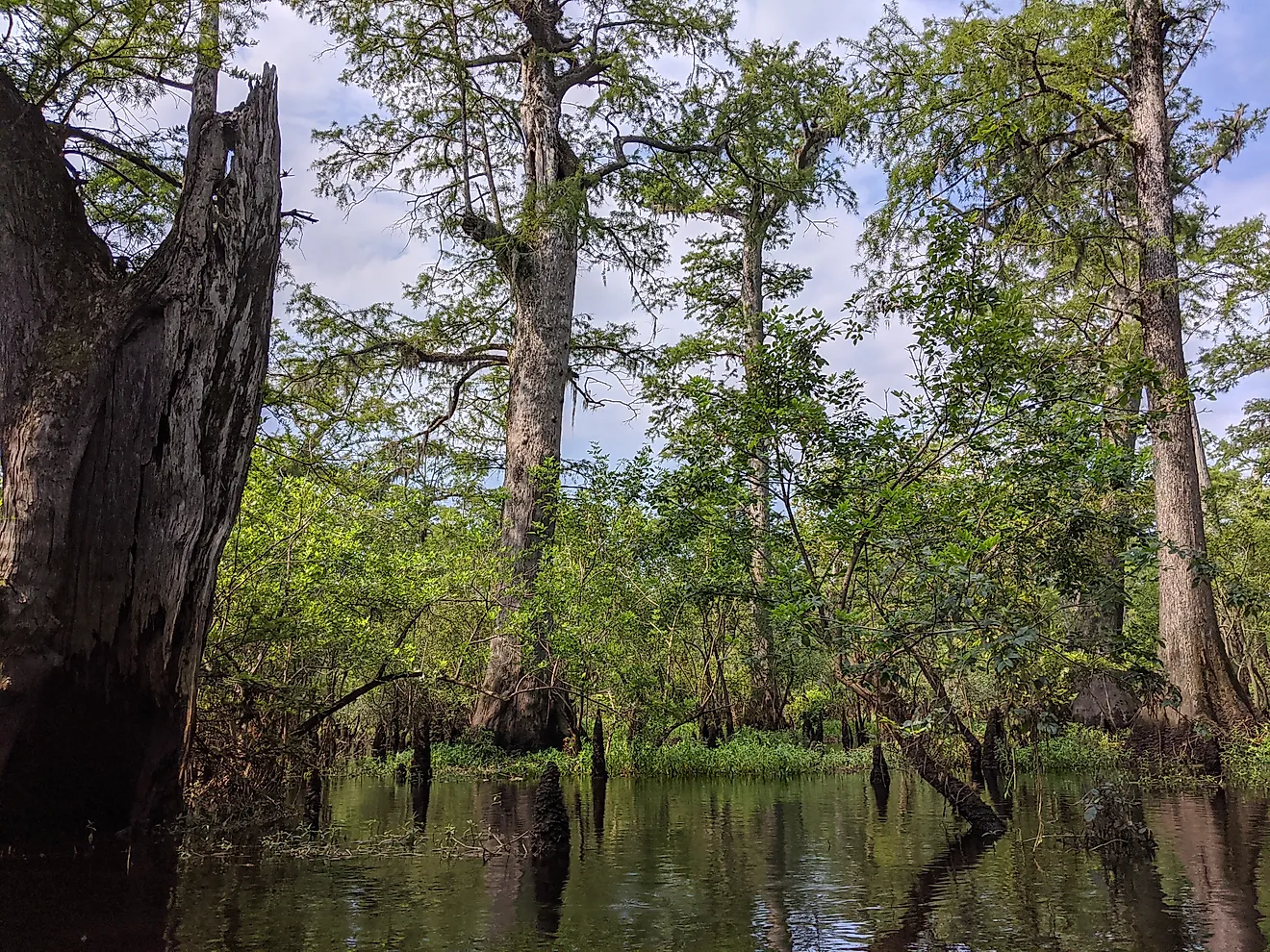
Another vast region made up of multiple swamps and wetlands, the Apalachicola River floodplain supports one of the most stable alligator populations in Florida due to its regular annual flooding cycle and high prey diversity. Seasonal rises in river levels spread water deep into tupelo and bald cypress forests, creating thousands of temporary backwaters where local alligators feed and nest with minimal disturbance.

Large, older alligators are common throughout the region, particularly in oxbow lakes and cutoff channels that remain wet during droughts. The river’s slow current and heavy shade also reduce water temperature swings, allowing gatirs to remain active longer into cooler months
This floodplain also produces among the largest freshwater fish biomasses of any other river system in the state (with over 130 species present), giving alligators a reliable food source year after year and making it a hotspot for anglers as well. To add to this, limited development along the floodplain has kept this system largely intact, preserving prime natural habitats and recreational spaces for people alike.
Everglades National Park

Made from a massive, interconnected web of swamps, Everglades National Park holds the highest concentration of American alligators in Florida, spread across more than 1.5 million acres that also include sawgrass marshes, sloughs, and various islands. Unlike most swamplands, the Everglades overall functions as a sort of giant, slow-moving river, with water flowing south at a barely noticeable pace towards the Gulf Coast.

This constant movement creates ideal feeding corridors for a multitude of reptiles, especially during the dry season when fish concentrate in ever-shrinking pools. Alligators here also play a critical ecological role by digging “gator holes,” which retain water during droughts and provide refuge for fish, birds, and mammals. These depressions reshape the swamp and directly influence wildlife distribution across the board.
The Everglades is also one of the few places where both American alligators and American crocodiles coexist naturally, though they generally occupy different zones within the wetland.
Big Cypress National Preserve

Big Cypress National Preserve supports another of Florida's largest alligator populations, spread across its cypress domes, wet prairies, and shallow woodland strands that flood for much of the year. Unlike the open marshes of the Everglades, this landscape is heavily forested, giving alligators extensive cover, shaded nesting sites, and places to conveniently escape from human development.

The preserve notably sits on a limestone foundation that holds water near the surface without absorbing into the ground, allowing alligators to remain active even during dry periods. Furthermore, Big Cypress is also known for its unusually clear swamp water, which improves hunting efficiency for ambush predators, on top of making it easier for human visitors to see through the depths.
In colder months, alligators here use what are known as "solution holes" in the limestone to regulate body temperature, a behavior rarely observed in other Florida swamps.
Fakahatchee Strand Preserve State Park

Fakahatchee Strand Preserve State Park contains one of Florida’s deepest and most continuously flooded swamps, creating idyllic conditions for large alligators. The strand is a slow-moving forested river, not a marsh, with water often flowing knee-deep beneath towering bald cypress and royal palms. This permanent depth of water allows alligators to avoid seasonal crowding seen in drier swamps around the southeast.

Fakahatchee is also among the few places where alligators regularly tend to use narrow, forested channels instead of open water, moving almost invisibly through dense vegetation. The swamp’s heavy canopy keeps water temperatures cooler as well, influencing feeding patterns and reducing evaporation during dry months. To top that off, limited public access and difficult, rugged terrain have kept human pressure low, allowing resident gators in Fakahatchee to reach advanced in age and size with minimal disturbance.
Find Florida's Largest Reptiles in these Gator Hotspots
These flourishing biomes are shaped by factors like different rates of water flow, geology, and long-term protection from us, not just size. From forested strands to vast floodplains, each swamp supports American alligators in different ways, and together, they show how adaptable this species is and why preserving these wetlands remains critical to Florida’s ecological balance in general. Given the state's almost constant warm temperatures, you are also free to try to catch a glimpse of these cold-blooded creatures at any point of the year. Now that you know where to look, give it a try next time you find yourself in the Sunshine State!