5 Best Natural Wonders To Visit In Rhode Island This Year
Rhode Island is brimming with natural wonders that highlight the variety of its landscapes and seascapes. Along the Atlantic Coast and Narragansett Bay, islands and beaches are habitats for harbor seals and seabirds, set against cliffs and historic lighthouses. Block Island emphasizes coastal scenery and historical significance, while inland kettle ponds and quaking bogs preserve remnants of the Ice Age. Collectively, these settings illustrate the state’s ecological diversity and offer opportunities for recreation and environmental education.
Mohegan Bluffs

On Block Island, the Mohegan Bluffs rise 150 to 200 feet above the south shore, where dramatic coastal scenery meets a site of historical significance. The name comes from a 16th-century battle between the Mohegan and Niantic peoples over control of Block Island. Reportedly, you can see as far as Montauk on a clear day. A variety of seabirds and migratory birds have been sighted, as well as the occasional harbor seal. Visit between mid-June and mid-September for peak summer activities, while May to October offers pleasant conditions for outdoor lounging.
The Gothic-Revival-style Southeast Lighthouse, dating back to 1874, is set at the top of the cliffs. The lighthouse is a National Historic Landmark with a 52-foot brick and granite tower. It was moved from its original location near the edge of the cliff in 1993 to protect it from erosion. There is a small museum with exhibits on coastal navigation and Rhode Island shipwrecks. Guided tours are sometimes available. A 142-step staircase leads to the scenic beach below. Surfing and swimming are popular, but it is rocky, so caution is advised.
To get to Block Island, which is approximately 13 miles off the southern coast of Rhode Island, ferries depart from Newport and Point Judith, as well as Montauk, New York, and New London, Connecticut. During the off-season, the only ferry leaves from Point Judith, Rhode Island. Once on Block Island, the cliffs can be reached by taking a taxi or bicycling. It is about a 30-minute walk.
Ell Pond Preserve

Ell Pond Preserve in Hopkinton is a unique ecological area with a diverse array of plants and notable geologic formations. The preserve serves as a gateway to the Long and Ell Ponds Natural Area with 218 acres of forested land. Ell Pond itself, Rhode Island’s only National Natural Landmark, is a kettle hole surrounded by a quaking bog.
A kettle hole is formed by retreating glaciers that leave giant depressions in the ground when they melt, eventually filling with fresh water to create a pond. Another unique formation, a quaking bog is a floating cover of sphagnum moss or shrubs that grows over a pond or heavily saturated soil. This creates a “spongy” surface that replicates a “quaking” feel when walked on, like a waterbed. Often developing from kettle ponds, these bogs are home to carnivorous plants like purple pitcher plants and the occasional spotted turtle.
A section of the Narragansett Trail, a 16.3-mile path winding through Connecticut and Rhode Island, runs through the preserve. The 1-mile section at Ell Pond passes through hemlock and rhododendron-filled forests. The terrain is rugged, but there are footbridges and a ladder where hikers can cross rocky areas. Visitors will also encounter swamps surrounded by red maple and Atlantic white cedar trees.
Ell Pond Preserve is open year-round, with early June to early July being the best times to see the rhododendrons and mountain laurel in bloom. Winter is ideal for activities such as ice-fishing and snowshoeing.
Narragansett Bay

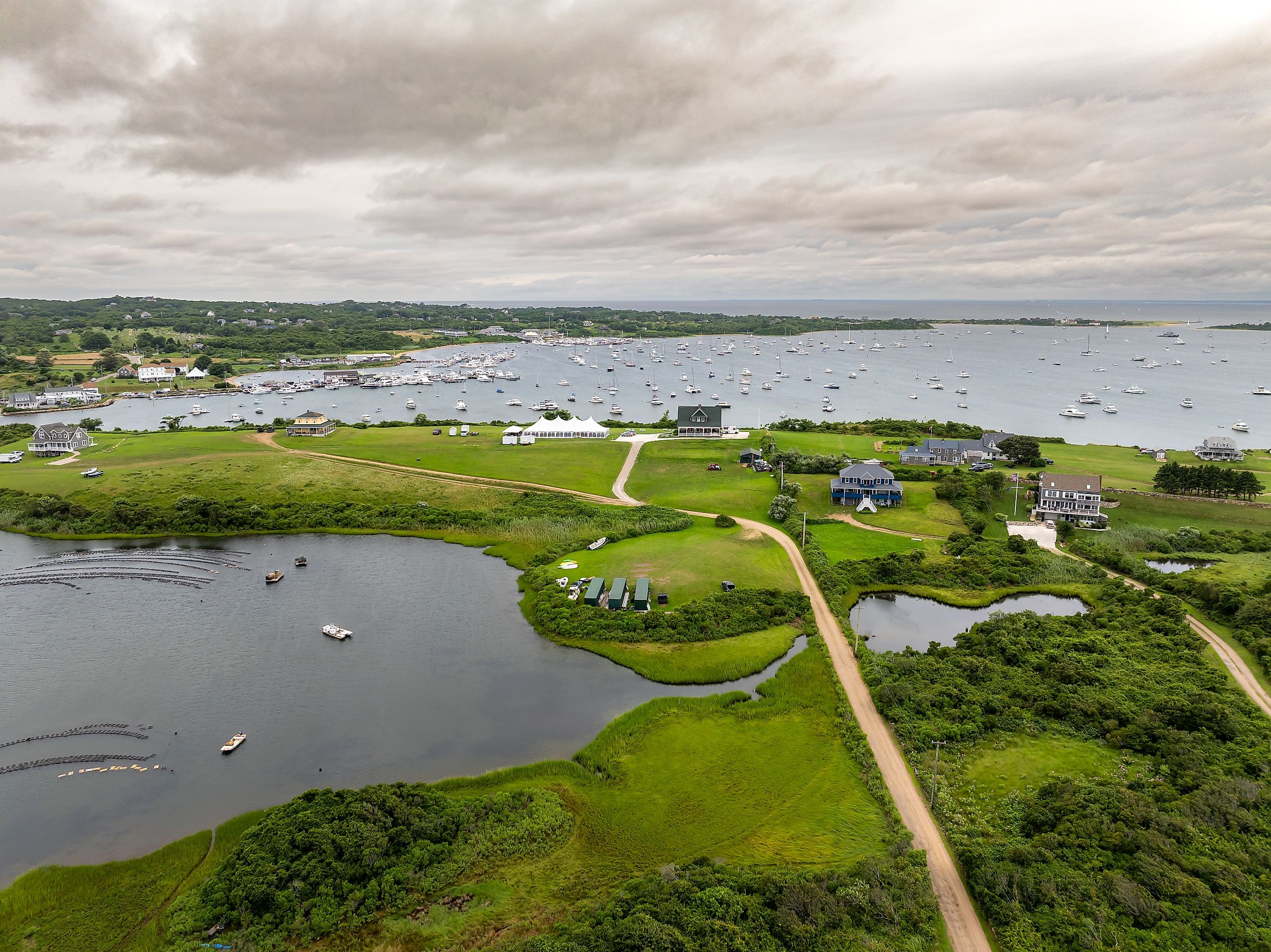
An inlet of the Atlantic Ocean, Narragansett Bay stretches 30 miles and supports both rich wildlife and a maritime heritage shaped by Ice Age history. The scenic waterway is located on Rhode Island Sound, created by glaciers and formed into a drowned river valley. The area's scope and diversity of scenic beauty blended with accessibility to coastal towns sets it apart as a natural wonder.
Like the Chesapeake Bay, it is both a bay and an estuary, and one of New England’s largest estuaries at 147 square miles. There are more than 30 islands throughout the waterway, with Aquidneck being home to Newport, Middletown, and Portsmouth. The bay is a natural habitat and viewing area for seals and horseshoe crabs. Whales and dolphins can occasionally be seen near the mouth of the bay. Birds such as osprey and piping plovers are also found in the area.
Towns around the bay are well known for sailing and coastal events, including the sailing hot spot of Newport and the vibrant waterfront of Providence. Narragansett Town Beach and the Port of Galilee, one of the largest commercial fishing ports in Rhode Island, are other popular places to take in the area's natural beauty. The 1816 octagonal Point Judith Lighthouse is on the west side of the bay entrance.
Mid-June to mid-September is the best time for summer activities, although it can be very hot and muggy from July to August. For calmer outdoor conditions, May to October offers relaxing days.
Stepstone Falls

Stepstone Falls, in West Greenwich, combines its unique geographical formation with access to outdoor activities such as hiking and nature viewing. Rhode Island has very few natural waterfalls, making this a site to add to any nature-inspired bucket list. The cascading waterfall on the Falls River, which flows into the Wood River, is situated within the 14,000-acre Arcadia Management Area, the state's largest recreational area.
The Ben Utter Trail leads the way to the waterfall along an easy-to-moderate 3-mile loop through a scenic forest. White-tailed deer and cottontail rabbits can be seen in this area, making it populur for wildlife observation. The waterfall is made up of a series of low cascades spanning a broad ledge. As water falls over each flat lip, in a tiered and step-like fashion, it creates a peaceful scene and soothing sound.
Summer is one of the best times to visit, as you can wade and cool off in the water. While spring is lovely for viewing, the trails can become muddy. For fewer crowds, fall is perfect for its moderate temperaturs. The area attracts visitors from mid-March to November.
Emilie Ruecker Wildlife Refuge

Located in Tiverton, the Emilie Ruecker Wildlife Refuge is filled with trails that wind along and near the Sakonnet River. Diverse habitats such as red maple swamps, salt marshes, and deciduous forests define this area as a unique natural wonder. Vernal ponds, temporary wetlands that fill with rainwater or melting snow, are important habitats for some species of invertebrates and amphibians, including salamanders and fairy shrimp.
The 50-acre refuge has an approximately 1.6-mile loop where you can hike among riverfront habitats and woodlands as well as Jack's Island, a peninsula that extends into the Sakonnet River. Flat and well-marked trails make it easy to walk around the refuge. Birds such as loons, brant geese, and snowy egrets can be seen at various times of the year, along with deer, crabs, and foxes.
An Audubon Society of Rhode Island property, the refuge is open year round. For mild temperatures and pleasant hiking conditions, spring and fall offer the scenery of colorful wildflowers, fall foliage, and nesting or migrating birds. The winter season sees fewer crowds and is a nice time for peaceful walks but summer heat brings out the insects. To see vernal pools, winter and spring are the best times to visit.
Tour The Natural Wonders of Rhode Island
Rhode Island’s natural wonders represent the state’s diverse landscapes and ecosystems. In West Greenwich, cascading waterfalls provide a peaceful atmosphere and scenic setting for photographers. In Tiverton and Hopkinton, trails wind through deciduous forests and by glacial kettle ponds. Audubon properties provide a wide range of birdwatching opportunities, while estuarine habitats link coastal waters to Narragansett Bay. Together, these environments span aquatic and terrestrial systems, supporting a rich variety of plant and wildlife species.