The Chesapeake Bay's 9 Most Laid-Back Towns
Laid-back towns line the shores of the Chesapeake Bay, where life moves at an easier pace. Across Maryland and Virginia, these communities reflect a water-centered way of life rooted in maritime heritage, natural beauty, and time spent along quiet creeks and harbors. Outdoor spaces like Susquehanna State Park and Holly Point Nature Park bring wildlife and relaxed days into everyday life. Waterfront restaurants and sunset views further reflect the calm, unhurried rhythm of the Bay.
Havre de Grace, Maryland

Havre de Grace is on a scenic section of the Upper Chesapeake Bay, near the mouth of the Susquehanna River. Its walkable downtown area reflects the maritime culture and natural beauty of the Bay with art galleries and boutique shops. There is also public art and carved wooden sculptures of Chesapeake Bay birds. A scenic boardwalk and peaceful parks add to the small-town ambiance, where boating and fishing make the town a destination.
The 1827 Concord Point Lighthouse stands at the intersection of the Chesapeake Bay and the Susquehanna River. The light keeper’s house is open as a museum. Susquehanna State Park is 2,753 acres of forest trails and a historic grist mill. There is also a boat launch for Bay and river access. Rounding out the waterfront experiences, the Havre de Grace Maritime Museum is home to exhibits on Chesapeake Bay ecology and marine life.
St. Michaels, Maryland

St. Michaels is located at St. Michaels Harbor and the Miles River in the Middle Chesapeake Bay. The downtown area is walkable, with boutique shops and antique stores. Local restaurants serve fresh-off-the-boat seafood and regional specialties with scenic views.
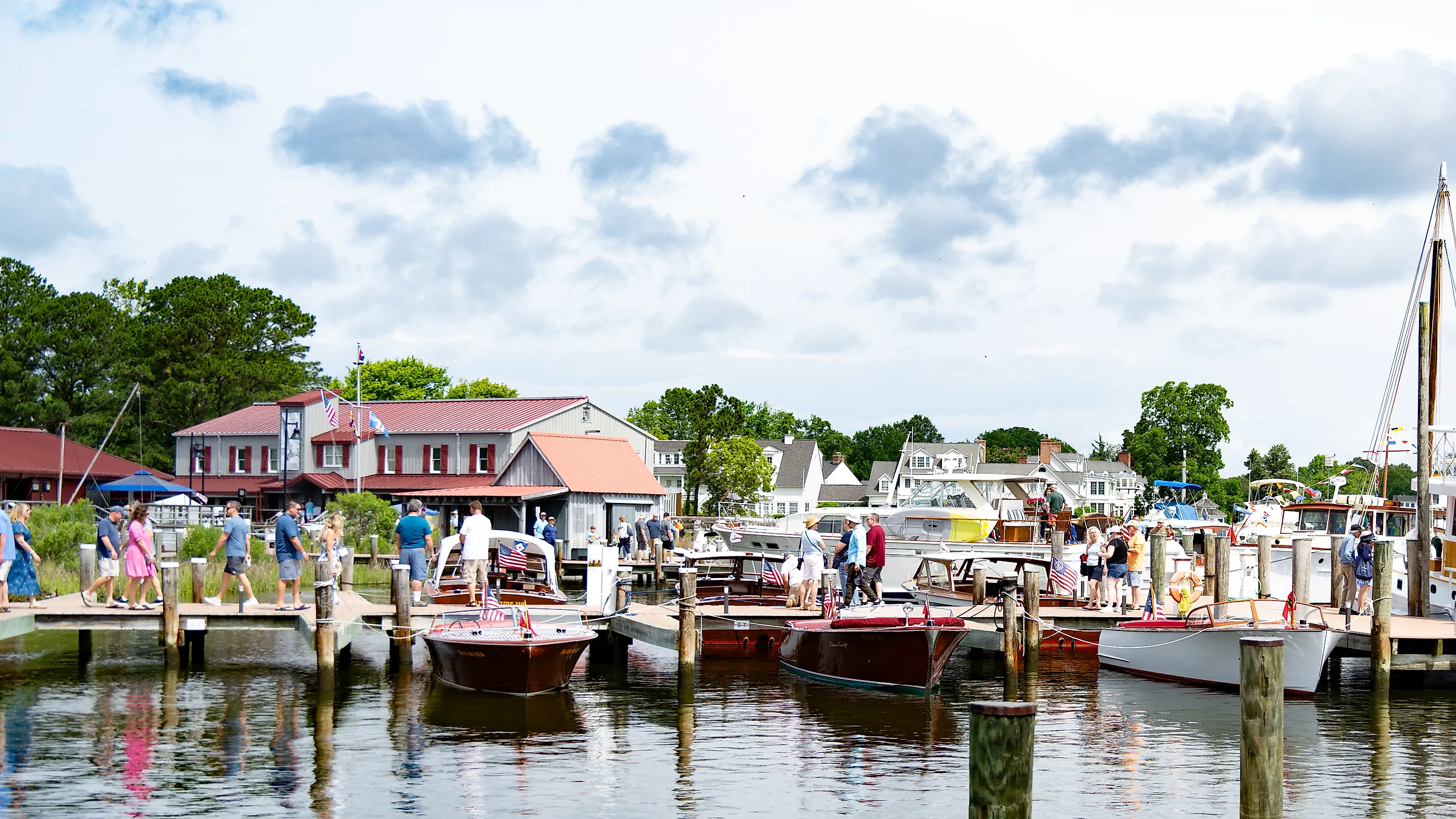
The 18-acre Chesapeake Bay Maritime Museum is on the waterfront and has a variety of historic boats and the 1879 Hooper Strait Lighthouse, which now serves as a museum. Walking trails lead through wetlands at the St. Michaels Nature Trail. Views of marinas and sailboats are available along the shoreline of St. Michaels Harbor.
Tilghman Island, Maryland

Bay views and a rural island setting give Tilghman Island a laid-back vibe. On Maryland’s Eastern Shore, it is rooted in the maritime history of the Chesapeake Bay. It is a classic waterman’s village that has waterfront inns and harbor views.
Tilghman Island Watermen’s Museum preserves and shares the traditions of the watermen who work on the Bay and the island’s maritime history. It features model boats and artifacts. The Tilghman Island and Bay Hundred Water Trails Guide lists the kayaking and stand-up paddleboarding routes found in the marshes and Bay waters around the island.
Oxford, Maryland

Historic inns and picket fences decorated with colorful murals painted by local artists give Oxford its ambiance. On the Tred Avon River and the Bay, in the Middle Chesapeake Bay region, the area is filled with marinas that support a laid-back boating vibe. Downtown Oxford is a walkable area with 18th-century architecture and small waterfront restaurants. James Michener lived in Oxford while writing his novel Chesapeake in the 1960s.
The Oxford-Bellevue Ferry has been in operation since the 17th century. It is one of the oldest privately operated ferries in the US. It runs between Oxford and Bellevue, Maryland. The Oxford Museum features exhibits on more than 300 years of colonial and maritime history. The Oxford/St. Michaels Bike Trail passes through town, providing idyllic farmland views.
Onancock, Virginia

Onancock is a port town to Tangier Island, a small and tranquil island in the middle of the Chesapeake Bay. It has a walkable downtown area with 18th-century architecture and docks for visiting boats. Several marinas and a protected harbor contribute to the town's waterfront atmosphere. The town is influenced by a thriving arts and culture scene, with live music events and art galleries all around.
Ker Place is a 1799 Federal-era house museum that is operated by the Eastern Shore Historical Society. Exhibits include antique furniture and artwork. Outside, there is an herb and kitchen garden, and a hand-built log canoe that was used as an oyster and clam boat until the 1960s. The Tangier-Onancock Ferry provides convenient access to the secluded Tangier Island.
Reedville, Virginia

Reedville, in Virginia’s Northern Neck region, is distinguished by its water-based lifestyle and access to the Chesapeake Bay and other waterways. It sits on Cockrell Creek, on the western shores of the Bay. The historic district invites you to slow down and admire Victorian and Edwardian mansions on “Millionaire’s Row."
Like Onancock, Reedville is another starting point for day cruises to Tangier Island. The Chesapeake Bay Wine Trail travels through the area, with access to regional and local wines in a rural setting. The Reedville Fishermen’s Museum houses a boat shop and exhibits, including historic vessels and the 1875 William Walker House, an example of a typical waterman’s house.
Deltaville, Virginia

Deltaville juts out into the Chesapeake Bay in Virginia’s Middle Peninsula region. It is flanked on one side by the Rappahannock River and on the other by the Piankatank River. Sometimes called the “Boating Capital of the Chesapeake Bay,” Deltaville was built on the boat-building and fishing industries. The town boasts more than 25 marinas and claims to have more boats than people. Its laid-back appeal comes from the fact that it’s not really near anything, except the carefree waters of the Bay and rivers.
The Deltaville Maritime Museum tells the story of the area’s boat-building history and the heritage of the Chesapeake Bay. Part of the museum, the 36-acre Holly Point Nature Park is filled with walking trails and wildlife sculptures along Jackson Creek. Stingray Point Marina features a replica of the 1858 hexagonal Stingray Point Lighthouse on its grounds.
Solomons Island, Maryland

Solomons Island, where the Patuxent River meets the Bay, developed as a hub for fishing and boat building. This maritime heritage is visible in the variety of marinas and sailing charters found around town. The walkable waterfront area has a boardwalk with seafood restaurants and local shops. The Solomons Island Boardwalk, or Riverwalk, makes it easy to take in Patuxent River and sunset views.
Annmarie Sculpture Garden & Arts Center has sculpture trails and art exhibits in an outdoor setting. Some of the sculptures are on loan from the Hirshhorn Museum and Sculpture Garden in Washington, D.C. The Calvert Marine Museum shares exhibits on maritime artifacts and fossils. The 1883 cottage-style Drum Point Lighthouse was moved to the museum grounds in 1975 and is open for viewing. There is also a river otter habitat, bringing the Bay’s wildlife into view.
Stevensville, Maryland

Stevensville, Maryland, is on Kent Island, one of the largest islands in the Bay. It is at the eastern end of the Chesapeake Bay Bridge. Stevensville was founded in 1850 and became a commercial center and a base for steamboat travel on the Bay. That nautical history is preserved in its museums and casual waterfront restaurants. The historic downtown is a walkable area with preserved structures from the 19th and 20th centuries, including the 1880 Historic Christ Church and an original 1902 train depot.
The Kent Island Farmer’s Market operates seasonally with vendors selling local produce and other products. It is held indoors during the winter. At 600 feet in length, the Romancoke Fishing Pier extends out into the Eastern Bay, providing a place to catch rockfish and flounder. A kayak ramp and a picnic area contribute to the area’s laid-back nature. Terrapin Nature Park features walking trails and a beach with Chesapeake Bay Bridge views.
Towns That Capture the Bay’s Easy Rhythm
Each of these Chesapeake Bay towns is brimming with the coastal spirit of maritime history and waterfront living. Collectively, they contain an array of seafood restaurants and water-based activities to unwind and take it slow. Fishing Bay Harbor Marina and Tilghman Island Marina supply boating access for leisurely days on the Bay. The Havre de Grace Maritime Museum and the Oxford Museum share insights into the history of the Bay and its diverse habitats. Concord Point Lighthouse and the Drum Point Lighthouse add to the nautical scenery of the Bay. These towns are accessible to larger areas but convey the feeling of being away from the rush of everyday life. They are all characterized by natural beauty and the distinctive atmosphere of a laid-back Chesapeake Bay town.