5 Best Natural Wonders To Visit In Pennsylvania This Year
Pennsylvania's natural landmarks run stranger and bigger than the state's reputation lets on. Ganoga Falls drops 94 feet in two steps through a rock chute at Ricketts Glen State Park. Pine Creek Gorge cuts a 47-mile channel nearly 1,500 feet deep with locals calling it the Grand Canyon of Pennsylvania for good reason. And Laurel Caverns runs four miles underground through sandstone in a way almost no other major cave system in the country shares. Five wonders together make a Pennsylvania road trip worth planning.
Ganoga Falls

Ganoga Falls drops 94 feet down in two steps, making it the tallest named waterfall in Pennsylvania. It sits within a narrow section of Kitchen Creek, a part of Ricketts Glen State Park, where steep, layered rock walls compress the flow into a concentrated chute.
A short spur from the Falls Loop Trail leads to the base, where spray and damp conditions are common, a good place to cool off in the summer. On the other hand, autumn turns the adjacent woodlands into a colorful landscape of reds, yellows, and oranges, great for a photograph. Regardless of when you're here, remember that the approach involves uneven footing and sustained elevation change, especially on the return climb.
The surrounding geology can also be just as interesting if you know what you're looking at, as it reflects past glacial activity going back tens of thousands of years, visible in the sharply cut ravine and exposed stone faces.
Pine Creek Gorge

Pine Creek Gorge is a 47-mile channel running through north-central Pennsylvania, reaching depths of nearly 1,500 feet and appropriately earning the "Grand Canyon of Pennsylvania" label. The best views here come from Leonard Harrison State Park and Colton Point State Park, where opposing overlooks reveal the full, nearly mile-wide width of the gorge and the winding course of Pine Creek below.

Keep in mind that morning fog often settles in the gorge, especially in warmer months, creating layered and sometimes obstructed visibility from the rim. As usual, fall brings the clearest long-distance views as foliage thins and colors peak across the slopes.
While the canyon's walls are also often heavily forested, for geology buffs, exposed sections of shale and sandstone show the scale of erosion that shaped it over time. Pine Creek itself runs along the valley floor, a popular spot for kayaking and rail-trail cycling along the Pine Creek Rail Trail.
The Forest Cathedral

The Forest Cathedral preserves one of the largest remaining stands of old-growth eastern white pine and eastern hemlock in Pennsylvania. The most prominent feature in the area is the Longfellow Trail, a loop within Cook Forest State Park that passes countless sizable trees. Some rise over 150 feet with straight trunks and high canopies that notably limit undergrowth.
The scale is immediate at ground level, with wide root systems, fallen giants, and thick layers of needles covering the forest floor for you to venture around. The Tom's Run Trail likewise threads through the area, taking you near a few small cascades and shaded sections that stay cool even in summer.

Wherever you decide to hike within the Cathedral, the terrain is relatively gentle compared to other nearby sites in this hilly corner of the state. Unlike the surrounding second-growth forest, this tract shows the impact of minimal logging, with complex layering and variously aged trees, giving you a glimpse into an undisturbed ecosystem.
Hickory Run Boulder Field

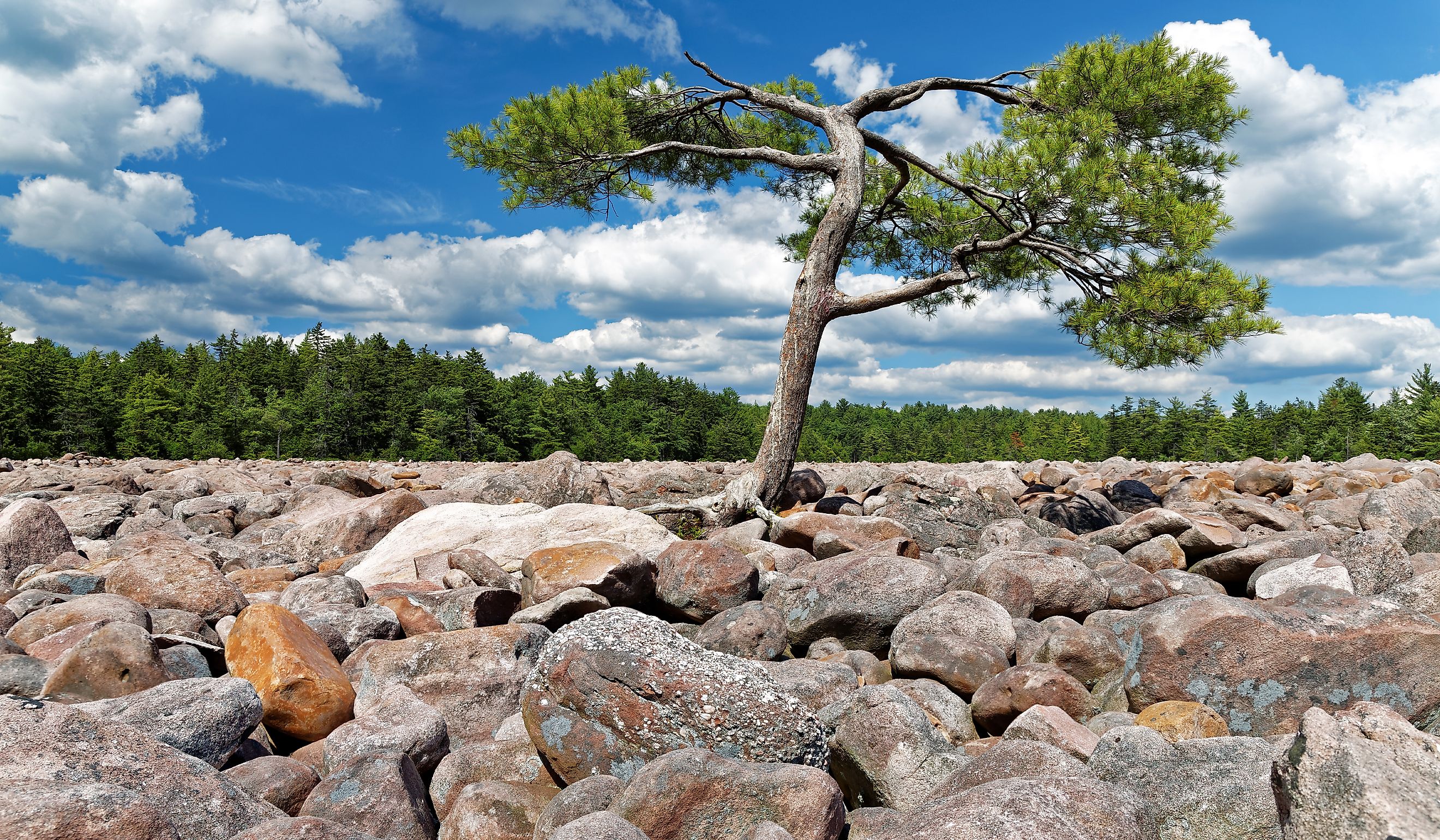
The Hickory Run Boulder Field lies within Hickory Run State Park and spans roughly 16 acres of tightly packed boulders, all seemingly out of place within an otherwise dense forest deep within the Pocono Mountains. We know exactly how this curious landscape came to be, with the field being formed under periglacial conditions during the last ice age, when repeated freezing and thawing fractured bedrock and slowly pushed the debris we see today downslope. The result is this broad, open expanse of angular rocks, many several feet across, with no soil or vegetation between them.

Walking across it requires careful footing, as surfaces here are generally craggy and gaps between stones can be deep. A short access trail leads from the parking area to the edge of the field, where the forest abruptly gives way to the exposed stone.
Laurel Caverns

The Laurel Caverns of Laurel Caverns Geological Park can be found about a 70-mile drive south of Pittsburgh. It is the largest cave system in Pennsylvania, and was developed in sandstone rather than the more typical limestone of other famously large caves in the United States. The site also functions as a hibernation area for bats, which restricts access to certain sections during the winter months to limit disturbances.
These caverns extend for over 4 miles, with mapped passages that include broad chambers, narrow crawlways, and formations shaped by eons of water erosion. Unlike limestone caves, stalactites and stalagmites here are relatively limited in number, with the interior featuring remarkably smooth walls, pothole formations, and occasional underground streams.
While visiting, you'll likely notice how the temperature remains consistently cool year-round, and how conditions can be damp, especially inside spots with low ceilings and tighter passages. Bring clothes you wouldn't mind getting a little dirty, just in case. Guided tours cover the main sections, while more technical routes are reserved for spelunking with permits.
Five Wonders Worth The Drive
Pennsylvania's outdoor landmarks range across exposed geological formations, old-growth stands, and extensive subterranean systems. Each site above rewards careful exploration with conditions and terrain varying sharply, plus opportunities for a memorable landscape photo or two around every corner. Together, they also show just how much fascinating natural history is on display within this often overlooked northeastern state.