5 Best Natural Wonders To Visit In Idaho This Year
Idaho is a scenic land of contrasts, with its lush and mountainous northern panhandle and its dry, desert-covered southern half. World-renowned preserves like Craters of the Moon can be found within these landscapes, while more specific landmarks, including Shoshone Falls, Hells Canyon, and countless others, are here for you to explore. Today, we will highlight five of these incredible wonders of the natural world that you can discover in Idaho this year.
Bruneau Dunes State Park

Bruneau Dunes State Park boasts the tallest single-structured sand dune in North America, standing approximately 470 feet above the surrounding desert of southern Idaho. It contrasts sharply with the nearby Snake River Plain, combining open desert, a collection of small lakes, and towering sand formations into what might be the state's coolest spot for landscape photography.
Located more specifically south of Mountain Home, about an hour's drive from Boise, the park’s dunes were formed by wind patterns that trapped sand in a natural basin rather than allowing it to drift away. You can hike or even sandboard the dunes, though climbing is physically demanding due to shifting sand and summer heat. Bring lots of water and sun protection, regardless of the time of year. Moreover, this already fun-filled state park contains Bruneau Dunes Observatory, which takes advantage of Idaho’s sometimes impossibly clear skies, and houses one of the largest public telescopes in the Pacific Northwest.
If you're looking for a more in-depth visit to the area, campgrounds and equestrian trails expand recreational options as well, and the Morley Nelson Snake River Birds of Prey National Conservation Area also sits a short drive away.
Shoshone Falls

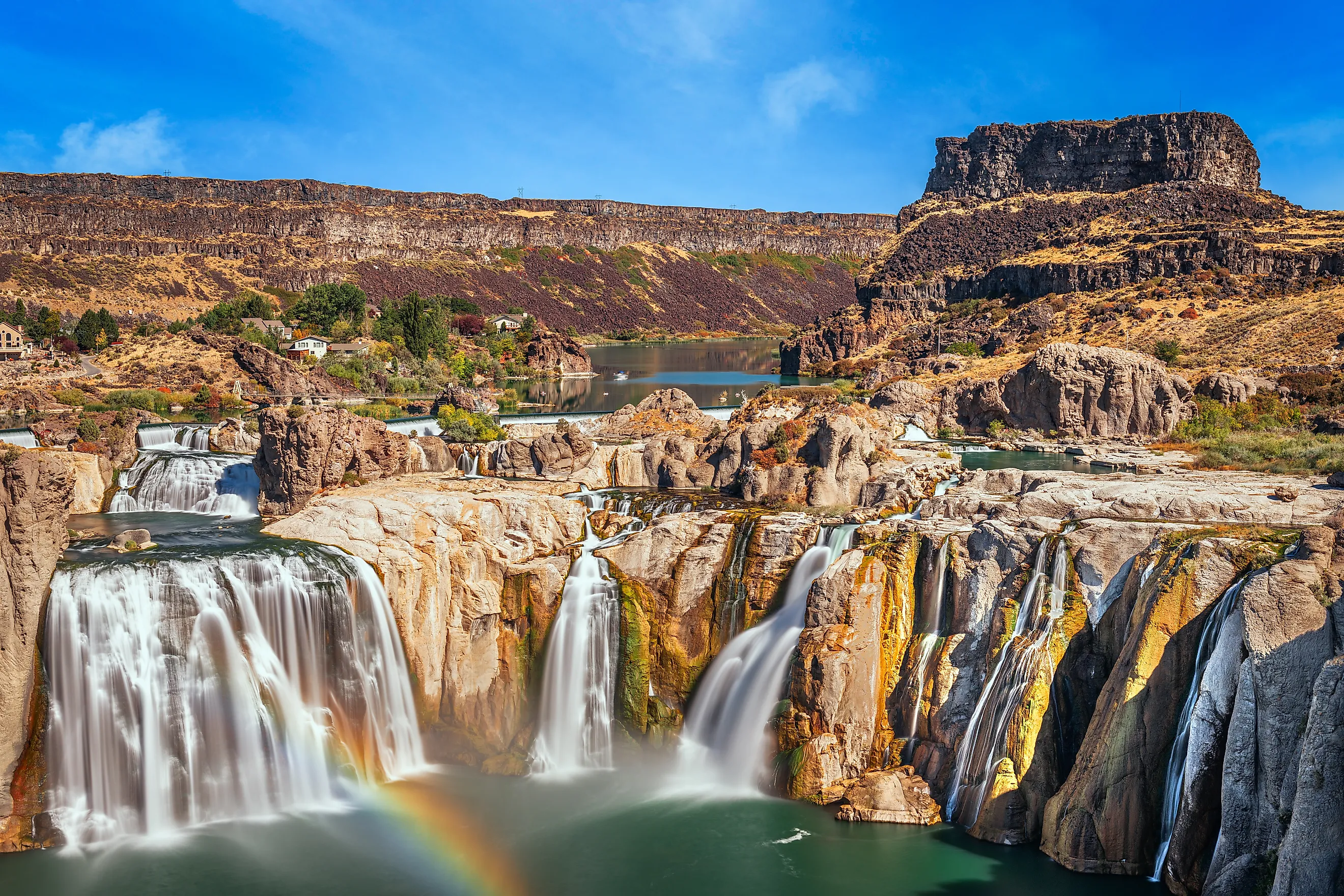
Often called the “Niagara of the West,” Shoshone Falls is one of Idaho’s most imposing water features. The falls drop 212 feet along the Snake River, in fact making them higher than the actual Niagara Falls! They also stretch an impressive 900 feet across at peak flow.
With that, spring is perhaps the best season to come, when snowmelt from the Rocky Mountains swells the river and sends heavy volumes of water over its basalt cliffs. By late summer, upstream irrigation diversions can significantly reduce the flow, calming it down and quieting its wow factor.
Located northeast of the city of Twin Falls, Shoshone actually sits within a city-managed park that provides safe overlooks, picnic areas, and several access trails. From there, you can explore the surrounding canyon, which was carved by ancient floods and volcanic activity, and it is part of the larger Snake River Plain geologic system. If you have the time, be sure to drop by nearby Dierkes Lake, plan a hike along the rim, or combine the stop with a drive across the lofty Perrine Bridge for a wider view of the broader canyon landscape.
Craters of the Moon National Monument and Preserve

Craters of the Moon National Monument and Preserve watches over one of the most extensive basaltic lava fields in the continental United States. Formed by repeated volcanic eruptions along the Great Rift for an estimated 15,000 years, this otherworldly landscape is home to countless cinder cones, lava tubes, and broad flows of hardened stone, as well as other notable volcanic features.
The monument covers a total of 750,000 acres deep in south-central Idaho and is managed by the National Park Service in partnership with the Bureau of Land Management. If it's your first time, a seven-mile Loop Road provides quick and easy access to many of its must-see features, including Inferno Cone and several accessible lava caves. Also note that elevations in the park average around 5,900 feet, creating a unique high-desert environment replete with sagebrush, limber pine, and wildlife such as mule deer and coyotes.
Clear, dry conditions and a lack of nearby development also make Craters of the Moon a designated International Dark Sky Park. Try booking a local campsite to appreciate all it has to offer, although get one good and early, as slots run out fast at this popular national park!
Hells Canyon

To witness a truly record-breaking landscape, head out to Hells Canyon, the deepest canyon in the United States. It plunges nearly 8,000 feet from the peaks of the Seven Devils Mountains to the Snake River below, and is located along the Idaho-Oregon border. This dizzyingly tall river gorge also goes for roughly 125 miles, protected in part by the Hells Canyon National Recreation Area.
Carved primarily by water cutting through layers of basalt (a common theme in Idaho) and uplifted rock over millions of years, these days, access varies from paved viewpoints near Lewiston to highly remote backcountry trails and river launches deeper within the canyon. Moreover, jet boat tours operate along calmer stretches of the river, while rafters tackle sections of whitewater.
The area also contains a number of archaeological sites linked to the Nez Perce, who lived along this river corridor for thousands of years. Now, you are more likely to see the bighorn sheep, black bears, golden eagles, and other diverse flora and fauna that flourish in its steep, rugged terrain.
Sawtooth National Recreation Area

The Sawtooth National Recreation Area protects around 760,000 acres of alpine terrain in the heart of the state. Anchored by the jagged Sawtooth Range, a subrange of the Rockies, the region is a paradise for hikers in the eastern PNW, containing over 700 miles of trails and roughly 300 high-elevation lakes for you to feast your eyes on (if you can reach them, of course).
Elevations rise above 10,000 feet at Thompson Peak, and the landscape showcases a gorgeous mix of glacial geology, wildflower meadows, and longstanding woodlands. Resident wildlife includes elk, mountain goats, black bears, and bald eagles, and snowpack lingers well into late spring, making preparation, whether it be for the region's large predators or its sometimes unpredictable weather, essential.
Popular access points include Redfish Lake near Stanley, where you can hike, kayak, or camp beneath granite spires, with peak hiking conditions typically arriving in July and August. In case you wish to simply explore via the road, there is the scenic Highway 75, too, which runs through the heart of the park.
Also note that the area is also designated as the Sawtooth Wilderness, limiting development and preserving large tracts of roadless backcountry. Perfect for any outdoorsman looking to really get out into the wild.
Find Your Outdoor Adventure in Idaho this Season
From moon-like volcanic lava fields and alpine wilderness to desert dunes and freakishly deep river canyons, Idaho’s massive selection of natural landmarks reflects the powerful geologic forces and wide ecological diversity that have made the state what it is. Each destination above offers curious travellers like you a distinct landscape that is begging to be photographed at every corner, and together, they demonstrate at least five of the reasons why Idaho is called the "Gem State."