5 Best Natural Wonders To Visit In Colorado This Year
Colorado's landscapes span alpine peaks, dry canyons, sculpted rock, and the tallest sand dunes on the continent. At Garden of the Gods, towering sandstone fins rise vertically from the ground, tilted on end by ancient tectonic forces. Great Sand Dunes National Park contains dunes reaching 750 feet against the Sangre de Cristo range. Black Canyon of the Gunnison cuts so deep and narrow that the canyon floor sits over 2,000 feet below the rim in places. The five locations below showcase the geological range that makes Colorado one of the most varied states in the country for outdoor and landscape travel.
Garden of the Gods

Few locations in the American West pack as much geological drama into a single site as Garden of the Gods. Set at the base of Pikes Peak just outside downtown Colorado Springs, the 1,364-acre public park is defined by massive sandstone fins rising sharply from the surrounding ground, some over 300 feet tall. These formations were tilted to vertical by ancient tectonic uplift around 65 million years ago, then exposed through erosion over millions of years to create the angular ridgelines visible today.

The Perkins Central Garden Trail provides paved wheelchair-accessible access to the most famous formations, while longer trails branch into quieter sections of the park. Rock climbing is permitted on many formations with a free permit from the visitor centre. Wildlife photographers often spot mule deer and red-tailed hawks through the park. The site is free to enter and remains one of the easiest-to-reach major natural attractions in Colorado.
Rocky Mountain National Park

Rocky Mountain National Park protects 415 square miles of glacial valleys, jagged peaks, and alpine tundra on the Continental Divide. The park contains more than 350 miles of hiking trails ranging from roadside overlooks to demanding backcountry routes.

Longs Peak, at 14,259 feet, is the most prominent summit in the park and one of Colorado's more technically demanding fourteeners, drawing experienced climbers via the exposed Keyhole Route. For non-climbers, Trail Ridge Road reaches 12,183 feet and is the highest continuous paved road in the United States, with several miles above treeline where alpine tundra replaces forest. Elk herds move through meadows in the lower elevations at dawn and dusk. The park sits about 90 minutes northwest of Denver, with summer the most reliable season for access as Trail Ridge Road closes in winter.
Great Sand Dunes National Park and Preserve

Great Sand Dunes National Park and Preserve is as surprising as Colorado gets. In the San Luis Valley at the base of the Sangre de Cristo Mountains, the dune field covers 30 square miles with the tallest dunes in North America, with Star Dune reaching about 750 feet tall. The dunes formed over roughly 440,000 years as prevailing winds blew sand from the valley floor up against the mountains.

Hiking directly onto the dunes from the main parking area is the usual approach; routes climb hundreds of feet of loose sand to broad summit views across the valley. Medano Creek, which typically flows from late May through early July depending on snowmelt, runs across the base of the dunes and creates the unusual combination of flowing water next to high desert sand. Beyond the dunes, surrounding grasslands and wetlands support pronghorn, black bears, and migratory birds. The park is also designated as an International Dark Sky Park, making it one of the best stargazing sites in the southern Rockies.
Black Canyon of the Gunnison National Park

Black Canyon of the Gunnison National Park protects one of the steepest and narrowest river-cut gorges in North America. The Gunnison River has carved through Precambrian gneiss and schist (some of the oldest exposed rock in Colorado at nearly 2 billion years) at the extraordinary rate of about 1 inch every 100 years. Sheer granite walls plunge from rim to river, with the deepest point at Warner Point reaching 2,722 feet, and some sections of the canyon measure less than 40 feet across at river level.
The South Rim offers the most accessible overlooks, including Gunnison Point and the dramatic Painted Wall View, where light-coloured pegmatite dikes intruded into the darker gneiss create natural abstract patterns on the canyon walls. Light changes quickly through the day, shifting the rock from charcoal to warm gold within minutes as the sun angle changes. The Inner Canyon is reserved for experienced climbers and permitted wilderness descents due to the extreme terrain. Sparse vegetation clings to ledges, and raptors circle on the thermal currents rising from below.
Colorado National Monument

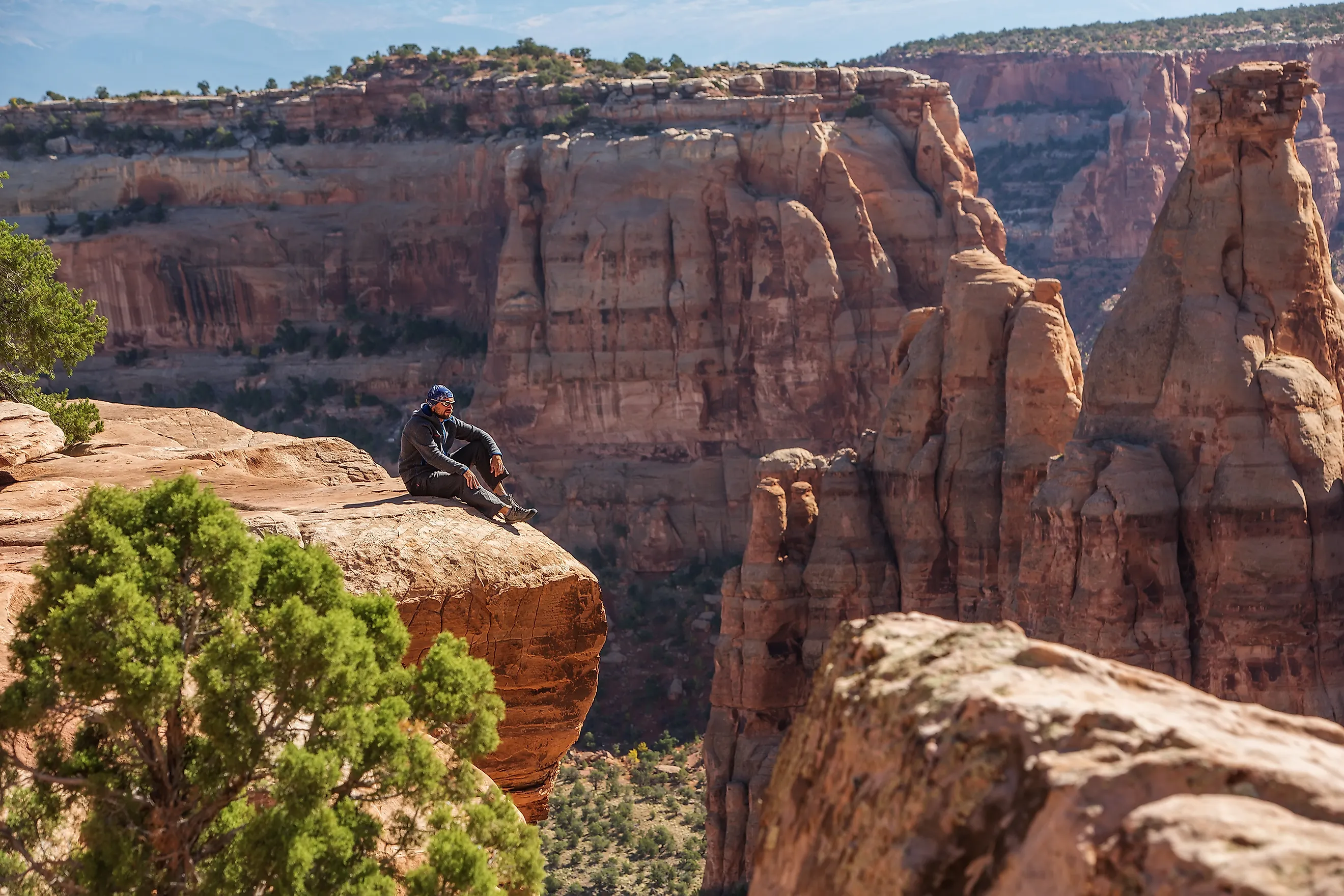
On Colorado's Western Slope near Grand Junction, Colorado National Monument protects a high-desert landscape of massive sandstone monoliths, deep red canyon walls, and broad plateau views. The 23-mile Rim Rock Drive follows the canyon edge with 19 overlooks and four tunnels, revealing formations including Independence Monument, a freestanding rock pillar rising nearly 450 feet above the canyon floor.

The monument's canyons were carved by ancient waterways over millions of years, leaving behind arches, alcoves, and layered sedimentary walls that preserve a visible record of geologic time. Desert bighorn sheep live within the monument and are sometimes spotted along Rim Rock Drive. Because it sits further from the main Colorado tourism corridor, the monument draws far fewer visitors than Garden of the Gods or Rocky Mountain National Park, making it one of the most accessible-yet-uncrowded landscapes in the state.
Colorado's Geological Range in One State
These five locations span the full geological variety of Colorado: vertical sandstone fins at Garden of the Gods, alpine tundra at Rocky Mountain National Park, 750-foot sand dunes at Great Sand Dunes, billion-year-old gneiss walls at Black Canyon, and Western Slope canyon country at Colorado National Monument. Each site is shaped by different geological forces (tectonic uplift, glacial carving, wind deposition, river erosion) and together they illustrate why Colorado's terrain is among the most varied in the western United States.