4 Rattlesnake Hotspots In Georgia
Georgia supports three rattlesnake species, each closely tied to particular landscapes shaped by soil, fire patterns, and climate. Coastal barrier islands, mountain forests, and river corridors all support rattlesnakes, but only where large tracts of habitat remain intact.
Rattlesnakes in Georgia are concentrated where development has remained limited. Large, connected habitats still meet the needs of species that rely on space, cover, and consistent prey rather than fragmented or heavily altered land.
Okefenokee Swamp

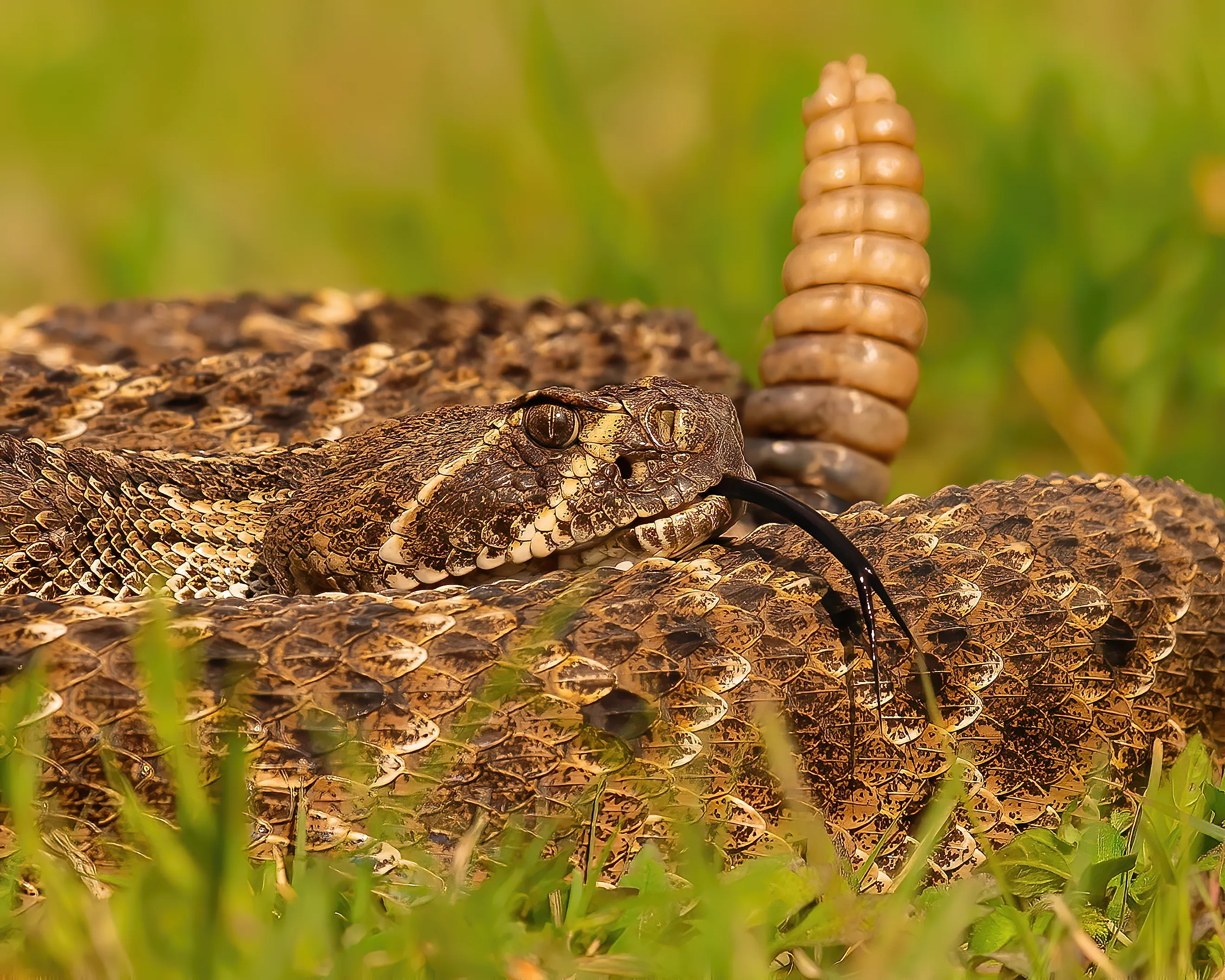
Okefenokee Swamp is one of Georgia’s most important wildlands, and a great place to encounter rattlesnakes, too, particularly the eastern diamondback rattlesnake, the largest venomous snake in North America. Its dry pine islands, sandy ridges, and the swamp’s edges provide ideal habitat where these snakes hunt small prey like frogs, rodents, and even rabbits. Timber rattlesnakes also occur locally, favoring slightly higher ground near forested margins, while dusky pygmy rattlesnakes appear in drier, brushy areas.

Interestingly, wildfires are known to periodically reshape the landscape here, maintaining open habitats that benefit these rattlesnakes and many other native species adapted to fire-prone ecosystems.
Beyond the snakes, Okefenokee is a nationally significant wetland covering nearly 440,000 acres and forming the headwaters of the Suwannee and St. Marys rivers. It also supports significant populations of American alligators, black bears, and over 200 bird species.
Chattahoochee National Forest

On the completely opposite side of the state, Chattahoochee National Forest boasts multiple rattlesnake species of its own. Timber rattlesnakes are the most widespread, using south-facing slopes and talus fields for basking and overwintering dens. Notably for Georgia, pygmy rattlesnakes occur in dry, brushy habitats and open pine stands.

Rattlesnakes in Chattahoochee National Forest are most often encountered along old logging roads, exposed rock ledges, and lightly used trails. Activity increases during warmer months, particularly in areas where sun-exposed slopes and open ground intersect with forest cover.
This sizable forest spans around 867,000 acres and includes portions of the Blue Ridge Mountains, creating sharp elevation changes and varied microclimates that draw sightseers as well as reptiles. In fact, these conditions support a high diversity of wildlife, from black bears to hellbenders, a species of giant river-dwelling salamander.
Fort Stewart and the Coastal Plain

Fort Stewart, located in Georgia’s Coastal Plain southwest of Savannah, is one of the strongest remaining refuges for rattlesnakes in the state. Large tracts of protected longleaf pine forest and warm sandy soils host healthy populations of eastern diamondback rattlesnakes. As with the other hotspots on this list, pygmy rattlers can also be found here, while timber rattlesnakes occur less frequently but are present near forested creek corridors.
Because much of Fort Stewart (the largest Army installation east of the Mississippi River) is closed to public access, habitat fragmentation is minimal compared to surrounding private lands. With that, prescribed burns are routinely used to maintain open pine savannas, a management practice that benefits rattlesnakes by preserving basking areas and prey populations.
This installation also sees gopher tortoises, red-cockaded woodpeckers, and other species on its property closely tied to the area's intact longleaf ecosystems, making it a key conservation stronghold in the coastal Deep South.
Cumberland Island National Seashore

The Cumberland Island National Seashore off Georgia’s southern coast is one of the state’s most notable barrier-island refuges for eastern diamondback rattlesnakes, as well as 17 other species. The island’s maritime forests, dunes, and interdunal grasslands provide year-round cover, shelter sites, and food for marsh rabbits and other small mammals.
Seasonal flooding and sandy soils further shape the island’s ecosystems, creating natural movement corridors for all snakes, with human-rattlesnake run-ins most likely along interior trails and forest edges during warmer months, especially in late spring and early fall.

Because Cumberland is largely protected from development, its diamondback population remains more stable than on the mainland, where habitat loss has sharply reduced numbers.
Covering more than 36,400 acres, Cumberland Island is often associated with its wild horses, maritime oak forests, and undeveloped beaches. Less visible, but equally important, is the stability this protected landscape provides for native wildlife. For eastern diamondback rattlesnakes, the island represents one of the few remaining coastal environments in Georgia where population pressure from development remains low.
Why Habitat Protection Matters for Georgia’s Rattlesnakes
Rattlesnakes in Georgia are not spread evenly across the landscape. They persist where intact systems remain, coastal pine woodlands, protected barrier islands, river corridors, and mountainous forests that still function as connected habitat rather than isolated fragments.
As development continues to narrow those spaces, sightings become more concentrated in a handful of strongholds. Understanding where rattlesnakes occur and why they occur there helps explain both their current distribution and the ecological limits they face across the state.