10 Best Places To Retire In Northern California
Northern California gives retirees Gold Rush heritage, riverfront walkways, and senior-friendly amenities throughout its communities. Housing prices in many spots sit well below the state's overall average. Ukiah pairs the Grace Hudson Museum and Sun House with Cow Mountain Recreation Area for active days outdoors. Oroville's Table Mountain Golf Course and Feather River keep older adults moving year-round. All ten Northern California towns ahead pair lower costs of living with strong retiree calendars.
Ukiah

Ukiah has a population of about 16,600 and serves as the largest city in Mendocino County. The town's name comes from a Pomo word meaning "deep valley" or "south valley." Median home values run around $486,000, more reasonable than the California state average. The Grace Hudson Museum and Sun House handles much of the cultural calendar, with exhibits on Western American art, California Indian art, and the diverse North Coast culture, plus the life and work of artists Grace Carpenter Hudson and her husband Dr. John W. Hudson.
For active retirees, Cow Mountain Recreation Area east of Ukiah covers more than 52,000 acres split between North Cow Mountain's non-motorized recreation and South Cow Mountain's off-highway-vehicle areas. The terrain supports biking, camping, hiking, horseback riding, and shooting on designated trails. The Ukiah Symphony Orchestra performs throughout the year at venues including the Mendocino College Center Theatre, rounding out the cultural calendar.
Oroville

Oroville sits just over 20,000 residents with one of the most affordable housing markets on the list, with median home prices around $310,000. The town's name combines the Spanish "oro" (gold) with the French "ville" (town). Oroville serves as the gateway to Lake Oroville and the Feather River, with canoeing, boating, fishing, and lakeside recreation right at hand. Table Mountain Golf Course opened in 1956 as an 18-hole par-72 course playing 6,690 yards from the championship tees, with a flat, walkable layout that suits active retirees.
The Saturday Farmers Market at the Oroville Convention Center stocks fresh produce in season. The annual Oroville Olive Festival celebrates the region's olive-growing heritage. The Oroville State Theatre, a restored 1928 Art Deco landmark at 1489 Myers Street, hosts live performances year-round.
Red Bluff

Red Bluff sits along the upper Sacramento River about 130 miles north of Sacramento and 30 miles south of Redding. The town's Chinatown dates to the Gold Rush era with Chinese immigrants settling as early as 1852, and in 2022 the city formally recognized Historic Chinatown Alley as part of its heritage. Median home values run around $316,000, well below the state average.
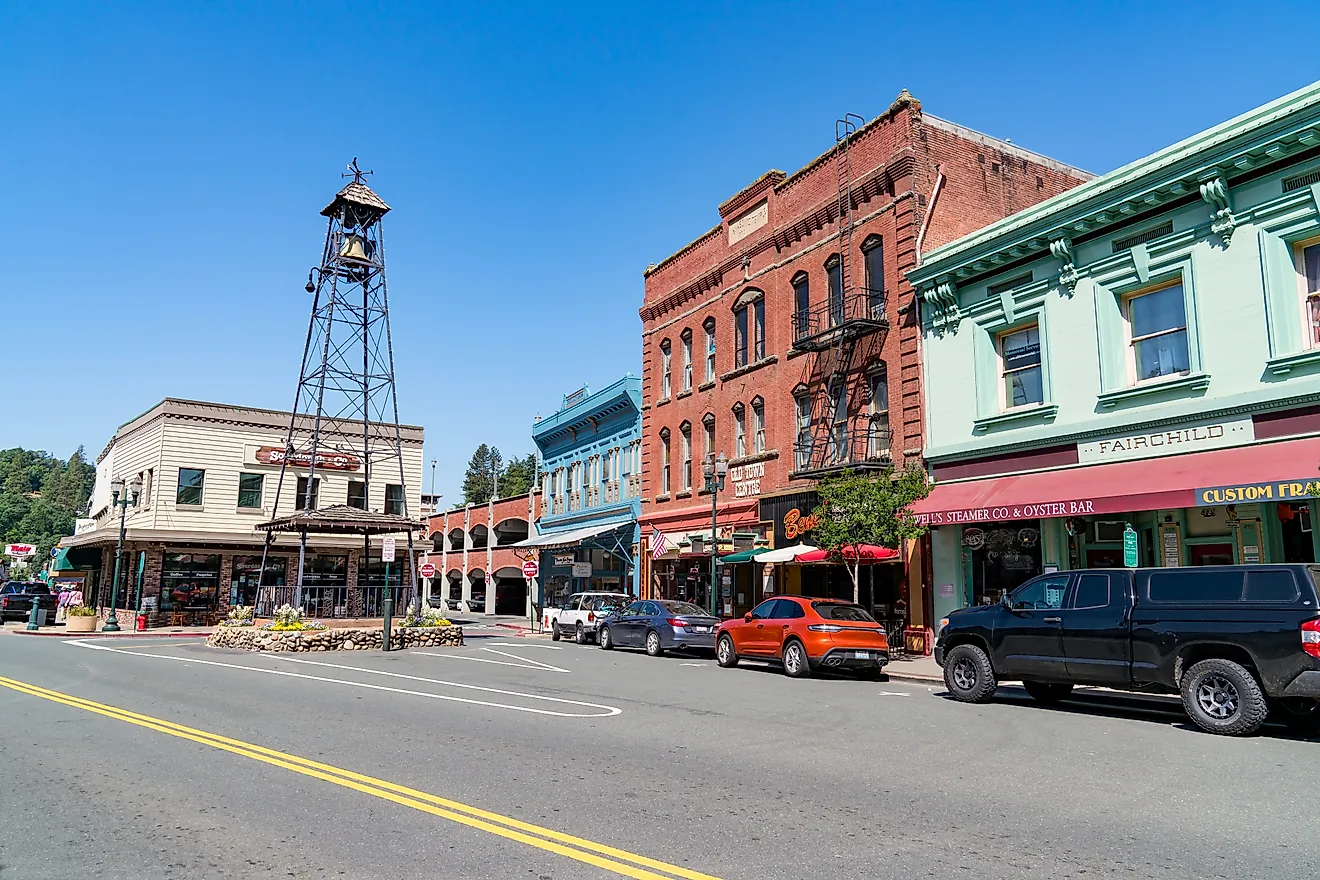
Downtown's Cone & Kimball Plaza features a reproduction clock tower honoring the original Victorian Cone & Kimball Building tower, once called the "Heart of Red Bluff" before fire destroyed it in 1984. Gaumer's Mineral and Mining Museum covers mining equipment, Native American artifacts, rocks, minerals, fossils, and an in-house jewelry shop. Outdoor options include William B. Ide Adobe State Historic Park, a four-acre day-use park along the Sacramento River with a 1850s homestead, and the Ishi Wilderness about 20 miles east, which covers roughly 41,000 acres of low-elevation wilderness with caves, basalt outcroppings, and pillar lava formations.
Paradise

Paradise sits in the Sierra Nevada foothills of the northeastern Sacramento Valley and is rebuilding after the 2018 Camp Fire. The town now holds about 10,000 residents, down from over 26,000 before the fire. The town was incorporated in 1979, and for many years the Butte County Railroad operated trains along the ridge serving the area's mines and sawmills. Median home values run around $335,000, comfortable for California pricing.
The Paradise Community Center serves as the gathering place for local programs, events, and senior-friendly activities. The Paradise Performing Arts Center has hosted theater groups, bands, orchestras, school programs, and community events since 1999. The Paradise Depot Museum covers the railroad and logging history that shaped the town in its early decades.
Grass Valley

Grass Valley holds about 14,000 residents at roughly 2,500 feet of elevation in the western foothills of the Sierra Nevada Mountains. The town sits about 57 miles from Sacramento, and its population grew during the California Gold Rush. Median home values run around $510,000, slightly higher than other towns on this list but still below the state average.
Empire Mine State Historic Park preserves one of California's oldest and richest gold mines, with restored stone buildings, walking trails, and landscaped gardens for evening strolls. The North Star Mining Museum focuses on the engineering side of Gold Country history, including hard-rock mining equipment and a 30-foot Pelton wheel. The Center for the Arts hosts concerts, theater, dance, and community events accessible to those with mobility concerns.
Marysville

Marysville sits on the ancestral land of the Maidu people, who lived in the area before Jedediah Smith and trappers from the Hudson's Bay Company arrived in 1828. The town holds about 12,000 residents and is known as the "Gateway to the Gold Fields." Median home values run around $393,000.
The Silver Dollar Saloon downtown has Gold Rush-era roots and stands as one of the longest-running establishments in the city. The Mary Aaron Museum, in an 1855 Gothic Revival house, preserves local artifacts and vintage photographs. The Bok Kai Temple in Marysville's Chinatown, dating to 1880, ranks among the oldest Taoist temples in the country and hosts the annual Bok Kai Festival featuring a parade with lion dancers and a 175-foot golden dragon. Marysville Raceway runs a quarter-mile clay oval for stock car events, and the Marysville Stampede rodeo has continued for more than 90 years.
Auburn

Auburn holds about 13,700 residents and is registered as a California Historical Landmark for its Gold Rush heritage. The town was named for a group of miners from Auburn, New York, who settled the area in 1849. Median home values run around $631,000, higher than other towns on this list but still below the state average. Auburn does not have a golf course within town limits, but The Ridge Golf Course, DarkHorse Golf Club, and Black Oak Golf Course all sit nearby.
The Placer Wine Trail runs through Placer County communities including Auburn, Loomis, Newcastle, Lincoln, and Rocklin, with Sierra Foothills and Gold Country wineries along the route. The annual Mountain Mandarin Festival each fall at the Roseville fairgrounds celebrates Placer County mandarins with growers, food vendors, live entertainment, and mandarin-inspired products.
Placerville

Placerville takes its name from placer mining, the technique of extracting gold from sand and gravel deposits. The town holds about 10,000 residents and sits within easy reach of Sacramento amenities. Placerville's Gold Rush history dates to 1848, and the historic downtown still reflects that era. Median home values run around $534,000.
The El Dorado County Fair brings livestock exhibits, carnival rides, entertainment, and community events to Placerville each summer. Fall visitors head to the Apple Hill Growers area for apple pies, apple picking, and harvest activities. Placerville's Main Street Farmers' Market runs June through October on Wednesday evenings at 574 Main Street. Wineries, fishing, boating, camping, and golf course options surround the town. The Red Hawk Resort & Casino offers slots, table games, restaurants, and entertainment, and Apple Mountain Golf Resort in Camino handles the nearby golf option.
Jackson

Jackson was settled in 1848 and incorporated in 1905. The town was named for Colonel Alden Jackson, a Gold Rush-era figure, and grew as a watering hole for cattle drives and a key stop on the route between Sacramento and the southern mines. Median home values run around $435,000.
The Amador County Museum preserves local history through wagons, carriages, blacksmithing tools, mining artifacts, and other equipment from the Gold Rush era. Baker Street West stages Sherlock Holmes-themed productions inside the historic Amador County Courthouse through the Baker Street Players. Detert Park holds a public pool, sports complex, and library, with picnic areas and gathering spaces for community events. The Kennedy Gold Mine offers seasonal paranormal-investigation tours of the historic gold mine.
Sutter Creek

Sutter Creek holds about 2,500 residents and was established in 1854 during the California Gold Rush. The town is nicknamed the "Jewel of the Motherlode" and is registered as a California Historical Landmark. Median home values run around $467,000.
The Amador Flower Farm in nearby Plymouth grows nearly 1,000 daylily varieties across 13 acres of gardens, with demonstrations and free picnic areas. Black Chasm Cavern in Pine Grove and Volcano offers a roughly 50-minute guided walking tour through crystal formations. Roaring Camp Mining Company in Pine Grove operates May through September with gold panning, cabin and tent sites, fishing, swimming, and Mokelumne River activities.
Finding Your Northern California Retirement Spot
Northern California's small retirement towns share Gold Rush heritage, lower housing costs, and active senior amenities, but each delivers them in its own way. Sutter Creek and Placerville hold on to Gold Rush downtowns, while Ukiah and Oroville pair recreation with lower-cost housing. Red Bluff and Paradise add quieter Sacramento Valley pacing. Grass Valley and Auburn give retirees Sierra foothills access. No matter what you're looking for in a retirement community, Northern California offers comparatively lower housing prices and a variety of activities especially appealing to seniors.