10 Best Natural Wonders To Visit In The Finger Lakes This Year
Eleven long, narrow lakes gouged out by a mile-thick ice sheet, and the gorges, drumlins, and plunge pools left behind when it melted: the Finger Lakes region of New York packs an unusual amount of glacial drama into a few thousand square miles.
Holding the tallest single-drop waterfall east of the Rockies, a gorge trail with 19 waterfalls in two miles, two lakes whose depths never mix with their surface, and a shoreline of clay spires that looks borrowed from the badlands, these ten are the ones worth planning a year around, along with the season to catch each at its best.
Waterfalls
It stands to reason that an area full of water features might also host a treasure trove of waterfalls. The Finger Lakes region doesn't just have plenty of them, but some distinctive ones that certainly qualify as natural wonders.
Taughannock Falls State Park

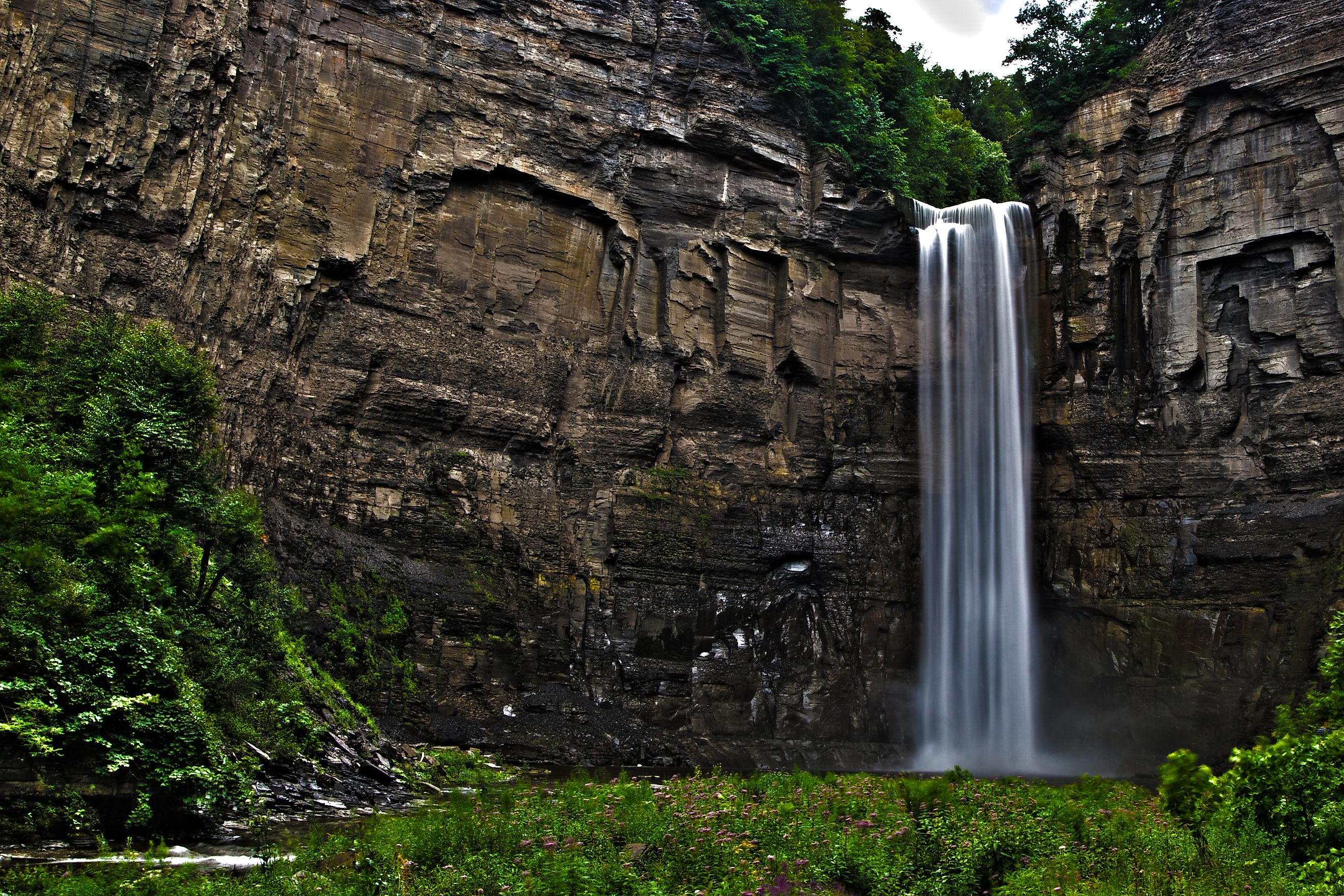
The tallest single-drop waterfall east of the Rockies lives in Taughannock Falls State Park, on the western shore of Cayuga Lake. It drops 215 feet in a single unbroken plunge, nearly 33 feet more than Niagara, into an amphitheater of shale and sandstone walls that rise close to 400 feet. The gorge trail to the base is under a mile and nearly level. Visit in spring for peak flow, or in winter, when the falls freezes into a column.
Watkins Glen State Park
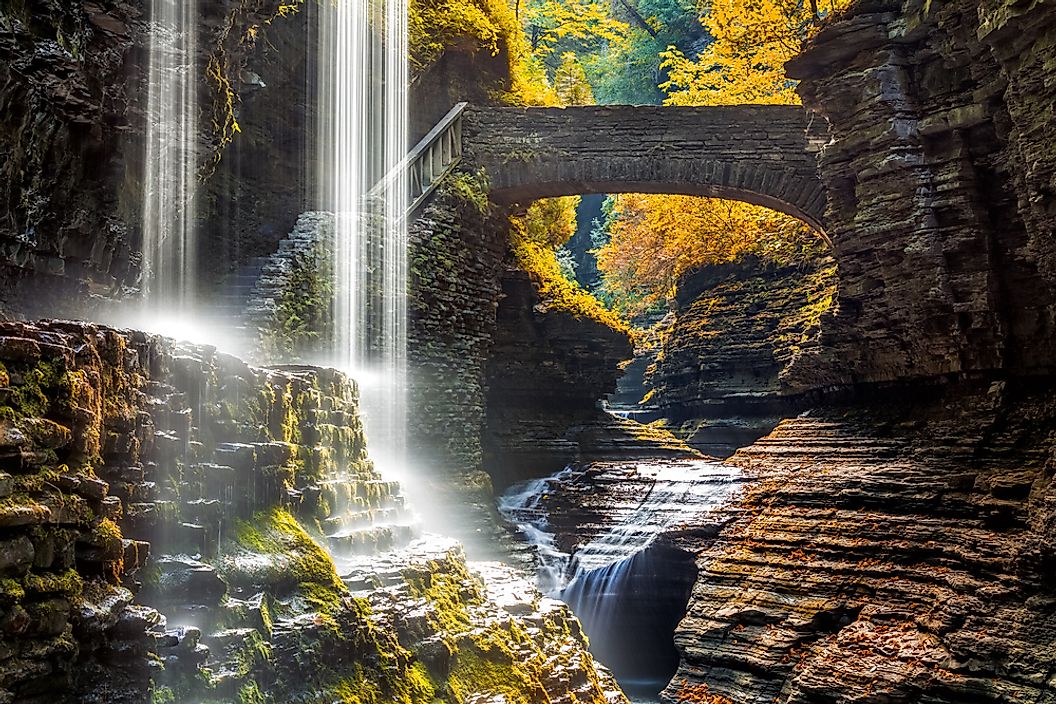
To see as many waterfalls as possible, head to Watkins Glen State Park, at the southern tip of Seneca Lake, where 19 waterfalls line a gorge trail that runs for two miles beneath 200-foot cliffs. Spring is the best time to visit, as the gorge trail closes in winter, though the upper paths and rim trails stay open. Autumn is another good time when the foliage adds greenery to the hike.
Robert H. Treman State Park

Another aspect of waterfall viewing is when multiple tiers are involved. Lucifer Falls, in Robert H. Treman State Park, just outside Ithaca, is a great example. The falls drop 115 feet at the head of Enfield Glen, and the gorge trail reaches it after more than a mile of relatively flat walking before climbing the stonework alongside the cliff.
Eleven more waterfalls are scattered through the park's 1,110 acres. Water flow is higher in spring, but the trails can be muddy compared to late spring or early summer that avoids it.
Lakes
Obviously, the region was named the Finger Lakes because there are plenty of lakes to see but what makes it special is the scenic nature of those lakes and the glacial valleys around them. Area residents take full advantage of the deep water for kayaking and boating.
Green Lakes State Park

The name says it all. The distinct green color of this park's two meromictic lakes is what makes them special: their surface and deep waters never mix, a rare condition anywhere in the world. Green Lake runs about 195 feet deep and Round Lake about 180, both of them glacial plunge pools scoured out by meltwater falling off the retreating ice. Round Lake and the old-growth forest beside it were designated a National Natural Landmark in 1973. Hike in spring for wildflowers and birds, swim in the summer time, come in fall for foliage and thinner crowds, and bring snowshoes in winter.
Skaneateles Lake and Canandaigua Lake

If you are after the clearest water and the least developed shorelines, Skaneateles and Canandaigua Lake, at the eastern and western ends of the Finger Lakes, should meet your goals. Both supply drinking water to nearby communities, which is a large part of why their shorelines have stayed as intact as they have. With nature preserves on both, this is the way to go to see the lakes close to their unspoiled state, and the ridges, waterfalls, and forests around them hold up all year.
Forests
While one might not think of forests as natural wonders, there are instances where a forest could strike you as one. Sheer size, and being wild and undeveloped, are two traits that some forests in the region have to offer.
Morgan Hill State Forest
What sets Morgan Hill State Forest apart is its size, more than 5,000 acres, and its tree diversity. Hikers here get seasonal streams and a mixed conifer and deciduous forest, with the North Country and Finger Lakes trails both running through. Plan to hike between late spring and early autumn for the most vibrant experience. Roads and campsites are not maintained in the winter.
Hemlock-Canadice State Forest

If you are looking for old-growth stands and natural lakeshores, Hemlock-Canadice State Forest is the largely undeveloped area you'll want. Hemlock and Canadice are the two smallest of the Finger Lakes, and together they supply drinking water to Rochester, which is why the surrounding land was never built on. Protecting that supply comes with restrictions like how in certain areas camping in prohibited, lighting a campfire, swimming or running a motorized boat. Check the current rules before you go, since a free permit has historically been required for boating.
Geological Features
The Finger Lakes region is not all about the lakes. The area is also known for some unique geological features that are worth investigating. Clay formations, cliffs, and dramatic gorges are all found in this part of New York.
Letchworth State Park

There is a reason Letchworth State Park carries the nickname "Grand Canyon of the East." It sits at the western edge of the region, where the Genesee River has cut a 17-mile gorge between cliffs that New York State Parks puts as high as 600 feet in places. Three major waterfalls run through it, with as many as 50 smaller ones on the tributaries, and 66 miles of trails including seven along the gorge rim.
Most locals agree autumn is the best time to visit for the foliage and the cooler temperatures with weekdays offering a quieter time than the weekends. Summer suits anyone after seasonal events. The falls run hardest in spring, though the trails can get muddy. Some trails close in winter, but only hearing the sounds of nature is its own reward.
Chimney Bluffs State Park

Chimney Bluffs State Park, on the Lake Ontario shore in Wayne County, is known for towering clay spires that rise as much as 150 feet above the water. They are eroded drumlins, teardrop hills of glacial till left by the ice sheet and then carved by wind, rain, and waves at a rate of a few feet a year. The park sits at the northern edge of the world's most extensive drumlin field.
Summer is a good time to go, with shade on the trails and a lake breeze that keeps the bugs away. The Bluff Trail runs 1.25 miles along the top, the Drumlin Trail at 0.75 miles, the Garner Point Trail 0.5 miles, and the East-West Trail 1.75 miles, and combining them makes a loop of nearly 3 miles. The gravel beach below is the other way to see the formations. Swimming is prohibited, and the bluff edge is unstable, so stay well back from it.
Fillmore Glen State Park

Fillmore Glen State Park, near Moravia at the south end of Owasco Lake, runs a narrow, densely wooded gorge with five waterfalls along it. The best known is Cowsheds Falls, an easy quarter-mile walk from the parking area, where the water drops off an overhang that cattle once sheltered under.
Heights quoted for it range from about 30 to 50 feet, depending on the source. Downstream, a dam creates the park's stream-fed swimming area, which is the place to cool off after the Gorge Trail or the South Rim Trail. Swimming is permitted only when lifeguards are on duty, and not in the plunge pool at the falls.
Summer is the season to go, though the park is open year-round. Check trail status before visiting, as the gorge trail closes seasonally.
What's Your Favorite?
How many of these ten did you already know about, and how many have you stood in front of? The region rewards a second look. A single ice sheet built all of it, gouging the lakes, hanging the side valleys that became waterfalls, dumping the drumlins that became the bluffs, and drilling the plunge pools that became Green Lakes.
Whether you come for waterfalls, gorges, old-growth forest, or a swimming hole at the end of a hot trail, the Finger Lakes has a version of it.