10 Best Natural Wonders To Visit In Switzerland This Year
Switzerland's landscape is marked by a remarkable diversity of natural wonders, including dramatic waterfalls, jagged mountain peaks, Alpine lakes, and expansive ice formations. The iconic Matterhorn serves as a defining feature of the Swiss Alps and provides a backdrop for outdoor recreational activities. Similarly, Lauterbrunnen Valley is well known for towering waterfalls and traditional Alpine villages. Beneath the surface, visitors can explore natural formations such as the glacier-fed Trümmelbach Falls and the stalactites and stalagmites at the Höllgrotten Caves. Above ground, the Aletsch Glacier extends approximately 14 miles, while the three-mile-long Moiry Icefall is noted for its brilliant blue and white seracs, or large blocks of ice. These 10 natural wonders illustrate the remarkable geology and distinctive terrain that Switzerland is known for.
The Matterhorn

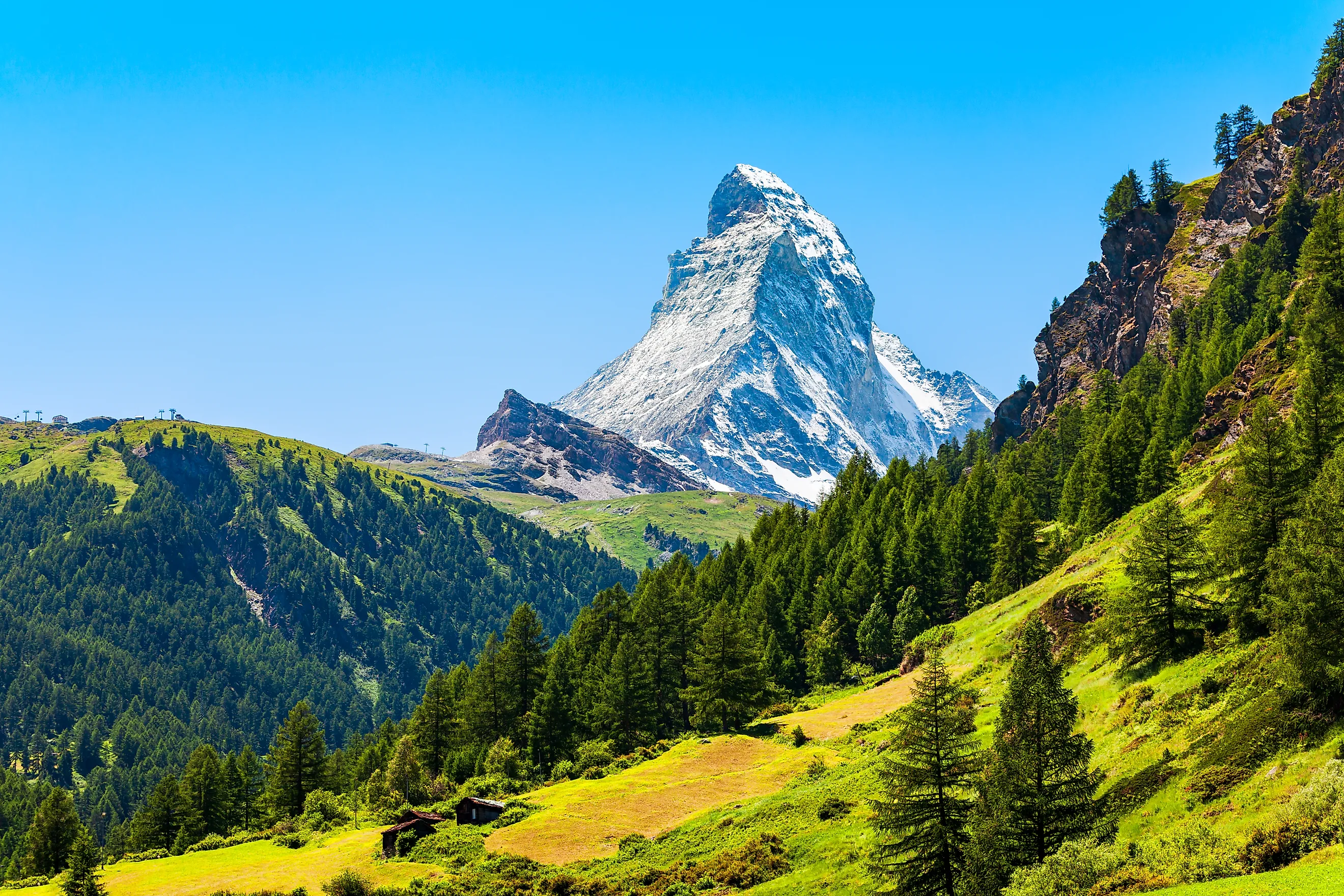
Part of the Alps mountain range, on the border between Switzerland and Italy, the Matterhorn combines its impressive dimensions with unique geologic features. Formed by a tectonic collision between the European and African continental plates, followed by millions of years of erosion, the pyramid-shaped formation has four steep, pointed faces that roughly align with cardinal directions.
At 14,692 feet tall, it overlooks the towns of Zermatt, Switzerland and Breuil-Cervinia, Italy. Views of the Matterhorn are visible from several locations, including the Charles Kuonen Suspension Bridge, the Gornergrat Railway, and the Sunnegga funicular. Winter recreation includes skiing, while summer leans toward hiking and climbing, which is advisable only for extremely experienced climbers led by a guide.
Aletsch Glacier
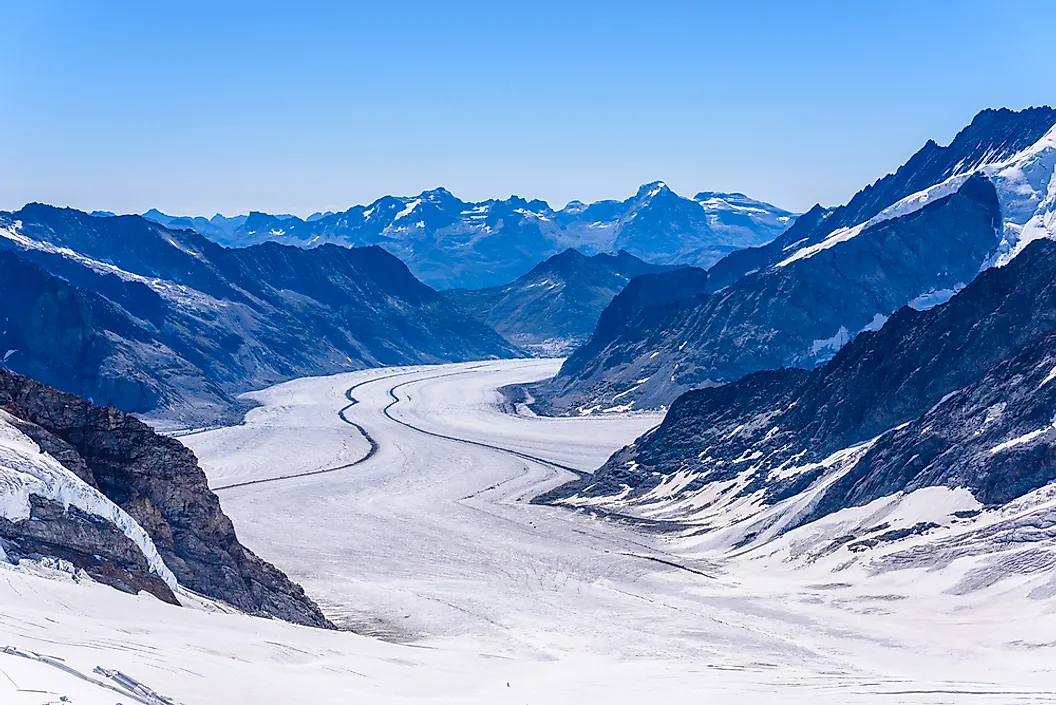
Set in the Bernese Alps in southwestern Switzerland, the Aletsch Glacier is the largest and longest glacier in the Alps. It is about 14 miles long and covers approximately 30 square miles, located between the Bernese Oberland and Valais. Aletsch was formed by the convergence of major ice and firn streams, including the Jungfraufirn and the Ewigschneefeld. Its dramatic landscape covers ice, rocks, snow, moraines, and other glacial formations. Meltwater flows through the Massa River toward the Rhône Valley.
The glacier is part of the Swiss Alps Jungfrau-Aletsch UNESCO World Heritage site, which is recognized for its alpine landscapes and geological features. Visitors can view the glacier from the Eggishorn above Fiesch, reached via the Fiesch-Eggishorn cable-car system, or the Jungfraujoch area on the opposite side of the glacier.
Rhine Falls

Rhine Falls, one of the largest and most powerful waterfalls in Europe, combines scenic beauty and the power of nature with accessible viewing. Situated near Schaffhausen, in the northern part of the country, it is 492 feet across and 75 feet high. It flows over limestone rocks and can reach roughly 21,000 cubic feet of water per second during periods of high summer flow.
The Rhine Falls formed 14,000 to 17,000 years ago, during the last Ice Age, when the Rhine River dramatically changed. Geological shifts and glacial retreat established a new course, creating the falls as it is seen today. Accessible year-round, this natural wonder can be seen on boat tours or along hiking trails, as well as the Belvedere or the Känzeli viewing platforms. Laufen Castle, located above the falls, is another vantage point.
Oeschinen Lake

Oeschinensee, or Oeschinen Lake, located in the Bernese Oberland region, shares its scenic location with an Ice Age history. Fed by glacial meltwater, streams, and precipitation, it is framed by the mountain peaks of Doldenhorn and Fründenhorn. It is located above the village of Kandersteg at an elevation of 5,177 feet. The lake is part of the Swiss Alps Jungfrau-Aletsch UNESCO World Heritage Site.
The lake formed when several prehistoric rockfalls and landslides created a natural dam, with major events occurring thousands of years ago. The loose landslide debris remains, allowing water to drain from the lake underground. This unusual drainage contributes to significant changes in the lake's water level throughout the year. Known for its vibrant turquoise water and mountain setting, Oeschinensee is popular for rowing, swimming, picnicking, and hiking. Visitors can reach the area via the Kandersteg-Oeschinen Gondola and then continue by foot.
Lauterbrunnen Valley

With steep rock cliffs and 72 cascading waterfalls, the Lauterbrunnen Valley features an iconic Swiss fairytale-like landscape. The U-shaped glacial valley is in the Swiss Alps, between Interlaken and the Jungfrau Massif. The valley is home to Trümmelbach Falls, the car-free Alpine villages of Wengen and Mürren, and Staubbach Falls, a 975-foot waterfall that plunges from a vertical cliff to the main village. It is one of Europe's highest free-falling waterfalls.
The valley is said to have inspired J.R.R. Tolkien's fictional Rivendell. Tolkien visited Lauterbrunnen in 1911 and later wrote that the fictional journey from Rivendell across the Misty Mountains was based on his experiences during his Swiss trip. While he didn't directly name Lauterbrunnen as the model itself, the valley is widely recognized as a possible inspiration for the setting.
Trümmelbach Falls

The Lauterbrunnen Valley's Trümmelbach Falls is home to a series of 10 glacier-fed subterranean waterfalls inside a mountain. They are Europe's largest underground waterfalls and are accessible to the public. The falls carry up to 20,000 liters of water per second, from draining meltwater from the glaciers and snowfields around the Eiger, Mönch, and Jungfrau glaciers. The meltwater carries fine sediment, which gives the falls a distinctive milky appearance.
Visitors can hike from Lauterbrunnen along the River Lütschine toward Stechelberg, about a two-hour walk, or reach the falls by car, and then take the stairs or a tunnel lift to a viewing platform near each of the waterfalls. Trümmelbach Falls is generally open daily from early April through early November.
Moiry Icefall

The Moiry Icefall is a heavily crevassed section of the Moiry Glacier at the head of Val de Moiry in the Pennine Alps in Valais. It descends from the Pointe de Mourti and is especially striking where the steep terrain creates a dramatic fall of ice, with deep crevasses and scenic fields of blue seracs, large blocks of glacial ice separated by crevasses. The turquoise reservoir and surrounding glacier landscape make this one of the scenic highlights of the Val d'Anniviers.
From the village of Grimentz, it takes about 10 minutes by car to reach the Moiry Dam, where the road then continues toward the glacier. The area is typically accessible during the summer and early autumn, weather permitting, while the road to the dam and glacier is closed in the winter. The best time to visit is between mid-June and September.
Höllgrotten Caves

Höllgrotten Caves, near Baar in central Switzerland, feature stalactites, stalagmites, and small lakes in the Lorzentobel ravine. The dripstone caves are unusual because they formed close to the surface from mineral-rich spring water rather than deep underground, typically associated with many cave systems. At only a few thousand years old, the caves themselves are relatively young. They developed after the last Ice Age as calcium-rich spring water emerged from the surrounding slopes and deposited calcium carbonate, gradually building up layers of porous limestone, or tuff. This rapid formation makes them unusual among dripstone caves.
The caves were discovered in the 1860s when workers mining tuff stone for railway construction exposed the underground formations. Further sections were eventually explored and developed. Today, carefully designed LED lighting shows off the colors and intricate shapes of the natural formations. The caves are open from April through October.
Pointe de la Jonction

Geneva is home to an unusual natural feature where the Rhône and Arve rivers meet. Unlike most waterways in this situation, they don't immediately mix but run side by side. The waters remain visibly distinct for a distance downstream, creating a striking contrast. This dramatic effect comes from a combination of water speed, density, and temperature.
Flowing out of Lake Geneva, the Rhône River carries little suspended sediment and appears clear and blue-green. The Arve River, which flows much faster from the Mont Blanc region, carries much more sediment, giving it a milky, gray, or brown appearance. When the two rivers meet, differences in flow, sediment concentration, temperature, and density influence how quickly the water mixes. The result is a dramatic difference between the two colors, though they do come together further downstream.
Pyramides d'Euseigne

Located in the municipality of Hérémence, in the canton of Valais, the Pyramides d'Euseigne contribute a distinctive and mysterious factor to the Val d'Hérens skyline. Sometimes called "fairy chimneys," these pyramid-shaped geological rock formations stand at the entrance to the village of Euseigne. Most of these tan and gray earth columns, or moraine formations, are capped by large boulders and reach heights of about 32 to 49 feet.
The spires were formed during the final phase of the last Ice Age, approximately 80,000 to 10,000 years ago. As the glaciers retreated, they left behind compact moraines containing large boulders. Rain and melting water gradually eroded the moraine around the boulders, while the rocks acted as protective caps, shielding the material underneath and leaving the columns behind.
The Pyramides d'Euseigne have been included in Switzerland's Federal Inventory of Landscapes and Natural Monuments of National Importance (BLN) since 1983. Following the construction of a new road tunnel in 2023, the former road tunnel beneath the formations was converted into a pedestrian path, allowing visitors to view the pyramids up close.
Natural Wonders to Visit in Switzerland
Reflecting historic landmarks, scenic beauty, and the power of nature, Switzerland's natural wonders show how the natural world comes together to create geologic formations. Remnants of the Ice Age are evident in the pyramid-shaped formations of the Pyramides d'Euseigne and the blue seracs of the Moiry Icefall. Meanwhile, Oeschinen Lake and Pointe de la Jonction feature scenic waterfronts and dramatic convergences. Rhine Falls and Trümmelbach Falls allow visitors to experience the country's famed waterfalls. While the individual landscapes and formations differ, they all share the mystery and wonder of the natural world, whether formed by eroding earth, retreating ice, or colliding tectonic plates.