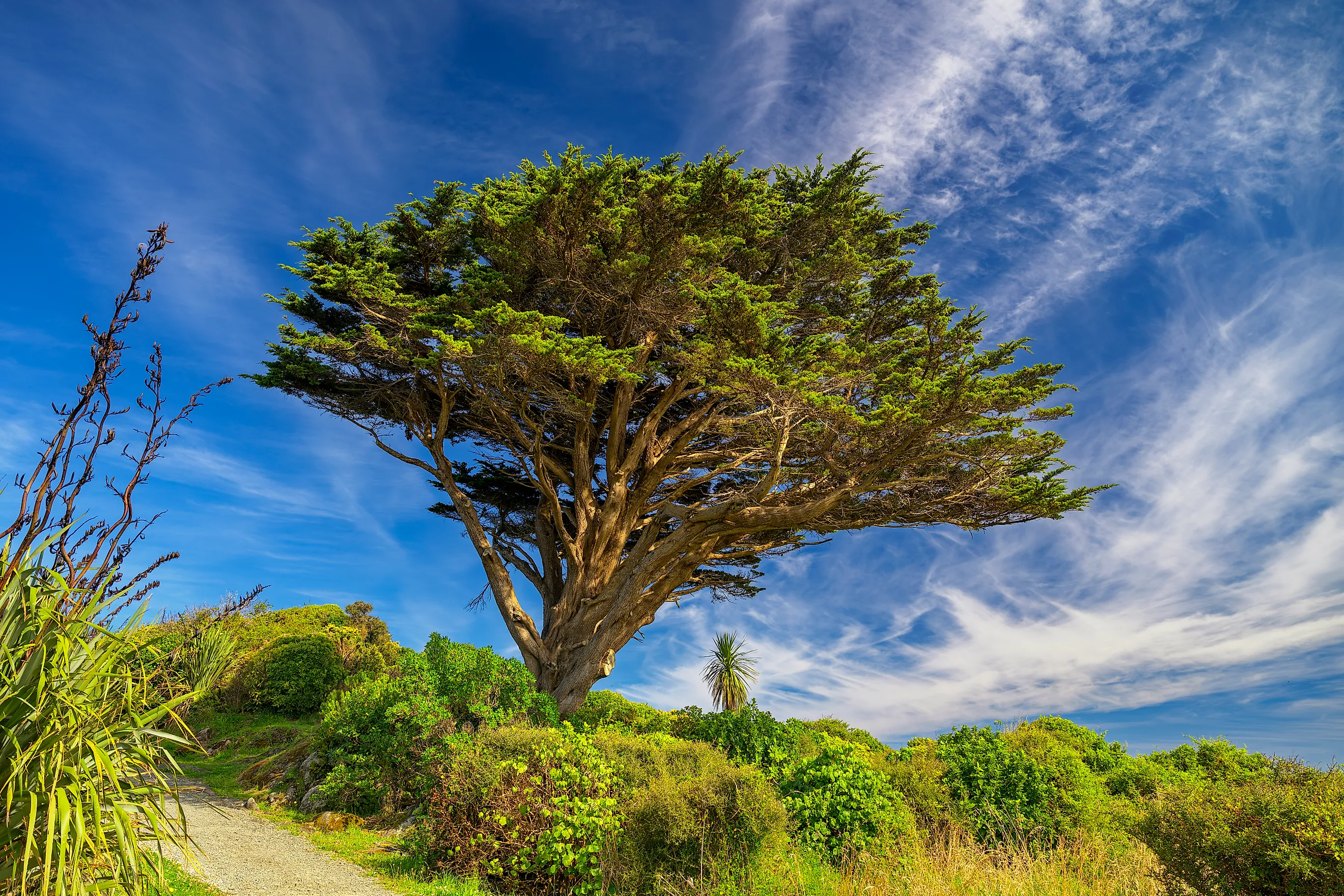
Why Monterey Cypress Only Grows On Two Headlands
The Lone Cypress standing sentinel over the Pacific at Pebble Beach may be the most photographed tree in North America, and the wind-sculpted Monterey cypress it belongs to is a beloved icon planted in gardens and along coastlines all over the world. Which makes one fact genuinely bizarre: in the wild, this globally famous tree grows in exactly two spots on the entire planet, a pair of tiny headlands a few miles apart on the central California coast, and absolutely nowhere else. Not up the coast, not down it, not across the bay. Two headlands. That is the whole natural range of the species. So what on Earth is going on? The answer is a strange brew of ice-age history, coastal fog, and a brutal competition for real estate.
The Two Groves

Let's start with the crime scene. The entire wild population of Monterey cypress is split between two small groves sitting on opposite sides of Carmel Bay. One is Crocker Grove at Cypress Point, on the famous 17-Mile Drive through Pebble Beach, which is where the Lone Cypress does its modeling work. The other is the Allan Memorial Grove at Point Lobos, the wild, rocky reserve just south of Carmel. That's it. Between them, they cover a strip of coastline you could walk in an afternoon, giving the Monterey cypress one of the smallest natural ranges of any tree on the planet. The two groves are even subtly different from each other, with slight genetic and cone variations, a sign of just how long they have been marooned in their separate corners.
A Relic of the Ice Age

Here is the key to the whole mystery: the Monterey cypress is a living relic, a leftover from a colder world. During the last ice age, when the California coast was cooler and wetter, this tree almost certainly grew in a far larger forest that stretched well to the north and south of its present toehold. Then the ice age ended, the climate warmed and dried, and the great coastal cypress forest began to shrink. As conditions turned against it, the species retreated, hanging on only in the few pockets where the old cool, damp conditions still lingered. Those two fog-soaked headlands near Carmel were the last redoubts, the final scraps of suitable habitat where a survivor from a vanished era could dig in and refuse to die. In other words, the cypress isn't stuck in two groves because that's where it started. It's stuck there because that's where it ended up when everything else disappeared.
It Lives on Fog

What makes those two headlands so special comes down largely to one thing: fog. The Monterey Peninsula sits in a cool, moist maritime microclimate where banks of Pacific fog roll in through the summer, draping the coast in a gray, dripping mist right when the rest of California bakes bone-dry. For a tree adapted to the mild, humid conditions of the ice age, that summer fog is a lifeline, delivering moisture and knocking back the heat during the very months that would otherwise cook it. The cypress is finely tuned to this narrow, fog-fed band of coast, and step even a little bit inland, away from the marine layer, and the conditions it needs vanish. The two surviving groves happen to sit right in the sweet spot of that fog belt, which is no coincidence at all.
Clinging to the Harshest Ground

Now for the twist that makes the story even stranger. You might assume a tree confined to two spots must be weak and delicate, but the Monterey cypress is anything but. It survives precisely because it can handle punishment that would kill softer species. It grips exposed, salt-blasted granite headlands battered by relentless Pacific wind, which is exactly why the wild trees grow into those gnarled, flat-topped, wind-tortured shapes. And that toughness is the whole point. On brutal, thin-soiled, wind-hammered ground like this, faster-growing neighbors such as the Monterey pine and coast live oak simply can't get established, leaving the stress-hardened cypress with the field to itself. The catch is that in gentler, richer soil just inland, those same competitors would swiftly crowd it out. The cypress, in effect, only wins where life is nearly unlivable, and it has been cornered into holding the roughest real estate on the coast.
The Twist: It Grows Almost Anywhere You Plant It

And here is the fact that turns the whole thing on its head. If you actually plant a Monterey cypress somewhere else, it grows just fine, often spectacularly. Since it was "discovered" by botanists in the 1840s, this supposedly delicate two-headland species has been enthusiastically planted around the globe, thriving in coastal California and Oregon, across Britain and Ireland, throughout Europe, in Australia, and even in South Africa, where a grove was planted near the Cape of Good Hope as a war memorial. In New Zealand it is such a beloved timber and hedge tree that locals just call it "macrocarpa." So the tree is not some fragile hothouse flower that can only survive in two magic spots. It grows happily wherever the climate is mild and coastal. The two-grove limit isn't about where it can grow, it's about the only place it managed to hang on naturally, without a gardener planting it there on purpose.
A Rare Tree Worth Protecting

That distinction matters more than it might seem. Because Monterey cypress is planted almost everywhere, it does not appear on the federal endangered species list, which does not separate wild populations from garden specimens. Yet California recognizes the two natural groves as genuinely rare and imperiled, and for good reason. The trees face a gauntlet of threats, from disease and drought to shifting fog patterns, aging populations, and the loss of the periodic fires their cones need to reliably open and regenerate. There is even a subtler danger: pollen drifting from the millions of planted cypresses worldwide can dilute the unique genetics of the wild stands, which is part of why the isolated Allan Memorial Grove at Point Lobos is treasured as a rare pocket of the pure, ancestral tree. So the next time you see the Lone Cypress on a postcard, remember you are looking at a survivor, an ice-age relic clinging to a granite cliff in one of only two places it ever truly belonged.