You Won't Believe This Town Is In South Australia
When thinking of South Australia, most people picture sun-baked red soil and outback that stretches forever toward the horizon. That is accurate for a huge portion of the state, but tucked away in the southeast corner, Mount Gambier looks like it belongs on a different continent entirely. Home to just under 27,000 residents, the town owes its unusual character to the dormant volcanic complex it sits on. A crater lake that changes colour and a downtown built around a 98-foot-deep sinkhole are the two most striking features, and together they make Mount Gambier one of the most distinctive towns in Australia.
A Town Built on Fire and Water

Mount Gambier takes its name from the volcanic complex on the town's southern edge. The complex is dormant but not extinct, with the most recent eruptions occurring around 5,000 to 6,000 years ago when volcanic activity heated the shallow water table and triggered a sequence of explosive phreatomagmatic eruptions. These eruptions created the distinctive crater formations, known as maars, that define the town today. At just a few thousand years old, these are some of the youngest volcanic features in Australia.
The largest and most famous crater holds Blue Lake, or Warwar to the region's Boandik people. Each November, as water temperatures rise, the 238-foot-deep crater lake undergoes an annual transformation, with its winter steel-grey shifting to an intense cobalt blue so vivid it appears digitally altered in photographs. The colour change is caused by the formation of calcium carbonate (calcite) crystals in the warmer surface waters, which scatter blue wavelengths of light more effectively than the green and yellow wavelengths dominant in winter. The blue colour typically holds through late March. A 3.2-kilometre (two-mile) track loops around the crater rim and is the best way to see the lake in full.
Mount Gambier's Other Craters

Three other crater formations complete the volcanic complex. Valley Lake, or Ketla Malpi, still holds water and is surrounded by a wildlife park with a boardwalk that allows for viewing of native kangaroos, wallabies, and emus. Leg of Mutton Lake, or Yatton Loo, dried up decades ago and is now a grassy clearing surrounded by woodland popular for an easy stroll. Above it all, the castle-like Centenary Tower crowns the crater rim. Built from dolomite stone in 1901 to mark the centenary of Lieutenant James Grant's 1800 sighting of the mountain from the survey brig HMS Lady Nelson, the tower provides 360-degree views over the craters, the city, and on clear days, the ocean to the south.
Sinkholes, Caves, and Sunken Gardens

Mount Gambier is equally known for the sinkholes and caves that riddle the town's limestone bedrock, formed by groundwater dissolving the soft rock over millennia. Cave Garden, known to the Boandik as Thugi, is a 98-foot-deep sinkhole that served as the town's water source in the 1840s. The first post office, town hall, and hotel were all built around it. Now a landscaped public park, several viewing platforms offer stunning experiences after heavy rainfall when water cascades into the chasm. Adjacent to the gardens, the Riddoch Arts and Cultural Centre is home to South Australia's largest regional gallery, with a permanent collection of more than 1,500 artworks and screenings of the documentary film Volcano, which tells the story of the eruptions that shaped the town.

A short drive east of town, the larger Umpherston Sinkhole, or Balumbul, is even more impressive. In 1886, retired landowner James Umpherston (for whom it is named) cleared the rubble from the sinkhole floor, carved paths into the rock walls, built staircases, planted ferns and flowers, and even offered boat rides on a small lake at the bottom. Now free to enter, it is especially striking after nightfall when lit up, with the garden filling with brushtail possums that emerge from the rock walls to feed on the fruit and vegetables visitors are permitted to bring. Engelbrecht Cave on the western side of town is another essential stop. Visitors can descend around 160 steps to viewing platforms overlooking a series of underground lakes, with guided cave-diving tours available for certified divers.
Other Things To Do in Mount Gambier

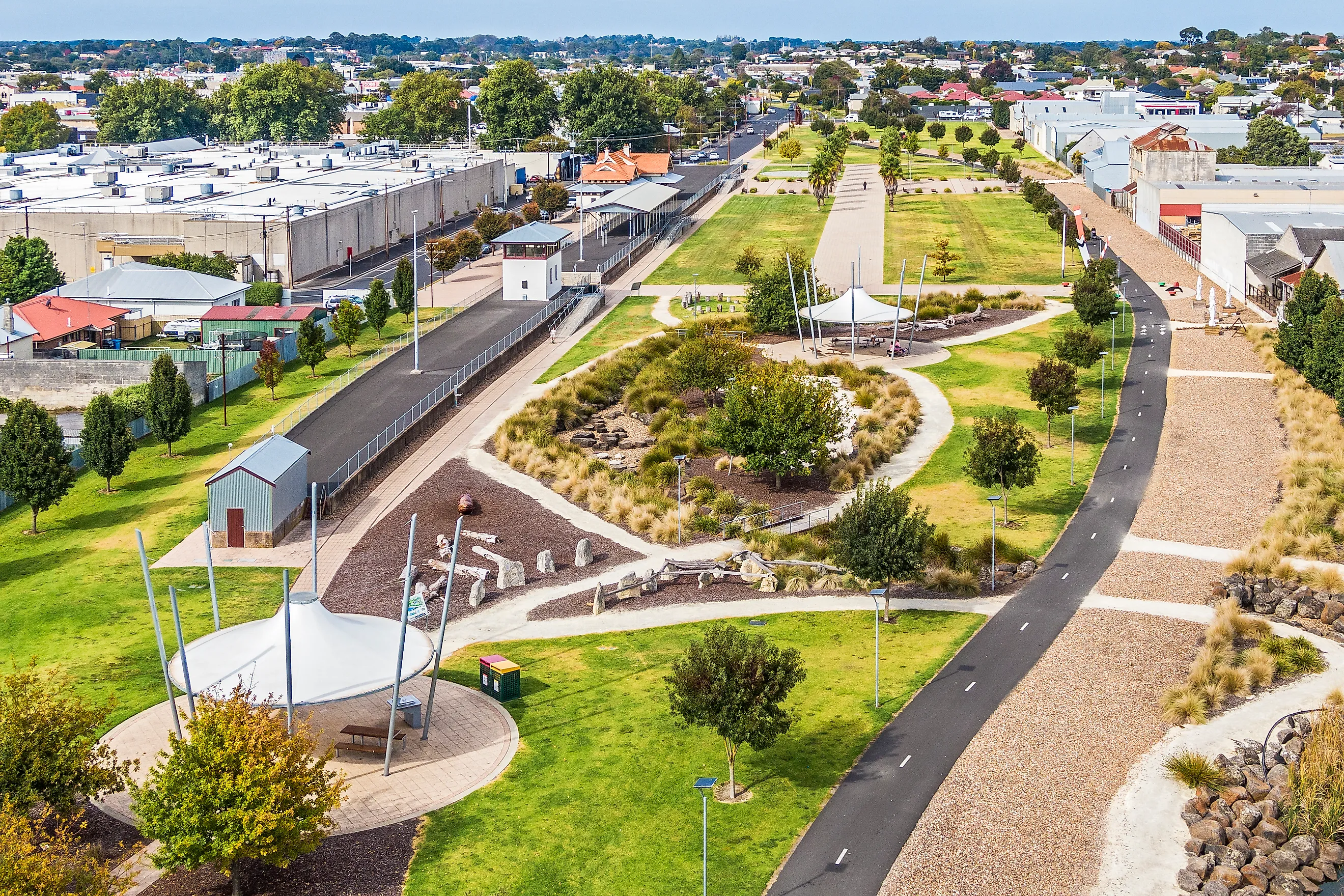
Mount Gambier's cultural scene holds its own. The 524-seat Sir Robert Helpmann Theatre, located in the town centre, is named after the town's most famous son (the ballet dancer, choreographer, and actor of The Red Shoes fame) and regularly hosts concerts, comedy nights, and touring shows. The Mount Gambier Visitor Centre offers free bicycle rentals for the 12.4-kilometre (7.7-mile) Rail Trail, which follows the old railway corridor across town. A few miles south of town, the dormant cone of Mount Schank has a one-mile walk to the crater rim with panoramic views extending to the ocean, and the town sits at the western edge of the Coonawarra wine region, with cellar-door tastings at Haig Wines inside Mount Gambier itself and dozens more within an hour's drive.
A Landscape Like No Other in South Australia

South Australia's reputation as a dry, flat frontier is generally accurate, which is what makes Mount Gambier so unusual. A town of volcanic craters, a colour-changing lake, sunken public gardens, and extensive cave networks, it upends expectations at every turn. For anyone travelling South Australia, Mount Gambier is the stop that shows the state is more geologically varied than its outback reputation suggests.