Where People Are Moving To In The United States In 2026
America's growth has moved away from its big cities. The Census Bureau's Vintage 2025 estimates put the fastest-rising places on the outer edges of metro areas across the South and the Mountain West. Each one tells a slightly different story about why people pack up. Some follow a new factory or a data center. Others want a beach or a lake within reach. Nearly all want a newer home near a job that pays, which is the thread tying these eight towns together.
Spring Hill, Tennessee

Start in Middle Tennessee, where Nashville's southward push has turned Spring Hill into one of the state's standout growth stories. The city straddles the Williamson and Maury county line, and it pairs Nashville-area access with the kind of new housing and schools that pull young families out of the core. Its population has climbed past 59,000, a rise of about 17% since 2020, and Maury County was Tennessee's second-fastest-growing county by percentage in the latest year.
The job engine sets Spring Hill apart from a simple commuter suburb. Ultium Cells, the General Motors battery venture, began production here in 2024 and announced a further investment in 2026 to retool for a new battery chemistry. That sits alongside the long-running GM plant that has been the area's employment mainstay for decades. Williamson County brings some of Tennessee's top-rated schools, and the state's lack of an income tax sharpens the appeal for households leaving pricier places. The result is a town with both an industrial spine and the suburban comforts that keep people moving in.
Eagle Mountain, Utah

Utah's growth has a new flagship, and it sits in Cedar Valley west of the Lake Mountains. The Census Bureau named Eagle Mountain the state's fastest-growing city in 2025, with an 8.5% jump that ranked ninth in the nation and pushed its population to 66,557. Young families drive much of it, drawn by some of the most attainable new housing within commuting distance of the Salt Lake and Provo job markets.
What sets Eagle Mountain apart is what is rising on its edges. Meta runs a large data center here. QTS topped out a 193-acre campus in 2026, part of a wave of tech investment bringing construction jobs and long-term tax revenue to a city that was mostly open desert two decades ago. The growth has tested the basics, and the council has gone so far as to study small nuclear reactors to secure power. For residents the appeal stays simple, namely a newer house, a young community, and the open Pony Express country at the western edge of the valley.
Kuna, Idaho

Idaho has been the poster state for domestic migration this decade, and Kuna shows where the newcomers actually land. Boise and neighboring Meridian have grown expensive, so families look south to Kuna for attainable houses and room to build. Its population climbed 8.4% in the past year to 31,525, one of the faster rates of any city its size in the country.
The city leans into it. New business licenses jumped to 313 in 2025, nearly triple the 2023 figure. Construction, retail, and health care have expanded to serve roughly a thousand new residents a year, helped along by Idaho's lack of a tax on services and its low overall costs. Kuna also has something its booming neighbors lack, a clear identity as the gateway to the Morley Nelson Snake River Birds of Prey National Conservation Area, with Indian Creek running through the old downtown.
Waukee, Iowa

Not all of the growth is in the South and West. Waukee sits fifteen miles west of Des Moines, the Midwest version of the same story. The Census Bureau ranked it seventh in the nation, with a 9.3% gain that brought it to 34,890. The appeal is a Midwest balance that is getting rare, namely strong schools, low housing costs, and a short commute to real careers.
Des Moines runs on insurance and finance, with Principal Financial and Wells Fargo among the metro's big employers. Waukee gives their workers top-rated schools and new neighborhoods close to the office. The city has built for it. The Kettlestone development mixes housing, shops, and offices. An Apple data center landed nearby, and a Live Nation concert hall now pulls touring acts that once skipped the area. For a family weighing cost against quality of life, that combination is hard to match in a coastal metro.
Fort Mill, South Carolina

The Charlotte region adds more than a hundred new residents a day, and a growing share of them cross the state line into South Carolina. Fort Mill, just over the border in York County, has been the fastest-growing city in the entire Charlotte metro, up 6.8% in the past year to 38,673 and 20th nationally. The move is often a deliberate financial one.
South Carolina's lower property taxes for owner-occupants and its overall costs make the same paycheck stretch further a few miles south of Charlotte, and Fort Mill pairs that advantage with schools that rank among the best in the state. Banking and corporate employers have followed the rooftops across the line, so the commute can be short or disappear entirely. The town has held onto its textile-mill past too. The Anne Springs Close Greenway preserves more than two thousand acres of woods, lakes, and trails right at the edge of downtown, a rare amount of protected green space for a place growing this fast.
Haines City, Florida

Florida keeps leading the nation in new arrivals, and Polk County is the bullseye. Wedged along Interstate 4 between Orlando and Tampa, the county pulled more domestic movers than any other in the country in a recent year. Haines City is one of the towns at the front of it, up 10.0% in the past year to 45,973 and sixth nationally.
The transformation is visible from the road. Citrus groves that defined Polk County for a century are giving way to subdivisions and shopping centers, as buyers priced out of Orlando accept a longer commute in return for a house they can own. Many are Puerto Rican and other Hispanic families reshaping the county's character. The appeal is straightforward, namely Florida weather, no state income tax, and the theme parks of Orlando barely half an hour up the interstate.
Foley, Alabama

The Gulf Coast version of the migration runs through Baldwin County, Alabama, now one of the fastest-growing metro areas in the country. Foley sits a few miles inland from the beaches at Gulf Shores and Orange Beach, and it grew 7.8% in the past year to 30,354. The newcomers skew older, because this stretch of coast has quietly become a retirement alternative to Florida.
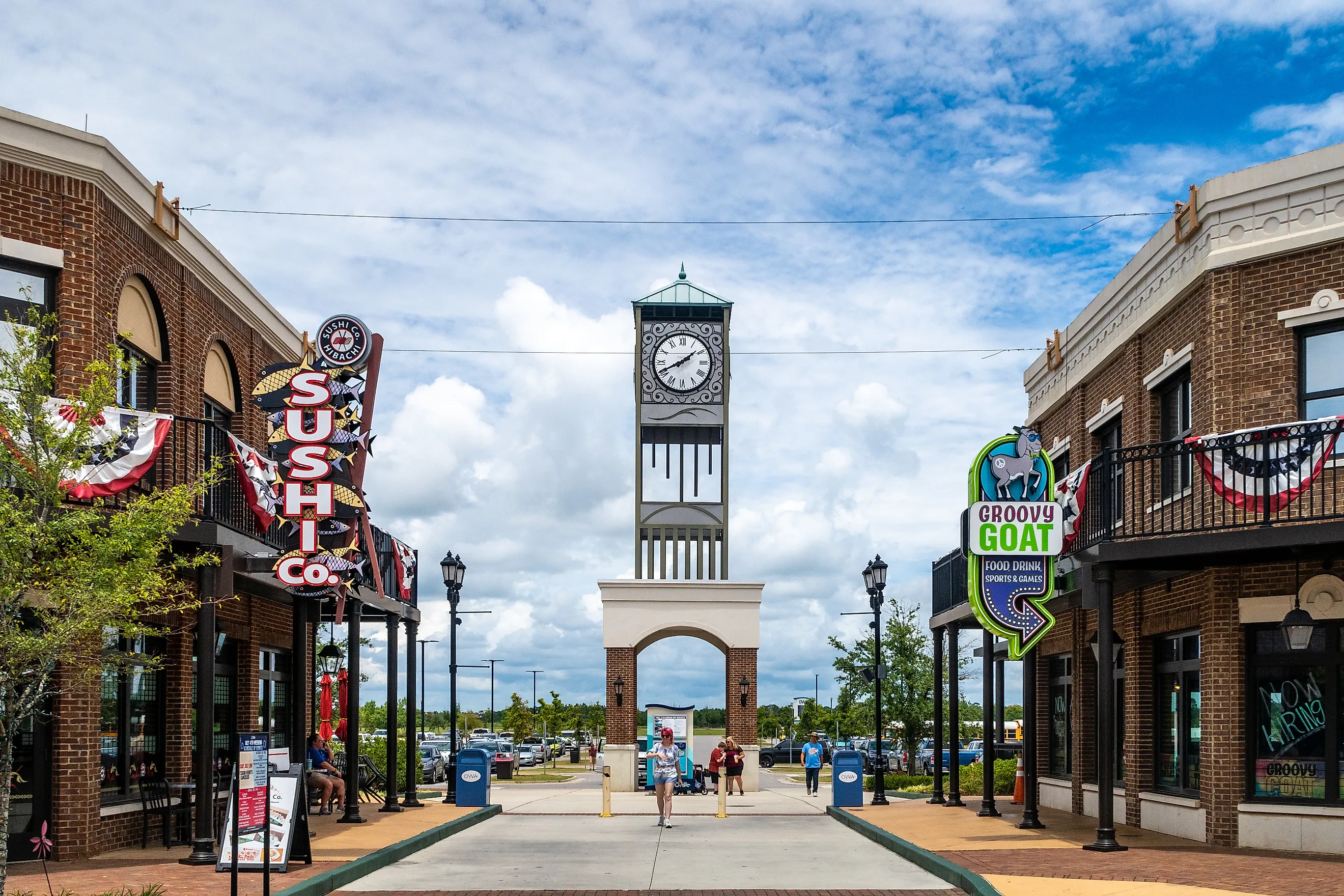
The pitch writes itself for a certain buyer. Alabama's property taxes are among the lowest in the country, the winters are mild, and the white-sand beaches sit close without Florida's prices or its insurance headaches. A 2024 study ranked Foley the most cost-effective place to retire in the country. The town is more than a waiting room for the coast, with the OWA amusement park and resort, the Tanger Outlets, and the Foley Beach Express carrying residents to the sand in minutes.
Anna, Texas

Texas added more people than any state last year, and the clearest place to see how is the northern edge of the Dallas-Fort Worth area. Anna, roughly forty miles north of downtown Dallas along U.S. 75, has ridden Collin County's relentless northward push, growing 10.2% in the past year to 35,245 and ranking fifth in the country. Collin County alone added nearly forty-three thousand residents, second only to Houston's Harris County.
What pulls people to Anna is the Collin County formula at a lower price. It offers affordable new houses and well-regarded schools within reach of jobs in McKinney, Plano, and the semiconductor plants rising near Sherman. The scale of what is coming is striking. In early 2026 a developer broke ground on Sherley Farms, a $1.5 billion community planned for roughly three thousand homes built around a working farm and trails. Anna is also rebuilding its downtown core under a long-range plan, a sign that it wants an identity beyond the subdivision signs along the highway.
Where America's Growth Is Heading
The map has a clear shape. Growth is leaving the big cities for their outer edges and for smaller metros across the South and the Mountain West, and the eight towns here are stand-ins for the forces behind it. A battery plant in Spring Hill and data centers in Eagle Mountain show jobs chasing land. Kuna, Waukee, and Anna show families chasing affordable houses near strong job markets. Fort Mill shows tax lines redrawing where people settle, and Foley and Haines City show the coastal pull that never really fades.
None of these places is finished becoming what it will be. The same growth that makes them attractive is also crowding their schools and their roads, and each is now spending on the infrastructure and the civic identity that a sudden population demands. For anyone tracking where the country is heading, the signal is consistent. People are moving toward space, lower costs, and a job within reach, and they are finding all three at the edges of the map rather than the center.