Where People Are Moving To In Oregon In 2026
Oregon added residents slowly between 2020 and 2025, but the growth is not spread evenly across the state. Central Oregon kept pulling people despite a price climb. The Willamette Valley caught households priced out of nearby metros. The west-side suburbs are still gaining people where there is room to plan and build. Statewide home values run near $503,000, which makes the lower-cost towns on this list especially important. The eight places ahead each show one piece of that pattern in concrete terms.
Bend

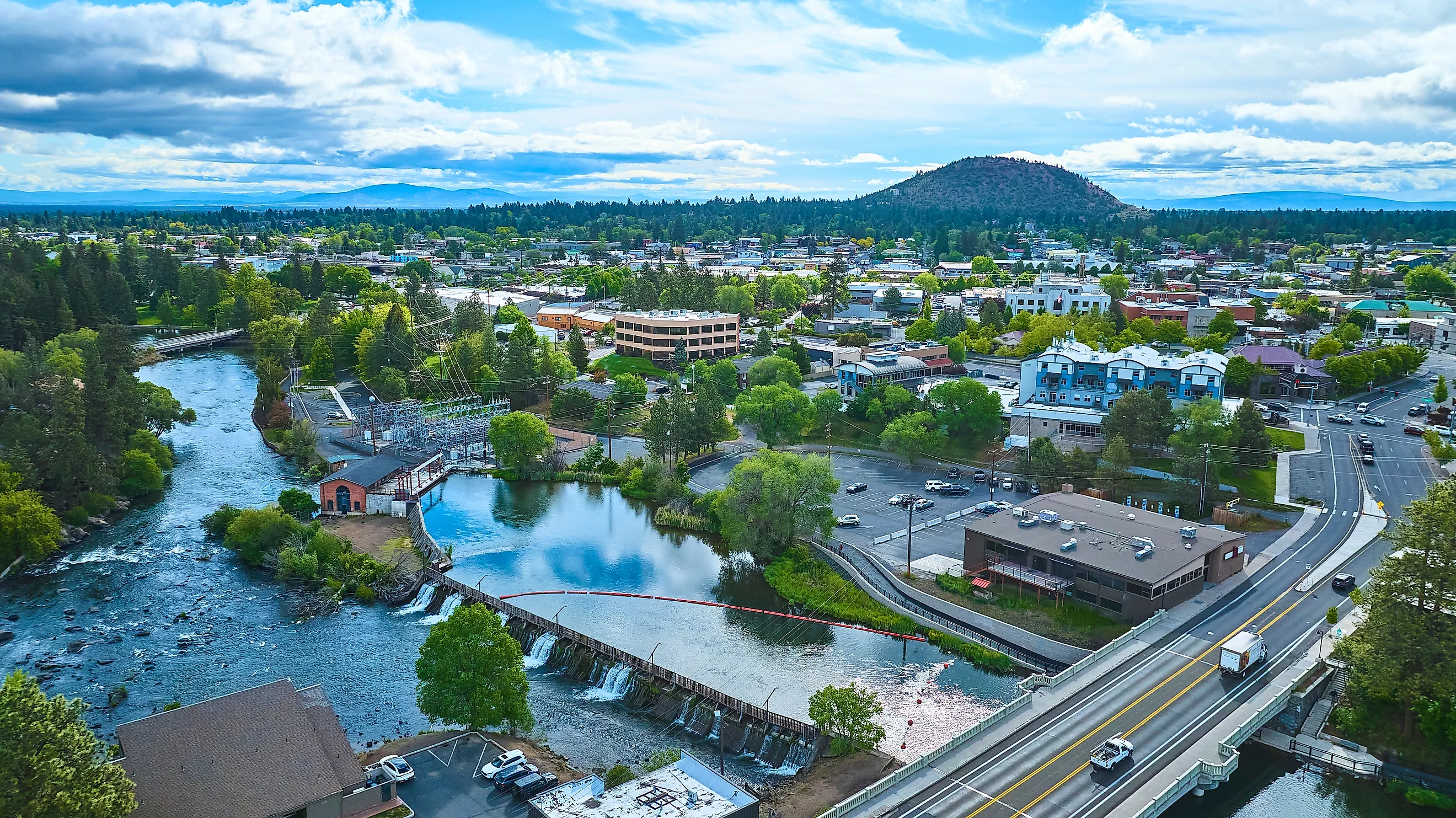
Bend gained more than 8,000 residents between 2020 and 2025 to reach about 107,000, even as the typical home value climbed past $738,000. People are not moving here because it is easy. They come because Bend keeps offering the same combination of high-desert outdoor access, jobs in tourism and health care, and a lifestyle that has not given up on outside-the-door time. The Old Mill District, on former lumber land, holds shops, restaurants, river trails, and offices along the Deschutes River. The Deschutes River Trail gives residents a daily walking and cycling link between neighborhoods, parks, and the water. Pilot Butte State Scenic Viewpoint and the High Desert Museum keep the town connected to the landscape around it. Growth has also forced long-term planning around housing, roads, and services, which is now part of the story.
Salem

Salem gained more than 6,000 residents between 2020 and 2025 with home values near $440,000, well below the state average and below most of the suburbs to the north. The state capital combines government jobs, health care, education, and a central Willamette Valley location that works for households who need access to multiple regional job markets without paying the highest price in any of them. Salem adopted a Housing Production Strategy in 2025, putting supply at the center of its growth conversation rather than the periphery. Riverfront Park, the Peter Courtney Minto Island Bridge, Minto-Brown Island Park, and the Willamette Heritage Center give the city a mix of river access, open space, and history. People are moving here because the math works for the income.
Woodburn

Woodburn grew 22.5% between 2020 and 2025, one of the sharpest jumps in the state, reaching about 32,000 residents. Home values around $430,000 keep it within reach for households closed out of pricier markets to the north and west. Interstate 5 puts residents between major job markets, and local shopping, services, and schools keep the city from feeling like a pass-through. The Woodburn Premium Outlets, the Wooden Shoe Tulip Farm, and the surrounding farm country give the city a different rhythm from the suburbs nearby. The growth shows up in schools, streets, housing demand, and the commercial corridor.
Happy Valley

Happy Valley grew 23.5% between 2020 and 2025 to reach about 29,000 residents, a pace usually reserved for smaller towns. Home values near $687,000 explain why the city is not affordable. The pull is something else: newer subdivisions, larger homes, school access, parks, and metro-area job proximity in a city that does not require moving into the metro proper. Happy Valley Park is one of the everyday gathering spaces, with trails, sports fields, playgrounds, and a wetlands boardwalk. Scouters Mountain Nature Park gives residents forested trails and Mount Hood views. Mount Talbert Nature Park sits close enough for a quick walk or a weekend outside. Expensive markets can still gain people when the housing stock matches what buyers want, and Happy Valley is the local example.
Redmond

Redmond has become Central Oregon's growth valve, gaining about 5,000 residents between 2020 and 2025 to reach roughly 38,500. Home values near $517,000 sit slightly above the state average but well below Bend's, and that single difference explains most of the migration pattern. Roberts Field, the city's airport, has been through a major expansion that reinforces Redmond's role as Central Oregon's air gateway. Downtown Redmond has restaurants, shops, breweries, and civic spaces that make the city feel less like a backup plan and more like its own center. Dry Canyon Trail runs through town with walking and biking access. Smith Rock State Park and the Redmond Caves Recreation Site keep Redmond close to some of the region's most recognizable scenery.
Hillsboro

Hillsboro gained about 4,600 residents between 2020 and 2025 to reach about 111,000, with jobs driving most of the movement. The city sits at the center of Oregon's semiconductor economy, and Intel's Hillsboro campus remains one of the state's most important employment forces even through a complicated period for the company. South Hillsboro and Reed's Crossing have brought new homes, parks, trails, and commercial space into one of the largest master-planned growth areas in the state. Orenco Station still shows how transit-oriented development can shape a neighborhood around the MAX Blue Line. Jackson Bottom Wetlands Preserve gives the city a major natural area inside its boundaries. Hillsboro is not absorbing people who work elsewhere. It is one of Oregon's main job centers itself.
Tigard

Tigard added more than 3,000 residents between 2020 and 2025 to reach about 58,000, with the kind of steady, visible growth that suburban planners count on. The city sits in southeast Washington County with proximity to multiple job markets and its own downtown, parks, schools, and housing pipeline. The biggest signal is River Terrace 2.0, the city's planning process for undeveloped urban reserve land that could eventually bring thousands of new homes. Downtown Tigard, the Fanno Creek Trail, Cook Park, and Washington Square give residents a blend of local routine and regional access. Tigard is part of the region's next housing conversation rather than just another built-out suburb.
Lebanon

Lebanon crossed the 20,000-resident mark between 2020 and 2025, with home values near $395,000 making it one of the more affordable mid-valley landing spots. The town pulls households priced out of more expensive Willamette Valley markets nearby. Samaritan Lebanon Community Hospital and the Western University of Health Sciences campus give the city a health care and education base unusual for its size. WesternU's long-term Oregon campus expansion plans point to more growth around training, health care, and related employment. Cheadle Lake Park, the Santiam River, Ralston Park, and the nearby Cascade foothills give residents outdoor access without long drives. Lebanon is not the loudest growth story in Oregon but it is one of the more practical ones.
Where Oregon's Growth Is Heading
Oregon's movement pattern in 2026 is uneven but it is not random. Bend and Redmond show the continued pull of Central Oregon despite affordability being less of one. Salem, Woodburn, and Lebanon show how the Willamette Valley is catching households who want lower housing costs and everyday access to jobs and services. Happy Valley, Hillsboro, and Tigard show that the region around the largest metro is still growing where there is housing, employment, or room to plan for both. These places do not share one price point or one lifestyle. They share momentum. People are moving where the practical pieces line up, whether that means a job center, a cheaper home, a new subdivision, a workable commute, a park system, or a city still building for what comes next.