Where People Are Moving To In Mississippi In 2026
Mississippi’s population, estimated at 2,954,160 in 2025, is quietly reshuffling. Growth is landing in suburban cities, coastal communities, and a few regional job centers, while more isolated areas continue to lose residents. The state added 3,988 residents between July 1, 2024, and July 1, 2025, according to the U.S. Census Bureau’s Vintage 2025 population estimates. The cities gaining residents are mostly places with job access, newer housing, and interstate connections already in place. In-state movement is especially visible around the Jackson suburbs, the Gulf Coast, and north Mississippi, where residents remain connected to larger job markets. Here are some of the Mississippi communities seeing the biggest population growth.
Gulfport

Gulfport posted one of the largest one-year gains among Mississippi cities in the latest Census place estimates. The city grew from 74,882 residents in 2024 to 76,506 in 2025, an increase of 1,624 people. It has also grown by 3,569 residents since its 2020 estimate base, a 4.9% increase. That makes Gulfport one of the clearest city-level examples of Mississippi’s recent growth concentrating along the Coast.
The Mississippi State Port Authority at Gulfport describes the port as an economic driver for the Gulf Coast while its restoration project was designed to strengthen the port’s long-term business development role. Gulfport-Biloxi International Airport is another major piece serving nearly 800,000 travelers each year and sitting near I-10. The city also offers beach access, downtown activity through Gulfport Main Street, and tourist-facing places such as Mississippi Aquarium and Jones Park. Together those pieces give Gulfport jobs, transportation, recreation, and housing demand in one of Mississippi’s most visible growth areas.
Pearl

Pearl’s growth reflects the continued pull of Jackson-area suburbs with easier highway access and room for commercial development. The city grew from 28,516 residents in 2024 to 28,864 in 2025, adding 348 people in one year. Since the 2020 estimate base Pearl has added 1,804 residents, a 6.7% increase. That steady rise puts Pearl near the top of Mississippi’s recent city-level gains.
Pearl sits in one of the state’s most useful transportation spots with I-20 and I-55 nearby and quick access to Jackson, Flowood, Brandon, and the airport. The city markets itself as the “Jewel of the Crossroads,” and its commercial base helps explain why people continue to settle there. Outlets of Mississippi is a 315,000-square-foot outlet center inside The Connection, alongside Bass Pro Shops, and Trustmark Park. Professional baseball also remains part of Pearl’s identity after the Mississippi Mud Monsters and Trustmark announced a naming-rights agreement.
Madison

Madison continues to grow as one of the Jackson metro’s most established residential and employment suburbs. The city rose from 28,366 residents in 2024 to 28,575 in 2025, a gain of 209 people. Since the 2020 estimate base Madison has added 824 residents, a 3.0% increase. The growth is steady in a state where many communities are either flat or losing population.
Madison’s appeal is tied to schools, housing, and commercial development north of Jackson. The city’s economic development office says Madison’s focus through the rest of the decade is high-tech jobs and commercial development. Nearby economic development activity also adds weight to the area, including Amazon Web Services’ major Madison County expansion. For residents, the practical advantages are just as important: I-55 access, retail along Madison and Ridgeland corridors, and proximity to both Jackson’s job base.
Hernando

Hernando has seen growth tied to Memphis-area access while retaining a recognizable town center. The city grew from 18,636 residents in 2024 to 18,824 in 2025, adding 188 people. Since the 2020 estimate base Hernando has gained 1,676 residents, a 9.8% increase, making it one of the stronger long-term growers on this list.
Hernando sits on the I-55 corridor south of Memphis while I-269 has strengthened north Mississippi’s development position by improving movement between I-55, the Tennessee line, and nearby job corridors. The city also leans into a more intentional development pattern. Hernando’s relocation materials point to sidewalks with new developments, renovated sidewalks, bike lane striping, and a goal of becoming more walkable and bikeable. The historic courthouse square, local businesses, and Main Street activity give the city a recognizable center, while the chamber represents nearly 350 businesses.
Brandon

Brandon’s growth fits the pattern of residents moving toward Jackson-area communities with newer homes, schools, entertainment, and direct highway access. The city increased from 25,964 residents in 2024 to 26,122 in 2025, a gain of 158 people. Since the 2020 estimate base Brandon has added 1,015 residents, a 4.0% increase.
The city gives residents an east-metro base with I-20 access, established neighborhoods, and a growing entertainment district. Brandon Amphitheater is the centerpiece of The Quarry, a 250-acre park area planned with running, biking, and nature trails, a dog park, and baseball facilities. The city also points residents toward Quarry Park, Shiloh Park, the city tennis complex, and spring events such as Jubilee Days, which uses several locations around town. Brandon’s own economic development materials note continued homebuilding, neighborhood expansion, and strong retail sales.
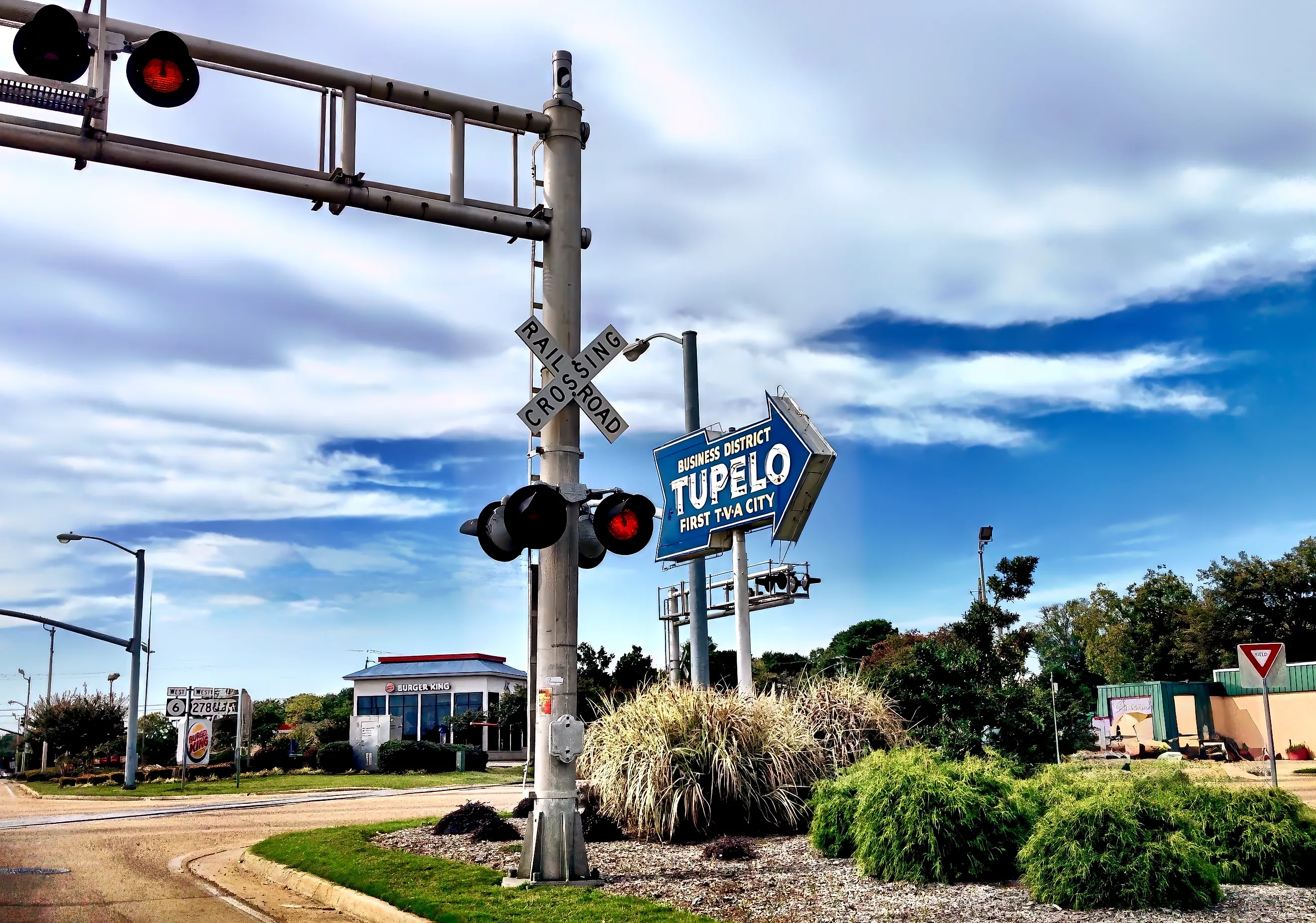
Tupelo

Tupelo’s recent gain is modest, but it stands out because the city is already a major regional job and service center. The population increased from 37,934 in 2024 to 38,087 in 2025, adding 153 residents. Since the 2020 estimate base Tupelo is up 170 residents, a smaller increase than several suburbs but still positive in the latest Census place estimates.
The city’s case depends less on rapid growth than on its role as a regional employment and service center. North Mississippi Medical Center-Tupelo is a 640-bed regional referral center and describes itself as the largest private, not-for-profit hospital in Mississippi. Toyota Motor Manufacturing Mississippi, located near Tupelo in Blue Springs, employs 2,400 people and assembles the Toyota Corolla. Tupelo also has a regional retail base in the Barnes Crossing District, plus tourism tied to Elvis Presley’s Birthplace, the Natchez Trace Parkway, downtown, and the Tupelo Visitors Center.
Flowood

Flowood keeps growing because it sits where healthcare, airport access, and Jackson-area commuting all overlap. The city grew from 10,877 residents in 2024 to 11,003 in 2025, adding 126 people. Since the 2020 estimate base Flowood has added 755 residents, a 7.4% increase.
The city’s practical appeal is unusually concentrated for its size. Dogwood Festival Market sits at Lakeland Drive and East Metro Parkway and includes 187,000 square feet of department stores, specialty shops, and restaurants. Retail listings for the center also point to its position near two hospitals, Jackson Preparatory School, the airport, and new residential construction at Waterpointe. Flowood also benefits from Lakeland Drive’s connection to Jackson, the Ross Barnett Reservoir area, and nearby medical employment. For people moving within the metro, that mix creates a convenient base with shopping, healthcare, and major roads close together.
D’Iberville

D’Iberville shows how Gulf Coast growth is not limited to the largest coastal cities. The city grew from 13,464 residents in 2024 to 13,557 in 2025, adding 93 people. Since the 2020 estimate base it has added 838 residents, a 6.6% increase. That puts D’Iberville among the more consistent smaller-city gainers in the state.
The city’s growth case starts with location. D’Iberville sits near I-10 and I-110, giving residents quick access to Biloxi, Gulfport, Ocean Springs, casinos, beaches, and regional employers. Scarlet Pearl Casino Resort adds a major hospitality and entertainment piece, with a 300-room hotel and a casino floor of about 68,000 square feet. The city’s comprehensive plan also points to the Scarlet Pearl and commercial growth as major milestones, while retail and restaurant activity around the I-10 corridor has made D’Iberville a practical shopping and service stop for the surrounding Coast.
Mississippi’s Growth Is Narrowing Into Specific Corridors
Mississippi’s latest growth is not large statewide, but it paints a relatively clear picture. The places gaining residents are mostly along the Gulf Coast, inside the Jackson suburban ring, or tied to regional job centers such as Tupelo and north Mississippi’s Memphis-facing corridor. Residents are choosing places with easier commutes, newer housing, and healthcare access. The next few years will likely make those differences more visible, especially in school enrollment, road traffic, housing demand, and commercial development in the cities already absorbing the state’s modest gains.