Where People Are Moving To In Michigan In 2026
Michigan's recent population growth is showing up in several major cities, close-in suburbs and college towns. Detroit and Grand Rapids posted some of the state's largest total population gains while communities such as Wyoming and Lansing also added residents. Many newcomers are following jobs, development projects and quality-of-life factors. In west Michigan, regional employers such as Corewell Health and Meijer help support growth across the Grand Rapids metro area. Affordable housing investment in Detroit and walkable downtown access in the Lansing area continue to draw new residents.
Detroit

Detroit is the most populous city in Michigan, with an estimated 2025 population of 649,095. From April 2020 to July 2025, the city added 9,561 residents, a 1.5% increase and the largest total population gain in the state. That growth is especially notable because Detroit experienced decades of population decline after the 1950s. Located in Wayne County, Detroit was one of only three communities in the county to gain population during this period, along with Canton Township and Sumpter Township. Much of the in-state migration came from nearby southeast Michigan counties such as Washtenaw, Macomb, and Oakland. Detroit has also seen more than $1 billion in affordable housing investment in recent years, with dozens of developments built or underway and thousands of affordable units added or preserved. With Ford Motor Company moving into the renovated Michigan Central Station in Corktown and GM relocating its headquarters to Hudson's Detroit downtown, the city is seeing momentum in several key neighborhoods.
Grand Rapids

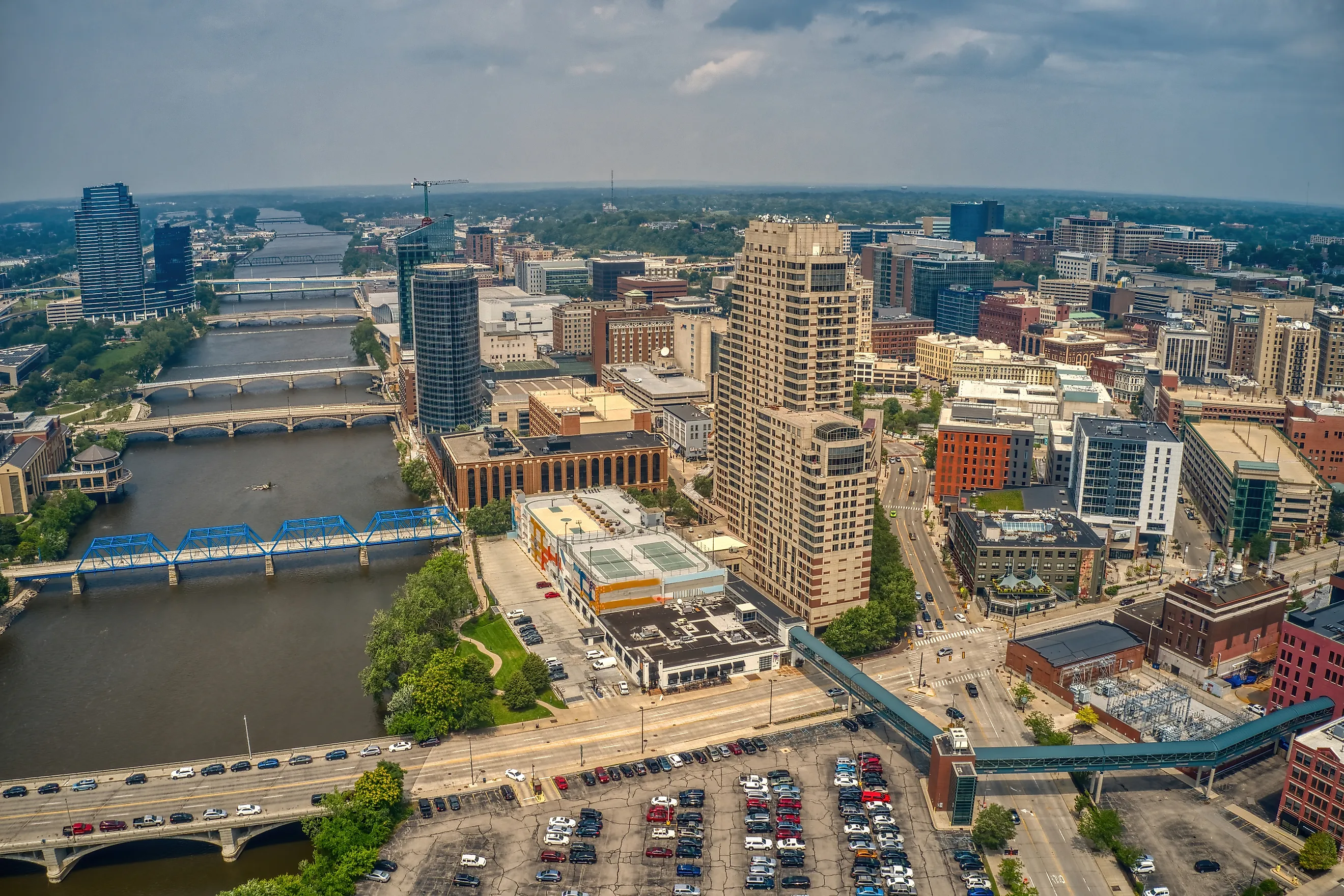
The second most populous city in the state, Grand Rapids has an estimated 2025 population of 201,183. The city added 2,340 residents from April 2020 to July 2025, a 1.2% increase. Located in Kent County, Grand Rapids has drawn many in-state movers from neighboring Allegan and Ottawa Counties. LinkedIn ranked Grand Rapids as 2025's "#1 US City on the Rise" for its strong job market, supported by employers and institutions such as Corewell Health, Grand Valley State University's Grand Rapids campuses, and Meijer in nearby Walker. Grand Rapids also topped $1 billion in construction value in 2025, helped by major projects such as Acrisure Amphitheater, which opened downtown in May 2026. Other riverfront efforts, including the Grand River Greenway and Grand River Restoration, continue to reshape the city. Recreation and cultural draws such as Frederik Meijer Gardens, Van Andel Arena, and the internationally recognized ArtPrize event add to Grand Rapids' appeal.
Wyoming

Wyoming is west Michigan's second most populous city after its immediate neighbor, Grand Rapids. By July 2025, Wyoming's population had reached 78,588, up 2,065 residents from April 2020 for a 2.7% increase. Like Grand Rapids, Wyoming is part of Kent County, which has drawn many Michiganders from neighboring Allegan and Ottawa Counties. As a suburb of Grand Rapids, Wyoming attracts residents who want access to big-city jobs and entertainment while living in a quieter and more affordable community. The median home value in Wyoming is $225,200 compared to $244,500 in Grand Rapids. US-131 makes Downtown Grand Rapids about a ten-minute drive away, and the area is also served by public transit. Recent City Center improvements include the 28th Street pedestrian bridge, which opened in 2025, and new mixed-income housing near HōM Flats at 28 West, including a 200-unit third phase.
Auburn Hills

Auburn Hills, a suburb of Detroit, increased its population by 1,558 people between April 2020 and July 2025, reaching an estimated 25,925 residents. That 6.41% increase was the largest percentage gain among the cities in this group. A small city within Oakland County, Auburn Hills drew many in-state migrants from nearby Wayne, Genesee, and Macomb Counties. Compared with many other Oakland County communities, its median home value of $245,000 makes it one of the more affordable options in the region. Another major draw is its central location along I-75 and M-59, putting commuters about 30 minutes from Downtown Detroit. Major employers with a footprint in Auburn Hills include BorgWarner, Stellantis, Autoliv, and Oakland University, whose campus spans Auburn Hills and Rochester Hills.
Troy

Another Detroit suburb, Troy added 1,427 residents from April 2020 to July 2025, bringing its estimated population to 88,733 for a 1.6% increase. Like Auburn Hills, this Oakland County city drew many new residents from nearby Wayne, Genesee, and Macomb Counties. Livability and U.S. News & World Report both ranked Troy among the best places to live in the country for 2025 and 2026. The city is home to several major employers and offices, including J.D. Power, thyssenkrupp Automotive Technology operations, and Kelly's world headquarters. Troy has also ranked among the safest cities in Michigan, and its school district remains one of the area's strongest, with several schools recognized for academic excellence. On top of that, I-75 runs through the city, giving drivers a direct connection to Detroit in under 30 minutes.
East Lansing

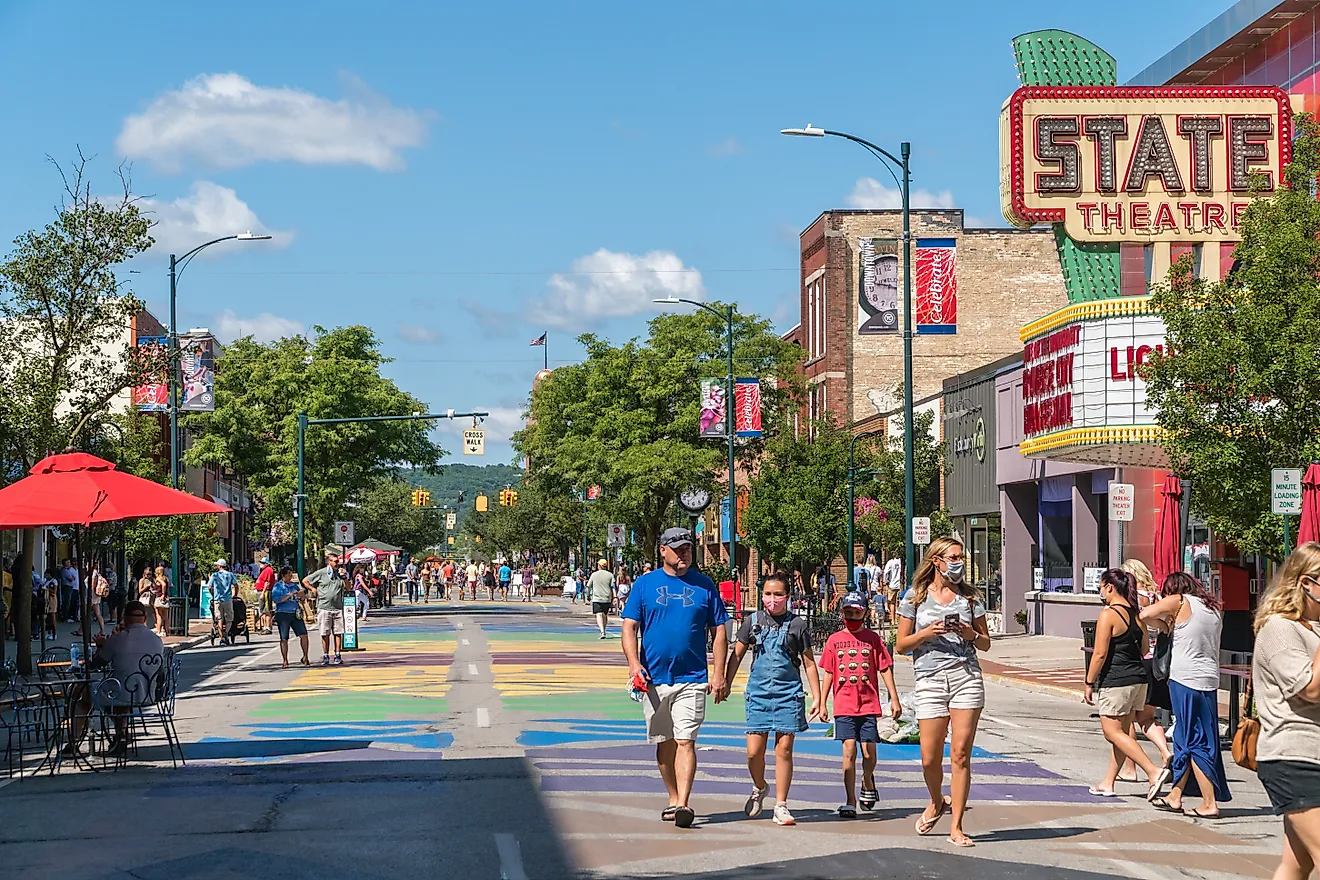
East Lansing grew by 1,257 residents from April 2020 to July 2025, reaching an estimated population of 49,355 for a 2.6% increase. Located in Ingham County, the city drew many in-state movers from neighboring Clinton and Eaton Counties. East Lansing is home to Michigan State University, one of the world's largest research universities, which brings people from around the world for education and employment. The downtown area along Grand River Avenue is walkable and bikeable, with strong public transit coverage from the Capital Area Transportation Authority. Local businesses such as Curious Book Shop, The Peanut Barrel restaurant, and Flat Black & Circular record store add to the downtown appeal. With a median home value of $270,800 and median rent of $1,171, East Lansing remains a relatively affordable place to settle down.
Lansing

Lansing is the sixth most populous city in Michigan, with an estimated 2025 population of 113,884. From April 2020 to July 2025, the city added 1,243 residents for a 1.1% increase. Like East Lansing, Lansing draws many in-state movers from neighboring Clinton and Eaton Counties. As Michigan's capital, Lansing is home to many state agencies that collectively employ more than 14,000 people. Its central location and access to major highways also make it a convenient hub for travel across much of Lower Michigan. Housing remains highly affordable compared with many other growing cities, with a median home value of $128,700 and median rent of $993. Lansing has also seen major redevelopment in recent years, including the Red Cedar development, a mixed-use project connecting Michigan State's campus and Downtown Lansing with housing, hospitality, and green space.
Growth in Michigan
Much of Michigan's recent growth remains concentrated in the southern half of the state, where residents can access jobs, affordable housing, and quality-of-life amenities. Recent population estimates show gains clustered in Detroit, Grand Rapids, and selected suburbs, with employment, housing costs, and development projects helping shape those local increases. The influx of newcomers could put upward pressure on housing prices, but it also adds momentum for further investment, including Wyoming's broader City Center improvements and other redevelopment projects across the state.