This Is The Friendliest Small Town in The United States
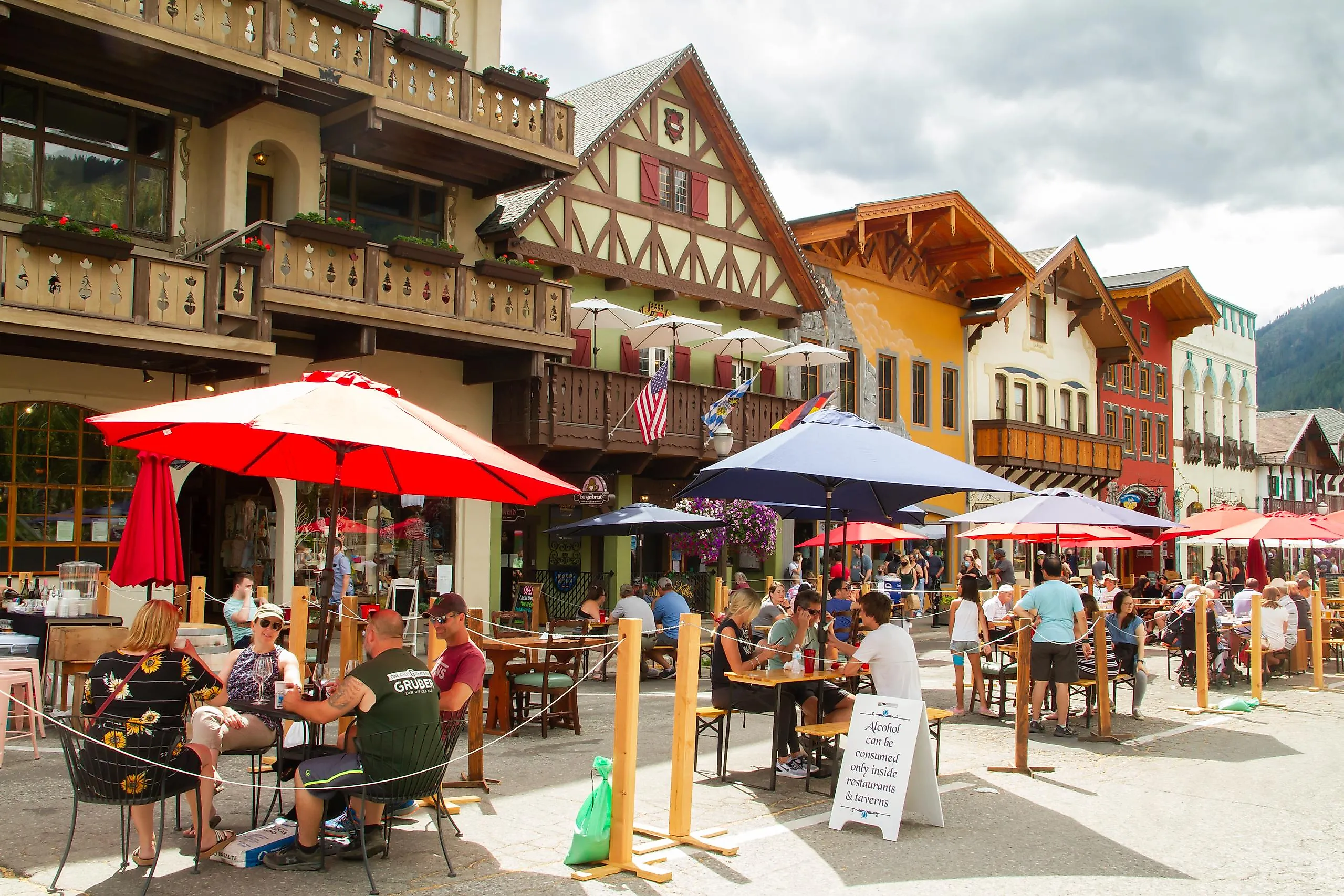
Leavenworth sits at about 1,200 feet on the eastern slope of Washington's Cascade Mountains, and is possibly the country's friendliest spot. It has only a couple thousand residents but draws around two million visitors a year. Its Bavarian look is real enough to feel transporting, but the more interesting fact is that none of it is historically German. The whole village was a deliberate economic rescue, and it worked so well that Leavenworth is now Washington's most-visited destination after Seattle.
That rescue is also why the town is so welcoming. The economy runs on residents who pour at the beer gardens and volunteer alongside city crews to string the holiday lights every fall, so the hospitality is the town's lifeline. It shows up most in the festivals the town built to draw crowds: an Oktoberfest that Outside magazine ranked among the country's top 13 outdoor festivals, and a Village of Lights holiday season that blankets downtown in more than half a million lights from Thanksgiving onward. Visitor guides and tourism boards repeatedly single out the locals' friendliness and sense of community, and the town actively recruits performers, including European groups it helps with US visas, to keep the streets full of music and entertainers. For a place that survives on people choosing to come back, being good to a crowd is the business model.
A Festival Almost Every Month

The festival calendar was part of the plan from the start, launching in 1960's with the Autumn Leaf Festival and the Christmas Lighting Festival. The Autumn Leaf Festival runs in late September with floats, bands, and a grand parade timed to the larch and maple color.

Oktoberfest is the biggest draw. Since 2022 the Chamber has run it across three October weekends, with beer gardens, nonstop entertainment on three stages, a street fair, lawn games, and a children's area featuring a 62-foot Ferris wheel and a root beer garden. Outside magazine named it one of the country's top 13 outdoor festivals. Maifest brings maypoles and a community celebration in spring.
The holiday season is the marquee event, now branded Village of Lights: Christmastown. More than half a million lights cover the downtown, switched on nightly from Thanksgiving through Christmas rather than in a single weekend ceremony as in years past. The Festhalle hosts kids' crafts, letters to Santa, and a gingerbread competition, while the downtown Gazebo anchors free live music, carolers, and visits from holiday characters. The lights stay up through the end of February, which let the town build two more seasons of programming on top of them: Winter Karneval in January (a nod to the centuries-old German Fasching tradition, with fireworks over MLK weekend, and named a top-three U.S. winter carnival by Time Out) and Love from Leavenworth in February.
Beyond the Festivals

Leavenworth is a serious outdoor hub the rest of the time. It is the main staging point for the Enchantments in the Alpine Lakes Wilderness, one of the most sought-after backpacking routes in Washington, and trailheads like Colchuck Lake (an 8-mile round trip to a turquoise alpine lake beneath Dragontail Peak) start nearby. For easier outings, the Icicle Gorge Trail is a flat 4.2-mile loop along Icicle Creek, and Blackbird Island offers short walks right from town. Icicle Creek and the Wenatchee River support rafting and gentle float trips through summer, and winter brings Nordic skiing, sledding, snowshoeing, and sleigh rides.

Indoors, the town leans into its theme with genuine oddities. The Leavenworth Nutcracker Museum on Front Street holds more than 8,000 nutcrackers from around the world and runs a nutcracker-carving competition that may be the only one in the country. The Greater Leavenworth Museum sits on the floor above it. Newer additions include Leavenworth Adventure Park, home to Washington's first alpine coaster, plus a climbing wall and a gem-mining sluice, and a Reindeer Farm just outside town. Downtown fills out with German restaurants and beer gardens like München Haus, Icicle Brewing Company, and a cluster of tasting rooms, since the surrounding area is also wine country.
From Dying Mill Town to Bavarian Village

Leavenworth was platted in 1893 and named after Captain Charles Leavenworth, growing up around the Lamb-Davis Sawmill and the Great Northern Railway. When the railroad moved its operations to Wenatchee in the 1920s, the logging economy collapsed. By the Great Depression, the two-block commercial district had more than 20 empty storefronts and the town was sliding toward ghost-town status.

The turnaround began in 1962, when residents formed the Leavenworth Improvement for Everyone (LIFE) committee and studied their options with help from the University of Washington. Two Seattle businessmen, Ted Price and Bob Rodgers, pushed the decisive idea. They had remodeled a nearby restaurant, the Squirrel Tree, in Bavarian style in 1960 and watched it succeed, and Rodgers had seen how closely the Cascade landscape resembled the Alps. Over local resistance, they steered the town away from a "Gay Nineties" Old West theme and toward a Bavarian one, even taking leaders to Solvang, California, to see how a Danish-themed town had revived itself.
Shop owners and innkeepers rebuilt their storefronts inside and out, and the town wrote the Alpine theme into its building code, where it remains: every structure downtown must conform. Much of the first wave was done by 1970, and in 1968 Leavenworth won an All-America City Award. The result is a town that flaunts a Bavarian identity it never historically had, a fact some architectural historians note with a raised eyebrow, but one that turned a failing mill town into a tourism machine.
Why It Earns the "Friendliest" Title
What sets Leavenworth apart from other pretty small towns is that its appeal is built around gathering rather than scenery alone. The downtown is compact and pedestrian-first, so when a festival is on, the activity concentrates in the streets instead of scattering across venues. That layout, plus a calendar that keeps people outdoors and together most months of the year, is the practical reason a town of a few thousand can absorb millions of visitors and still feel sociable. And it traces directly back to the 1960s, when the residents bet the town's survival on the idea that bringing people together could be an economy.