These Towns in the Netherlands Have the Best Main Streets
Seven towns. A village with no roads. A fort shaped like a star, sized to be visible from a satellite. A town painted white to dodge a window tax. The Netherlands keeps a lot of its strangest stories in small places, and each one organizes that strangeness along one specific street, square, or waterfront. These seven main drags are the easiest way to read them.
Giethoorn

Giethoorn has no roads through its old core. Just water. The main thoroughfare, Binnenpad, is a footpath and bike path that runs parallel to the central canal, threading a chain of small private islands joined by 176 hand-built wooden bridges. Most of the homes are 18th- and 19th-century thatched farmhouses, and each one has its own bridge to its own front door. Diesel engines are banned in the village; the local boats run on near-silent electric motors. Walking and cycling speeds are the village speed limits. The Binnenpad runs about two and a half miles end to end. Boat rental shops, cafes, and a handful of shops line the early stretch, after which the village dissolves into the wetlands of Weerribben-Wieden National Park.
Volendam

Volendam started as Edam's harbor and gained its own identity in 1357. It got rich on herring in the 17th century, then reinvented itself as an artist colony in the late 1800s. Renoir, Picasso, and Monet all sketched here, and the town built a parallel industry on photographing visitors in traditional Volendammer dress (the wing-cap, the striped shirt, the wooden klompen). The main drag is de Haven, the harbor street, lined with wooden gable houses, old fisherman's huts, smokehouses, and a row of fish stalls selling the herring you came for. The Volendams Museum, half a block back, holds a wall of cigar-band mosaics, traditional costumes, and the town's art-colony archive. The Volendammer Kermis fair takes over the harbor every September.
Naarden

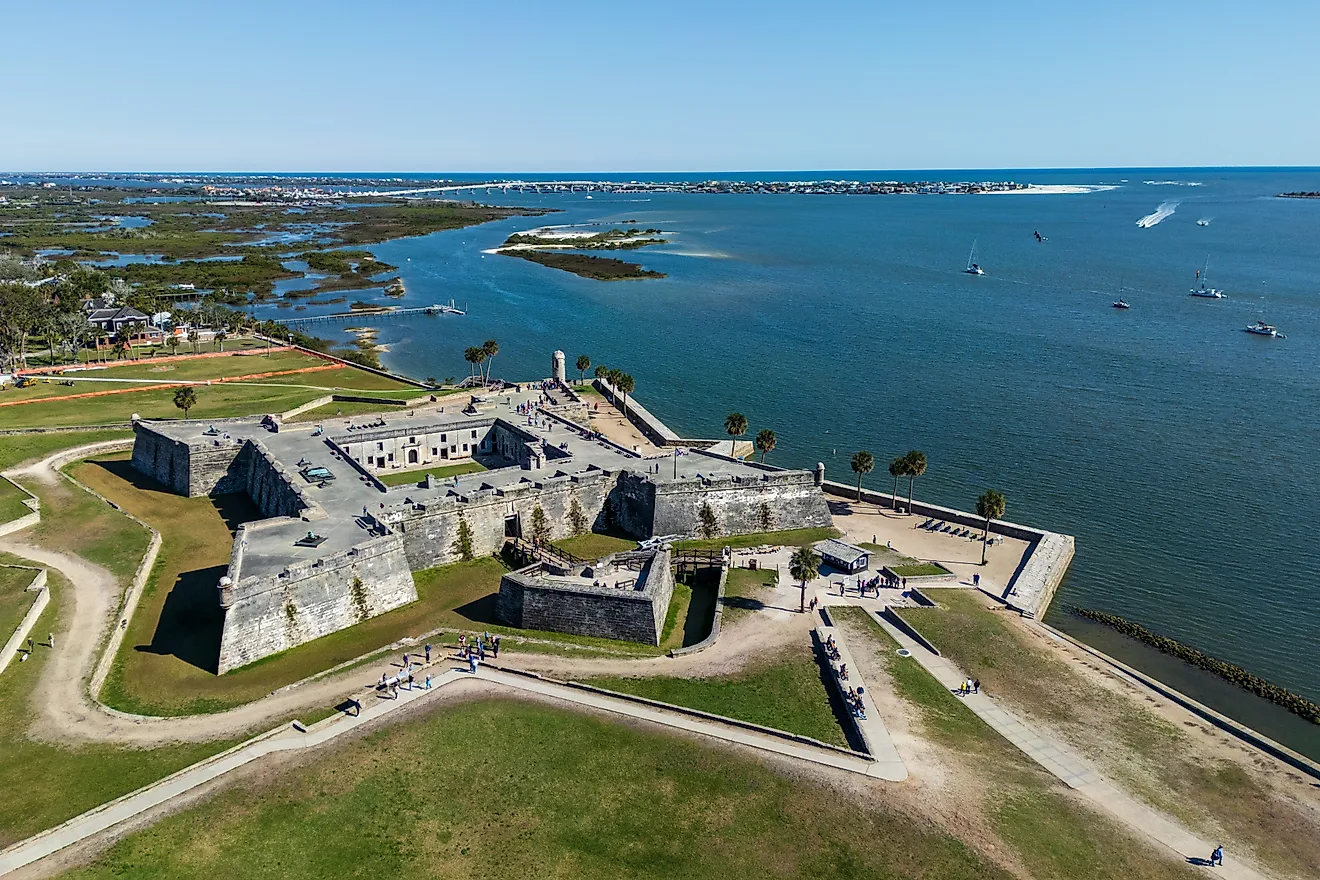
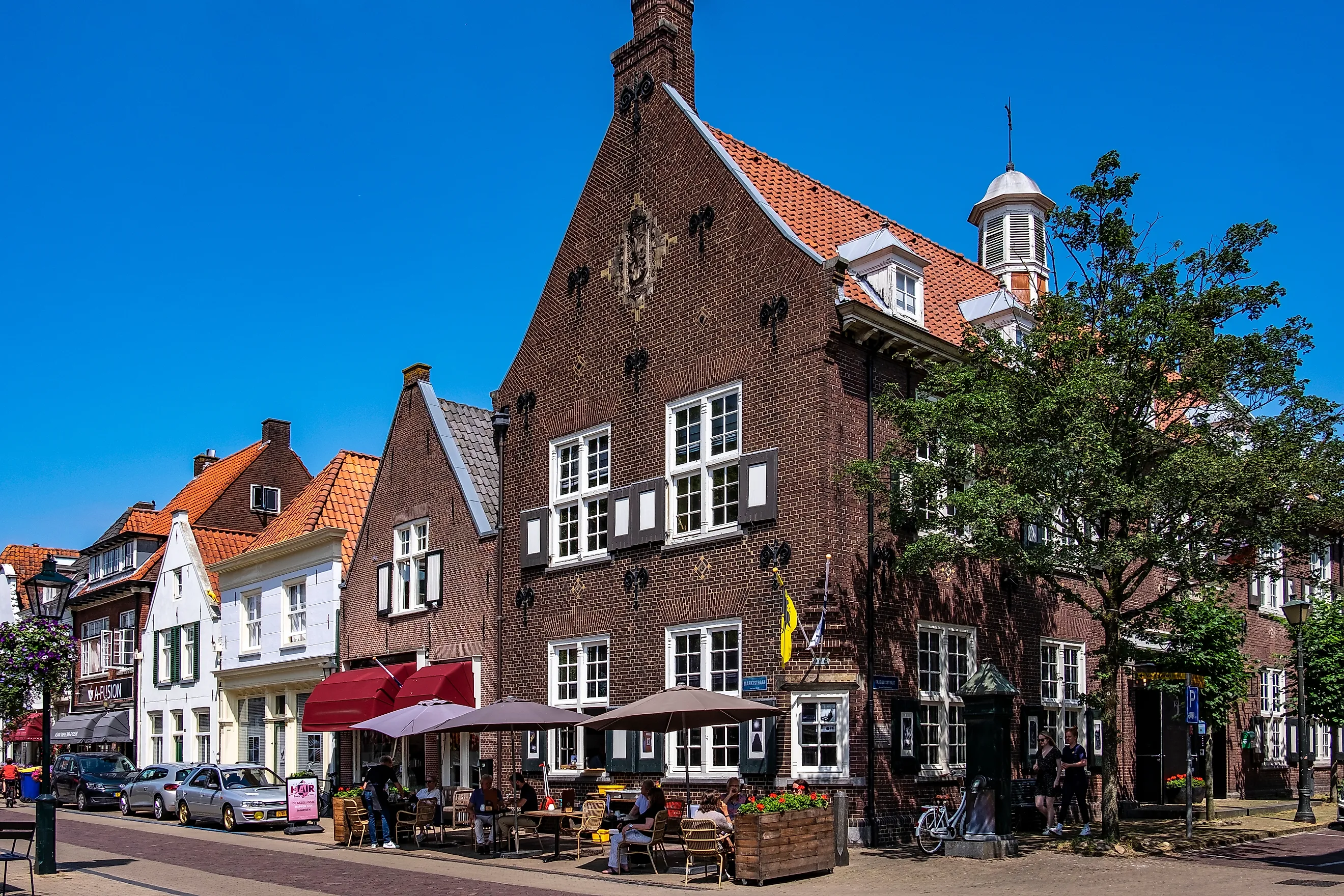
Naarden's defining feature is best seen from above: a six-pointed star, two concentric rings of moats, six bastions, all built into the flat ground east of Amsterdam. The original fortifications went up between 1575 and 1585 under King Philip II of Spain; the version that still stands was rebuilt after 1673, when Naarden became a key defensive node guarding the western approach to the capital. The main street through the old town, Marktstraat, runs from the Utrecht Gate to the central market square, past a 1601 stepped-gable town hall and the Grote Kerk, where the Netherlands Bach Society still performs the St. Matthew Passion every Good Friday. The Czech philosopher and educator Jan Amos Comenius (1592 to 1670) is buried in the small chapel on Kloosterstraat. The Netherlands Fortress Museum, built into one of the bastion casemates, runs through the town's military history and lets visitors into the underground gunpowder rooms.
Valkenburg

Valkenburg sits on a hill, which is rare in the Netherlands, and inside a hill, which is rarer still. The castle ruins on top are the remnants of the only hilltop castle in the country. The caves beneath are a marl-mining network running for miles. The main street, Grotestraat, runs through the town center, past cafes and shops, and ends at the path up to the castle. The Velvet Cave (Fluweelengrot) opens off the castle hill and connects to a series of larger marl chambers that the town fills with stalls every Christmas, turning the network into the largest underground Christmas market in Europe. February brings carnival; year-round, Valkenburg also runs a thermal spa, Thermae 2000, on a separate hill nearby.
Zutphen

Zutphen is called Torenstad, the city of towers, for the dense cluster of medieval spires that rise above its center. Inside one of them, the 12th-century St. Walburgis Church, is the Librije: a chained library opened to the public in 1564 where the books are still physically chained to the original wooden lecterns. It is one of only five surviving intact chained libraries in the world and the oldest in the Netherlands. Look at the floor inside and you can find the so-called devil's footprints, baked into the tiles by a monk who, the story goes, ate chicken during Lent. The car-free old town is a tangle of medieval streets, and the most useful orientation point is IJsselkade, the road and walking path that runs along the IJssel River past the Oude IJsselbrug bridge. The Berkelpoort, a 14th-century stone watergate, is still there too, and small boats still pass under it.
Harlingen

Harlingen has more than 500 protected historic buildings inside one of the oldest city centers in the Netherlands, plus seven working harbors and a direct edge on the Wadden Sea, a UNESCO World Heritage Site. The main commercial spine starts at Kleine Voorstraat, where a statue of Anton Wachter (a Simon Vestdijk character) welcomes pedestrians into the old town; it becomes Voorstraat, where the shops and the Hannemahuis museum sit; and ends at Grote Bredeplaats, where most of the dining is and a monument honors Frisian naval commander Tsjerk Hiddes de Vries. The local activity that distinguishes Harlingen from every other Dutch port is wadlopen, mudflat hiking: at low tide the seabed exposes itself for miles, and guided groups walk out across the wet sand toward the West Frisian Islands, returning before the tide does.
Thorn

Thorn is white because of a tax. After French troops invaded in 1794 and ended the town's centuries as an independent imperial abbey, the new French administration began taxing houses on the number and size of their windows. Thorn's residents, suddenly stripped of the abbey's wealth, bricked up windows to lower the bill, then painted the patches white to hide them. The whole town followed. What remains today is a small village of whitewashed brick lining a tight grid of cobbled lanes, with the Gothic Abbey Church at the center. The abbey itself, founded around 975 by Bishop Ansfried of Utrecht, was ruled by an abbess and a chapter of noblewomen for roughly 800 years; the women came from the highest European nobility, kept their personal property, and ran one of the smallest sovereign states in the Holy Roman Empire. The Abbey Church and the Chapel under the Lindens are open to visitors. A municipal museum, Het Land van Thorn, fills in the rest of the story.
Seven Towns, Seven Different Reasons
Each town here leans on a single distinctive feature. Giethoorn is built on the absence of cars. Volendam is built on a herring fleet that turned itself into an art colony and then a costumed photo studio. Naarden is built on military geometry. Valkenburg is built into a hill. Zutphen is built around towers and books that haven't moved since 1564. Harlingen is built between seven harbors and a tidal seabed. Thorn is built on bricked-up windows and 800 years of women running their own country. Each main street is the place where the underlying story sits closest to the surface.