These 11 Towns In Iowa Were Ranked Among US Favorites In 2026
Along Iowa's eastern edge, the Mississippi cuts below bluffs and around streets that feel closer to river towns than farm country. Near McGregor, those bluffs hold the ancient mounds preserved at Effigy Mounds National Monument. Sabula tells the river story another way, with streets on an island created after Lock and Dam No. 13 changed the surrounding waterline. These 11 towns in Iowa have ranked among U.S. favorites in 2026 for their landmarks, including an island town, a Dutch-style town, and a network of German villages that were once part of a utopian experiment.
Maquoketa

Maquoketa has been a popular stop for tourists since at least the 1860s, thanks to its vast network of caves, which are now part of Maquoketa Caves State Park. Spelunkers can discover 13 caves within its borders, such as the Dancehall Cave or Hernando's Hideaway. Some are appropriate for walking, while others require braver explorers willing to squeeze through small openings. The park itself is worth walking through, with its six-mile trail system that follows tall bluffs. Outside the caves, visitors to Maquoketa can spend time at the Old City Hall Gallery, which features portraits and nature scenes, or try locally made Iowa wine from the Iowa Grapes Vine Winery. Visitors can also explore a historic site called the Hurstville Lime Kilns, built in the 1870s in the former town of Hurstville to produce lime mortar from nearby limestone.
Sabula

Sabula is the most unusual town in Iowa in terms of its location. It is the only island town in the state. It was initially connected to the mainland until Lock and Dam No. 13 was built on the Mississippi River, which submerged the land to its west, turning Sabula into a river island. Visiting Sabula feels different from anywhere else in Iowa, with a distinctly beach-town atmosphere. Travelers can fish and boat in South Sabula Lake and the Mississippi River via the South Sabula Lake Park, or they can take to the waters right from the small downtown on the Island City Harbor & Marina. Visitors don't have to leave the island to find good snacks and lunch items; they can stop in at the Korner Shop Ice Cream Shop or the Island City Cafe.
Story City

With a name like Story City, it's easy to see why this Iowa town is held in such high regard. One of the town's most beloved attractions is the 1913 Story City Antique Carousel. The community has maintained this classic carousel for future generations to enjoy, all for $1 a person. The year 1913 also gave Story City the Story Theatre and Grand Opera House, which still hosts theatrical performances and concerts today. The town is filled with quirky attractions, including its Story City Museum, which features exhibits of a general store, jail cell, cabinetmaker's shop, and other businesses from Story City's history. Every June, Story City comes alive for Scandinavian Days, celebrating the many Scandinavians who came to live in the community and in Iowa.
Le Claire

Set on the Mississippi River, Le Claire regularly tops lists of Iowa river towns thanks to its riverboat tours, antiques, and famous residents. The baby-blue Riverboat Twilight is a common sight on the shores of the city, taking visitors on sightseeing cruises and day-long adventures through the Iowa countryside. Antique shoppers head to the Antique Archaeology shop, which is the home base of the "American Pickers" show on the History Channel. The town's biggest claim to fame is as the birthplace of William F. Cody, better known as Buffalo Bill, the western showman. The Buffalo Bill Museum catalogs his legacy while also featuring local Indian history and Native American artifacts.
McGregor

McGregor is one of the most popular natural destinations in Iowa. Like other towns further on in this list, it sits in the Driftless region. During the last Ice Age, continental glaciers passed around the Driftless Area, sparing it the glacial drift that reshaped surrounding regions and leaving behind tall river bluffs and ravines. Pikes Peak State Park, just to the south of McGregor, has 11 miles of trails through these river bluffs, including a 500-foot-tall one overlooking the convergence of the Mississippi and Wisconsin Rivers. The area was also frequented by Native Americans, who left behind effigies, such as the Bear Mound. To the north of Pikes Peak, visitors can see a network of more than 200 of these mounds at the Effigy Mounds National Monument. In downtown McGregor, readers can find plenty of new books at Paper Moon and Rivertown Fine Books.
Winterset

Le Claire wasn't the only Iowa town to raise a famous American performer. Winterset was the birthplace of movie star Marion Robert Morrison (better known as John Wayne). His portrayal of a lone cowboy continues to influence popular depictions of cowboys to this day. Winterset is home to the John Wayne Birthplace & Museum, which features a vast collection of movie props, memorabilia, and film reels. Not too far from this museum is the Iowa Quilt Museum, located in a converted 19th-century hardware store. It has several types of quilts, with a current exhibition featuring poppy designs inspired by John McCrae's World War I poem, "In Flanders Fields." Hikers can get lost in a hedge maze at Winterset City Park or explore some of the region's covered bridges, such as Roseman Covered Bridge, which was featured in the movie "The Bridges of Madison County."
Dyersville

Dyersville is the type of town where visitors feel like pulling out a baseball mitt and enjoying a game. That's because the town was the filming location for the 1989 Kevin Costner baseball film "Field of Dreams." Visitors can tour the diamond field set in the cornfields at the Field of Dreams Movie Site or the original farmhouse used for the film. Baseball has always welcomed all kinds of players, a spirit this town takes to heart. The Baseball Hall of Dreams celebrates the game in all its facets, including the disabled players who have shaped it. Another spot worth a visit in Dyersville is the National Farm Toy Museum, a huge collection of dioramas, toy tractors, and other pint-sized items that trace the development of farm equipment.
Pella

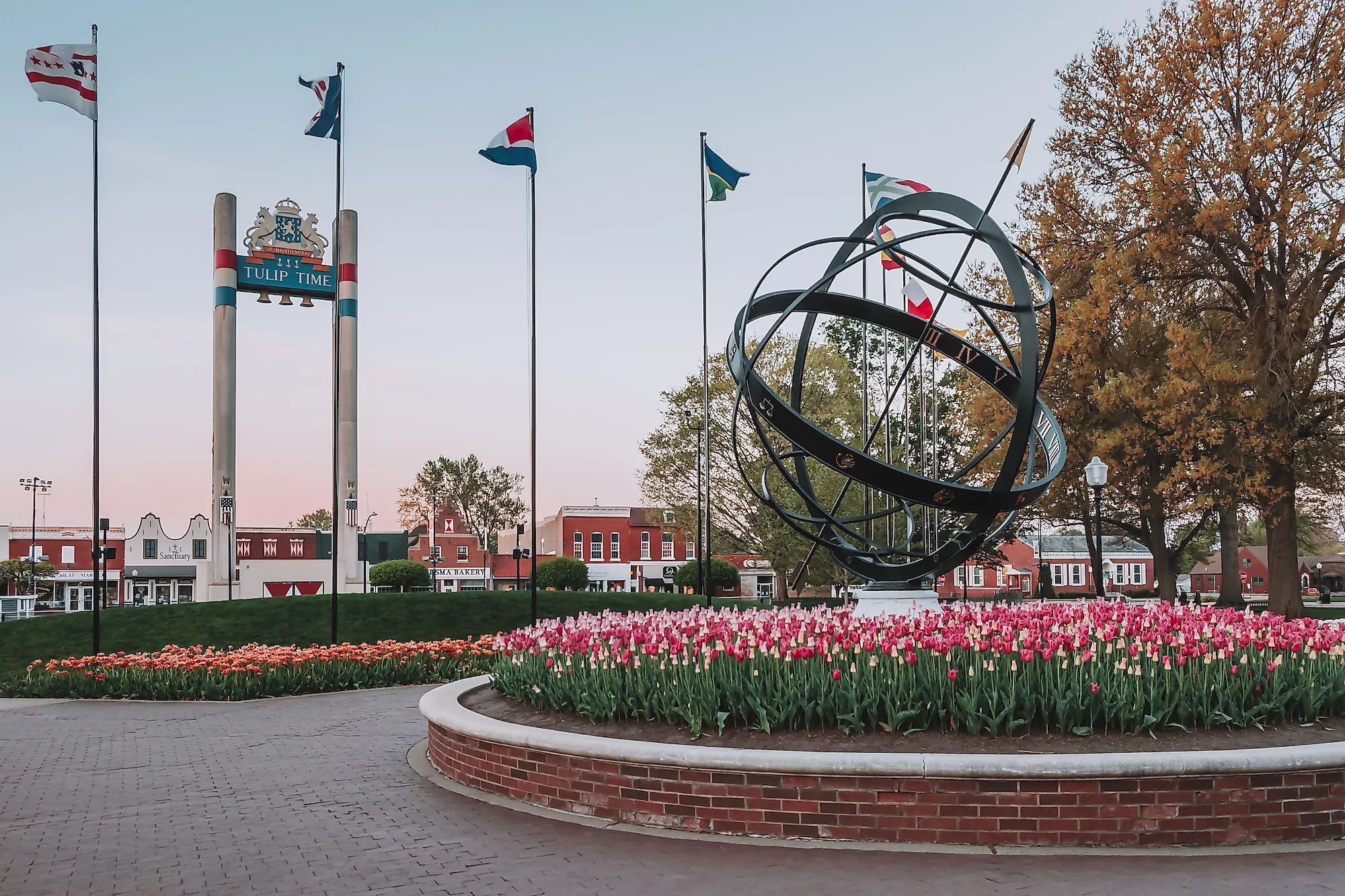
Pella is a strikingly Dutch town right in the center of the Midwest. In 1847, a group of Dutch dissenters from the official Reformed Church of the Netherlands came to the region and named it Pella in honor of the ancient city of refuge. Today, arriving in Pella feels like stepping into the Old World, with Dutch-style attractions like the Vermeer Windmill, the tallest working windmill in North America at 124.5 feet tall, or the Frisian Farms Cheese House, which makes traditional Dutch Gouda just southwest of Pella. Tulip fields are another key part of Pella's appeal, filling Central Park and Brinkhoff Park with color. When the tulips bloom in spring, the town throws a Dutch-style party called Tulip Time, featuring dances, traditional outfits, and Dutch food.
Okoboji

Iowa is home to a chain called the Iowa Great Lakes, seven in all, the largest being West Okoboji, East Okoboji, and Big Spirit Lake. The town of Okoboji is a central location for visiting all the lakes while also enjoying the region's lakeside culture. Okoboji is located on the shores of West Okoboji Lake, with beachside access at Dixon Beach. It is an entry point into the Iowa Great Lakes Trail, where hikers and bikers can explore a 40-plus-mile trail system through the Iowa Great Lakes region. During the winter, it also becomes a cross-country skiing trail. For artistic endeavors, Okoboji maintains the Pearson Lakes Art Center, featuring performances, visual art exhibits, and culinary arts instruction classes for those looking to learn different cooking styles.
Amana Colonies

Similar to Pella, the Amana Colonies were settled by a group fleeing religious persecution: the German Pietists. They first arrived in Iowa in 1855 and established a series of seven villages, connected through their religious heritage and communal living. For example, all goods and money were shared, and meals were eaten together in communal kitchens. By the 1930s, money was running out, and the colonies ended their communal way of life and reorganized under the Amana Society, Inc. The Amana Heritage Society tells the story of this utopian experiment through the Communal Kitchen, High Amana General Store, and Homestead Church. The other way the town attracts tourists is through its many German festivals, which tap into the German backgrounds of those original colonists, such as the Maifest every spring with decorated maypoles and dances, or the Wurst Festival in summer with games and German sausages.
Decorah

Decorah was named after the Native American Ho-Chunk leader Waukon Decorah, who previously lived in this part of the Driftless region. In the 1850s and 1860s, many Norwegian immigrants called Decorah their Vesterheim, Norwegian for "Western Home." These Norwegians have had a deep impact on Decorah's culture, which is visible at the Vesterheim, the National Norwegian-American Museum and Folk Art School. This museum has classic Norwegian folk art, immigrant artifacts, and log cabins built by some of the first settlers. Norwegian values shape daily life here too, including friluftsliv, meaning "open-air living." Because of this value, Decorah residents love to get out into the great outdoors, exploring the grassy prairies of Barbara Barnhart Van Peenen Memorial Park or going down into Decorah Ice Cave State Preserve, where ice forms seasonally and often lasts into summer.
How Iowa's Small Towns Tell The State's Story
In the early 19th century, Iowa sat on the frontier of the western U.S., which is why it became home to so many different groups: Native Americans, Norwegians, the Dutch, and American legends like Buffalo Bill and John Wayne. The landmarks that draw visitors today carry those histories forward, from the towering river bluffs in McGregor to the seasonal ice cave in Decorah and the baseball-field movie set in Dyersville. Each of these towns earned its place on the list by holding onto something specific, whether a 1913 carousel still turning for a dollar or a working Dutch windmill grinding grain in the center of the Midwest.