Where People Are Moving To In Nevada In 2026
Nevada gained nearly 30,000 residents in the past year and most of them skipped the old downtowns entirely. The newcomers are buying in Mesquite and Fernley instead. Lyon County east of Reno is now the fastest-growing county in the state. Buyers priced out of Las Vegas and the Truckee Meadows are chasing cheaper land at the metro edges. Retirees are settling in Pahrump for the big lots and the tax-free paychecks. Workers are following warehouse and factory jobs along I-15 and I-80 into once-quiet towns.
Mesquite

Mesquite sits in Clark County's Virgin River Valley, about 80 miles northeast of Las Vegas, and has become one of the county's clearest examples of growth beyond the Las Vegas core. The city rose from a 2020 Census count of 20,471 to a Census Vintage 2025 estimate of 24,001. That is a 17.3% increase from the 2020 estimates base. Its growth reflects the broader county migration that continues feeding Southern Nevada. A secondary StorageCafe analysis identified Los Angeles County to Clark County as the busiest California-to-Nevada route, and IRS SOI county-to-county data support the broader Clark County trend.
The city sits at the northern end of I-15 for buyers priced out of closer-in Clark County suburbs. Cost is the main driver. Census 2020-2024 ACS data put Mesquite's median household income at $75,227, while owner-occupied housing values remained below many Clark County markets. Golf-course communities near the Palms Golf Course have absorbed much of the new construction. Mesquite was also the only Clark County jurisdiction with a net affordable-housing gain in 2024. It added 36 units while losing 31 to market-rate conversion, for a net increase of five.
North Las Vegas

Apex Industrial Park helps explain why North Las Vegas keeps adding residents on the metro's northern edge. The city had 296,653 residents in the Census Vintage 2025 estimate, a 14.3% increase from 2020. The 18,000-acre industrial site is projected by city leaders to generate 73,000 jobs and $7 billion in investment at full buildout over roughly 20 years. Meanwhile, KB Home committed to the 1,500-home Sandstone community after a $91 million land purchase. It was among the largest single Southern Nevada land deals of the past decade.
The city's downtown is also adding density. The 73-acre Hylo Park mixed-use development is bringing roughly 700 housing units and a 160,000-square-foot sports facility. North Las Vegas remains one of the lower-priced large housing markets in Clark County. That makes it a natural destination within the county-level migration trend feeding the rest of the metro. In 2023, StorageCafe estimated that California accounted for 38% of Nevada newcomers, and Clark County received most of the top California-to-Nevada arrivals.
Henderson

New development on Henderson's southern and eastern edges has carried much of the city's recent population gain. Henderson had 353,289 residents in the Census Vintage 2025 estimate, an 11.5% increase from the 2020 base. It remains Nevada's second-largest city, and construction has continued as the older Green Valley core has filled in.
The city also captures a larger share of higher-income arrivals in the Las Vegas Valley. Census 2020-2024 ACS data show Henderson's median household income at $90,138, higher than that of Las Vegas, while AB540 created the Nevada Attainable Housing Account and appropriated $133 million for attainable housing statewide.
Fernley

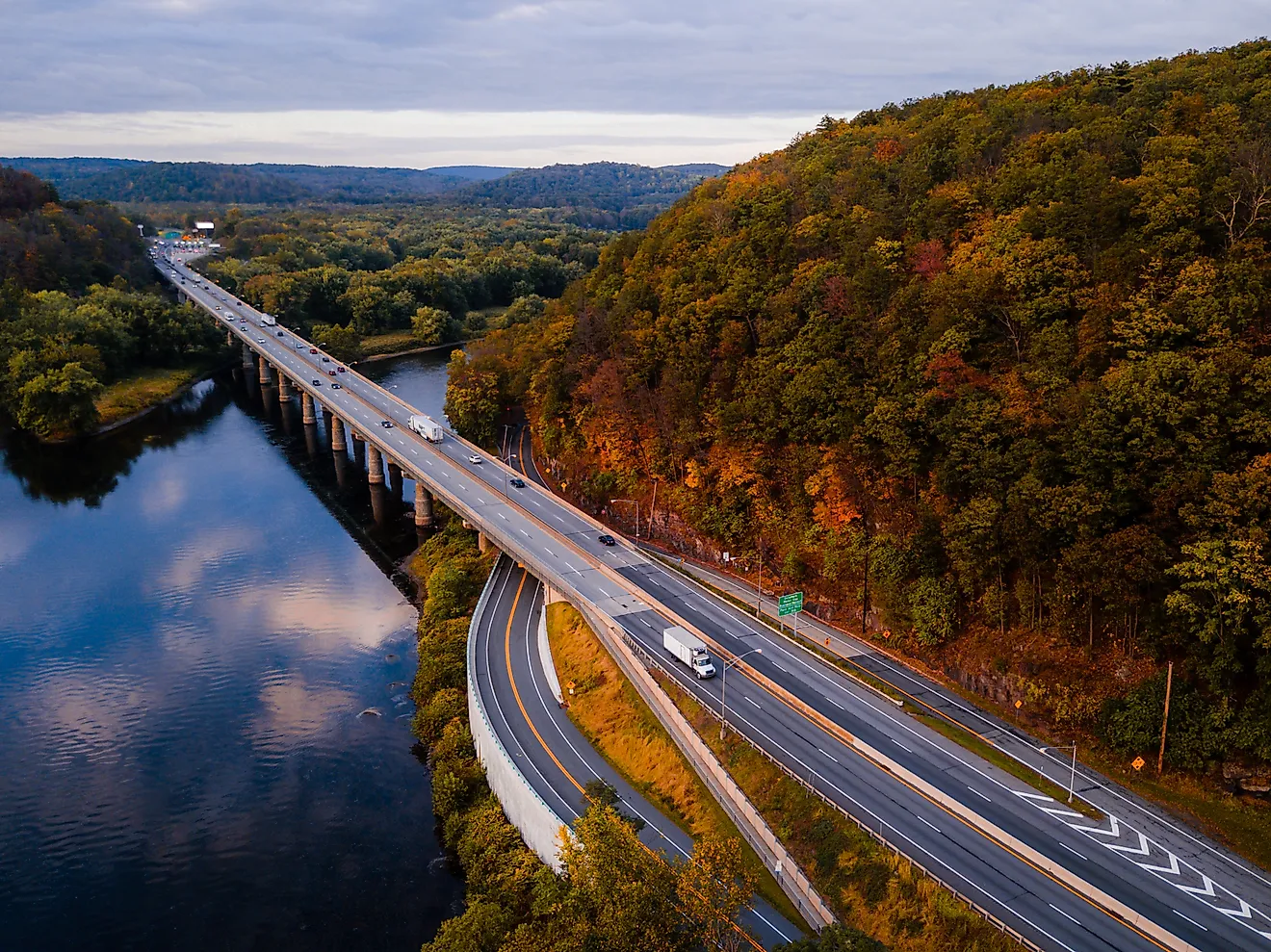
Industrial expansion along the I-80 corridor is central to Fernley's growth story. The city had 26,214 residents in the Census Vintage 2025 estimate, up 14.5% from the 2020 estimate. Its recent gains are closely tied to lower housing costs in the Reno-Sparks orbit and new employment activity near the Tahoe-Reno Industrial Center. The 4,300-acre Victory Logistics District's first phase included an 815,215-square-foot building originally leased to Redwood Materials. Developer Mark IV Capital plans up to 10 million square feet of additional Class A industrial space.
Lyon County, which contains Fernley and nearby Dayton, is now Nevada's fastest-growing county by percentage. The state demographer projects an increase from 65,116 residents in 2024 to 67,598 by 2026. That roughly 1.9% annual rate outpaces every other county in the state. Fernley also benefits from buyers looking east of Reno and Sparks, where housing costs are typically lower than in the Truckee Meadows. Kidder Mathews retail analysts have documented that cost difference. Fernley still offers access to the Tahoe-Reno Industrial Center along I-80, and the city's long-range plan projects the population could approach 40,000 within two decades.
Pahrump

Pahrump's role as a bedroom and retirement community west of Las Vegas gives Nye County one of its strongest growth stories. The community had 44,738 residents in the 2020 Census, while later local and state estimates point to continued gains in the surrounding Nye County market. Large residential lots, home prices well below Clark County's core, and Nevada's absence of a state income tax have made it a landing spot for Las Vegas retirees and some workers willing to make the drive.
Nye County's master plan update describes the town's expansion as Las Vegas Valley spillover stretching back to the 1990s. Census 2020-2024 ACS data show that 31.7% of Pahrump CDP residents are 65 or older, reflecting the retiree component. The commute to Las Vegas is roughly 60 miles each way, about an hour on a clear day, so many working-age residents make that trip to access Clark County employment while avoiding the higher housing prices.
Reno

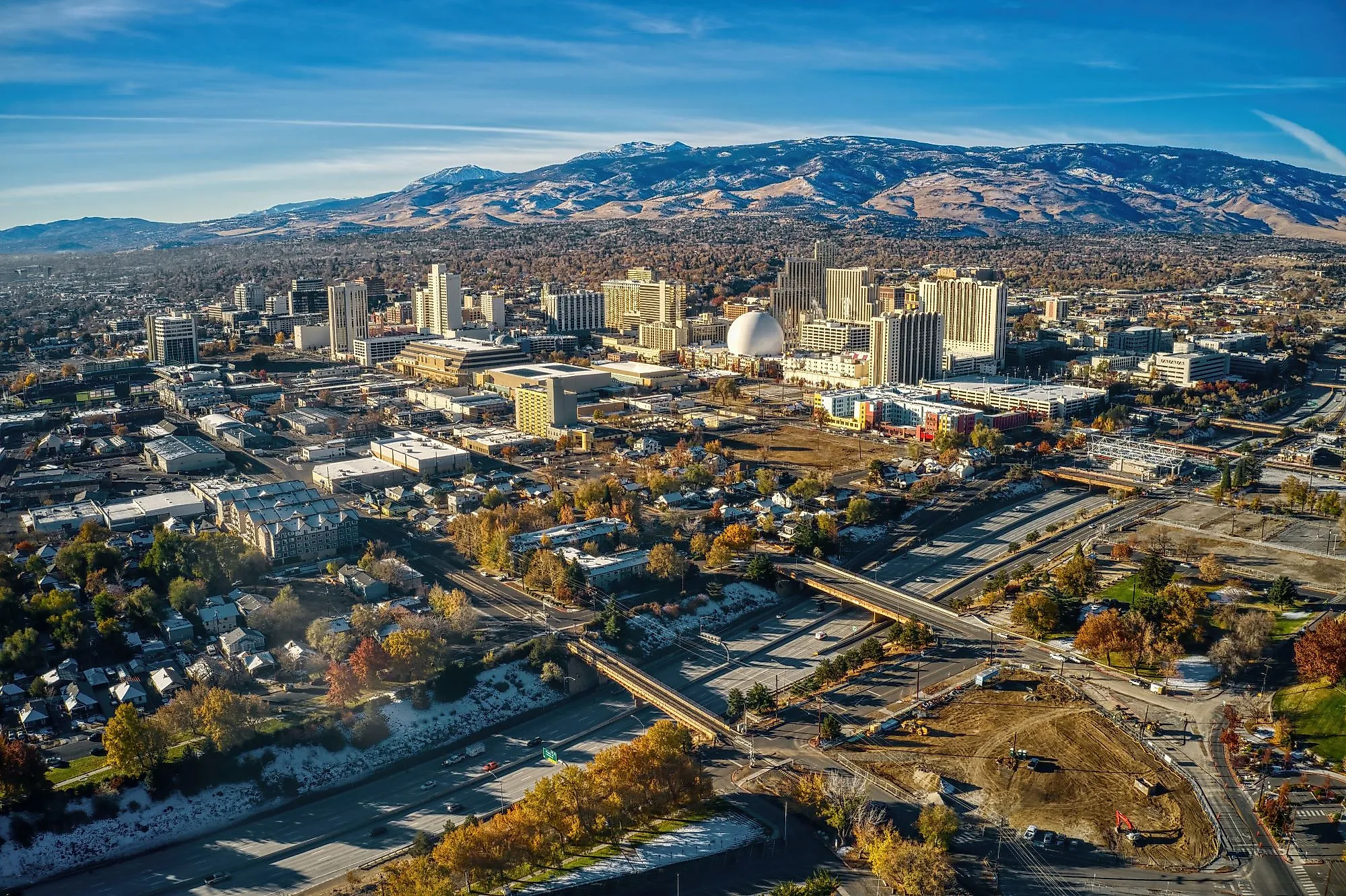
Reno's recent growth has concentrated less in the built-out downtown and Midtown cores and more in outer neighborhoods and northern subdivisions. The city had 283,621 residents in the Census Vintage 2025 estimate, a 7.4% increase from the 2020 estimate base. IRS SOI migration files track county-to-county flows, so the city's in-state migration story is best read through Washoe County. Spanish Springs and Cold Springs have absorbed demand that the older core cannot. Reno's pull is tied to Washoe County's economic diversification away from gaming and toward logistics and advanced manufacturing at the nearby Tahoe-Reno Industrial Center, which the state demographer identifies as a primary regional growth driver.
Sparks

Sparks has posted the smallest gain on this list, reaching 111,902 residents in the Census Vintage 2025 estimate. Because IRS SOI data tracks moves by county, the city's migration story is best read through Washoe County's broader housing pressures. Sparks functions as a pressure-relief point between Reno's tighter market and Lyon County's cheaper but more distant subdivisions.
Workers who want a shorter commute to the Tahoe-Reno Industrial Center than Fernley offers often land in Sparks to avoid Reno's downtown premium. Kidder Mathews analysts covering the Fernley market have cited Reno housing costs as a factor pushing buyers eastward, and Sparks absorbs some of that overflow from Reno's older core. The city's northern and Spanish Springs-area growth corridors have taken in new residential demand, while employment growth at the industrial center continues to outstrip nearby housing supply.
Where Growth is Expected to Continue
The state demographer's office projects Clark County will keep adding the most people in absolute terms through the late 2020s, though its annual growth rate is already slowing. Lyon County's rate is still climbing and is expected to remain Nevada's fastest-growing county through at least 2030. On the other hand, Storey County, once the engine of Tahoe-Reno Industrial Center growth, is projected to lose population slightly through 2029 as limited housing pushes workers into Lyon County instead. For residents already living in these growth corridors, the practical effect is continued upward pressure on land prices in Fernley, Dayton, Mesquite, and Pahrump, while North Las Vegas and Henderson face growing strain on schools and roads, even where housing supply has kept pace with demand so far.