These 9 Towns in North Carolina Have Bustling Main Streets
North Carolina has barrier islands on one end and mile-high peaks on the other, and most of its small towns still have a working main street. The shops tend to be independent, the museums local, and the restaurants named after whoever opened them. A few of these downtowns stand a block from the water. A few more stop where a national forest starts. What follows is nine towns where the main street is still the center of things.
Bryson City

Bryson City is at the edge of the Great Smoky Mountains and the Nantahala National Forest, which is more wilderness than most towns can claim within walking distance. The main street is short and walkable. Everett Street Diner handles breakfast, Gallery Zella shows local painters and photographers, and the Swain County Heritage Museum occupies the old courthouse with exhibits on the county's past.
Deep Creek Trail leaves downtown and climbs to Indian Creek Falls, one of several waterfalls inside Great Smoky Mountains National Park. The Nantahala Gorge and its whitewater are a short drive west.
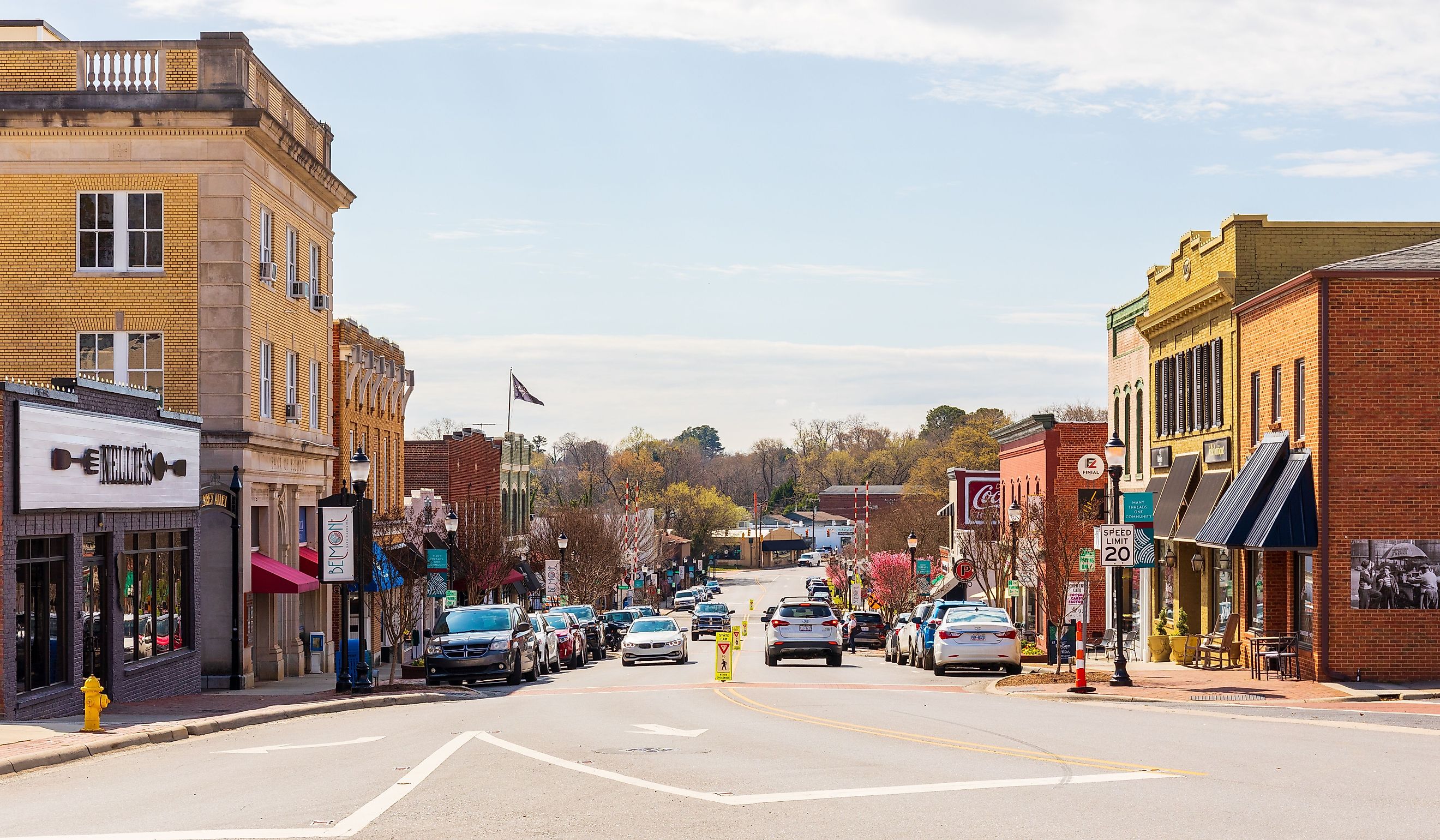
Belmont

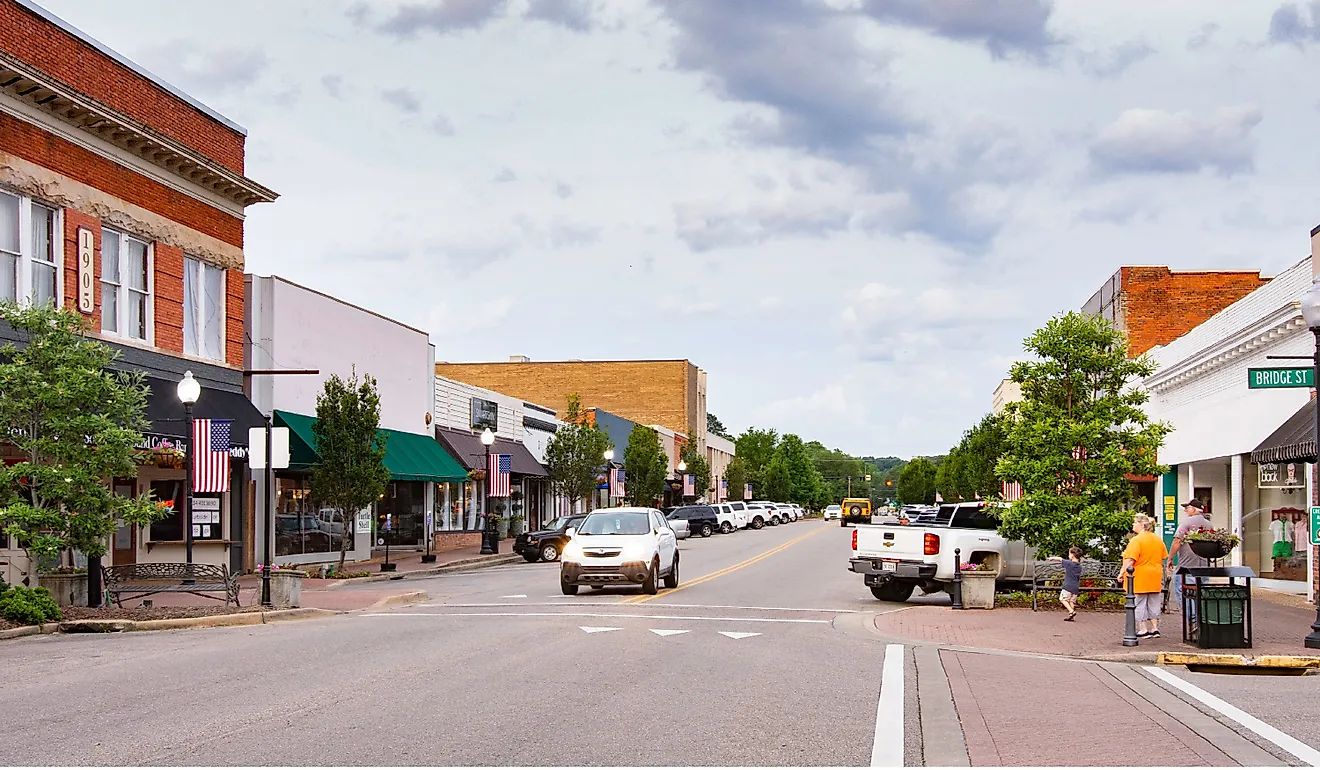
Belmont was a textile town until the mills closed, and the brick storefronts built for the mill workers are still in use. The main street has antique malls, a creamery, and a few cafes. Bumblebee Creamery does the gelato. The Belmont Historical Society has a small house museum on Catawba River Street.
Kevin Loftin Riverfront Park puts the Catawba River at the end of a short walk, with a kayak launch and a path along the water. Belmont Abbey College and its old basilica are just outside downtown.
Hillsborough

Hillsborough is on the Eno River. The main street carries art galleries, the Hillsborough Gallery of Arts and Skylight Gallery among them, along with the Burwell School Historic Site and its early 1800s house. Saratoga Grill and Antonia's handle dinner.
The Hillsborough Riverwalk follows the Eno for about two miles, a paved greenway that doubles as part of the Mountains-to-Sea Trail. It connects downtown to Gold Park and the grounds of the old Occoneechee Speedway, a dirt track from the early days of stock car racing.
Beaufort

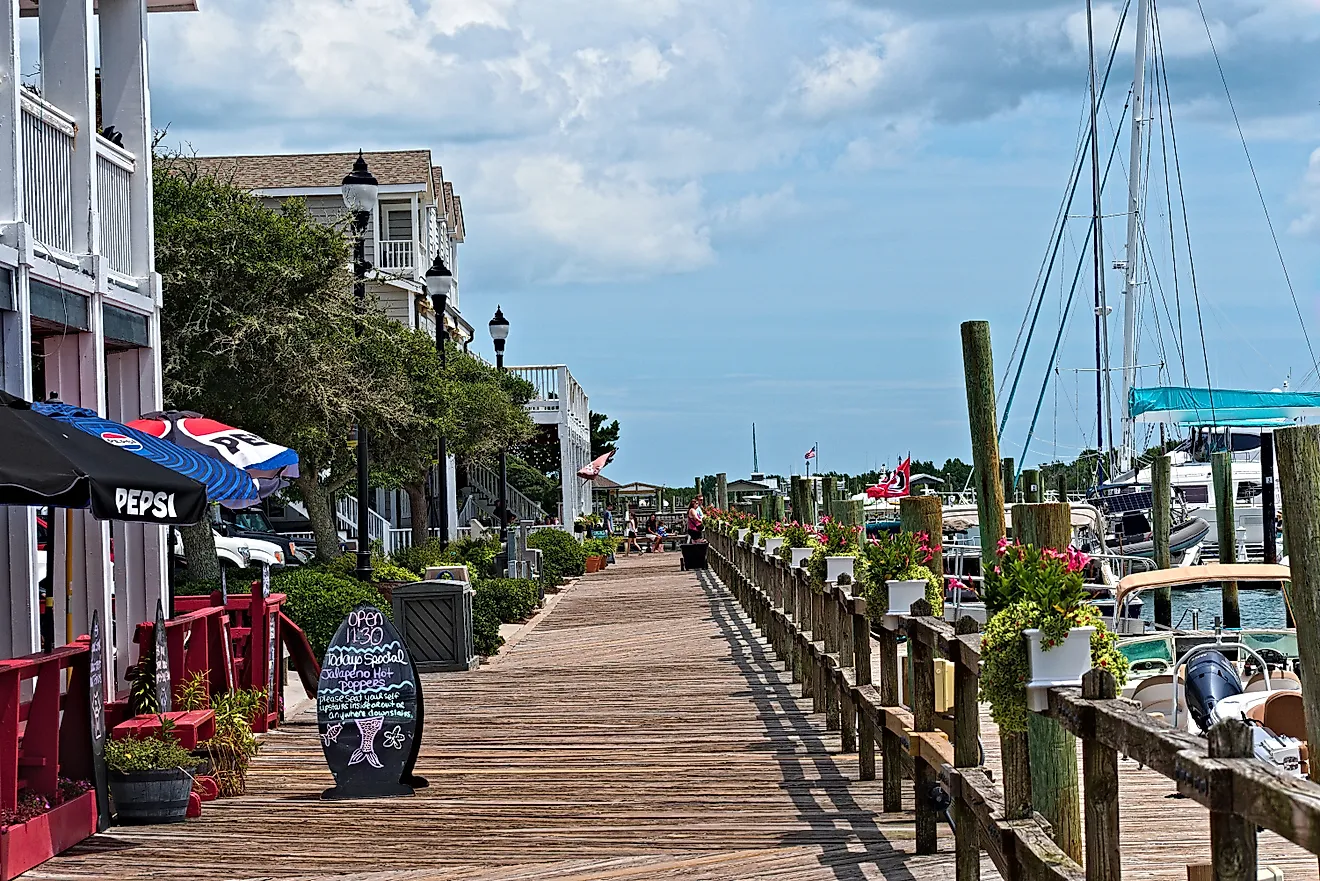
Summer day on the boardwalk waterfront in Beaufort, via Ryan McGurl / Shutterstock.com
Beaufort is one of North Carolina's oldest coastal towns, and its main street faces the water. The North Carolina Maritime Museum stands at the center of it, with exhibits on the coast's shipwrecks and on Blackbeard, whose flagship ran aground just offshore in 1718. Front Street Grill and Moonrakers handle the seafood.
Across Taylor's Creek, the Rachel Carson Reserve has a herd of wild horses that have lived on the islands for generations, along with herons and other shorebirds. Boats cross from the waterfront.
Banner Elk

Banner Elk is a mountain town in the high country, and its main street is busy in both ski season and leaf season. Banner Elk Cafe opens early for coffee. The Banner Elk Artist Gallery shows regional work, and the Banner House Museum lays out what life looked like in the 1800s mountains.
Grandfather Mountain rises just south of town. Its Mile High Swinging Bridge is the highest suspension footbridge in the country, named for the 5,280-foot elevation it crosses at, not the 80-foot drop beneath it. About 12 miles of trails follow the ridgeline below.
Franklin

Franklin is set inside the Nantahala National Forest with the Blue Ridge Mountains in view. The main street has the usual galleries and antique shops, plus the Scottish Tartans Museum, the only one of its kind in the United States, devoted to Highland dress and the registry of clan tartans. The Macon County Historical Museum has Civil War exhibits and Native American artifacts.
The national forest starts at the edge of town, with hiking trails and the Nantahala River for paddling. Cullasaja Falls drops beside US 64 in the gorge west of town.
Blowing Rock

Blowing Rock takes its name from a cliff outside town, a rock formation about 4,000 feet up that overlooks the Johns River Gorge. The main street is short and stands high in the Blue Ridge. Coffee comes from the Spice and Tea Exchange, lunch from Say Cheese. The Blowing Rock Art and History Museum sets out American art, local history, and Appalachian culture in rotating exhibits.
Bass Lake lies below town in the Moses H. Cone Memorial Park, ringed by a carriage trail, with Flat Top Manor on the rise above it. The Blue Ridge Parkway passes the edge of town.
Washington

Washington is on the Pamlico River in Beaufort County, and it claims to be the first town in the country named for George Washington. The main street reaches back from the waterfront, with the Turnage Theatre, the River Walk Gallery, and a row of restaurants. St. Peter's Episcopal Church traces its parish to 1822, though the brick Gothic Revival church standing today was finished in 1873 after fire took the first one.
The Washington Waterfront Underground Railroad Museum tells the story of escape routes along the river, not the kind of railroad with trains. Goose Creek State Park lies east of town, where a Live Oak Trail follows the Pamlico past a swim beach and a boat ramp.
Southport

Southport is at the mouth of the Cape Fear River in Brunswick County, where the river meets the Atlantic. The main street still has its old storefronts, the Ricky Evans Gallery and the Artshak Studio among them. The North Carolina Maritime Museum has a branch here, with exhibits on shipwrecks and the river's fishing trade. Fishy Fishy Cafe puts its tables on the water.
Keziah Park, a block off the waterfront, has a bent live oak called the Indian Trail Tree. A marker dates it to more than 800 years and credits Native Americans with bending it to mark a path to the fishing grounds. The figure comes from a 1940s town legend rather than any forester, but the tree is old and strange-looking either way.
What a Working Main Street Looks Like
The towns on this list do not have much else in common. Bryson City answers to the Smokies, Beaufort to the tide. What they share is a main street that never got hollowed out, where the hardware store, the diner, and the museum still stand within a block of each other. The mills closed in the Piedmont towns and the tourists arrived in the mountain ones, but the storefronts did not empty out. A working downtown is harder to sustain than it looks, and these towns still have theirs.