6 Wallet-Friendly Small Towns To Retire In Germany
Germany is a country where history is built into the streets, the churches, and the town squares, and where even its smallest towns carry centuries of stories. For retirees looking to stretch their budget without sacrificing quality of life, Germany's lesser-known and Medieval towns like Bautzen, Goslar, and Meissen offer something the bigger cities cannot: genuinely affordable property prices, walkable historic centers, and a pace of life that rewards those who slow down.
The six towns below, all with property prices below their state medians, make a strong case for retiring in Germany without breaking the bank.
Goslar

Goslar, a medieval town at the foot of the Harz Mountains in Lower Saxony, is one of the most affordable places to retire in northern Germany. Average home prices are listed at €303,708, notably less than the €375,934 average for all homes in Lower Saxony, according to Engel & Völkers.
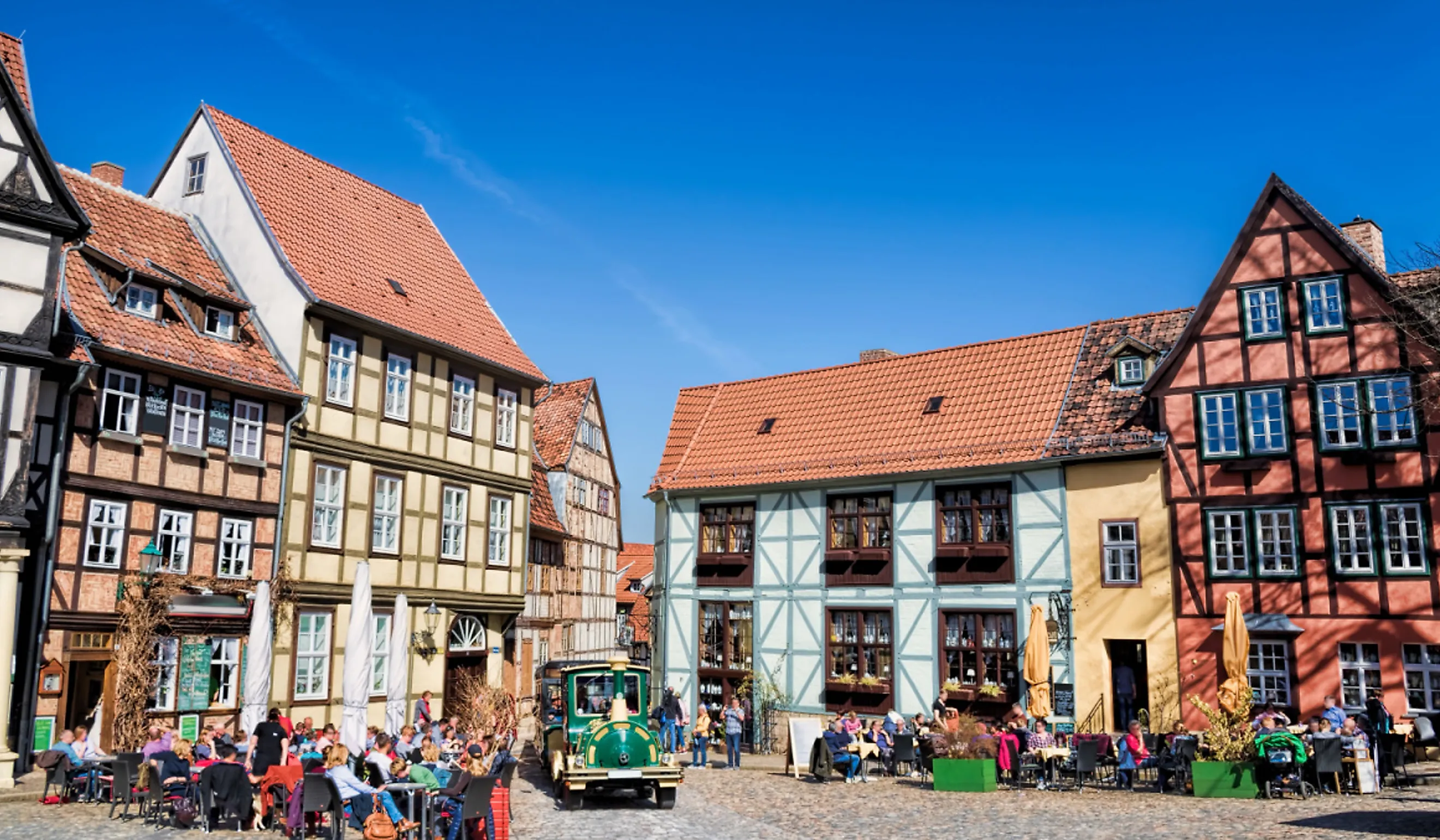
Goslar Old Town is a UNESCO World Heritage Site with over 1,500 Fachwerk houses ("half-timbered house") built from the 15th to 19th centuries. There's also the Marktplatz, or market square, which was once a center of mining and trade and is now a great place to stroll and spend an afternoon. The Kaiserpfalz, an 11th-century Imperial Palace in the southern part of the Old Town, served as an important power center of the Holy Roman Empire for over 200 years and is the town's most visited landmark.
Just outside town, the Rammelsberg Mine operated for over 1,000 years before closing in 1988, and is now a museum where visitors can walk through original medieval mining tunnels. The Harz Mountains surrounding the town offer visitors a variety of hiking and cycling trails year-round.
Bautzen

Located above the River Spree in eastern Saxony, Bautzen is one of the best-preserved medieval towns in Germany, with 17 towers and bastions still standing from its original fortifications, and cobbled streets filled with colorful old houses. Property prices here are among the lowest in Saxony, making it a genuinely affordable place to settle down.
The town is also the cultural home of the Sorbs, a Slavic minority with their own language and traditions, and street signs in the town appear in both German and Sorbian. The Ortenburg Castle at the top of the old town houses the Sorbian Museum and a theater, with views across the river valley below. History lovers will find the Bautzen Memorial worth a visit: a former Stasi prison, preserved with detention cells, exercise yards, and the isolation tract from 1990, offering a rare look at life under East German secret police rule.
Quedlinburg

Not many towns in Germany can claim to be a central place in the country's earliest royal history, but Quedlinburg can. It was here in the 10th century that King Henry I established his royal residence, and his tomb inside the Collegiate Church of St. Servatius on Castle Hill still draws visitors from across the country. The Quedlinburg Abbey and castle complex is a UNESCO World Heritage Site and is located on a cliff above a town packed with over 2,000 Fachwerk houses, one of the largest collections in Germany.
Property prices in Saxony-Anhalt are among the lowest in the country, and Quedlinburg sits well below even the state median, according to Immowelt's data. The Market Square at the foot of the hill has a weekly market and a Gothic town hall, and the narrow-gauge Selketalbahn steam railway connects the town to hiking trails and villages throughout the nearby Harz Mountains.
Meissen

Long before Dresden became the capital of Saxony, Meissen was the center of power in the region, and the town has never quite let go of that identity. It is best known today as the birthplace of European porcelain, which was first produced here in 1710 at the Meissen Porcelain Manufactory, still operating after more than 300 years. Visitors can take tours of the factory that show how each piece is made and painted by hand, and the attached museum holds one of the largest collections of Meissen porcelain in the world.
Above the old town, the Albrechtsburg Castle and Meissen Cathedral sit side by side on a rocky hill with views over the red rooftops and the Elbe River below. The Market Square at the foot of the hill is decorated with painted townhouses and the Frauenkirche, whose bells are made of porcelain and play traditional chorales six times per day. Meissen is just 35 minutes from Dresden by train.
Wismar

Wismar is a Baltic port town in the state of Mecklenburg-Western Pomerania, with an old town listed as a UNESCO World Heritage Site that most tourists outside Germany aren't familiar with. The town became rich by trading beer, fish, and timber across the Baltic Sea, and the wealth from that era is still visible in the brick Gothic churches and merchant houses seen today. The Market Square, one of the largest in northern Germany, is known for the Wasserkunst, a late-16th-century ornamental waterworks building that supplied the town with water for over 200 years.
The Nikolaikirche, a 14th-century Brick Gothic church, is the best preserved of Wismar's three medieval churches and is worth stepping inside for its scale alone. Down at the Old Harbor, fishing boats still bring in daily catches, and fresh fish sandwiches are sold from waterfront stands, a tradition that has not changed for generations. The Wassertor, the last surviving medieval city gate of five that once protected the town, marks the old boundary between the town and the sea.
Güstrow

For 28 years, the German Expressionist sculptor Ernst Barlach called Güstrow home, and the town has never quite moved on from that fact. Known locally as Barlachstadt (Barlach town), this quiet brick Gothic town of around 29,000 people in the heart of Mecklenburg-Vorpommern preserves his legacy across multiple dedicated museum sites, including his original studio, all housing some of his most powerful works. The most famous of these is the Schwebende Engel (Floating Angel), a memorial to the victims of World War I that the Nazis had melted down and which now hangs again as a replica in its original place inside the Güstrow Cathedral, a brick Gothic church built between 1226 and 1335.
The Güstrow Palace, a Renaissance ducal residence completed in 1589, is considered one of the most significant Renaissance buildings in northern Germany. While its grand exterior and grounds remain open, the palace interior is currently closed for long-term restoration work, after which it will reopen with its historic decorated rooms and expanded museum collections. Property prices in Mecklenburg-Vorpommern are among the lowest in Germany, and Güstrow sits well below even the state median, making it one of the most genuinely affordable places to retire in the country.
Affordable Germany is Waiting
Germany's smaller towns have always offered a different kind of retirement, one built around weekly markets, riverside walks, and town squares that have looked the same for centuries. From the medieval streets of Goslar at the foot of the Harz Mountains to the Baltic harbor of Wismar, these six towns prove that affordability and quality of life are not mutually exclusive in Germany. For retirees willing to look beyond the obvious destinations, the country offers more than most people expect.